● US,China-Power,War-Erosion
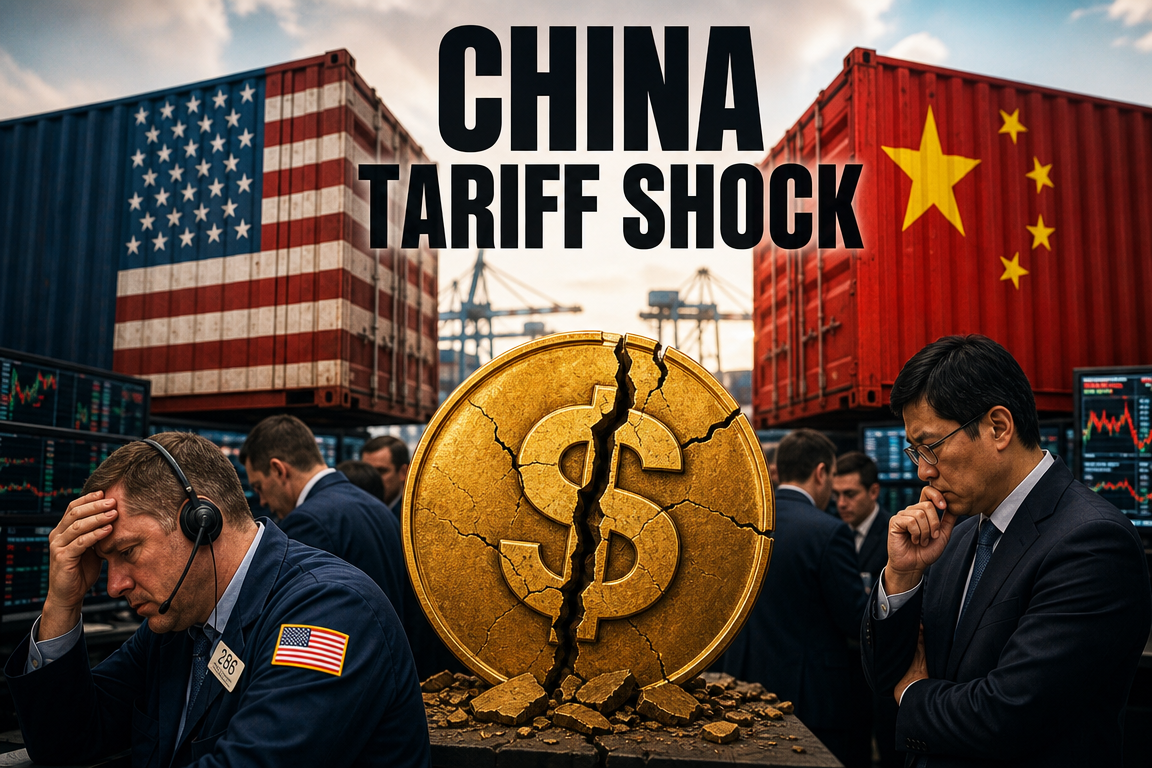
The Real Nature of the U.S.-China Power Contest: The United States Is More Likely Eroding Itself Than “Beating” China
The central issue is not simply whether the United States or China is stronger.
The key point is that the Russia-Ukraine war, the Middle East war, sanctions on Iran and Russia, BRICS expansion, the weakening of dollar dominance, and supply chain restructuring are all part of a single larger trend.
What most news coverage misses is that U.S. hegemony is not collapsing abruptly, but is being gradually eroded through the dollar, technology standards, platforms, and military networks.
China is not pursuing global hegemony in the same way the United States has. Its focus is on survival, manufacturing capacity, resource security, and supply chain stability.
Ultimately, the U.S.-China power contest is not only a military rivalry. It is also a conflict between financial economics and the real economy, and it is a key variable for the global economic outlook.
1. Are the Current Wars Proxy Wars in the U.S.-China Power Contest?
The Russia-Ukraine war and the Middle East war are clearly connected to the U.S.-China power contest.
However, it is too simplistic and overly West-centric to describe them only as proxy wars in which China uses Russia and Iran to fight the United States.
From the U.S. perspective, Russia, China, and Iran appear to form an anti-Western bloc.
From China’s perspective, however, the priority is less about challenging U.S. hegemony directly and more about building a system that can withstand sanctions and external pressure.
In the case of Russia-Ukraine, the proxy-war character is stronger on the side of the United States and the West, which are using Ukraine to pressure Russia.
By contrast, it is difficult to argue that China is using Russia to wage war against the United States.
China has purchased Russian oil and resources, helping stabilize the Russian economy, but this can be understood as part of China’s energy security and real-economy strategy.
Iran has also supplied discounted oil to China and India to work around the U.S. sanctions regime.
Russia, Iran, and China are therefore better understood not as a formal alliance, but as countries connected by mutual need within a U.S.-centered order that imposes sanctions and pressure.
2. The United States Sees China as a Challenger, but China Does Not See the United States in the Same Way
The United States views China as a strategic challenger to U.S. hegemony.
Accordingly, it has intensified technology restrictions, semiconductor export controls, tariffs, investment limits, and supply chain decoupling.
China, however, does not appear to believe it is moving to replace U.S. hegemony on the same terms.
China’s underlying approach is closer to securing what it needs to survive.
From the U.S. perspective, the Belt and Road Initiative may look like a global dominance strategy.
From China’s perspective, it is largely a defensive survival strategy to secure energy routes, raw material supply chains, export markets, and logistics networks.
China has a strong historical sense of centrality, but it does not operate in the same way as the United States, which maintains roughly 750 overseas military bases and controls maritime choke points through its military network.
The United States has managed the global order through military power and the dollar system, while China has expanded influence through manufacturing, trade, investment, and infrastructure.
Failing to understand this distinction leads to a distorted view of the U.S.-China power contest.
3. Is the Thucydides Trap an Accurate Framework?
The Thucydides Trap argues that war becomes likely when an established power confronts a rising power.
The United States and its allies tend to view China through this lens.
In other words, the argument is that if China continues to grow, it will inevitably challenge U.S. hegemony, and therefore it should be contained in advance.
However, this framework does not fit all historical cases.
A key counterargument is that China is not pursuing the same model of global hegemony as the United States.
President Xi’s reference to the Thucydides Trap in discussions with U.S. leaders can also be interpreted as a signal that China does not intend to challenge the United States by directly replicating its hegemonic model.
China’s position is broadly as follows:
“We are seeking development and prosperity in our own way, and the United States can prosper in its own way.”
Even so, China’s economic scale and manufacturing capacity could eventually exceed those of the United States.
That does not automatically mean it intends to reproduce the U.S. model of global hegemony.
4. China Is Already Pressuring the United States in Manufacturing
If U.S.-China competition is broken down by sector, the areas of strength on both sides are clear.
-
Manufacturing: China is central to global manufacturing supply chains.
It has achieved both scale and cost competitiveness in electric vehicles, batteries, solar, steel, shipbuilding, machinery, and consumer goods.
-
Raw material processing: China has major influence not only in rare earth mining, but also in refining and permanent magnet production.
Its role is also significant in the processing and distribution of key minerals such as copper, nickel, and lithium.
-
Technology leadership: The United States and its allies still lead in semiconductor equipment and advanced chips.
However, China is advancing rapidly, and in areas such as telecom equipment, batteries, EVs, drones, and AI application manufacturing, it is already competitive or ahead in some segments.
-
Currency dominance: Renminbi internationalization is progressing, but replacing dollar dominance in the near term remains difficult.
Even so, efforts to reduce dollar dependence are clearly expanding among Russia, Iran, China, and BRICS countries.
-
Military power: The United States still retains the world’s strongest military.
In aircraft carriers, overseas bases, alliance networks, intelligence assets, and naval power, China cannot easily catch up.
The key point is that China is not fighting the United States in the same way.
The United States uses finance, military power, technology standards, and alliance networks; China relies on manufacturing, pricing, supply chains, and resource security.
This is the most important structural shift in the global economy today.
5. U.S. Hegemony Is Not Collapsing; It Is Being Eroded
One of Professor Jin Jae-il’s central views is that the United States is not collapsing abruptly, but is being gradually eroded.
The U.S. power base rests on four pillars:
-
Technology standards
-
Global platforms
-
Dollar dominance
-
Military and security networks
These foundations remain strong.
However, they are no longer as overwhelmingly dominant as before.
A representative example is the trend in U.S. Treasury holdings and gold purchases.
Countries including China do not dump U.S. 10-year Treasuries all at once.
Doing so would also depress the value of their own assets.
Instead, they sell gradually and buy gold gradually, reducing dollar dependence over time.
This is not a sudden collapse of dollar dominance, but a gradual erosion.
This trend is highly important for the global economic outlook.
If the dollar-centered system weakens, U.S. interest rates, commodity prices, emerging market exchange rates, global liquidity, and inflation expectations will all be affected.
6. SWIFT Sanctions Weaponized the Dollar and Created a Backlash
SWIFT exclusion for Russia demonstrated the power of the U.S. and Western financial system.
At the same time, it sent a strong warning to the rest of the world.
“The dollar and SWIFT system can be used as weapons at any time.”
Russia was not the only country to experience this dynamic; Iran has faced similar constraints.
China has likely concluded that it could one day be targeted in the same way.
As a result, China has accelerated its own payment network, renminbi settlement, gold accumulation, long-term energy contracts, and BRICS cooperation.
This is not simply an effort to dismantle the United States.
It is better understood as a defensive response to the weaponization of the financial network by the United States.
Putin’s remark that “dollars can be printed, but oil cannot” is symbolic.
The current conflict is a collision between financial economics and the real economy.
The United States applies pressure through the dollar and financial platforms, while Russia, China, and Iran rely on energy, minerals, manufacturing, and logistics as real-economy foundations.
7. Why Are Russia, Iran, and China Structurally Connected?
Russia, Iran, and China are not united simply by anti-U.S. sentiment.
They are also connected by geography, energy flows, and sanctions-avoidance mechanisms.
For Russia, access to warm-water routes has long been strategically important.
Sevastopol in the Black Sea is strategically significant, but Turkey controls a major bottleneck and remains within the NATO and Western sphere of influence.
The Baltic Sea is also constrained, and Vladivostok faces seasonal and geographic limits.
That is why the north-south corridor through the Caspian Sea and Iran toward the Indian Ocean is strategically important.
In this context, Iran is not simply a Middle Eastern state but a critical transit route linking Russia to the Indian Ocean.
The “Primakov Triangle,” associated with former Russian Foreign Minister Yevgeny Primakov, refers to a Russia-China-India strategic concept.
In practice, Iran sits at the center of that geometry.
The United States is also trying to bring India closer for this reason.
India, however, has maintained a non-aligned strategy, cooperating with the West while remaining within BRICS.
In other words, India is not fully aligning with either side of the U.S.-China contest, but is pursuing a balancing strategy to maximize its own interests.
8. BRICS and the Anti-Western Bloc Are Better Seen as a Survival Network Than an Alliance
Many observers describe Russia, Iran, China, parts of the Middle East, and the Global South as a single bloc.
In reality, this is not comparable to a military alliance such as NATO.
These countries have different interests, historical mistrust, and different economic structures.
Still, they cooperate for a clear reason.
They share the belief that any of them could be the next target under a U.S.-led order.
Russia and Iran have already experienced sanctions.
China is facing technology and trade restrictions.
Middle Eastern energy exporters want to reduce dependence on dollar settlement and security reliance.
Resource-rich countries in Africa and Latin America are widening their options through Chinese investment and infrastructure financing.
This is driving BRICS expansion, de-dollarization, settlement diversification, and supply chain restructuring.
9. The Relationship Between Western Financial Capital and War: A Core Issue Often Missed by the News
One important and controversial perspective is that war is shaped not only by ideology and security, but also by financial capital and collateral assets.
Countries such as Russia and Iran are resource-rich.
Oil, gas, minerals, farmland, ports, and infrastructure can all function as collateral within the financial system.
For financial institutions, it can be more profitable to structure debt and financial products around resource-backed assets than to extract resources directly.
From this perspective, the war in Ukraine is not only a territorial conflict, but also a case involving debt, sovereign bonds, reconstruction finance, resource collateral, and financial-capital interests.
Investment in Ukraine, sovereign debt, reconstruction finance, farmland, and mineral assets will likely remain important issues.
This is often not explored in depth in mainstream news.
Explaining war through morality and ideology is easier, while tracing financial flows exposes a far more complex set of interests.
10. China’s “Overcapacity” Debate Is Fundamentally a Manufacturing Power Debate
The United States and Europe criticize China’s electric vehicle, battery, and solar industries as overcapacity.
The claim is that China produces too much and sells too cheaply, weakening Western manufacturing.
China, by contrast, views this not as overcapacity but as mass production and price efficiency.
Chinese companies do not operate only on government subsidies; internal competition is also extremely intense.
As a result, prices fall quickly, production efficiency rises, and global competitiveness strengthens.
Within China, competition is so intense that inflation remains structurally subdued.
Low-cost Chinese goods also helped the United States maintain low inflation for much of the past several decades.
However, as the United States expanded liquidity and began decoupling from China, that low-inflation structure started to weaken.
Supply chain restructuring is now not simply an industrial policy issue, but a key driver of inflation, interest rates, corporate earnings, and consumer prices.
11. Borders Are Both a Cause of War and a Condition for Peace
An important theme in the latter part of the discussion is borders.
“Borders can, depending on the situation, be both the cause and the result of peace, or the cause and the result of war.”
This is a crucial principle for understanding geopolitical risk.
When borders are clearly fixed, the likelihood of war declines.
After World War II, Western European borders remained relatively stable despite many disputes.
France and Germany fought repeated wars for a long period, but after borders were settled and the European integration framework was established, direct conflict ceased.
By contrast, if borders are not accepted as final, conflict can continue indefinitely.
Israel is often cited as a case in which borders were not clearly finalized at the time of UN admission.
As a result, disputes involving the Golan Heights, southern Lebanon, and the Palestinian issue have continued.
Ukraine is another example: although its borders were defined after the dissolution of the Soviet Union in 1991, the combination of eastern Russian-speaking regions, the Crimea issue, and identity conflict after Euromaidan escalated into war.
In other words, borders are not merely lines on a map; they are geopolitical constructs that concentrate history, ethnicity, resources, military power, and politics.
12. Is the World Splitting into Two?
At first glance, the world appears to be dividing into countries aligned with the United States and countries aligned with China.
In practice, the structure is much more complex.
Even countries aligned with the United States cannot fully sever ties with Chinese markets and supply chains.
Countries close to China also cannot fully abandon the dollar system and Western financial networks.
Saudi Arabia uses the U.S. security umbrella while expanding energy trade with China.
India cooperates with the United States on security while buying Russian oil and participating in BRICS.
Europe seeks to contain China while remaining dependent on Chinese markets and manufacturing supply chains.
South Korea, too, must balance U.S. security ties against economic dependence on China.
Therefore, it is more accurate to describe the world not as a simple two-bloc split, but as a multi-layered fragmentation in which countries make different choices by sector.
13. The Most Important Points Rarely Emphasized by Other News and YouTube Coverage
-
First, U.S. hegemony is being eroded rather than collapsing.
The dollar, Treasuries, SWIFT, technology standards, and military bases remain powerful, but they are no longer absolutely dominant.
-
Second, China is not trying to become a U.S.-style hegemon; it is building a survival-oriented manufacturing and supply chain system.
Instead of expanding military bases, it is expanding ports, railways, mines, manufacturing clusters, and energy contracts.
-
Third, de-dollarization is not about abandoning the dollar entirely, but about reducing dollar risk.
Countries are not dropping the dollar all at once; they are gradually combining gold, renminbi, local currencies, and commodity settlement.
-
Fourth, the hidden structure of war includes financial collateral and resource control.
Oil, gas, minerals, farmland, ports, and infrastructure are all assets that financial capital seeks to control.
-
Fifth, the main front in the U.S.-China contest is manufacturing and settlement networks rather than military confrontation alone.
While the visible conflict is in Ukraine and the Middle East, the real economic war is being fought in semiconductors, batteries, raw materials, and dollar settlement channels.
14. Key Watchpoints for the Korean Economy and Investors
South Korea is close to the front line of the U.S.-China power contest.
Its security depends on the United States, while its exports and supply chains remain deeply connected to China.
Accordingly, Korean companies and investors should continue monitoring the following variables:
-
Semiconductor export controls: As U.S. restrictions on China intensify, Korean strategies in equipment, materials, and memory chips will also be affected.
-
Batteries and critical minerals: Reducing dependence on China in lithium, nickel, graphite, and rare earth supply chains remains a long-term priority.
-
Exchange rates and dollar liquidity: In a period of weakening dollar dominance, volatility in the won exchange rate may increase.
-
Energy prices: Middle East conflict and risks around the Strait of Hormuz directly affect Korea’s inflation and trade balance.
-
Export market diversification: It is becoming increasingly difficult to rely on either the United States or China alone.
For Korea, the core strategy is not selection, but diversification.
Security, technology, exports, energy, raw materials, and finance must each be designed separately.
This is the practical economic strategy required in an era of heightened geopolitical risk.
15. Global Economic Outlook: Financial Hegemony Versus Real-Economy Hegemony
Going forward, the global economy is likely to be shaped by the conflict between dollar-based financial dominance and resource- and manufacturing-based real-economy power.
The United States remains dominant in finance, technology, military power, and platforms.
China is strong in manufacturing, price competitiveness, supply chains, and raw material processing.
Russia has energy and military power, Iran has geopolitical transit routes and energy, India has population and market scale, and the Middle East has oil and investment capital.
The key question is no longer who will win outright.
The more important issue is how much disruption will occur as the single-polar order gives way to a more multipolar system.
If the United States manages its hegemony smoothly, conflict may be contained.
But if resistance to the loss of 500 years of Western-led dominance intensifies, tensions in Ukraine, the Middle East, Taiwan, and the South China Sea may increase further.
From an investment perspective, gold, energy, defense, semiconductors, AI infrastructure, power grids, critical minerals, and exchange-rate volatility should all be monitored together.
AI Trend cannot be separated from this process.
AI semiconductors, data center power demand, rare earths, cooling infrastructure, cloud platforms, and country-specific AI regulation are all becoming part of the U.S.-China technology contest.
< Summary >
The U.S.-China power contest is not a simple contest between two countries.
It is a structural transformation of the global economy involving dollar dominance, supply chain restructuring, geopolitical risk, resource control, and manufacturing competition.
The United States sees China as a hegemonic challenger, but China is focusing more on building a survivable manufacturing and supply chain system than on replicating U.S.-style hegemony.
U.S. hegemony is not collapsing suddenly; it is being gradually eroded across the dollar, Treasuries, SWIFT, and technology standards.
Russia, Iran, and China are better understood as a survival network responding to sanctions than as a military alliance.
The key issue for the global economic outlook is the conflict between financial economics and the real economy, while South Korea must manage security, exports, raw materials, and currency risk through diversification.
[Related Articles…]
- U.S.-China Semiconductor Controls and Supply Chain Realignment
- Dollar Dominance and BRICS De-Dollarization Strategy
*Source: [ 경제 읽어주는 남자(김광석TV) ]
– 미국은 이미 중국을 이기기 어렵다? 미중 패권전쟁의 진짜 본질 | 경읽남과 토론합시다 | 진재일 교수 [2편]
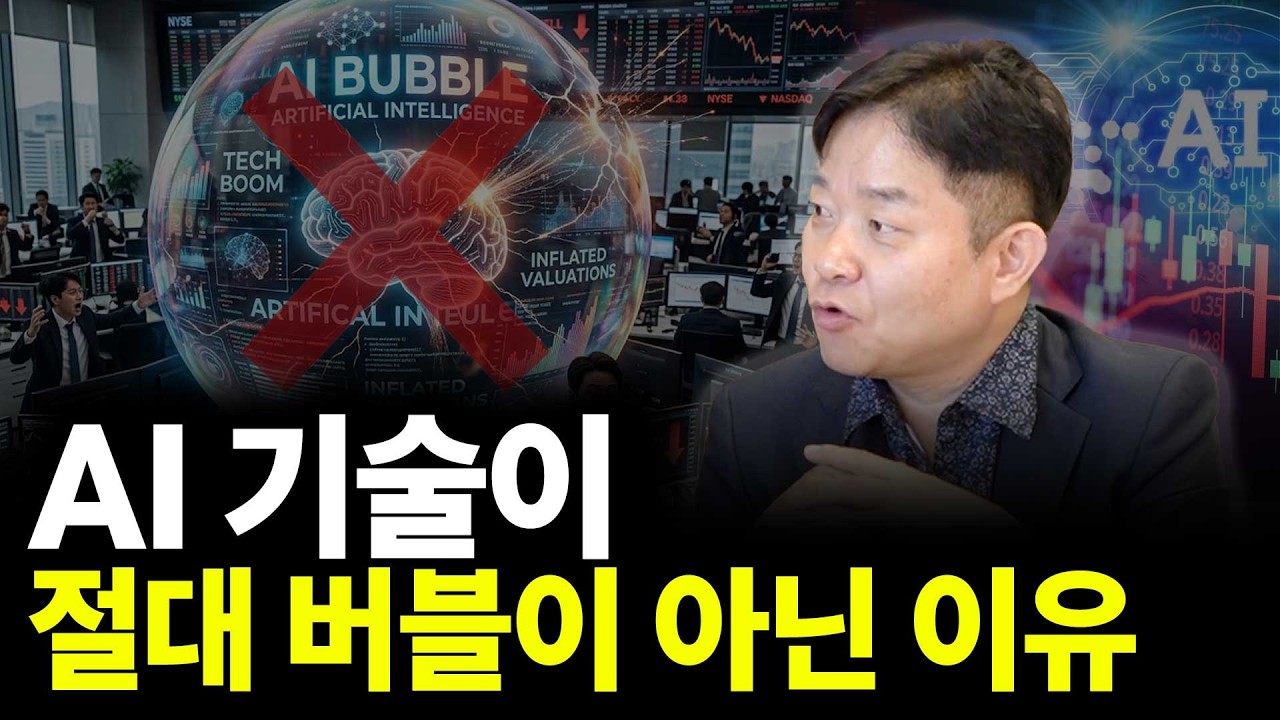
● AI-Bubble, Not-Model-Driven, Infrastructure-Driven
Why AI Is Not a Bubble: The Core Issue Is Not Model Performance, but AI Infrastructure, AI Agents, and National Competitiveness
The key point in this discussion is not simply that “AI has become smarter.”
Below is a concise review of why AI ethics is complex, why the United States is seeking to control frontier AI models, why Korea must secure an independent foundation model, and how the limits of generative AI are reshaping AI investment opportunities.
The critical issue often missed in other news coverage and video commentary is this.
When assessing whether AI is a bubble, model performance alone is not sufficient.
Capital will increasingly flow not into the largest models themselves, but into AI data centers, on-device AI, AI agents, enterprise applications, and sovereign AI infrastructure by country.
1. The core of the AI ethics debate: the issue is not whether AI is “suffering,” but who is using it and how
When people discuss AI ethics, they often think first of robot emotions, AI rights, or robot abuse.
However, from Professor Lee Kyung-jun’s perspective, the more important ethical issue is not whether AI itself feels emotions, but how society should control human misuse of AI.
- The Iruda case: There was debate over whether sexual harassment of an AI chatbot was possible.
- Legally, since AI has no gender or legal personhood, some argue it should be treated differently from sexual harassment against a human being.
- However, capturing and distributing such conversations can create social discomfort and may be criticized as unethical conduct.
- Striking a robot dog: If the robot is someone else’s property, the issue is a violation of property rights rather than harm to the robot itself.
- Even striking one’s own robot dog may be viewed as socially inappropriate if it causes discomfort to others.
- Ultimately, ethics is not absolute; it evolves with social norms and consensus.
The key point is that AI ethics should not be framed too emotionally, or the fundamental issue may be missed.
Even if an AI appears to cry, that does not necessarily mean it experiences sadness like a human.
Water can be routed near the eyes of a robot to create a tear-like effect, but whether this reflects actual emotion or mechanical function is a separate issue.
2. The real risk of AI: not emotion, but its nature as a double-edged tool
AI is not dangerous because it feels emotions or initiates a rebellion.
The real risk is that AI designed for beneficial purposes can produce the opposite outcome if its objective function is changed.
- An AI developed for drug discovery can be used to identify life-saving medicines.
- However, if the objective is reversed, it could be misused to develop toxic substances or chemical weapons.
- An AI built for cyber defense can also be used to automate cyberattacks.
For this reason, the United States views AI not as ordinary software but as a strategic technology.
GPU export controls, pre-deployment review of frontier AI models, and access restrictions for certain countries and personnel reflect this perspective.
AI is one of the most important productivity technologies in the economic outlook, but it is also a national security asset.
3. What the Mythos incident showed: even advanced U.S. AI can be blocked or bypassed overnight
The central lesson from the Mythos incident is that even powerful AI models with guardrails can be circumvented.
Developers add safety mechanisms to prevent the model from answering dangerous questions.
For example, requests for chemical weapon instructions or hacking methods are blocked.
The problem is that methods to bypass these guardrails continue to emerge.
- The more powerful the AI, the greater its potential misuse in hacking, biological threats, and automated attacks.
- The U.S. government sees a need to review frontier AI models before they are released to companies and consumers.
- AI firms are also moving toward accepting a voluntary government oversight role.
The global economic and investment implication is clear.
AI is shifting from a freely used service to a strategic infrastructure asset under state oversight.
This trend has direct implications for U.S. equities, Nasdaq AI companies, semiconductors, cloud services, cybersecurity, and AI data center investment.
4. Why Korea is preparing an independent foundation model: this is not nationalism, but a survival strategy
Korea’s independent foundation model initiative, often referred to as the “independent foundation model project,” is not simply a plan to build a Korean version of ChatGPT.
The real purpose is to build an AI ecosystem that is not fully dependent on the technology and policy decisions of foreign Big Tech firms.
- If the U.S. government restricts access to a specific AI model, foreign companies and countries could lose access to critical AI services overnight.
- In that environment, domestic AI infrastructure serves as insurance for the national economy and corporate competitiveness.
- If Korean companies hold independent models, they can apply customized AI across domestic services, public systems, manufacturing, finance, healthcare, and education.
The goal is not to create an AI that simply answers “Dokdo is Korean territory.”
That kind of output can already be approximated by adding guardrails or prompts to foreign models.
The core issue is whether Korean companies can build independent services and application structures without relying on another country’s technology.
At a broader level, the question is whether Korea can export AI solutions to markets in the Middle East, Southeast Asia, and parts of Europe.
5. Why a new opportunity is emerging for Korean AI companies: large language model growth is slowing
One of the most important points in the original discussion is the phrase, “the winter of large language models, the spring of AI applications.”
This does not mean AI is ending.
It means the opposite.
Performance improvements in LLMs are slowing, but the current level of AI is already strong enough to be useful for enterprises and society.
- If frontier model performance continues to rise on a J-curve, late entrants will struggle to catch up.
- But if performance improvement becomes more gradual, as in an S-curve, Korean companies gain time to narrow the gap.
- The key benchmark is not whether a model ranks third or seventh globally.
- The real question is whether users feel they can rely on it instead of GPT or Claude.
This is also where bubble arguments often miss the point.
Even if LLM performance is no longer rising as explosively as before, AI industry growth does not end.
The center of gravity is shifting from model development to application-layer competition.
6. The limitation of generative AI: hallucinations cannot be fully eliminated
One of the most frustrating aspects of generative AI is hallucination, where the system confidently produces false information.
The original discussion explains that this cannot be fully solved scientifically, but it can be mitigated through engineering.
The reason is straightforward.
Current LLMs generate the next word or sentence probabilistically.
If hallucination were completely eliminated, creative and flexible output would likely weaken as well.
- The ability of AI to generate new ideas comes from its probabilistic generation structure.
- That same structure also creates the possibility of incorrect outputs.
- For this reason, multiple AIs with different roles are becoming more important than a single perfect AI.
This is the logic behind AI agents and multi-agent systems.
One AI produces the answer, another reviews it, and another checks factual accuracy.
This approach helps reduce hallucinations.
However, it also increases token usage and raises costs.
7. Why AI agents are gaining attention: because LLMs are not perfect
AI agents are attracting attention not simply because they are innovative, but because it has become clear that a single LLM cannot perform all tasks perfectly.
- Some AI systems are strong at generation.
- Others are strong at verification.
- Others are stronger at coding.
- Others are better at research.
- Others are suited to workflow automation.
Going forward, these systems are likely to be combined to handle specific tasks.
For enterprises, AI agents that change actual business workflows create far greater value than a simple chatbot.
Accordingly, from an investment perspective, it is necessary to look beyond model companies and also examine enterprise AI agents, workflow automation SaaS, data security, and cloud infrastructure providers.
8. Why demand for AI data centers will keep rising: multi-agent systems significantly increase token usage
An important variable in the AI data center investment debate is token usage.
In the past, a user would ask one question and receive one answer from AI.
In the AI agent era, however, multiple systems operate simultaneously to complete a single task.
- One AI drafts the initial output.
- A second AI checks for errors.
- A third AI retrieves source material.
- A fourth AI formats the final report.
From the user’s perspective, this is a single action, but internally it involves multiple rounds of inference and verification.
This structure can continue to drive demand for AI data centers, GPUs, power, cooling, and network infrastructure.
That said, high interest rates or greater exchange-rate volatility can place pressure on investment costs and valuations in the AI data center sector.
9. The rise of on-device AI: the monthly subscription model may change
Another important trend in the original discussion is on-device AI.
This refers to using AI not only in the cloud, but directly on personal PCs, laptops, or internal enterprise servers.
If AI PCs combining Nvidia and the Windows ecosystem, as well as RTX-based AI computers, become more widespread, usage patterns may change significantly.
- Cloud AI generates token costs every time it is used.
- On-device AI can materially reduce ongoing usage costs after the initial hardware purchase.
- For enterprises, it offers the advantage of keeping sensitive data off external servers.
- For individuals, it enables a certain level of AI functionality even without an internet connection.
Initial device prices may be high.
However, computer prices generally decline over time.
Ultimately, the AI market is likely to expand through both cloud subscription AI and on-device AI.
10. Where AI will be used most: high-value sectors with the greatest economic return
AI will first penetrate areas where the cost-benefit ratio is strongest.
In other words, adoption will accelerate first in industries where the cost of AI is far lower than the value it creates.
- R&D: AI use cases are expanding in pharmaceuticals, materials, semiconductors, batteries, robotics, and biotech.
- Finance: Applications include risk management, portfolio analysis, automated research, customer service, and fraud detection.
- Manufacturing: AI is being applied to quality inspection, process optimization, predictive maintenance, and supply chain management.
- Healthcare: Uses include diagnostic support, drug candidate discovery, and medical documentation automation.
- Education: Potential applications include personalized tutoring, exam analysis, and learning support.
The most valuable talent going forward will not simply be people who know how to use AI well.
It will be people who can identify human pain points and demand.
The ability to recognize what problem exists, who is experiencing it, and where payment willingness exists will become more important.
AI is a tool for finding answers; the ability to formulate the right questions remains human.
11. AI and human roles: AI is intelligent, but it cannot take responsibility
One notable expression in the original text describes AI as a “ghost-like entity.”
AI can hold vast amounts of knowledge and provide advice, but it cannot independently act in the real world with full responsibility.
Humans have bodies, social responsibility, and legal liability.
AI, by contrast, cannot be meaningfully punished by imprisonment.
The concept of punishing AI is fundamentally different from punishing a human being.
- When AI makes a wrong decision, the responsibility ultimately remains with humans, companies, and institutions.
- For that reason, human management, judgment, and accountability are unlikely to disappear even as AI advances.
- Work may become easier, but roles that require responsibility are likely to remain.
This view differs from extreme forecasts that AI will eliminate all jobs.
AI may replace some labor, but it can also raise the value of managers, validators, planners, and problem definers.
12. Reframing the AI bubble argument: the bubble may exist in models, but not in the industry as a whole
When assessing whether AI is a bubble, it is important not to treat the entire industry as a single block.
Some company valuations, data center investments, and startup multiples may be overheated.
However, it is difficult to say that AI technology itself is a bubble.
- LLM performance gains may be slowing.
- But the current level of AI is already sufficient for enterprise automation and productivity improvement.
- AI agent adoption can increase inference demand and data center demand.
- On-device AI can create a new hardware replacement cycle.
- National competition over AI sovereignty can continue to support government investment and industrial policy.
The most realistic conclusion is as follows.
If one looks only at model competition, growth may appear to be slowing.
But if one examines AI applications, data centers, semiconductors, security, on-device AI, and enterprise automation, industrial expansion is likely still in its early phase.
13. Key points for investors
AI investing should not be based on the assumption that “anything AI-related must go up.”
What matters is identifying where actual revenue and profit will emerge.
- Semiconductors: Monitor demand for GPUs, HBM, network chips, and power semiconductors.
- AI data centers: Power availability, cooling, land, and server investment capacity are critical.
- Cloud: The key issue is whether enterprise AI usage translates into earnings growth.
- AI agents: The central question is whether they deliver cost savings and productivity gains through real workflow automation.
- On-device AI: Track expansion into AI PCs, smartphones, robotics, and vehicles.
- Korea’s AI ecosystem: The key issue is whether independent models can be used in domestic enterprises and public-sector applications.
Macroeconomic variables must also be considered.
Higher interest rates put pressure on growth-stock valuations.
Exchange-rate volatility can raise the cost of importing GPUs and server equipment.
For U.S. equities and Korean AI-related stocks, investors should assess not only technology expectations but also earnings, cash flow, and payback periods for capital expenditure.
What other news coverage and video commentary often overlook
- First, AI sovereignty is not optional; it is insurance.
- Because a single policy change by the U.S. government could restrict access to foreign AI systems, Korea’s independent foundation model is important from an economic security perspective.
- Second, slower LLM improvement is not necessarily negative.
- If the performance gap among frontier models stops widening, Korean companies gain time to catch up.
- Third, hallucinations create new markets.
- Verification AI, multi-agent systems, AI security, data reliability management, and enterprise workflow solutions may expand.
- Fourth, AI data center demand may grow more because of AI agents than because of simple chatbots.
- When one task requires multiple AI systems working in parallel, token usage and inference demand can rise sharply.
- Fifth, on-device AI could change the balance of the subscription AI market.
- If individuals and enterprises run AI on their own devices, dependence on the cloud may decline, while the AI PC and edge semiconductor markets may expand.
< Summary >
AI technology is difficult to classify as a pure bubble.
Although the pace of LLM improvement is slowing, current AI capabilities are already sufficient to drive meaningful productivity gains for businesses and society.
The core of AI ethics is not robot emotions, but how to prevent misuse of AI.
U.S. efforts to tighten AI control highlight why Korea needs independent foundation models and AI infrastructure.
The center of AI investment is likely shifting from large models themselves to AI data centers, AI agents, on-device AI, and enterprise applications.
Interest rates, foreign exchange, U.S. equity valuations, and semiconductor supply chains must also be considered to understand the AI macro outlook properly.
[Related Articles…]
- AI Data Center Investment Trends and the Global Economic Outlook
- How Interest Rates Affect U.S. Equities and AI Investment
*Source: [ Jun’s economy lab ]
– AI 기술이 절대 버블이 절대 아닌 이유(ft.이경전 교수 2부)