● Tesla China Split, SpaceX Merger Rumor, China Risk Breakout
WSJ’s Report on a Possible Tesla China Business Separation and Musk’s “Fake News” Rebuttal: The Real Issue Is the SpaceX Merger Speculation and China Regulatory Risk
This is not simply a question of whether WSJ is right or Elon Musk is right.
With Tesla trading around $311, the market is already pricing in the possibility of a Tesla-SpaceX combination, the strategic value of Tesla’s China business, and risks tied to short interest and upcoming lockup expirations.
The key issue is not whether Tesla can separate its China factory, but how significant China regulatory and data security concerns would become if Tesla were to be linked with SpaceX.
At the same time, rising oil prices, a U.S. earnings-driven market, SpaceX’s first earnings release, and a large lockup expiration are making this a complex week for Tesla investors.
1. Market conditions today show that sentiment moved before the numbers
Tesla closed at $311.21, up 0.76% on the day.
SpaceX traded at $108.37, down 3.41%.
Both companies drew attention because of their connection to Elon Musk, but market reactions diverged significantly.
U.S. equities rose broadly.
The Nasdaq gained about 1%, the S&P 500 rose 0.7%, and the Dow Jones Industrial Average advanced 0.53%.
Amazon jumped more than 15% after a strong earnings surprise, while Apple fell more than 7% despite beating consensus on revenue and earnings.
The implication is clear.
Markets are no longer moving purely on whether results beat or miss expectations.
Investor sentiment, positioning, and expectations are now driving price action ahead of fundamentals.
The Tesla and SpaceX headlines should be viewed in that context.
2. The surge in oil prices is an indirect variable for Tesla
Geopolitical tensions between the United States and Iran pushed crude prices up more than 20% this month.
Oil inventories continue to decline.
Broader commodity markets are reflecting Middle East-related geopolitical risk.
Normally, higher oil prices increase consumer costs and inflation concerns.
That is a headwind for the auto sector overall.
However, the EV sector is somewhat different.
As gasoline and diesel prices rise, the economic appeal of electric vehicles may improve.
Tesla’s stock will not move solely on oil prices in the short term.
Still, sustained oil strength could affect EV demand, consumer sentiment, battery costs, and the inflation outlook.
For Tesla’s third-quarter sales trend, oil should remain on the checklist.
3. The core of the WSJ report was a review of separating Tesla’s China business
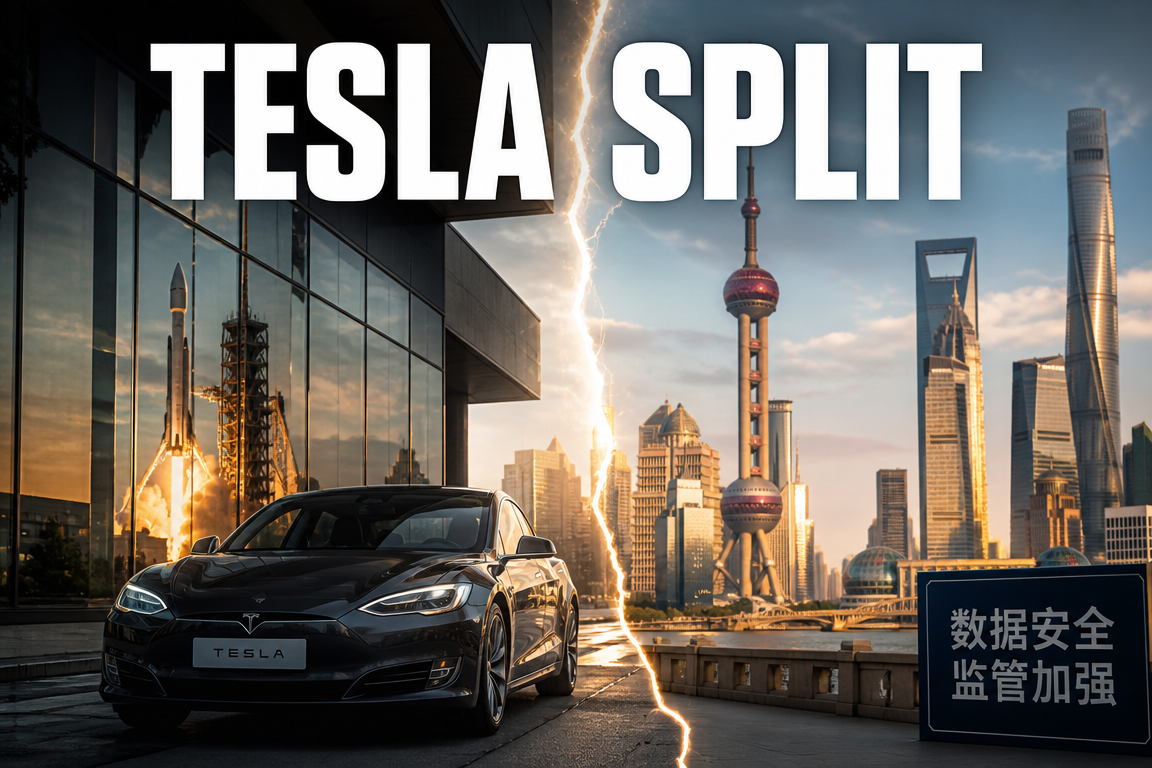
The Wall Street Journal reported that Tesla management had been instructed to prepare for a separation of its China business.
According to the report, the move was linked to a potential merger with SpaceX.
The article outlined three possible paths.
The first was a spinoff.
That would mean separating the China business into an independent legal entity.
The second was a sale.
That would involve transferring the China business or related stakes to a third party.
The third was closure.
That would be the most extreme option, effectively ending the China business.
These options carry very different implications.
A spinoff would resemble restructuring, a sale would resemble strategic withdrawal, and closure would amount to exiting China.
The fact that all three were mentioned suggests this was likely an early-stage review rather than a finalized plan.
4. Elon Musk and Tesla China immediately rejected the report as false
After the report was published, Elon Musk strongly denied it on X.
He said the matter had not even been discussed and called it outright fake news.
He also said news should be assumed false until proven otherwise.
Tesla China also separately denied the report.
In other words, both the CEO and the China operation issued direct rebuttals.
That is a very strong denial on the surface.
However, the market did not stop there.
The reason is that speculation about a Tesla-SpaceX combination is not new.
5. Tesla’s China business is strategically important in quantitative terms
Gigafactory Shanghai is one of Tesla’s core production hubs.
Its annual capacity is estimated at more than 950,000 vehicles.
Historically, it has accounted for more than half of Tesla’s total deliveries at certain points.
China is Tesla’s second-largest market.
As of the first half of this year, it accounted for roughly 18% of Tesla’s revenue.
More than 95% of components are sourced locally from over 400 suppliers.
This is not simply a case of Tesla selling cars in China.
China is tied to Tesla’s manufacturing efficiency, cost structure, supply chain stability, and global delivery volume.
If Tesla were to separate its China business, it would need to restructure not only revenue exposure but also its production model.
Removing Gigafactory Shanghai would be more consequential than exiting the China sales market.
It would fundamentally alter Tesla’s global manufacturing strategy.
6. The market reacted because of the SpaceX merger speculation
When the report first appeared, Tesla shares initially moved higher.
That reaction appeared to reflect speculation about a potential SpaceX combination rather than optimism about a China business separation itself.
After Musk’s denial, sentiment normalized.
However, investors did not fully dismiss the idea.
If the market had viewed a Tesla-SpaceX combination as a clear negative, Tesla likely would have sold off immediately.
Instead, merger-related expectations appeared first.
This suggests that some investors see Tesla not only as an EV company, but as a platform spanning autonomous driving, AI, robotics, energy, and space-related technologies.
7. The Tesla-SpaceX merger idea has surfaced repeatedly
The possibility of combining Tesla and SpaceX has been discussed multiple times in the past.
Some on Wall Street have argued that bringing the two companies together could create a larger technology platform that may appeal to investors.
There is also a skeptical view.
The two businesses differ substantially in operating structure, regulation, shareholder base, and valuation methods.
The pattern has been consistent.
Rumors emerge.
Tesla stock reacts in the short term.
Support and criticism intensify.
The company denies or avoids a direct answer.
The issue eventually fades.
This case appears to follow the same pattern.
However, the WSJ framed it as a exclusive report, and other outlets including Bloomberg also referenced the broader theme, making markets more sensitive.
8. Why did this story emerge now?
The timing is important.
It is unusually sensitive.
SpaceX reportedly went public on June 12, with an IPO price of $135.
The stock is now trading around $108, below the offer price.
Its 52-week range is roughly $107 to $225.
From the peak, it has declined by more than half.
There are also reports that short interest has risen to as much as 35% of float.
High short interest signals significant skepticism about valuation.
At the same time, favorable news can trigger a sharp short-covering rally.
SpaceX is also scheduled to report its first earnings after listing on August 4, U.S. time.
On August 6, up to 901.5 million shares are expected to come out of lockup.
The first earnings release and a large lockup expiration are arriving almost simultaneously.
In that setting, a Tesla merger narrative could help support SpaceX shares.
There is no basis for concluding that SpaceX intentionally leaked the story.
But in a heavily shorted stock, a headline such as a merger rumor can materially increase volatility.
9. SpaceX’s valuation remains unresolved
Analyst views remain highly divided.
Reportedly, 27 analysts have buy ratings and one has a sell rating.
The average target price is around $236.
However, the highest target is $800 and the lowest is $62, which shows a wide dispersion.
This indicates that the market has not reached a clear consensus on fair value.
Space launch, satellite internet, government contracts, defense, and the broader space economy are all part of the valuation discussion, making traditional earnings-based analysis difficult.
Tesla, by contrast, has a more established revenue and earnings model, even though it also has growth narratives in EVs, energy storage, autonomous software, and robotics.
If the two companies were combined, investors would immediately face the question of which valuation framework should dominate.
10. A Tesla-SpaceX combination would raise complex valuation questions
Tesla’s market capitalization is currently estimated at about $1.2 trillion.
SpaceX’s market capitalization is being discussed at roughly $1.42 trillion.
On market cap alone, SpaceX appears larger.
However, on revenue, earnings, and free cash flow, Tesla is the larger and more established business.
This creates a valuation mismatch.
SpaceX is being assigned a higher future-growth premium, while Tesla has the stronger current operating base.
If a merger were pursued, Tesla shareholders would need to ask several questions.
How much dilution would they face?
Would Tesla’s current earnings power be properly reflected?
Would Tesla shareholders end up overpaying for SpaceX’s future growth premium?
If those questions are not resolved clearly, a merger narrative may remain a source of volatility rather than a long-term positive catalyst.
11. JP Morgan sees Chinese regulatory approval as the biggest hurdle
JP Morgan identifies Chinese regulatory approval as the main obstacle to a Tesla-SpaceX merger.
The reason is SpaceX’s defense-related contracts with the U.S. Department of Defense.
If Tesla and SpaceX were combined, China could interpret Tesla vehicle data, factory operations, and supply-chain information as falling under the influence of a U.S. defense-linked company.
From Beijing’s perspective, this would not be a standard M&A issue.
It would involve data security, industrial policy, and geopolitical risk.
There may be data related to around 2 million Tesla owners in China.
That would be in addition to the manufacturing know-how and supplier network connected to Gigafactory Shanghai.
A strong regulatory response from China cannot be ruled out.
That is also why the WSJ report raised the idea of separating the China business.
The logic is that a merger with SpaceX might require Tesla’s China operations to be ring-fenced.
However, as noted above, Gigafactory Shanghai is central to Tesla’s production system.
It is not a simple asset to separate.
12. Morningstar says Tesla shareholders should receive a larger stake in any merged entity
Morningstar focuses more on value allocation than regulation.
If the two companies were combined, it suggested Tesla shareholders should receive between 50% and 68% of the merged entity.
The argument is based on Tesla’s larger contribution in terms of current earnings and operating scale.
Tesla already generates significant revenue, profits, and cash flow.
SpaceX has stronger future growth optionality, but its valuation remains far less certain.
In other words, any merger would need to use an exchange ratio favorable to Tesla shareholders.
If the deal were priced primarily on SpaceX’s higher implied valuation, Tesla holders would likely view it as unfavorable.
13. The key point that other coverage often misses is this
First, the central issue is not just a China business separation, but SpaceX valuation support.
SpaceX is approaching its first earnings release and a lockup expiration.
Short interest is also elevated.
In that context, a Tesla merger narrative is a powerful way to shift market attention.
Second, Tesla’s China business is not a standalone division that can easily be removed.
Gigafactory Shanghai is a core part of Tesla’s manufacturing system.
It supports cost competitiveness, supply-chain efficiency, and global delivery volume.
Separating it is possible in theory, but difficult in practice.
Third, if a merger were to happen, dilution would be the most sensitive issue for Tesla shareholders.
The key question is how much of SpaceX’s future premium Tesla investors should be asked to absorb.
Even if the concept sounds attractive, an unfavorable exchange ratio could make it negative for shareholders.
Fourth, Chinese regulation is not just an approval issue but a data sovereignty issue.
Once Tesla vehicle data and SpaceX’s U.S. defense exposure sit under one corporate structure, China’s response becomes a major variable.
This is not only an auto-sector story; it is part of the U.S.-China technology competition.
Fifth, even if Musk calls it fake news, the market is not fully reassured.
Past guidance on autonomous driving, FSD, and robotaxi timelines has created a gap between expectations and delivery.
Investors still pay attention to Musk’s remarks, but they no longer treat them as fully conclusive on their own.
14. What should Tesla shareholders watch at the $311 level?
With Tesla trading around $311, short-term traders remain vulnerable to rumor-driven headlines.
SpaceX’s earnings release, lockup expiration, and shifts in short interest could all affect Tesla shares indirectly.
Longer-term investors should focus on three areas.
First is Gigafactory Shanghai’s production and delivery trend.
If China weakens, Tesla’s global margin and delivery outlook may also weaken.
Second is the pace of monetization in autonomous driving and AI.
For Tesla to be valued as more than an EV manufacturer, FSD, robotaxi, and Optimus need measurable progress.
Third is whether Tesla’s relationship with SpaceX remains a rumor or develops into a strategic discussion.
As long as that possibility is not fully dismissed, related headlines may continue to drive volatility in Tesla shares.
15. The next major events are SpaceX earnings and lockup expiration
SpaceX is scheduled to report its first post-listing quarterly earnings on August 4, U.S. time.
Questions about a possible Tesla combination are likely to come up.
How Musk responds will shape market interpretation.
On August 6, up to 901.5 million shares are expected to be released from lockup.
That event could materially affect near-term supply and demand.
With short interest elevated, there is both downside pressure and short-covering potential.
The week ahead is therefore not only about SpaceX.
It may also influence Tesla shares, U.S. market sentiment, space-sector valuations, and China-related regulatory risk.
16. In conclusion, the more important point is that the market was prepared to believe the rumor
For now, the company’s position is clear.
Elon Musk and Tesla China have denied the WSJ report.
It would therefore be risky to treat the China business separation story as fact.
But the market reaction matters more.
Investors remain interested in the possibility of a Tesla-SpaceX combination.
That reflects the view that Tesla may eventually be assessed as a broader ecosystem spanning AI, autonomous driving, robotics, energy, and space-related technologies.
Still, expectations alone are not enough.
China regulation, data security, exchange ratios, shareholder dilution, SpaceX valuation, and lockup expiration are the more concrete variables.
Tesla shareholders should treat this not as a one-off rumor, but as a preview of the volatility that could recur if merger speculation returns.
< Summary >
WSJ reported that Tesla may be considering a separation of its China business in connection with a potential merger with SpaceX.
Elon Musk and Tesla China strongly denied the report and called it fake news.
Gigafactory Shanghai is central to Tesla’s manufacturing and supply chain, making a China separation difficult in practice.
The real issue is the overlap of SpaceX earnings, lockup expiration, elevated short interest, and merger speculation.
JP Morgan sees Chinese regulatory approval and data security as the main hurdles, while Morningstar argues Tesla shareholders should receive a larger stake in any merged company.
Tesla investors should focus on China business stability, AI and autonomous driving monetization, and volatility tied to SpaceX.
[Related Articles…]
- Tesla stock and autonomous driving AI valuation analysis
- How surging oil prices affect U.S. equities and the EV market
*Source: [ 오늘의 테슬라 뉴스 ]
– WSJ “테슬라 중국사업 분리” 단독보도, 머스크는 “가짜뉴스” — 근데 왜 하필 지금? $311 주주는?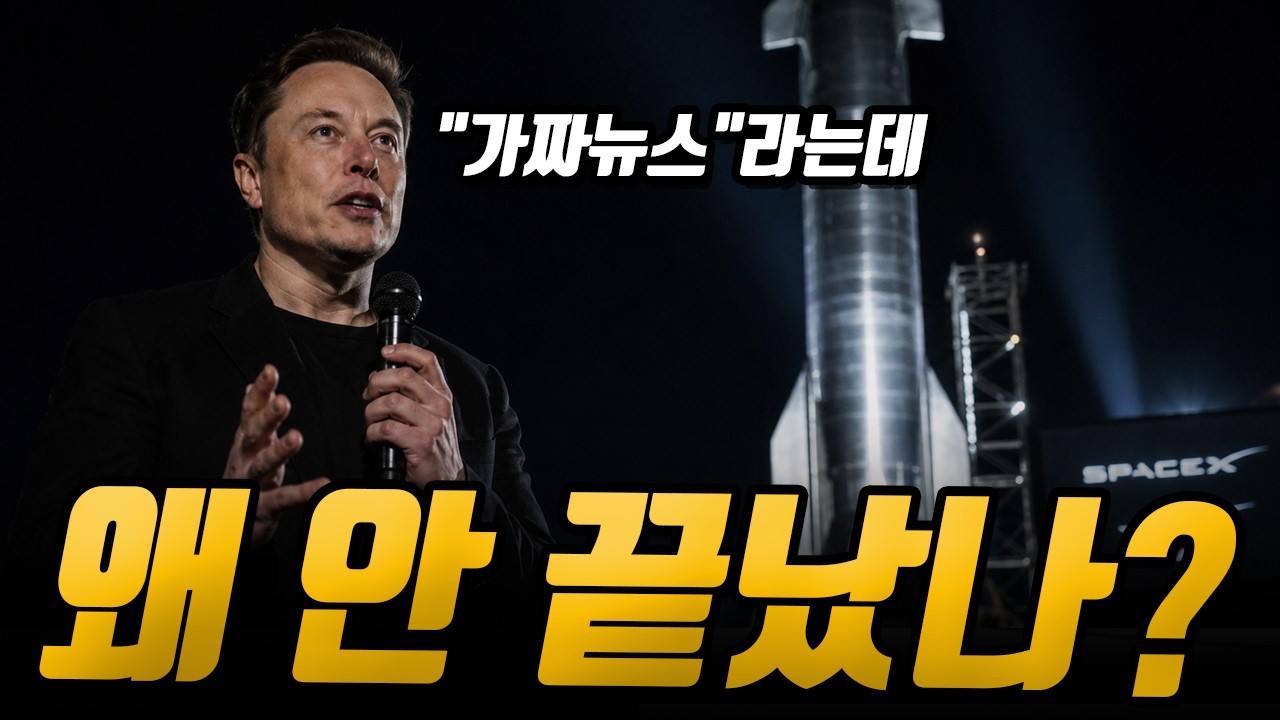
● China-vs-US,AI,Supply-Chain,Power-Struggle
Can China Overtake the United States? The Key Variable for Korea Is Not GDP, but Who Stands Together
The central issue in this debate is not simply whether China’s economy will surpass the U.S. economy.
It is tied to AI leadership, semiconductor supply chains, protectionism, Europe’s manufacturing weakness, China’s overcapacity, and Korea’s survival strategy.
The short answer is that China will find it difficult to dominate the United States, primarily because of the structure of the alliance ecosystem and trust, not because of technology alone.
The United States and the West are not in a comfortable position either.
The U.S.-centered order is weakening, Europe’s industrial base is eroding rapidly, and China is responding with greater flexibility than many expected.
For Korea, the issue is not whether to choose the U.S. or China in simple geopolitical terms, but how to protect key industries and use market opportunities amid supply chain restructuring.
1. Core Question: Can China Really Overtake the United States?
The most common question in the U.S.-China rivalry is whether China will surpass the United States.
China’s perspective emphasizes population scale, manufacturing capacity, domestic demand, and the speed of technological catch-up.
By contrast, U.S. think tanks and Western analysts generally argue that China is unlikely to fully overtake the United States.
The more important issue is not how strong China is on its own, but how many countries are truly willing to stand with China.
The United States has played a central role in the global order for the past 80 years.
Despite its flaws, it has helped shape a system based on democracy, freedom, human rights, rule of law, and market economics.
China, by contrast, has a powerful manufacturing base and a large market, but it remains unclear whether it offers a political model or lifestyle that other countries want to emulate.
In other words, China’s economic expansion and the attractiveness of a China-led global order are separate questions.
2. Why the U.S. Is Better Positioned in the AI Competition
The AI race is not limited to chatbots or generative AI services.
It is a large-scale industrial contest spanning semiconductor design, equipment, materials, manufacturing, cloud infrastructure, data centers, power supply, and critical minerals.
In this structure, the U.S.-aligned ecosystem has a strong division of labor.
The United States leads in AI models, semiconductor design, and big tech platforms.
The Netherlands has ASML and other critical semiconductor equipment capabilities.
Japan is strong in semiconductor materials and precision components.
TSMC in Taiwan and Samsung in Korea are essential to advanced semiconductor manufacturing.
Australia and Canada play important roles in critical minerals and raw materials.
By contrast, China’s ecosystem is more concentrated around China itself.
Even where China has friendly partners, the structure is less balanced than the U.S.-led system, where each participant has distinct strengths and contributes to overall synergy.
In AI and semiconductor supply chain competition, a system built on complementary strengths is more resilient than one centered on a single dominant actor.
3. China’s Weakness: The World Sees China as a Market, Not as a Model to Follow
China evaluates the world through a clear lens.
That lens is the market.
From China’s perspective, selling its products globally is the primary objective.
The problem is that being a great power requires more than selling products well.
It requires trust in times of crisis, confidence in shared growth, and a model that others want to follow.
The United States has been heavily criticized, but in global emergencies such as natural disasters, wars, and financial crises, many countries still expect the U.S. to play a stabilizing role.
It remains uncertain whether China is willing or able to assume that role.
That is a key reason China may struggle to surpass the United States.
China is a strong state, but whether a China-centered order would be perceived as a secure future by other countries remains an open question.
4. What the Russia Gas Pipeline Case Reveals About China’s Negotiating Style
China and Russia currently appear to be close strategic partners.
However, in negotiations over a new gas pipeline from Siberia to China, an important pattern emerged.
Russia reportedly proposed a price of around $250, below usual levels.
China is said to have demanded around $50.
The gap between $250 and $50 is less like normal bargaining and more like pressure applied to a weak counterpart.
China appears to have used Russia’s post-war energy pressure to maximize its own leverage.
From China’s perspective, this may be rational commercial behavior.
But for other countries, it raises a question: would China support partners when they are under pressure?
Alliances are not sustained by interests alone.
They require trust and a willingness to absorb some cost in difficult times.
On that basis, China remains unable to replace the U.S.-led alliance network.
5. The U.S. and Western Order Is Also Under Strain
At the same time, it would be incorrect to assume the U.S. and the West are fully secure.
Many countries now agree that the U.S.-led order is no longer as stable as it once was.
The issue is that no clear alternative has emerged.
The existing order is increasingly questioned, but China’s model is not widely viewed as a superior alternative.
The result is a world with rising dissatisfaction but no clear direction.
Domestic political conflict in the United States is also a major variable.
Trump-style America First policies, protectionism, and tariff conflicts place heavy pressure on allies.
If the U.S. disrupts its own order too aggressively, allies may conclude that the U.S. is no longer fully reliable.
Europe faces similar problems.
Rising political extremism and frequent leadership changes, as seen in the U.K., weaken confidence in the stability of the Western system.
If the rule-based Western order continues to become less predictable, some countries may begin to see China’s system as comparatively more stable.
6. Europe’s Manufacturing Crisis: If German Automakers Falter, Europe Weakens
China’s mass production and what the West describes as overcapacity are directly affecting European manufacturing.
The clearest example is Germany’s auto industry.
Germany is not only strong in large automakers.
Its manufacturing base also depends on a dense network of small and medium-sized suppliers.
If companies such as Volkswagen cut production or consider plant closures, the broader supplier ecosystem is hit as well.
Chinese electric vehicles, batteries, and auto components are putting pressure on the European market.
Because Germany is the core engine of the European economy, weakness in German manufacturing affects the broader outlook for Europe.
In the past, Europe viewed China primarily as a large consumer market.
German automakers generated significant profits by selling premium vehicles in China.
Today, however, Chinese consumers are increasingly choosing domestic EV brands and technologies.
China is no longer just a market for European firms; it is a direct competitor.
7. China’s Overcapacity Is Both a Strength and a Weakness
China has large-scale production capacity in solar panels, electric vehicles, batteries, steel, and chemicals.
On the surface, its manufacturing base is formidable.
But the key question is whether Chinese firms are actually making money.
For example, China accounts for most of the global solar panel supply.
Yet many leading firms are under pressure and operating at a loss.
EV makers are achieving some export gains, but intense price competition in the domestic market is eroding profitability.
This may be less about industrial competitiveness than about a race to secure cash flow.
If Chinese firms eventually eliminate competitors and establish dominant supply positions, the long-term power could be significant.
If, however, both competitors and Chinese firms continue to lose money, the result may be a destructive competition with weak returns for all sides.
The market is still at an inflection point.
That makes this a critical variable for the global economic outlook.
8. China Is More Flexible Than Expected: Working Around Europe’s Barriers
Europe is tightening tariffs and subsidy rules to contain Chinese EV and battery expansion.
For example, subsidies may be restricted or tariffs imposed unless local content requirements or local assembly conditions are met.
Chinese firms are adapting quickly.
They may respond by acquiring factories in Europe.
They can buy closing auto plants or component factories, retain local workers, and produce Chinese-branded EVs locally.
That leaves European governments in a difficult position.
On the surface, the company is Chinese, but production remains in Europe and local employment is preserved.
It becomes difficult to determine whether such investment should be restricted or accepted.
Japanese firms once moved more slowly in localizing production.
Chinese firms, by contrast, are moving quickly to fit the conditions of each market.
This is one of the most important features of China’s economy.
It is not simply about low-cost exports, but about entering markets by exploiting regulatory gaps and local structural weaknesses.
9. Korea Has Been Competing with China for More Than 20 Years
For Korea, China’s rise is not a new issue.
Korean companies have competed with China for more than 20 years.
At first, China imported Korean products.
Then it caught up technologically.
After that, it began to take market share by offering lower prices.
This pattern has repeated across shipbuilding, steel, petrochemicals, displays, batteries, smartphones, and EV components.
Korea therefore has a relatively deep understanding of China.
By contrast, the U.S. and Europe are only now fully recognizing the pace of China’s industrial change.
That difference matters.
Analyses of China written from a U.S. or European perspective may not fully reflect Korea’s reality.
Korea is a country that has long operated close to China through both competition and cooperation.
It therefore requires its own interpretation.
10. The Key Variable for Korea
Korea should not view the U.S.-China rivalry solely as an ideological issue.
It must also assess industrial structure, supply chains, export markets, technology standards, and security risk.
-
First, Korea must protect its position in the semiconductor supply chain.
In the AI race, Korea remains a core country through memory semiconductors and advanced manufacturing capability.
To strengthen its leverage in the U.S.-led supply chain restructuring, Korea must remain a strategically necessary technology partner, not just a production base.
-
Second, Korea should reduce dependence on China without fully decoupling.
China remains a large market and an important supply chain partner.
However, excessive dependence on China in specific industries or raw materials increases exposure to geopolitical risk.
-
Third, Europe’s manufacturing weakness should not be viewed only as an opportunity.
Weakness in Germany and Europe may create openings for Korean automakers, battery makers, and machinery firms.
At the same time, Chinese firms may become more competitive by localizing production in Europe.
-
Fourth, protectionism is a structural shift, not a temporary trend.
Even without Trump-style tariffs, the U.S. and Europe are likely to reorganize strategic industries around domestic priorities.
Korean firms must move from an export-only model to local production, technology partnerships, and supply chain diversification.
-
Fifth, China’s corporate profitability should be monitored closely.
Market share alone is not enough.
Investors need to distinguish between firms expanding share through losses and firms that are building genuine competitive strength.
The Most Important Point Often Missed in Other Coverage
The key to whether China can overtake the United States is not technological catch-up, but whether it can build a trust structure that others are willing to support even at a cost.
Most analysis focuses on GDP, population, manufacturing output, military strength, or patent counts.
But a superpower’s real strength is not determined by numbers alone.
What matters more is whether it can support allies in a crisis, sustain the order even at a cost, and create a system that others want to join.
China has shown extraordinary strength in manufacturing and price competition.
However, cases such as the Russia gas negotiation raise concerns about how China treats even close partners when leverage is available.
That is the central weakness of a China-centered order.
At the same time, the United States also faces risk.
If it pushes America First policies and protectionism too far, it may erode the trust it has accumulated over decades.
In other words, the future global order will depend not only on China’s rise, but also on whether the U.S. can preserve the foundations of its own system.
Conclusion from a Korea Economic Perspective
China does not appear likely to fully overtake the United States in the short term.
China is a powerful manufacturing state, but it still lacks the ability to combine alliances, values, finance, technology, military power, culture, and institutions in the way the United States can.
However, underestimating China would also be a mistake.
China is highly flexible in pricing, localization, acquisitions, regulatory adaptation, and supply chain control.
Even when Europe builds barriers, Chinese firms will likely try to enter through those barriers.
Korea is not simply a country being forced to choose between the U.S. and China.
It is one of the countries that feels the structural shifts in both systems most quickly.
Korea therefore should not adopt U.S., European, or Chinese perspectives without adjustment.
It needs an independent strategy based on industrial structure, export dependence, semiconductor competitiveness, battery supply chains, and geopolitical risk.
Going forward, the most important themes for the economic outlook are U.S.-China rivalry, supply chain restructuring, protectionism, AI leadership, and the profitability of Chinese industry.
Korean companies and investors will need to track all five closely to avoid missing the next inflection point.
< Summary >
Whether China can overtake the United States cannot be judged by GDP or manufacturing scale alone.
The key issue is how many countries are truly willing to stand with China.
The U.S.-aligned ecosystem has strong specialization across AI, semiconductors, equipment, materials, manufacturing, and minerals.
China has powerful manufacturing capacity and market leverage, but it remains limited in offering a trusted order and a model that others want to follow.
Europe’s manufacturing base is under pressure from Chinese EVs and overcapacity.
Chinese firms are likely to bypass trade barriers through local production and acquisitions.
Korea should build its strategy around semiconductor supply chains and export structure rather than simply following the U.S. or China.
[Related Articles…]
- Global Supply Chain Restructuring and Korean Corporate Survival Strategy
- How AI Leadership Is Reshaping the Semiconductor Outlook
*Source: [ 경제 읽어주는 남자(김광석TV) ]
– 중국은 미국을 넘을 수 있을까? 한국이 봐야 할 진짜 변수 | 경읽남과 토론합시다 | 최준영 박사님 [3편]