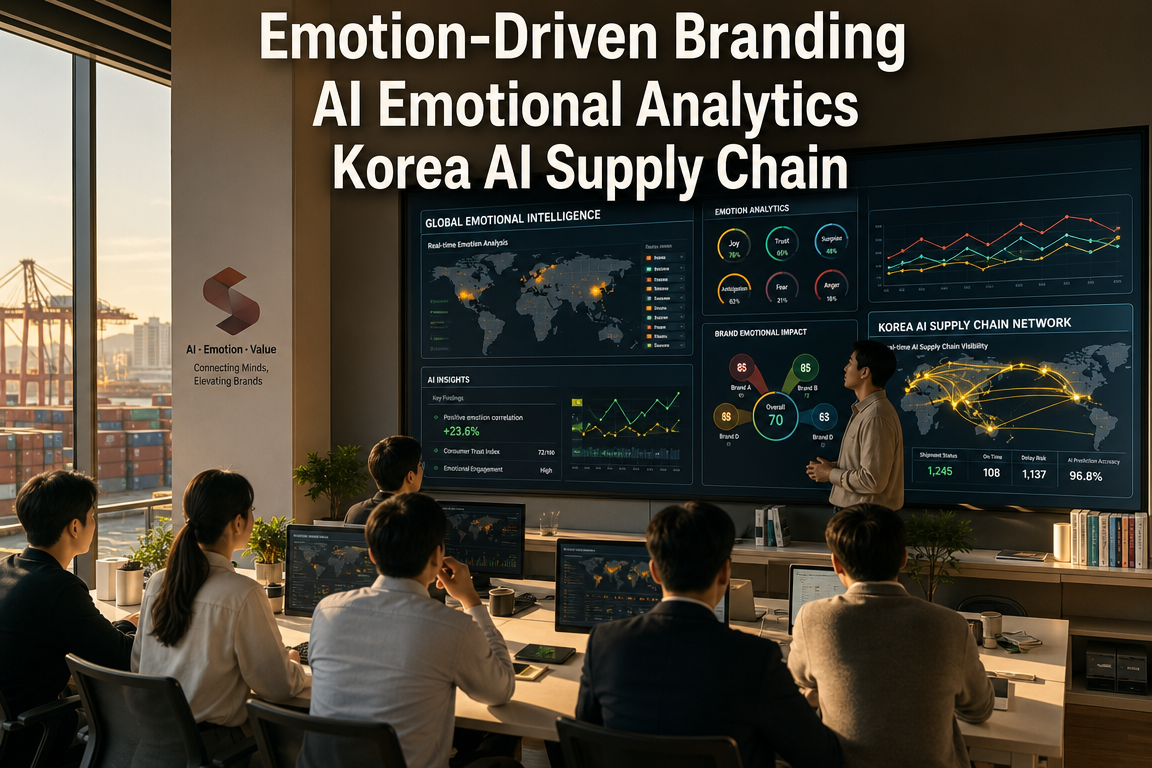
● Emotion-Driven Branding, LVMH, Tiffany, Chanel, Airbnb
Consumers Buy Emotions, Not Products: Brand Strategy Through Emotional Design in LVMH, Tiffany, Chanel, and Airbnb
The core point of this discussion is not simply to “improve marketing.”
It examines why LVMH emphasized the emotional value of “eternal love” when acquiring Tiffany for approximately KRW 17 trillion, why consumers respond more strongly to “peace of mind for a trip to Busan without recharging” than to battery performance alone, and why luxury consumption is linked to the economic cycle, consumer sentiment, and mobility aspirations.
From an economic outlook perspective, corporate value can no longer be explained solely by revenue and operating profit.
How accurately a brand designs customer emotions, and how precisely it uses AI trends to read those emotions, is becoming a key variable in investment strategy and corporate competitiveness.
In short, the market is shifting from product-spec competition to emotional design competition.
1. Why LVMH Acquired Tiffany for KRW 17 Trillion
At the time of the acquisition, LVMH paid approximately KRW 17 trillion for Tiffany.
In most M&A cases, investors first focus on revenue, operating profit, market share, and cost synergies.
However, LVMH highlighted a different rationale: the symbolic value of “eternal love” built since 1886.
This distinction is significant.
LVMH viewed Tiffany not merely as a jewelry company, but as an emotional asset embedded in consumer memory worldwide.
The Tiffany blue box, proposals, engagement rings, and the promise of love are images that cannot be fully explained through product functionality.
Yet consumers buy the emotion associated with them.
Following the acquisition, Tiffany’s jewelry sales reportedly increased significantly, with broadcast coverage citing roughly a fourfold improvement.
This case illustrates a central principle of brand strategy.
Consumers do not buy metal and gemstones; they buy the feeling that their love is exceptional.
2. Brand Identity Is Built Through a Combination of Emotions
Brand identity is not created by logos, colors, or advertising copy alone.
Author Lee Dong-cheol describes brand identity in terms of “complex emotions” or “mixed emotions.”
Love may appear to be a single emotion, but in practice it is a combination of multiple emotional states.
In the broadcast discussion, love was described as the combination of trust and expectation.
When trust in another person is reinforced by positive experiences and favorable events, expectation develops.
As trust and expectation repeatedly combine, they evolve into love.
The same applies to brands.
Chanel centers its identity on female freedom and empowerment.
Dior emphasizes female sensuality and elegance.
These emotions are not created overnight.
Products, advertising, store experience, pricing, sales staff behavior, packaging, and customer communication must all reinforce the same direction.
This is why strong brands are difficult to imitate.
Products can be replicated, but the emotional accumulation stored in consumer memory is difficult to reproduce.
3. Why Numbers Are Forgotten and Stories Remain
Economic news and corporate briefings often contain large amounts of numerical information.
Examples include sales growth rates, battery capacity in kWh, driving range in km, and interest rate changes in bp.
Numbers are important.
However, stories remain in consumer memory longer than numbers.
The broadcast explained this through the concept of “overlap.”
Numerical data and specifications are easily forgotten because similar information keeps repeating.
For example, “this beverage tastes good” is a common claim.
Because many brands make the same statement, consumers struggle to perceive differentiation.
By contrast, a story about how a product was made, by whom, where, and for what purpose carries a unique context.
Stories are memorable because they are contextualized.
Specifications drive comparison; stories drive memory.
To sustain premium pricing in the global economy, firms will need a narrative, not just product performance.
This is the key difference between high-end brands and mass-market brands.
4. Self-Reference: Customers Respond to Brands That Reflect Their Own Emotions
The self-reference effect is a psychological phenomenon in which people respond more strongly to information related to themselves.
A typical example is recognizing one’s name immediately even in a crowded environment.
The same principle applies to brand marketing.
In an era saturated with advertising and product information, telling customers “our product is good” is no longer sufficient.
Brands must instead trigger the customer’s current emotional state.
Questions such as “Are you experiencing this kind of inconvenience lately?”
“Are you stressed by this issue?”
“Are you exhausted by the same routine every day?”
create self-reference in the customer.
The customer then thinks, “This brand understands my situation.”
This is why many high-performing online product pages begin with empathy-based language rather than product specifications.
Effective brands do not lead with features.
They first identify the customer’s inconvenience, fear, fatigue, desire, or expectation.
5. AI Is Making Emotional Measurement and Design Possible
In the past, emotions were considered difficult to observe and measure.
They were viewed as intangible, difficult to manage, and often accidental.
However, the spread of AI trends is enabling emotion to be analyzed through data.
Customer reviews, call center transcripts, social media comments, search terms, purchase conversion rates, and repurchase patterns can all be used to identify the emotional state in which customers encounter a brand.
For example, if a brand is creating disappointment, data can help identify where that disappointment originates.
It may stem from delivery delays, poor value relative to price, customer service issues, or the gap between expectation and actual experience.
The emotional component can then be redesigned.
If trust is lacking, transparency is needed.
If expectation is weak, new experiences and events are required.
If reassurance is insufficient, guarantees, refunds, and customer support systems must be strengthened.
Emotional design is no longer only a matter of copywriting.
It is becoming a convergence of AI-based customer experience analytics and brand strategy.
6. Three Steps to Building a Brand with Strong Emotional Design
The first step in emotional design is identifying the brand’s dominant emotion.
Some brands create trust.
Some create excitement.
Some create stability.
Some create achievement or superiority.
The challenge is that many companies focus only on the product, causing the brand emotion to become fragmented.
If customers cannot clearly identify the emotion associated with a brand, marketing costs rise while effectiveness declines.
The second step is deciding which emotion the customer should receive.
The emotion intended by the company and the emotion actually perceived by the customer can differ.
A company may intend premium positioning, while the customer perceives only high price.
A company may emphasize innovation, while the customer experiences complexity.
A company may intend warmth, while the customer perceives lack of seriousness.
The third step is ensuring that the product and service actually improve the customer’s emotional state.
The broadcast described this as converting negative emotions into positive ones.
Customers often encounter products while feeling tired, depressed, or stressed.
If the brand improves that emotional state, it is more likely to be remembered.
Ultimately, a strong brand does not simply sell products; it changes the customer’s day.
7. Why Battery Companies Must Communicate Emotion, Not Only Performance
Battery technology is complex.
Companies naturally want to highlight energy density, charging speed, driving range, lifespan, and safety.
However, customers often lack both the time and incentive to understand the technical details.
What customers want is not the technology itself, but the emotion created by the technology.
For example, “an EV driving range of 500 km” is information.
“The ability to drive to Busan without worrying about charging” is emotion.
“A comfortable trip to one’s hometown without a mid-route charge” is also emotion.
When the same technology is connected to daily life, it becomes far more powerful.
This applies to EVs, batteries, semiconductors, AI services, healthcare, and financial platforms.
To grow, technology companies must translate technical language into customer emotion language.
In the era of the Fourth Industrial Revolution, the winners are likely to be firms that can explain not only what their technology does, but how it changes the customer’s life.
8. How Airbnb Became an Emotional Brand Beyond Accommodation
On a functional level, Airbnb is a platform connecting property owners with travelers who need accommodation.
But Airbnb did not position itself as a simple lodging intermediary.
Its core message is “Belong Anywhere.”
This is the emotion of feeling at home anywhere.
Travelers may stay in a high-quality hotel abroad, yet still say upon returning home, “There is no place like home.”
That illustrates the strength of the emotional value associated with home.
Airbnb did not compete directly with hotel luxury.
Instead, it sold the feeling of being in a personal space even in an unfamiliar city.
This is the core of brand positioning.
Not every brand needs to be more luxurious or more dramatic.
If it captures the exact emotion customers truly want, it can create an entirely different market.
9. Luxury Consumption and the Veblen Effect: Why Higher Prices Can Increase Demand
Luxury consumption cannot be explained only as vanity.
In economics, the phenomenon in which demand rises as price increases is known as the Veblen effect.
Thorstein Veblen argued that once basic survival needs are met, people allocate resources to conspicuous consumption.
The broadcast divided human needs into survival needs and growth needs.
Survival needs refer to necessities such as food, shelter, and clothing.
Growth needs refer to the desire for a better life, higher status, and a more advanced future.
Luxury goods are closely tied to these growth needs.
Consumers use luxury brands to signal that they belong to a higher social tier.
Just as belonging to a stronger group improved survival chances in prehistoric times, ownership of certain brands can signal social position in modern society.
For this reason, luxury goods are not merely bags or watches; they are symbols of upward mobility.
South Korea, in particular, has a strong orientation toward growth.
Despite war and poverty, education was never abandoned, and intense effort toward upward mobility became deeply embedded in the culture.
This background is also linked to the country’s high luxury consumption tendency.
The more important question, however, is whether luxury consumption actually leads to personal growth.
Brand ownership can create a temporary sense of elevation, but whether it results in real social mobility is a separate issue.
For that reason, governments and society should focus less on criticizing luxury consumption and more on building stronger mobility ladders through education, entrepreneurship, investment, and occupational transition.
10. Brand Expansion Risk: The Central Daily and JTBC Example
The broadcast mentioned risk issues related to Central Daily and JTBC.
The key issue is not a judgment on specific financial conditions, but the relationship between brand expansion and customer emotion.
Companies often pursue acquisitions, expansion, and new business lines as part of growth.
However, if the emotional impact on customers is not evaluated, brand identity can weaken.
Management may interpret this as strategic expansion, while customers may perceive fatigue or distance.
Management may see synergy, while customers may ask why a brand they trusted is moving in a different direction.
Brand expansion is risky if it is evaluated only by financial metrics.
It must strengthen the trust, familiarity, professionalism, and expectation that existing customers associate with the brand.
Otherwise, scale may increase while emotional assets decline.
11. High-Value Customers Seek Growth Partners, Not Just Products
One of the most notable lines in the broadcast was the following point.
High-value customers are not simply buyers of products.
They seek environments and partners that will make them better.
If a brand does not continue to develop and grow, it will struggle to attract customers willing to pay a premium.
This captures the essence of premium branding and high-end strategy.
Customers buying high-priced products do not believe they are merely acquiring a single item.
They expect better taste, higher standards, better relationships, and a more advanced version of themselves.
For that reason, premium brands must grow alongside their customers.
As customers move to higher levels, the brand must deliver a correspondingly higher experience.
If the brand stagnates, customers leave.
Conversely, if the brand continues to grow, customers perceive it as a partner in their own development.
12. The Most Important Point Rarely Covered in Other Content
Most content stops at stating that storytelling matters or that customer emotions must be triggered.
The more important point is that emotion is becoming a new intangible asset in corporate valuation.
First, emotional assets create pricing power.
With the same quality, some brands must discount to sell, while others can raise prices and still sell.
This difference comes not from cost structure but from emotional assets.
Second, emotional assets improve resilience during downturns.
When consumption contracts, customers reduce unnecessary spending.
However, they continue to pay for brands that comfort, develop, or reinforce identity.
Third, emotional design will become more precise in the AI era.
Whereas brands once relied on intuition, they can now analyze customer reviews and behavior data to identify which emotions drive conversion.
Fourth, emotional design capability matters from an investment perspective.
Even if sales are strong, a weak emotional brand may struggle to sustain a long-term premium.
By contrast, companies with strong emotional assets are better positioned for product launches, price increases, and global expansion.
Fifth, not only consumer companies but also AI firms, EV makers, financial platforms, and healthcare companies will need emotional language.
As technology becomes more standardized, customers respond less to features and more to how a service changes their lives.
13. Emotional Design in the Context of the Economic Outlook
The global economy is likely to face low growth, post-high-interest-rate effects, polarized consumption, and AI-driven productivity competition simultaneously.
In this environment, mid-priced brands with vague positioning may face the greatest pressure.
Low-price segments depend on cost competitiveness, while premium segments depend on emotional assets.
The challenge lies with the middle market.
If functional differentiation is limited and emotional differentiation is absent, customers may move either to cheaper alternatives or to more symbolic premium brands.
For this reason, companies should treat brand strategy as a long-term investment rather than a cost.
Emotional design is not limited to a single advertising campaign.
It must be integrated across product development, customer service, pricing, membership, community, offline experience, and AI-based personalization.
From an investor’s perspective, evaluating a company solely on current earnings is insufficient.
Analysts should also assess the emotion the company creates, whether that emotion drives repeat purchases and pricing power, and whether AI is being used to improve the customer experience.
14. Emotional Design Checklist for Practitioners
First, define the primary emotion customers associate with the brand.
Second, verify whether that emotion is consistently delivered across the product and service lifecycle.
Third, check whether the landing page or advertising copy begins with product description or customer empathy.
Fourth, translate technical advantages into customer language and emotional language.
Fifth, define the state customers should reach after purchase.
Sixth, continuously measure the emotion the brand currently creates through reviews and data.
Seventh, if the objective is to raise prices, strengthen emotional value and symbolic assets before adding features.
Eighth, when expanding the brand, ensure that the core emotion valued by existing customers is not damaged.
Ninth, use AI analytics tools to quantify customer complaints and expectations.
Tenth, design the brand so that customers experience a better version of themselves through the brand.
[Related Articles…]
2026 Economic Outlook and Shifts in Consumer Sentiment
How AI Is Reshaping Brand Marketing Strategy
*Source: [ 경제 읽어주는 남자(김광석TV) ]
– 사람들은 제품이 아니라 ‘감정’을 삽니다 | 경읽남X만권당TV | 이동철 작가
● AI Power Shift, Korea Emerges
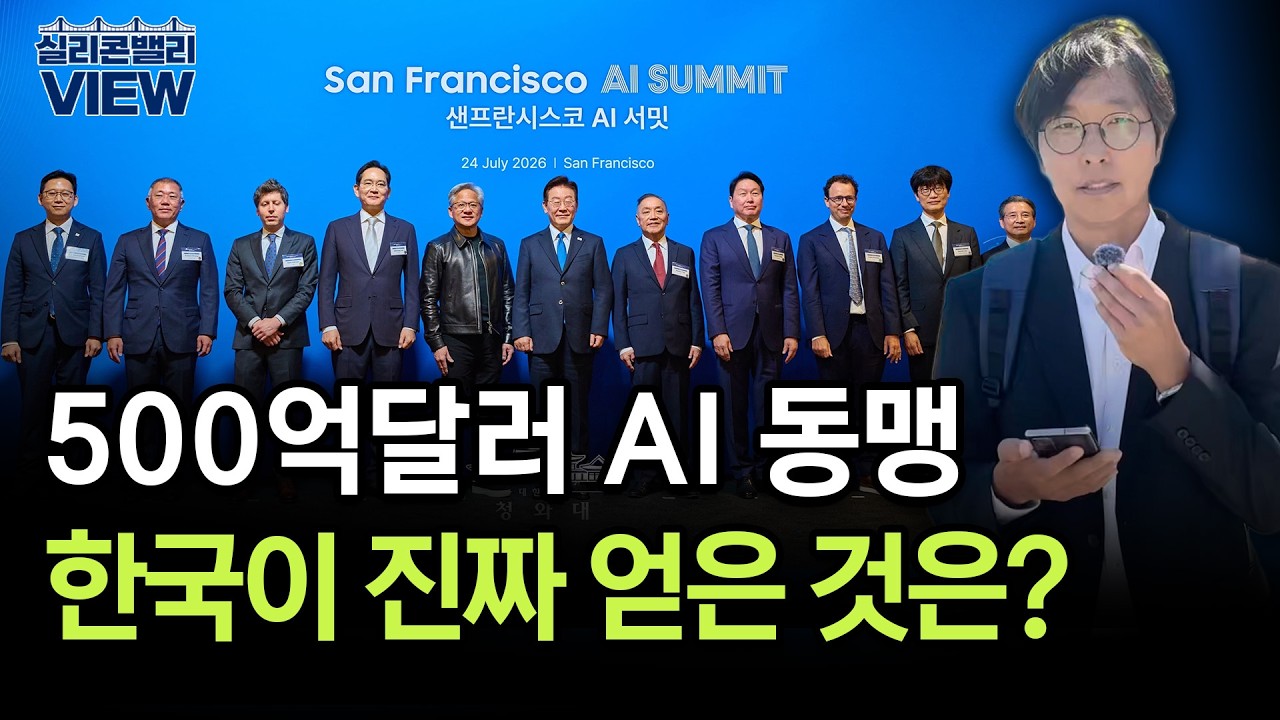
AI Summit Key Takeaways: The More Important Point Than $950 Billion Is That Korea Is Moving Toward the Center of the AI Supply Chain
The largest figure highlighted at this San Francisco AI Summit was an AI semiconductor collaboration worth approximately $950 billion.
However, the real significance goes beyond the size of the announced commitments.
Korea is now moving beyond its role as a component supplier into a core partner across the global AI supply chain, spanning AI semiconductors, data centers, HBM, foundry, advanced packaging, physical AI, robotics, and AI R&D.
In particular, the key questions are why global AI companies such as Nvidia, OpenAI, Anthropic, and Broadcom are seeking closer ties with Korea now, and what Samsung Electronics and SK hynix must overcome to convert this opportunity into actual revenue.
This article summarizes the summit announcements in a news format and separately examines the real investment points and risks hidden behind the numbers.
1. The Core Participants: Global AI Power Brokers Gathered in One Place
The event was held at the Midway Convention Center in San Francisco.
The attendance alone suggests this was not a routine corporate meeting, but a venue to discuss the future order of the AI industry.
- Jensen Huang, CEO of Nvidia
- Sam Altman, CEO of OpenAI
- Dario Amodei, CEO of Anthropic
- Hock Tan, CEO of Broadcom
- Lee Jae-yong, Chairman of Samsung Electronics
- Chey Tae-won, Chairman of SK Group
- Chung Eui-sun, Chairman of Hyundai Motor Group
- Lee Hae-jin, Chairman of Naver
- President Lee Jae-myung
This lineup indicates that the AI industry is no longer driven solely by model performance competition.
The next phase will link AI models, semiconductors, data centers, power infrastructure, cloud services, robotics, automotive, software, and government policy.
In that sense, the AI race is shifting from “who built the smartest model” to “who built the strongest industrial ecosystem.”
2. The Largest Figure: Samsung Electronics and SK hynix’s Long-Term AI Semiconductor Supply Cooperation
The most notable figure at the summit was approximately $950 billion.
In Korean won, this was discussed as roughly KRW 1,390 trillion.
The amount is interpreted as the scale of AI semiconductor-related cooperation that Samsung Electronics and SK hynix may supply to U.S. big tech companies over the next five years.
That said, one point must be clarified: most of this figure should be understood as a long-term purchasing arrangement or cooperation framework rather than a finalized sales contract.
In other words, it is closer to a large-scale supply chain agreement setting a direction for future collaboration than to revenue already booked.
Even so, the significance is substantial.
Given the pace of AI data center expansion, the move by global big tech companies to secure HBM and high-performance memory in advance is commercially realistic.
3. Samsung Electronics: Moving Into the AI ASIC Market Through Broadcom
Samsung Electronics was reported to be entering a cooperation framework with Broadcom valued at around $200 billion.
The key point is that Samsung is not positioning itself as a memory-only supplier.
Samsung is pursuing a strategy that combines HBM, 2-nanometer foundry, and advanced packaging to enter Broadcom’s AI semiconductor production ecosystem.
The AI semiconductor market is currently dominated by Nvidia GPUs.
However, Google, Meta, Microsoft, and Amazon are also investing heavily in proprietary AI chip development.
These customized AI chips are generally referred to as ASICs.
Broadcom is one of the most important players in this market.
Samsung’s cooperation with Broadcom implies an effort to expand beyond Nvidia’s GPU-centric market into the custom AI semiconductor segment used by major cloud providers and platform companies.
At present, TSMC holds a clear lead in advanced foundry manufacturing.
For large customers, reliance on a single supplier such as TSMC creates concentration risk.
That is why a second source is needed.
For Samsung Electronics, this represents a significant opening.
4. Samsung Electronics’ Practical Challenges: Commitments Become Revenue Only After Yield and Qualification
However, a cooperation announcement with Broadcom does not automatically translate into rapid revenue growth.
To produce actual results, Samsung Electronics must meet several conditions.
- Stable 2-nanometer process yield
- Customer qualification approval
- Advanced packaging capability linking HBM and logic semiconductors
- Cost competitiveness at mass production scale
- Demonstrated delivery stability relative to TSMC
In the AI semiconductor market, manufacturing capability matters more than technical announcements.
Customers place greater trust in suppliers that can produce reliably on schedule than in those with superior specifications on paper.
For Samsung, this announcement is therefore a starting point rather than a finish line.
The opportunity is real, but converting it into revenue and share-price momentum will require execution.
5. SK hynix: Strengthening Next-Generation HBM Cooperation With Nvidia
SK hynix was said to be advancing next-generation HBM joint development with Nvidia at the summit.
Including memory supply for Microsoft servers, the total scale of cooperation was described as approximately $750 billion.
SK hynix’s core strength remains HBM.
HBM is the ultra-high-speed memory used alongside GPUs in AI servers.
As AI models grow larger, not only computational demand but also memory bandwidth becomes more critical.
For that reason, HBM is effectively treated as a strategic resource in the AI semiconductor industry.
SK hynix already holds a strong position in Nvidia’s supply chain.
This cooperation appears aimed at extending that position into the next generation of HBM products.
6. SK Telecom’s AI Factory and HBM4: Why a Telecom Company Is Turning Into an AI Infrastructure Player
Another notable point from the announcements was SK Telecom’s AI Factory initiative.
SK Telecom is said to be pursuing an AI Factory with capacity of up to 2GW starting in 2027.
The initiative is expected to include Nvidia’s next-generation platform and SK hynix’s HBM4.
An AI factory is not simply a data center.
It is a large-scale compute infrastructure for training, inference, and enterprise AI deployment.
Where telecom companies once relied on network infrastructure as their core asset, AI compute infrastructure and data centers may become the new strategic assets.
This trend has implications for domestic telecom companies, cloud operators, semiconductor firms, and power infrastructure providers.
7. Data Center Scale: What a 5GW AI Infrastructure Plan Means
The AI data center initiative discussed at the summit was described as having a total capacity of about 5GW.
In GPU terms, this was also framed as roughly 2 million units.
This figure matters for a simple reason.
AI data centers require vast amounts of power, semiconductors, cooling, networking, and server infrastructure.
In other words, AI is no longer only a software business.
It depends on power grids, transformers, cooling systems, memory semiconductors, foundry services, telecom networks, and cloud operations.
When evaluating the AI investment cycle, focusing only on Nvidia stock is insufficient.
HBM supply chains, data center power demand, power infrastructure investment, cloud CAPEX, and broader U.S. technology equity flows must also be considered.
8. Nvidia: Establishing an AI Frontier Lab in Korea
At the summit, Nvidia agreed to send core researchers to Korea to establish an AI Frontier Lab with KAIST.
This is not simply a plan to sell more GPUs.
It indicates an intention to conduct core AI research in Korea.
Jensen Huang is reported to have acknowledged Korea’s research capabilities and industrial base.
He also reportedly noted that Korea could build its own AI systems if GPU access is sufficient.
The relevant concept here is sovereign AI.
Sovereign AI refers to the effort by each country to develop AI systems aligned with its own data, language, and industrial environment.
For Korea, this could become a turning point from being only a strong semiconductor producer to developing Korean-language AI models and industrial AI services.
9. OpenAI: Testing the Next AI Device in Korea
OpenAI is reportedly planning to test its next-generation AI device, co-developed with Jony Ive, in Korea.
This is more important than it may initially appear.
A market selected for early testing often becomes a point of entry for component suppliers, displays, batteries, telecom, software, and content companies.
Korea offers an environment with smartphones, consumer electronics, semiconductors, displays, telecom networks, and application ecosystems.
For OpenAI, Korea is well positioned as a test market for new AI hardware.
If this evolves into a commercial product, Korean companies could move beyond manufacturing into the broader AI device ecosystem.
10. Anthropic and Samsung SDS: AI Talent Development and the Enterprise AI Market
Anthropic confirmed interest in data center investment in Korea and began cooperation with Samsung SDS on AI talent development.
Anthropic is a global AI company best known for Claude.
Along with OpenAI, it is considered a major competitor in the enterprise AI market.
Its cooperation with Samsung SDS could have a direct effect on enterprise AI adoption in Korea.
In particular, it may accelerate AI deployment in manufacturing, logistics, finance, security, and the public sector.
This could help Korean companies move beyond basic chatbot use toward workflow automation and decision-support systems.
11. Broadcom: Semiconductor Support Tailored to Korean AI Models
Broadcom reportedly outlined plans to support semiconductors optimized for Korean AI models.
Broadcom has strong competitiveness in networking semiconductors, AI ASICs, and data center connectivity infrastructure.
In AI data centers, GPUs are not the only critical component.
Network semiconductors and switching technologies are also essential, because large numbers of servers and chips must exchange data rapidly.
Broadcom’s support for Korean AI models would strengthen the link between Korea’s AI infrastructure and global standard technologies.
12. Why the Announcement Should Be Read Cautiously: MOU and LOI Are Not Final Contracts
The most important caution is not to treat the announced figures as finalized revenue.
Much of what was reported remains in MOU or LOI form.
An MOU is a memorandum of understanding.
An LOI is a letter of intent.
Both indicate direction, but neither is equivalent to a final contract.
For example, the SK-Nvidia cooperation appears to be at the letter-of-intent stage, while Samsung-Broadcom cooperation is also best understood as an MOU-level arrangement.
Board approval, customer qualification, final contracts, production schedules, and regulatory procedures still lie ahead.
The same applies to data center investment.
Power availability, site selection, permitting, cooling infrastructure, and grid connection must all be completed before construction can begin.
Nvidia’s research team allocation to Korea, and the scope of the lab’s activities, also remain to be clarified.
In short, the direction is clear, but the figures and timelines still require validation.
13. Why the Story Still Matters: AI Demand Is Real
Even if the announcements are not yet final contracts, the underlying demand is real.
Broadcom’s AI semiconductor revenue continues to grow rapidly.
Nvidia GPU demand remains strong.
Microsoft, Google, Amazon, and Meta continue to expand AI data center spending.
As AI models scale up, the compute resources required for training and inference increase as well.
HBM, high-performance server memory, foundry capacity, advanced packaging, and power infrastructure are at the center of that demand.
Korea’s potential to become a core part of this supply chain is therefore highly relevant from an investment perspective.
14. The Key Point Other Reports Often Miss: The Real Bottleneck Is Power
Many reports focus on the $950 billion figure and on Nvidia, Samsung Electronics, and SK hynix.
However, the real bottleneck is power.
AI data centers consume power on a scale that differs materially from conventional data centers.
A 5GW AI data center cannot be realized with semiconductors alone.
It also requires power grids, generation capacity, transmission networks, transformers, cooling systems, and energy-efficiency technologies.
The bottleneck in AI is likely to shift from GPU supply to HBM supply and then toward power availability.
Investors who focus only on AI semiconductors are therefore seeing only part of the picture.
AI data center power infrastructure, nuclear power, renewable energy, power equipment, and cooling solutions also need to be included in the analysis.
15. Another Major Point: Korea Is Moving From a Component Supplier to an AI Testbed
Several years ago, Korea was viewed primarily as a memory semiconductor supplier rather than a core player in the AI era.
That role appears to be changing.
Korea is increasingly being discussed as a country for AI research, AI device testing, data center construction, industrial AI deployment, and physical AI experimentation.
This shift is significant.
Selling semiconductors alone leaves companies exposed to cyclical volatility.
But when R&D, data centers, software, robotics, automotive, and manufacturing AI are connected, value creation becomes much larger.
If Korean companies use this opportunity effectively, they can move higher in the AI supply chain.
16. Investment Perspective: The Corporate Groups to Watch
After this AI summit, investors should look beyond Samsung Electronics and SK hynix.
Because the AI industry operates as a full value chain, several groups must be monitored together.
① Memory Semiconductor Group
- HBM suppliers
- Server DRAM suppliers
- High-performance NAND-related companies
As AI data centers expand, demand for high-performance memory is structurally increasing.
SK hynix holds a strong position in HBM, while Samsung Electronics is pursuing a strategy that combines HBM, foundry, and packaging.
② Foundry and Advanced Packaging Group
- 2-nanometer foundry
- AI ASIC production
- Advanced packaging competition such as CoWoS
- HBM integration with GPU and ASIC platforms
AI semiconductors cannot be built on design alone.
Actual manufacturing, memory integration, and thermal management through packaging are equally important.
③ Data Center Infrastructure Group
- Power equipment
- Transformers
- Cooling systems
- Server racks
- Networking equipment
Growth in AI data center investment affects not only semiconductors but also power infrastructure.
In U.S. equity markets as well, AI beneficiaries are expanding beyond semiconductors into power and infrastructure companies.
④ Cloud and Enterprise AI Group
- Cloud operators
- Enterprise AI solution providers
- AI security firms
- AI automation platforms
AI investment becomes economically meaningful only when it is deployed in enterprise operations.
The cooperation between Samsung SDS and Anthropic is relevant in this context.
⑤ Physical AI, Robotics, and Automotive Group
- Hyundai Motor Group
- Robotics companies
- Autonomous driving software
- Smart factory solutions
Physical AI refers to AI operating machines and robots in the real world.
It connects automotive, robotics, logistics, and manufacturing.
The presence of Chung Eui-sun, Chairman of Hyundai Motor Group, is consistent with this direction.
17. Korea’s Policy Strategy: Positioning AI Semiconductors, Data Centers, and Physical AI as National Priorities
The summit was not only about corporate cooperation.
The Korean government is also positioning AI semiconductors, data centers, and physical AI as core national priorities.
President Lee Jae-myung’s planned meetings with global AI CEOs and the expected release of a San Francisco AI declaration also carry symbolic weight.
For global technology companies, a national commitment to AI infrastructure matters.
AI data centers are difficult to build without government support.
Power, taxation, permitting, talent, security, and data regulation all require policy coordination.
Ultimately, AI competitiveness strengthens when corporate strategy and national policy move together.
18. Key Milestones to Monitor Over the Next Five Years
The success of this summit will be determined not on the day of the announcement, but over the next five years.
Investors and industry participants should continue to monitor the following:
- Whether the Samsung-Broadcom cooperation becomes a final contract
- Whether Samsung Electronics stabilizes its 2-nanometer process yield
- Whether SK hynix’s HBM4 supply schedule aligns with Nvidia’s roadmap
- Whether AI data center permitting and power procurement proceed as planned
- The scale and scope of Nvidia’s AI Frontier Lab in Korea
- Whether OpenAI’s next AI device testing expands into Korea’s component ecosystem
- Whether Anthropic and Samsung SDS cooperation translates into enterprise revenue
- Whether Korea’s sovereign AI strategy is implemented in actual services
Any meaningful progress on these fronts could create strong momentum for related industries.
Conversely, contract delays, yield issues, or power-permit bottlenecks could lead to a reassessment of expectations.
19. One-Sentence Summary of the Summit
This San Francisco AI Summit signaled Korea’s potential move to a higher position in the AI semiconductor supply chain.
At first glance, the $950 billion figure stands out most clearly.
But the real point is that global AI companies are beginning to view Korea not merely as a memory supplier, but as a partner in research, testing, data centers, and industrial deployment.
Many of the announcements remain at the MOU and LOI stage.
Final contracts, mass production, investment execution, and data center construction still need to be verified.
Even so, the signal is clear: Korea’s position within the global AI supply chain is changing.
< Summary >
The central takeaway from the AI Summit is not the $950 billion figure, but the change in Korea’s role.
Samsung Electronics is seeking entry into the AI ASIC market by combining HBM, 2-nanometer foundry, and advanced packaging with Broadcom.
SK hynix is strengthening cooperation with Nvidia on next-generation HBM and remains at the center of the AI memory supply chain.
Nvidia is advancing an AI Frontier Lab with KAIST, while OpenAI is reportedly planning to test its next AI device in Korea.
However, most announcements remain MOU- or LOI-level arrangements, so confirmation of final contracts and actual revenue is still needed.
The key variables are AI data center power procurement, Samsung Electronics’ yield improvement, HBM4 supply timing, and data center permitting.
The summit may mark a starting point for Korea’s transition from an AI component supplier to a testbed for AI research, data centers, and physical AI.
[Related Articles…]
- AI Semiconductor Supply Chain Shifts and HBM Investment Trends
- AI Data Centers and Power Infrastructure Market Outlook
*Source: [ Maeil Business Newspaper ]
– AI 서밋, 숫자보다 중요한 변화 | 실리콘밸리뷰 | 원호섭 특파원