● BIS Sounds Alarm, Korea Leverage Bomb, AI Slowdown Shock, Oil Spike, Fed Hike Odds 86 Percent
Why the BIS Identified Korea as an “Extreme Case”: Leveraged ETFs, AI Slowdown Debate, Oil at $109, and an 86% Fed Hike Probability
The key point in this New York market briefing is not simply that technology stocks declined.
The core issue is that the AI investment boom expanded too quickly through debt and leverage, and Korean semiconductor stocks and leveraged ETFs became a focus of concern for global financial institutions.
At the same time, surging crude oil prices, U.S. Treasury yields near 5%, an 86% probability of a Fed rate hike, and calls for slowing AI development are all pressuring U.S. equities and global assets simultaneously.
In particular, the BIS’s reference to the Korean market as an “extreme case” is highly unusual.
The concern centers on leveraged ETFs, call options, and ELS structures concentrated in Samsung Electronics and SK hynix, which are amplifying stock volatility and warrant close attention from domestic investors.
1. New York Market Overview: Technology Stocks Fall Sharply, Semiconductor Losses Deepen
U.S. equities weakened from the opening bell, led by technology stocks.
At one point before the open, Nasdaq 100 futures fell about 1.87%, S&P 500 futures about 0.8%, and Dow Jones futures about 0.47%.
After the open, the Nasdaq continued to trade down more than 1%, with semiconductors and data center-related names under the most pressure.
- Nvidia fell more than 3% intraday.
- Micron declined by roughly 7%.
- AMD and Intel each fell by around 6%.
- Semiconductor equipment names such as Broadcom, Lam Research, and Applied Materials also declined.
- Data center hardware names including Dell and SanDisk also weakened.
Not all technology stocks declined.
Microsoft, Google, Meta, and Apple were relatively resilient or higher.
Software, cybersecurity, healthcare, and consumer staples also held up comparatively well.
The market is currently reducing exposure to AI semiconductors and infrastructure names while reallocating toward cash-generating platform companies and defensive sectors.
2. Why the AI Slowdown Debate Hit Technology Stocks
The immediate catalyst for the tech selloff was commentary from within the AI industry suggesting that development should slow.
Anthropic CEO Dario Amodei argued that AI model progress needs to be moderated to allow time for safety safeguards.
He proposed independent safety evaluators within AI companies, shared standards among major AI firms, and international coordination.
OpenAI CEO Sam Altman and Elon Musk also expressed similar concerns.
The market reacted because a slower pace of AI development could delay data center investment.
If data center spending slows, demand for GPUs, memory, servers, power equipment, cooling systems, and networking equipment may also moderate.
As a result, semiconductor and hardware names that have been the primary beneficiaries of the AI investment cycle faced immediate selling pressure.
Markets had been assigning elevated valuations on the assumption that AI growth would continue at a rapid pace.
When AI leaders began talking about slowing the pace, investors started revising forecasts for AI growth and capital expenditures.
3. Crude Oil Above $109: Inflation Concerns Rise Again
Another major source of market stress was the sharp rise in crude oil prices.
Brent crude moved to around $109 per barrel, while WTI rose to about $104 per barrel.
Over the weekend, several developments in the Middle East intensified supply concerns.
- Talks on transit issues through the Strait of Hormuz were delayed.
- Saudi Arabia’s east-west pipeline was taken offline after a drone attack.
- The Houthis seized Perim Island, a strategic location near the Red Sea, increasing shipping concerns.
The Saudi east-west pipeline is a key alternative route that bypasses the Strait of Hormuz.
Its maximum transport capacity is around 7 million barrels per day, and it has recently carried about 5 million barrels per day.
If the pipeline remains offline for an extended period, as much as 4% of global oil supply could be further disrupted.
Some analysts expect rapid repairs, but others see a full restoration taking 5 to 6 weeks.
Bernstein said that if the supply disruption lasts, Brent could rise to $120 to $150 per barrel in a severe-case scenario.
Rising crude prices affect more than energy stocks.
They can push up transport costs, airfares, logistics costs, heating expenses, and food prices, reviving inflation pressures.
This time, prices for refined products such as diesel and heating oil are rising even faster than crude.
Diesel price gains directly affect trucking, logistics, agriculture, and industrial production costs, broadening consumer price pressure.
4. U.S. 10-Year Treasury Yield Near 5%: Pressure on Growth Valuations
The U.S. 10-year Treasury yield rose to around 4.98%, approaching the 5% threshold.
Although the daily move was modest, the absolute level is what matters.
From below 4% earlier this year, the 10-year yield has risen by nearly 1 percentage point in about six months.
If the 10-year yield holds above 5%, several pressures emerge.
- Higher discount rates reduce the valuation support for technology and growth stocks.
- Corporate bond issuance and borrowing costs rise.
- Higher mortgage rates could delay any recovery in the U.S. housing market.
- As bonds become relatively more attractive, risk appetite for equities may weaken.
In short, 5% is not just a number; it is a psychological level that could reset equity multiples lower.
This is especially relevant for sectors such as AI, semiconductors, cloud computing, and data centers, where much of the future growth expectation is already embedded in valuations.
5. 86% Probability of a Fed Rate Hike: What Matters in This FOMC Meeting
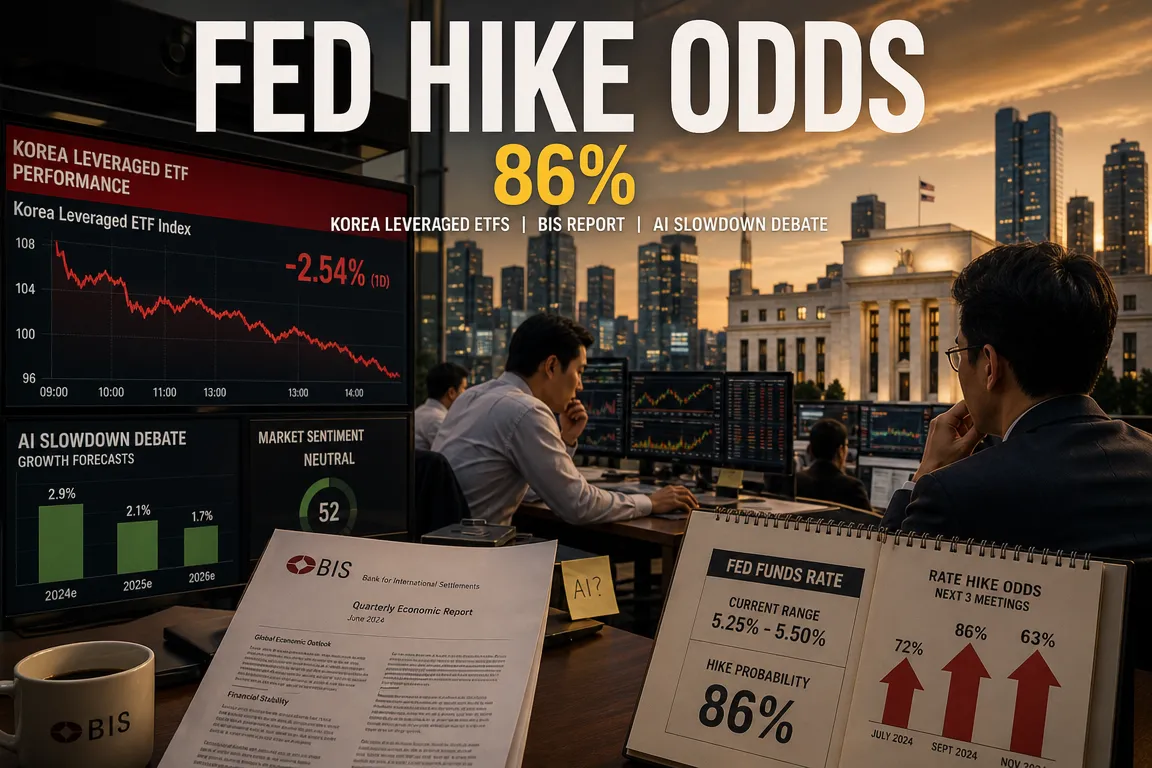
The market is pricing roughly an 86% chance that the Fed will raise the policy rate by 25 basis points at this FOMC meeting.
The probability of holding rates steady remains around 13% to 14%, but the base case is clearly skewed toward a hike.
Last week’s U.S. August CPI report reinforced this view.
The headline CPI was broadly in line with expectations, but core CPI excluding food and energy came in above forecasts.
Higher core CPI suggests that the inflationary impact is not limited to oil prices, but is also spreading through services and transportation costs.
Subcomponents also showed increases in gasoline, diesel, airfare, and transportation costs.
For this FOMC meeting, what matters most is not the hike decision itself, but the Fed’s interpretation.
- Whether the Fed views the oil price rise as temporary.
- How strongly it worries that higher oil prices could feed into core inflation.
- The extent to which additional rate hikes are reflected in the dot plot.
- How growth, unemployment, and inflation forecasts are revised in the economic projections.
If the Fed describes the oil spike as temporary, the market reaction could be limited.
If, however, it emphasizes the risk of renewed inflation, Treasury yields and the dollar could rise further, adding pressure on technology stocks.
6. BIS Report: The Weak Link in the AI Rally Is Debt
The Bank for International Settlements said in its latest report that the weak point in the AI rally is its financing structure.
It estimated that debt raised by technology companies in private credit markets increased from about $22 billion in 2010 to more than $1 trillion in 2025.
The share of private credit attributable to tech companies also rose from 22% to 44%.
The BIS’s concern is not AI investment itself, but the structure of the funding behind it.
- Some AI-related transactions are occurring off balance sheet.
- Capital is increasingly circulating between companies.
- It is becoming harder to identify where the actual risk is concentrated.
- Corporate bond issuance and borrowing by large technology companies may compete with Treasury supply.
If AI firms continue to increase leverage, they could compete with government bond issuance and put upward pressure on overall interest rates.
In other words, AI investment may support growth expectations while simultaneously acting as a source of higher rates in financial markets.
The BIS said the market has not yet entered a phase of broad stress.
However, it warned that in a high-rate environment, the combination of AI investment and rising debt needs careful management.
7. Why the BIS Described Korea as an “Extreme Case”
The most notable part of the report was the BIS’s separate reference to the Korean market.
The BIS described leveraged ETFs and structured products concentrated in Samsung Electronics and SK hynix as an “extreme case” that has increased volatility in Korean equities.
The key issue is the mechanical rebalancing structure of leveraged ETFs.
Leveraged ETFs generally aim to deliver twice the return of the underlying asset.
To maintain that target, they must buy more shares when prices rise and sell more when prices fall.
This amplifies gains in rising markets and deepens losses in declining markets.
According to the BIS, the size of leveraged products linked to Samsung Electronics, SK hynix, and Micron expanded from less than $100 million in mid-last year to more than $38 billion by June this year.
That implies nearly 380-fold growth in less than a year.
It also estimated that if SK hynix moves 10%, the resulting mechanical trading from these products could reach as much as $5 billion.
Given that daily trading value in SK hynix was below $10 billion at the time, this implies that mechanical rebalancing alone could generate buying or selling pressure equivalent to nearly half of daily turnover.
The BIS also suggested that this mechanical trading may have added roughly 4 percentage points of volatility to a 10% move in the stock.
8. Leveraged ETFs Are Not the Only Issue: Call Options and ELS Move in the Same Direction
The BIS identified three main channels that may have increased volatility in the Korean market.
1) Mechanical rebalancing in leveraged ETFs
When stock prices rise, leveraged ETFs must buy more shares to maintain target exposure.
When stock prices fall, they must sell more shares.
This structure automatically creates momentum-driven trading.
2) Concentration in call options
In SK hynix, call options were at one point estimated to outnumber put options by nearly 100 to 1.
Call options are bets on higher prices.
Financial institutions that sell these options face losses if the stock continues to rise.
To hedge that risk, they buy the underlying stock as prices rise.
As call buying increases, hedging demand from financial institutions can feed back into the stock price.
3) ELS and ELB structured products
ELS and ELB products linked to Samsung Electronics and SK hynix can also increase volatility.
These products pay a pre-agreed return if certain conditions are met.
To meet those obligations, financial institutions may need to buy or sell large amounts of stock around specific price levels.
In effect, leveraged ETFs, options, and ELS products can all operate in a way that causes more buying as prices rise and more selling as prices fall.
This is why the BIS viewed Korea as an extreme case from a global perspective.
9. The Main Point Often Missed Elsewhere: Korean Semiconductor Stocks Cannot Be Judged on Earnings Alone
Most reports discuss Samsung Electronics and SK hynix mainly in terms of HBM, DRAM pricing, AI server demand, and Nvidia’s supply chain.
These factors are important.
However, the BIS report highlights a broader point: stock prices are not driven by fundamentals alone.
Korean semiconductor stocks are now exposed to amplified volatility not only from earnings expectations, but also from derivatives, leveraged ETFs, option hedging, and ELS rebalancing.
That means even on days when SK hynix rises on stronger earnings expectations, leveraged products can intensify the move through follow-on buying.
Conversely, when negative news hits, mechanical selling from leveraged ETFs and option hedging can deepen losses.
For short-term traders, this may look like an opportunity, but for long-term investors it makes risk management more important.
Given the large weight of Samsung Electronics and SK hynix in the KOSPI, volatility in these two names translates directly into volatility for the broader Korean market.
Investors in Korea now need to monitor not only semiconductor fundamentals, but also ETF flows, derivatives positioning, and retail leverage concentration.
10. Key Economic Calendar This Week: The FOMC Is the Main Event
The most important market event this week is the FOMC.
On Wednesday U.S. time, which is Thursday morning in Korea, the Fed will release its policy decision, dot plot, and economic projections.
Tuesday
- ADP employment data will be released.
- The New York Fed manufacturing index will be published.
- A 20-year U.S. Treasury auction is scheduled.
Weak demand at the long end could add further upward pressure on Treasury yields.
Wednesday
- U.S. retail sales will be released.
- The FOMC policy decision will be announced.
- The dot plot and economic projections will be published.
- The Fed Chair will hold a press conference.
Strong retail sales could strengthen the case for tighter policy.
Conversely, signs of consumer slowing could intensify debate over the economic cost of further tightening.
Thursday
- Initial jobless claims will be released.
- Housing starts will be published.
- The Philadelphia Fed manufacturing index will be released.
- Existing home sales will also be reported.
The key question is how much pressure higher mortgage rates are placing on the housing market.
Friday
- U.S. industrial production data will be released.
- Fed Vice Chair Michelle Bowman is scheduled to speak.
Bowman is generally viewed as a hawkish policymaker, so her comments on the possibility of additional hikes after the FOMC will be important.
11. Major Central Banks Are Also Moving on Rates
During this period, rate decisions are also coming from major central banks beyond the United States.
- The Bank of Korea raised its policy rate from 2.75% to 3.00%.
- The Bank of Canada held its policy rate at 2.25%.
- The European Central Bank raised its deposit rate from 2.25% to 2.50%.
- The Fed is widely expected to raise rates by 0.25 percentage point at this meeting.
- The Bank of Japan is also being discussed as a possible rate hike candidate from 1.00% to 1.25%.
If the Bank of Japan raises rates, the focus will shift to yen strength and the unwind of carry trades.
However, some analysts argue that a BoJ hike is already partly priced in, so a sharp post-announcement move in the yen remains uncertain.
A renewed global rate-tightening cycle would reduce liquidity worldwide and weigh on risk assets.
12. Key Checkpoints for Investors
- Whether Brent crude moves above $110 and toward $120.
- Whether the U.S. 10-year Treasury yield holds above 5%.
- The extent to which the dot plot reflects the possibility of additional Fed hikes.
- Whether the AI slowdown debate leads to actual cuts in data center investment.
- Flow changes in semiconductor names such as Nvidia, Micron, AMD, and SK hynix.
- Whether leverage concentration in leveraged ETFs and derivatives eases in the Korean market.
The current market is not simply undergoing a correction; it is a phase in which expectations for AI growth are colliding with the reality of higher rates.
With oil prices and inflation concerns adding pressure, the Fed’s policy options are narrowing.
In the near term, the FOMC outcome is the most important event, but over the medium term the key question is whether the AI investment cycle can absorb the burden of higher debt.
< Summary >
The BIS identified the Korean market as an “extreme case,” arguing that leveraged ETFs, options, and ELS products concentrated in Samsung Electronics and SK hynix are increasing stock volatility.
The AI industry slowdown debate has weighed on semiconductor and data center-related stocks.
Crude oil rose to around $109 per barrel on Middle East supply concerns, renewing inflation worries.
The U.S. 10-year Treasury yield has approached 5%, while the market is pricing about an 86% probability of a 25 basis point Fed rate hike.
This week’s main event is the FOMC, but the more important issue is how the Fed interprets rising oil prices and the risk of renewed inflation.
Korean investors should monitor not only semiconductor fundamentals, but also the extent to which leveraged ETF and derivatives flows are amplifying stock moves.
[Related Articles…]
- AI Investment Cycle and Data Center Infrastructure Shifts
- Semiconductor Volatility and the Global Market Outlook
*Source: [ Maeil Business Newspaper ]
– BIS “한국은 극단적 사례”ㅣ레버리지 ETF가 반도체주 흔든 이유ㅣAI 속도조절론에 기술주 급락ㅣ유가 108달러 돌파ㅣFed 인상 확률 86%ㅣ홍혜진의 뉴욕브리핑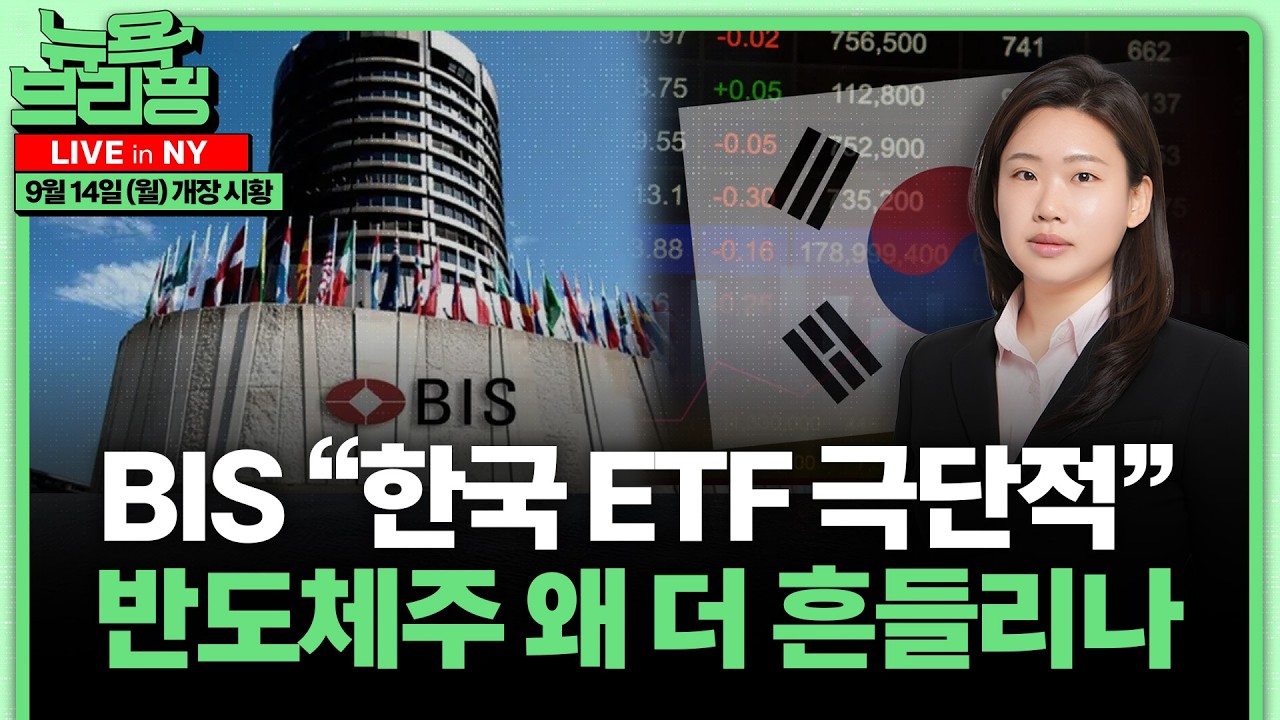
● Trump War Goals Shift, No Endgame
Trump’s Difficulty in Ending the War: When Objectives Keep Shifting, the War Does Not End
The core issue is straightforward.
A war ends only when the objective of victory is clearly defined.
However, the sequence described in the source suggests that Trump’s war objectives shifted repeatedly: regime change, nuclear elimination, missile launcher removal, reopening the strait, and demands for surrender.
This report examines why such objective drift prolongs conflict, how it affects crude oil and market volatility, and how it may also influence the AI sector and the global economic outlook.
It also highlights two frequently overlooked factors: the absence of clear termination conditions and how markets respond when there is no exit path acceptable to the other side.
1. Key News Summary: War Ends When the Objective Is Achieved
The most important statement in the source is attributed to President Lincoln:
“War ends when its purpose is achieved.”
This principle is essential for understanding the current situation.
War is not resolved simply by inflicting greater damage on the opponent.
The decisive issue is whether the original objective has been met.
For example, if the objective is to neutralize nuclear facilities, those facilities must be destroyed or placed under verifiable control for a credible end-state to emerge.
If the objective is to reopen a strait, shipping flows, insurance costs, and crude transport must normalize.
Problems arise when the objective keeps changing.
The goalposts keep moving.
Even if military operations appear successful, the conflict cannot be politically concluded, and negotiators cannot define what the other side must concede.
2. Timeline Based on the Source: How Trump’s War Objectives Shifted
The following summary is based on the flow of the source provided by the user.
| Date | Declared Objective | Key Shift | Market Interpretation |
|---|---|---|---|
| February 28 | Regime change in Iran, nuclear elimination, missile launcher removal | Maximum objectives set | Higher risk of full-scale conflict |
| April 12 | Nuclear issue as the sole focus | Regime change and missile issues recede | Partial repricing of negotiation potential |
| June | Priority on reopening the strait | Shift from military goals to logistics and energy flow | Greater sensitivity in oil and shipping markets |
| August 17 | Iran must raise the white flag | From measurable conditions to a demand for submission | Termination criteria become unclear |
The most important point is the final stage.
“Raise the white flag” is a forceful message, but in negotiations it can become an ambiguous objective.
That is because it is difficult to measure what surrender actually means.
Does it mean regime collapse, nuclear abandonment, reopening the strait, or suspension of missile development?
When the objective becomes a demand for attitude rather than a concrete condition, ending the war becomes more difficult.
3. Why Trump Has Difficulty Ending the War
First, the victory condition keeps changing.
In war, the most dangerous problem is not a large objective. It is an unclear one.
If regime change is the goal, the opposing regime must fall.
If nuclear dismantlement is the goal, there must be specific agreements covering facilities, fissile material, and inspection mechanisms.
If reopening the strait is the goal, maritime transit and crude exports must stabilize.
When these objectives keep shifting, the military, diplomatic teams, allies, and financial markets cannot operate from the same framework.
Second, the opponent has no credible exit that preserves face.
Negotiation is not simply a process of total surrender.
It is the process of giving the other side a pathway to retreat without appearing to have been completely defeated.
A demand such as “raise the white flag” is difficult for the opposing leadership to accept.
This is especially true for a state such as Iran, where regime survival logic is strong and visible capitulation is politically costly.
Third, domestic political messaging conflicts with real termination conditions.
Strong language may be effective in domestic politics.
In international negotiations, however, concrete conditions matter more than rhetoric.
A leader may need to promise “complete victory” to supporters while accepting a partial settlement at the negotiating table.
The wider this gap becomes, the harder it is to end the war.
Fourth, the objective shifts from military to economic considerations.
If the initial focus was regime change, nuclear issues, and missiles, and later the priority becomes reopening the strait, the center of gravity has moved from military victory to energy supply chains and oil price stability.
Once war becomes an economic issue, the criteria for ending it become more complex.
4. The Key Point Often Missed in Other Coverage: Without Termination Conditions, Markets Keep Swinging
Many reports focus on strikes, military clashes, or leader statements.
However, markets are mainly focused on one issue:
When and under what conditions does it end?
If the end-state is not visible, financial volatility is unlikely to ease materially.
Oil prices may swing sharply in the short term, while safe-haven demand rises and gold, the dollar, and other defensive assets move more sensitively.
When strait risk rises, one of the first indicators to move is not necessarily crude prices, but maritime insurance, freight rates, and shipping diversion costs.
General media coverage often focuses only on crude oil, but in practice, companies feel the impact first through insurance and transport costs.
As these costs accumulate, they can feed into import prices and broader inflation pressure.
In other words, the real cost of a war that does not end may be the supply-chain risk premium attached to the entire economy rather than a single missile strike.
5. Global Economic Outlook: How Prolonged Conflict Affects the Economy
The energy market reacts first.
When the Iran issue is linked to the strait, the market immediately prices in higher oil risk.
In particular, the Strait of Hormuz is a critical passage for global crude and LNG shipments.
Even if the strait is not fully blocked, the perception of risk alone can push up insurance and freight costs.
In that case, the increase in oil prices may reflect not physical shortages but a risk premium.
Inflationary pressure may rise again.
Higher energy prices increase transport costs, electricity costs, and petrochemical input costs.
This may pass through to consumer prices after several months.
For central banks, this could make it more difficult to accelerate rate cuts.
Geopolitical risk therefore also affects U.S. rate expectations.
Financial markets may oscillate between risk assets and safe havens.
If the conflict appears likely to end after limited strikes, equity markets may recover quickly.
However, if objectives continue shifting and termination conditions remain unclear, investors are likely to reduce risk exposure.
In that environment, demand for the dollar, gold, and short-duration government bonds may increase.
By contrast, emerging market currencies and higher-beta equities may come under pressure.
The Korean economy would also be directly affected.
Korea has a high dependence on energy imports.
Rising crude prices may weigh on the trade balance and the won.
Sectors such as airlines, shipping, petrochemicals, refining, battery materials, and semiconductor logistics may be especially sensitive.
At the same time, defense, energy security, and cybersecurity-related companies may attract near-term attention.
6. Connection to the AI Trend: War Also Affects the AI Industry
Today’s AI industry is not just a software sector.
It is a large physical industry that depends on data centers, semiconductors, power grids, cooling systems, and cloud infrastructure.
Rising geopolitical risk can affect AI through three channels.
First, electricity costs may rise.
AI data centers consume large amounts of electricity.
If oil and LNG prices increase, power generation costs may rise as well, increasing operating expenses for cloud and AI providers.
Second, semiconductor supply-chain risk increases.
AI chips depend on supply chains spanning the U.S., Taiwan, Korea, Japan, and the Netherlands.
Extended disruption in the Middle East may affect transport, raw materials, and air-freight costs.
Third, demand for defense AI and cybersecurity may rise.
As conflict extends, demand increases for drones, satellite intelligence, cyber defense, and automated analytical systems.
AI is therefore likely to be treated more strongly as both a commercial technology and a security asset.
AI trends should not be viewed only through the lens of generative model competition.
Energy security, semiconductor supply chains, defense AI, and cybersecurity must also be considered.
7. Key Signals to Watch to Assess Whether the War Can End
To assess the probability of an end-state, the focus should be on concrete signals rather than rhetoric.
The first signal is whether objectives return to measurable conditions.
For example, negotiation becomes more plausible if the language shifts from “surrender” to verifiable terms such as nuclear inspections, uranium enrichment limits, or facility verification.
The second signal is whether indicators linked to the strait and shipping stabilize.
Oil prices alone may be too slow an indicator.
Maritime insurance, tanker freight, port delays, and increased use of alternative routes should also be monitored.
The third signal is whether both sides adopt language that preserves face.
An end-state becomes more likely when one side can claim victory while the other can claim sovereignty was preserved.
The fourth signal is whether third-party mediation becomes formalized.
In the Middle East, third-party channels are highly important.
If direct talks are difficult, intermediaries such as Oman, Qatar, European states, or international organizations may become the communication channel.
The fifth signal is whether the market risk premium declines.
If oil prices fall, gold stabilizes, and dollar strength eases, markets may be signaling lower expectations of conflict escalation.
8. Economic Impact by Scenario
Scenario 1: Limited conflict followed by negotiations
This is the most market-friendly outcome.
In this case, oil prices may stabilize quickly and equity markets could recover.
However, if the settlement is weak, tensions could return at any time.
Scenario 2: Prolonged low-intensity conflict
This is the most burdensome scenario.
Even without full-scale war, repeated drone attacks, missile launches, maritime threats, and cyberattacks would keep the environment unstable.
In that case, the global outlook would remain fragile, and companies would manage inventories and logistics more conservatively.
Scenario 3: Escalation of strait risk
This is the most dangerous economic scenario.
If transit through the Strait of Hormuz is genuinely threatened, oil, LNG, and freight costs could all rise simultaneously.
That would increase the risk of renewed inflation and delay central bank easing.
Scenario 4: Resurgence of regime change as the objective
If regime change returns as the core objective, ending the war becomes much more difficult.
The opposing side is likely to resist more strongly for survival, reducing the scope for compromise.
This scenario would likely increase market volatility the most.
9. What Investors and Companies Should Monitor Now
Investors should not focus only on crude prices, but on the reason behind the move.
Markets will react differently depending on whether the driver is actual supply disruption or a geopolitical risk premium.
Foreign exchange should also be monitored.
If Middle East risk rises, the dollar may strengthen and pressure the won.
Companies should review logistics and energy costs.
Firms with heavy reliance on maritime shipping should assess insurance costs, freight rates, and delivery delays.
AI-related firms should place greater emphasis on electricity costs and data-center location.
AI competitiveness depends not only on GPU access but also on stable and affordable power.
Defense and cybersecurity sectors may attract short-term interest.
However, stocks that rise on geopolitical headlines may remain highly volatile, so chasing momentum warrants caution.
10. Conclusion: The Core Problem Is Not Weakness, But Objective Drift
The key message in the source is not that Trump lacks the military capability to end the war.
The real issue is that the definition of victory keeps changing.
When regime change is followed by nuclear demands, then by reopening the strait, and finally by demands to raise the white flag, neither the opponent, allies, nor markets can identify what constitutes the end of the conflict.
To end a war, clear conditions are more important than forceful language.
Whether the condition is nuclear inspection, reopening the strait, missile limits, or security guarantees must be explicit.
And the other side must have a politically acceptable exit path.
Without these conditions, the war is likely to continue, and the effects will extend into oil prices, inflation, exchange rates, market volatility, and AI supply chains.
< Summary >
War ends when its objectives are achieved.
Based on the source, Trump’s objectives shifted from regime change to nuclear dismantlement, missile removal, reopening the strait, and demands for surrender.
When objectives shift, the victory condition becomes unstable and negotiations become more difficult.
The central issue is not military power but the absence of a clear termination framework.
Oil prices, inflation, FX, and market volatility are highly sensitive to this uncertainty.
The AI sector may also be affected through power costs, semiconductor supply chains, defense AI, and cybersecurity.
Going forward, the key indicators to watch are not rhetoric but nuclear inspections, shipping conditions, insurance rates, mediation channels, and the decline in the risk premium.
[Related Articles…]
- Oil Outlook and Geopolitical Risk Assessment
- AI Infrastructure Investment and the Global Economic Outlook
*Source: [ jisik-hanbang ]
– 트럼프가 전쟁을 못 끝내는 진짜 이유