● Tesla Surges, SpaceX Explodes
Tesla’s Delivery Beat Did Not Lift Target Prices Much: Why Wall Street Bought SpaceX More Aggressively Than Tesla
Although Tesla significantly exceeded Wall Street expectations for third-quarter deliveries, analysts did not raise their target prices by much.
By contrast, SpaceX reacted much more strongly.
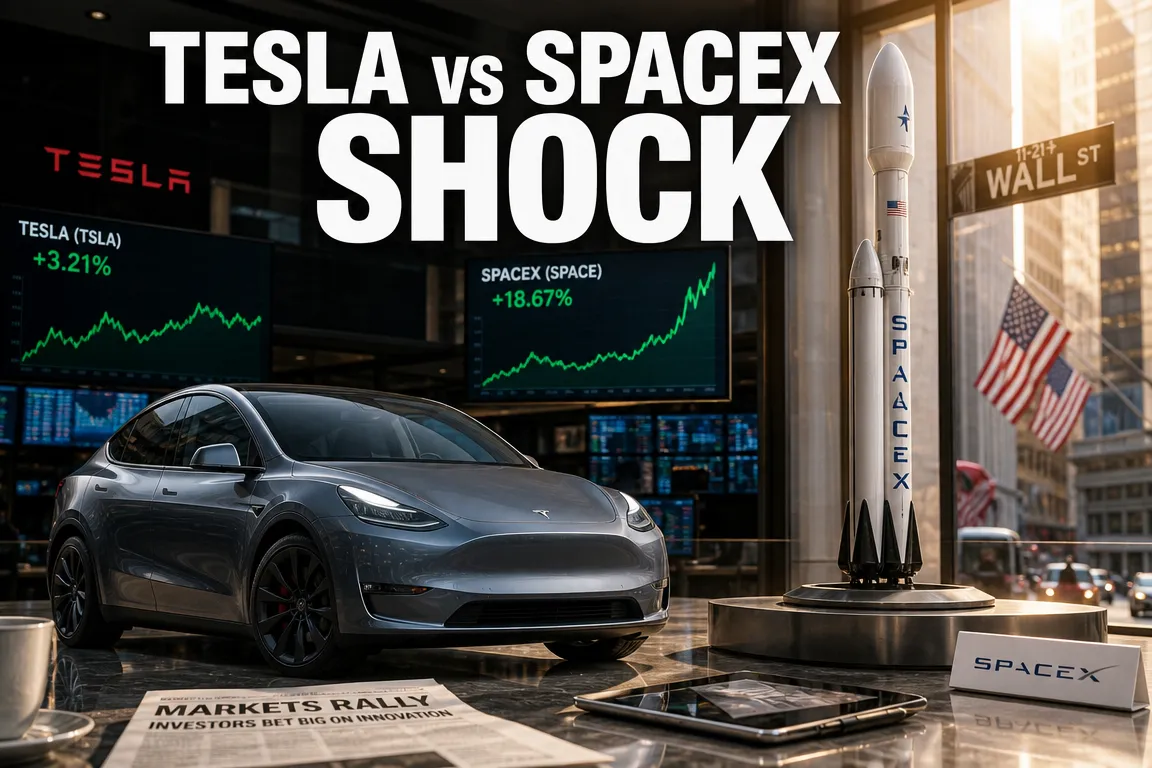
Tesla shares rose 2.2% to $378.73, while SpaceX surged 7.63% to $171.09.
The key issue is not simply that Tesla sold more vehicles.
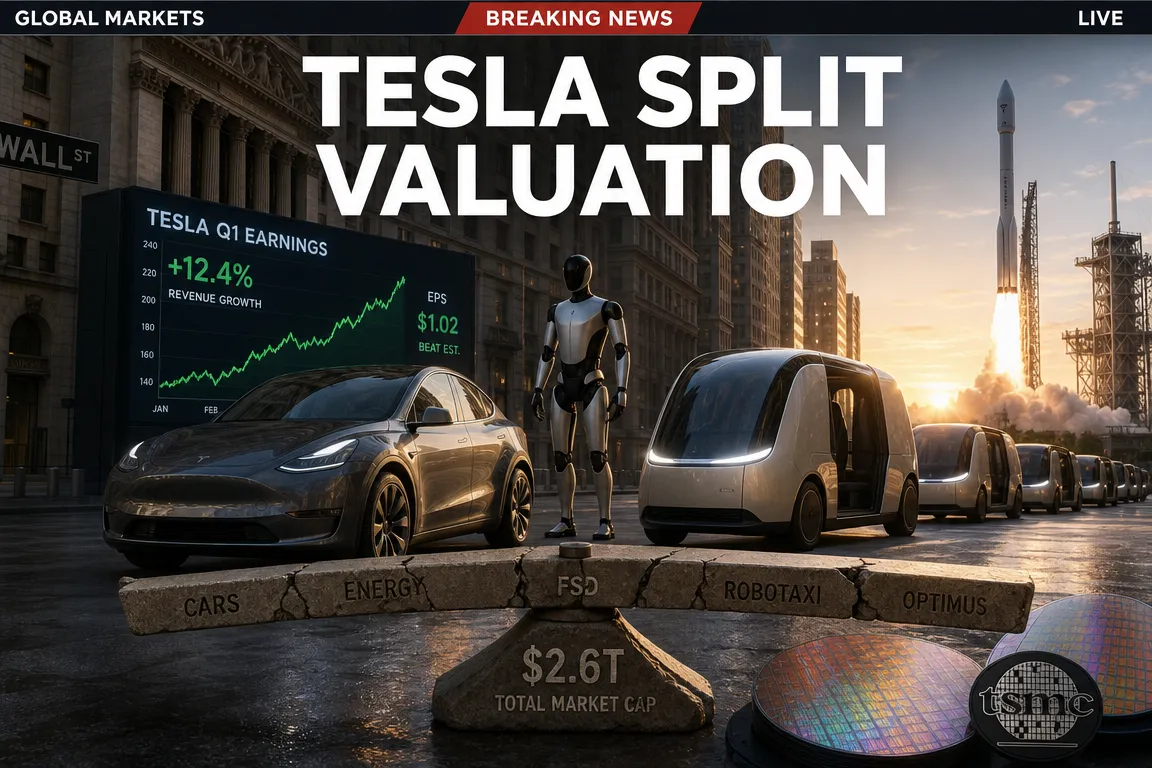
The market still has no clear pricing framework for how much of Tesla’s value should be assigned to automotive, energy, autonomous driving, robotaxi, and Optimus humanoid robotics.
By contrast, SpaceX is beginning to be valued with greater separation across rockets, Starlink, and AI-related expectations.
This divergence helps explain the different market reactions to Tesla and SpaceX.
This report summarizes the rise in U.S. rates, the burden of AI data-center investment, changes in Tesla target prices, the TSMC and TerraFab issue, SpaceX’s superintelligence strategy, and the key robotaxi revenue points to watch in third-quarter earnings.
1. Market backdrop: U.S. rates are rising, but the Nasdaq is at record highs
The first point to note is market sentiment in the United States.
According to the original source, the U.S. 10-year Treasury yield rose to 5.31%.
This indicates a significantly higher cost of capital.
Under normal conditions, this environment would weigh on growth and technology stocks.
However, the Nasdaq still closed at a record high.
This is important because Tesla’s share price and AI-related valuations are reflecting expectations that go well beyond near-term earnings.
Despite high U.S. rates, the market is simultaneously pricing in AI growth, large-cap technology investment, and a recovery in electric-vehicle demand.
2. Why rate-cut expectations have returned: weaker employment and stable oil prices
The first reason for Nasdaq strength was labor data.
Recent employment figures came in weaker than expected, increasing market expectations that the Federal Reserve will have limited room for further rate hikes.
The original text noted that the probability of a rate hike this month fell to around 20% within a week.
The second reason is oil prices.
According to JP Morgan, the release of emergency reserves and 100 million barrels of diesel by the G7 has kept Brent crude from rising further near $100 per barrel.
Stable oil prices may help ease inflationary pressure.
That, in turn, could reduce the intensity of Fed tightening expectations.
3. Inflation remains a concern: persistent service-sector cost pressure
The issue is that inflation has not been fully contained.
The original source stated that the prices-paid component in the September services index reached its highest level since July 2022.
In practical terms, this means that service companies are seeing operating costs rise faster than the revenue they collect from customers.
This trend suggests inflation may not decline quickly.
As a result, there is still support for the view that U.S. rates will remain elevated in the near term.
4. A new market risk: AI data-center debt
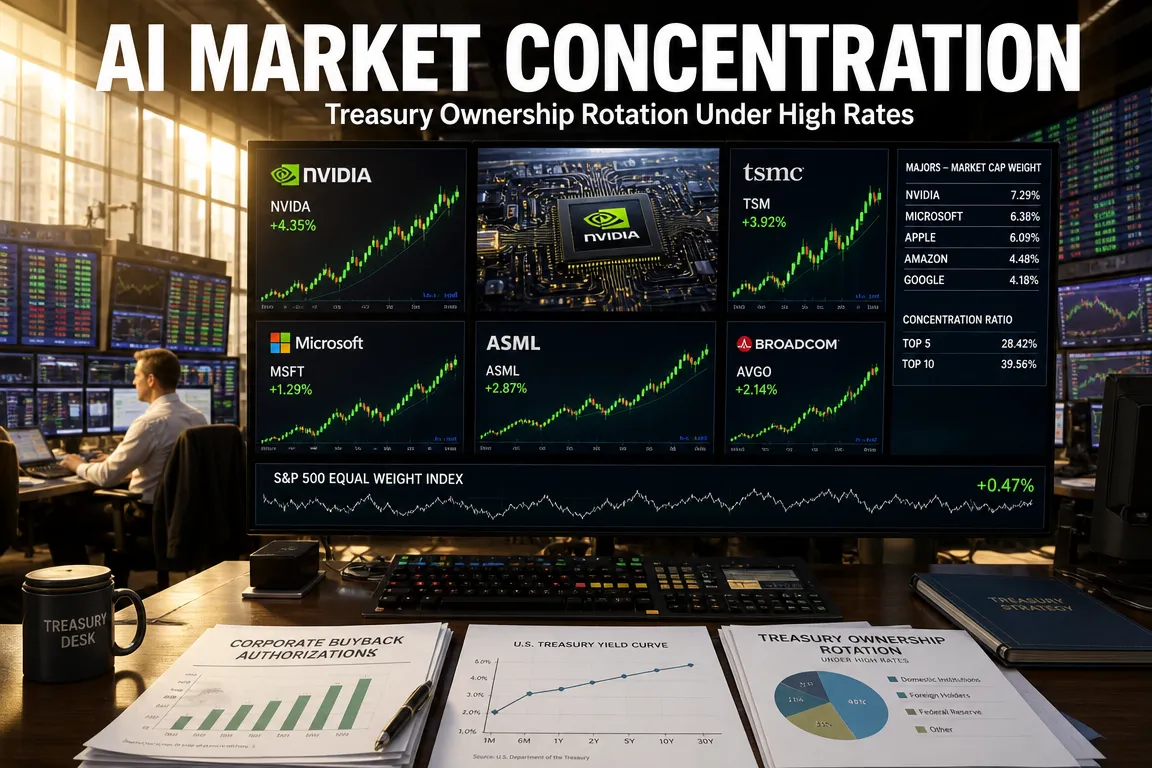
One of the market’s most sensitive themes is AI data-center investment.
AI requires substantial power, semiconductors, servers, and network infrastructure.
Companies are raising large amounts of capital to fund these investments.
The issue is that this increases demand for corporate bonds and loans, while also expanding bond supply.
Greater bond supply can push bond prices lower and yields higher.
In other words, AI investment is a long-term growth driver, but in the short term it can also add to upward pressure on U.S. rates.
The original text also referred to Wall Street monitoring loan demand related to a $60 billion transaction involving Broadcom and Anthropic.
This is not simply an AI-positive story.
As AI data-center investment expands, it may affect corporate earnings, the bond market, U.S. rates, and equity valuations at the same time.
5. Key Tesla calendar items: third-quarter earnings remain the main inflection point
Several Tesla-related events are also important.
According to the source, a Road-related announcement is scheduled for October 15.
On October 16, a documentary film critical of Elon Musk is expected to be released in theaters across the United States.
Musk has reportedly suggested possible legal action over the film.
The most important date is Tesla’s third-quarter earnings release.
The earnings call is scheduled for October 21 in the U.S. and October 22 at 6:30 a.m. Korea time.
For this earnings report, the focus is not only vehicle deliveries.
Investors will also watch for disclosure on robotaxi revenue, Cybercab operating data, FSD adoption, Optimus timing, and energy business margins.
6. Tesla delivery surprise: the numbers were strong, but target prices barely moved
Tesla significantly exceeded market expectations for third-quarter deliveries.
HSBC also acknowledged that Tesla’s third-quarter deliveries were about 7% above consensus and nearly 80,000 units above registered estimate levels.
Under normal circumstances, such a result would usually lead to a meaningful increase in target prices.
However, the actual market response was muted.
Even firms that raised targets appeared to stop near the current share price.
The reason is that Tesla’s current valuation is already difficult to justify on vehicle sales alone.
7. Wall Street target prices: HSBC at $157, Baird at $475
Analyst reactions after the delivery announcement varied widely.
HSBC maintained its underweight view.
That is effectively close to a sell stance.
However, it raised its target price from $125 to $157, an increase of more than 25%.
Even so, with Tesla trading around $378, HSBC’s target remains well below the current share price.
UBS issued a neutral rating with a $385 target price.
Truist assigned a hold rating with a $370 target.
Baird set a $475 target, implying more than 25% upside.
The Wall Street average target is around $405, roughly 7% above the current share price.
In short, Wall Street acknowledges the delivery beat, but remains unconvinced that Tesla should be repriced much higher on that basis alone.
8. Why the target price did not rise sharply: valuation remains the core issue
The central issue is valuation.
UBS estimated Tesla’s price-to-earnings ratio at roughly 345 times.
That implies the company would need 345 years of current earnings to justify the existing market capitalization.
Of course, simple P/E analysis has limitations for high-growth companies.
However, when valuation reaches this level, a stronger quarterly delivery result alone is not enough to materially raise target prices.
UBS also noted that weaker-than-expected energy-storage sales may have reduced earnings per share by about $0.03.
For a stock priced near $378, $0.03 is negligible.
In other words, Tesla’s share price is being driven far more by expectations for future businesses than by near-term automotive and energy results.
9. Why HSBC remains cautious: slowing energy business growth
HSBC’s negative stance reflects concern over Tesla’s energy business.
Although third-quarter deliveries were strong, the energy segment fell short of expectations.
HSBC views this not as a one-quarter issue but as a trend issue.
It had originally expected Tesla’s energy business to grow around 40%, but year-to-date growth has been only 11%.
Other companies’ energy-storage businesses are growing quickly, while Tesla is seen as underperforming expectations.
As a result, HSBC is also lowering its 2026 estimates.
The argument is that even if Tesla remains strong in electric vehicles, weaker energy growth can still weigh on the overall valuation.
10. The counterview: Tesla is priced as a robot and autonomy platform, not just a car company
By contrast, Canaccord maintained its buy rating on Tesla.
Its main argument is that Tesla should not be valued as a simple auto manufacturer.
The delivery beat is positive, but the real driver of the stock is elsewhere.
That “elsewhere” includes the Optimus humanoid robot, robotaxi, and FSD autonomous driving.
At present, the gap between the lowest and highest Wall Street targets is wide.
The difference is not primarily about vehicle sales, but about how much value is assigned to robots and autonomy.
In other words, the central debate around Tesla is not how many cars it sold, but whether the market is willing to value robotaxi and Optimus as real businesses.
11. Gene Munster’s bullish view: FSD could reignite EV demand
Gene Munster argued that Tesla could outperform legacy automakers.
He pointed to the sharp decline in Ford and GM EV deliveries.
According to the original text, Ford and GM EV deliveries fell by nearly 75% in September.
By contrast, Tesla deliveries were down 2% year over year, but excluding last year’s tax-credit pull-forward effect, they may have increased 8%.
Munster expects Tesla’s delivery growth next year to reach 15%, above the market consensus of 9%.
The main reason is FSD.
As more users adopt FSD, experience may spread through word of mouth and support additional demand for Tesla vehicles.
He also suggested that Ford and GM may eventually struggle to compete unless they rely on FSD-like capabilities.
There is a risk, however.
Because EV demand is still sensitive to gasoline prices, lower oil prices could slow demand.
12. TerraFab issue: TSMC enters the discussion on a dedicated chip plant for Tesla, SpaceX, and xAI
Another major Tesla-related topic is the chip facility.
The original text referred to TerraFab in Texas, which Tesla and SpaceX are expected to build together.
Chips produced at the facility are expected to be used exclusively by Tesla, SpaceX, and xAI.
Semiconductor publication Culum reported that TSMC, the world’s leading foundry, is considering helping operate the TerraFab facility.
Musk also confirmed on X that discussions are still preliminary, but something could emerge.
According to the report, the facility would be operated by TSMC, while TerraFab would serve as a major buyer of chips.
This resembles the model TSMC uses in Japan and Germany.
13. Why the news was negative for Intel and positive for TSMC
Intel reacted most negatively to the report.
Intel joined TerraFab in April and had previously been the only named chip manufacturing partner.
The emergence of TSMC raised concerns that Intel’s role could diminish.
According to the original source, Intel shares fell 2.63%, while TSMC rose 2.75%.
For the market, the key question is which company will supply the chips for Tesla and SpaceX’s future systems.
Autonomy, robotaxi, Optimus, xAI, and SpaceX’s superintelligence systems all require advanced chips.
14. TerraFab investment scale: $16.8 billion in phase one, with potential upside to $119 billion
The investment scale of TerraFab is substantial.
According to the source, phase one alone requires $16.8 billion, or about 22 trillion won.
County filings reportedly indicate a potential step-by-step investment of up to $119 billion, or about 160 trillion won.
That is nearly five times Tesla’s stated long-term capital expenditure plan of $25 billion.
Who operates the plant will affect the cost structure for chip procurement by Tesla and SpaceX.
Over the long term, this could affect Tesla’s valuation, the AI semiconductor supply chain, U.S. manufacturing investment, and global foundry competition.
15. Why SpaceX rose more than Tesla: a move to define itself as an AI company
SpaceX rose much more strongly than Tesla.
According to the source, SpaceX gained 7.63% in a single day and rose about 15.5% over two days after the delivery announcement.
Tesla rose about 7% over the same period.
Over the weekend, Musk said on X that the industry should use “SI,” or superintelligence, instead of AI.
He also described SpaceX as a superintelligence company.
He suggested changing SpaceX’s internal AI unit from SpaceXAI to SpaceXSI.
This was interpreted as aligning with a White House directive to replace references to AI with superintelligence in government documents.
No official corporate announcement has been made, but if the name change occurs, it would be the company’s third name change.
16. Morgan Stanley’s SpaceX view: core businesses and AI optionality are separated
SpaceX’s stronger reaction is also consistent with Morgan Stanley’s analysis.
Adam Jonas of Morgan Stanley assigned an overweight rating and a $300 target price to SpaceX.
Based on a share price of $159, he valued rockets and communications at $127 per share.
The remaining $32 was attributed to AI-related optionality.
In other words, about 80% of SpaceX’s value is supported by rockets and Starlink, while roughly 20% reflects AI and superintelligence expectations.
For investors, this framework is easier to understand.
Even if AI expectations fluctuate, the company still has an identifiable base of value from rockets and Starlink.
17. The key difference between Tesla and SpaceX: priced-in value versus unpriced optionality
This is where Tesla faces a problem.
Tesla’s share price clearly reflects expectations for robotaxi, FSD, Optimus, AI chips, and energy storage.
However, most Wall Street reports still calculate its value mainly from vehicle deliveries and energy figures.
There are still few models that separately assign value to robotaxi, Optimus, or FSD licensing.
By contrast, SpaceX is increasingly being valued through a clearer separation of rockets, Starlink, and AI optionality.
This difference helps explain the diverging stock reactions.
Tesla has significant future value, but it is not yet confirmed through official numbers and revenue lines.
SpaceX has a more visible earnings base, with AI layered on top as an additional option.
18. What Tesla holders near $379 should watch
If Tesla is trading around $379, it is not enough to rely on the average target price of $405.
That average implies only about 7% upside.
However, the gap between the lowest and highest targets is very wide.
This indicates that Wall Street has not yet reached a common view of Tesla’s core identity.
If viewed as an auto company, the stock looks expensive. If viewed as an AI, robotics, and autonomy platform, it may still look reasonable.
For holders near $379, the key issue is not the near-term delivery beat, but whether third-quarter earnings begin to separate out future business lines in a measurable way.
19. The critical earnings checkpoint: will robotaxi revenue be disclosed separately?
The most important issue in Tesla’s third-quarter earnings is whether robotaxi revenue is disclosed separately.
If Tesla provides separate revenue for robotaxi or Cybercab operations, the market can begin applying a revenue multiple to that line item.
At that point, Tesla’s valuation model could change materially.
The company would no longer be valued only on vehicle sales and auto margins, but also on platform revenue and recurring revenue potential.
Another focus is the Optimus timeline.
Investors will want clarity on when Optimus will be deployed more broadly inside Tesla factories, whether there is a path to external sales, and what management is implying about production costs and pricing.
FSD is also important.
Subscription rates, purchase rates, real-world driving data, accident rates, and regulatory approval progress will all matter.
20. The most important point missing from many news reports
The most important issue in this story is not simply that Tesla delivered strong numbers.
The real point is that Wall Street has not yet separated Tesla’s future businesses in financial terms.
SpaceX has a structure in which rockets and Starlink support current value, while AI is treated as a separate option.
Tesla, by contrast, bundles automotive, energy, FSD, robotaxi, and Optimus into one framework.
That makes it difficult for Wall Street to raise target prices significantly.
Even if vehicle deliveries improve, a high multiple is hard to justify unless robotaxi and Optimus are confirmed through official revenue data.
In the end, Tesla needs not just more vehicle sales, but financialization of its future businesses.
Once the company can show how much revenue comes from robotaxi, recurring FSD income, and Optimus, the market may revalue Tesla as an AI robotics platform rather than an auto company.
21. Investment takeaway: the variables that matter for Tesla
First, U.S. rates.
Persistently high rates remain a headwind for Tesla as a high-multiple growth stock.
Second, AI data-center investment and debt.
Greater AI investment supports long-term growth, but also adds stress to the bond market.
Third, electric-vehicle demand.
Higher oil prices can support EV demand, while lower oil prices may weaken it.
Fourth, Tesla’s energy business.
If energy-storage growth remains below expectations, caution such as HSBC’s is likely to continue.
Fifth, autonomy and robotaxi.
To justify a materially higher valuation, FSD and robotaxi need to appear as actual revenue lines.
Sixth, Optimus.
Once the humanoid robot is tied to productivity and revenue, Tesla’s valuation framework could change substantially.
Seventh, the semiconductor supply chain.
The TSMC, Intel, and TerraFab issue may directly affect the cost of Tesla and SpaceX’s long-term AI infrastructure.
< Summary >
Tesla’s third-quarter delivery beat did not lead to a major increase in target prices.
HSBC raised its target to $157 but remained negative, UBS set $385, Truist set $370, and Baird set $475.
The Wall Street average target is around $405, about 7% above the current share price.
Target prices did not move sharply because Tesla is already valued at a level that is difficult to explain with vehicle sales alone.
By contrast, SpaceX rose more strongly as rockets, Starlink, and AI-related expectations were valued with greater separation.
The key watchpoint for Tesla is whether third-quarter earnings provide specific disclosure on robotaxi revenue, FSD metrics, and Optimus timing.
If Tesla can quantify its future businesses, the market may once again value it as an AI robotics platform rather than a car company.
[Related Articles…]
Tesla Third-Quarter Earnings Watch: Robotaxi and Optimus Valuation
AI Data-Center Investment and U.S. Rates: Why Big Tech Debt Is Moving the Market
*Source: [ 오늘의 테슬라 뉴스 ]
– 인도량 서프라이즈 뒤 첫 월요일, 테슬라 +2.2% 오를 때 스페이스X는 +7.6% — 월가가 고쳐 쓴 목표가, $379 주주는?
● Money Rotates from Samsung and SK Hynix to Kosdaq, 2nd Battery, Chip Parts, Biotech Surge
Why Capital Is Rotating from Samsung Electronics and SK Hynix to KOSDAQ: 2nd-Gen Batteries, Semiconductor Equipment and Materials, and Biotech Re-accelerate
The key issue in the market today is not simply that the KOSPI is weak while the KOSDAQ is strong.
The core point is that foreign capital is leaving large-cap semiconductor names such as Samsung Electronics and SK Hynix and rotating into KOSDAQ sectors including 2nd-generation batteries, semiconductor equipment and materials, and biotech.
This move appears to be driven not by a short-term thematic rebound, but by the simultaneous combination of expanded data center investment, expectations for a cyclical turnaround in semiconductors, and FDA-related biotech catalysts.
With Samsung Electronics’ preliminary earnings announcement potentially serving as a turning point for the KOSPI, this week’s key checkpoints are whether the KOSDAQ rally can continue and whether Samsung Electronics can materially exceed market expectations.
1. Today’s market summary: KOSPI lagged, KOSDAQ outperformed
Domestic equities diverged sharply today.
The KOSPI remained sluggish, led by large-cap technology names such as Samsung Electronics and SK Hynix.
In contrast, the KOSDAQ rose by nearly 3%, creating a distinctly different market tone.
Market participants are seeing a clear pattern: large caps are heavy, while small- and mid-cap growth names are rotating quickly.
This is not simply a one-day flow shift, but a pattern that has been recurring recently.
In other words, the market is showing a structure in which the KOSPI remains range-bound while the KOSDAQ rallies.
2. Why the KOSPI is weak: a lack of fresh catalysts for large-cap technology
The main reason for the KOSPI’s weakness is the absence of new positive catalysts strong enough to lift large-cap technology stocks again.
Samsung Electronics and SK Hynix have already priced in much of the optimism around AI semiconductors, HBM, and improving memory semiconductor conditions.
However, the market is now shifting toward the view that stocks which have already risen need additional catalysts to extend gains.
Foreign investors remain net sellers, which is a key headwind.
If foreigners continue selling, domestic institutions or retail investors must absorb the supply, but that absorption capacity is weaker than before.
As a result, large-cap KOSPI names are facing a supply-demand imbalance.
There is also growing concern that major global technology firms may have less room for share buybacks.
Share buybacks are an important support for stock prices, and weaker expectations in that regard tend to pressure large-cap technology shares.
3. Why the KOSDAQ is strong: 2nd-generation batteries, semiconductor equipment and materials, and biotech moved together
The KOSDAQ strength was driven not by a single sector, but by simultaneous gains across multiple growth industries.
The main groups leading the market today were 2nd-generation batteries, semiconductor equipment and materials, and biotech.
Although each sector had a different catalyst, they share an important commonality.
They offer higher expected returns than large caps, have active individual catalysts, and can materially influence the KOSDAQ index.
4. Why 2nd-generation batteries strengthened: data center investment is linked to battery demand
The rebound in 2nd-generation batteries is supported by expectations for expanded data center investment.
Data centers are often associated only with semiconductors and power infrastructure.
In practice, they also require stable power supply, energy storage systems, and backup power infrastructure.
This is increasing expectations that battery and ESS-related companies may benefit.
AI data centers, in particular, consume significantly more power than conventional facilities.
As pressure on the power grid increases, ESS and high-performance battery demand may also gain attention.
Accordingly, the recent rebound in 2nd-generation batteries is not only about recovery in EV sales.
It is being reinterpreted within a broader theme of AI infrastructure investment and power infrastructure restructuring.
5. Why semiconductor equipment and materials strengthened: expectations are shifting from price cycle to volume cycle
Semiconductor equipment and materials outperformed on expectations that the industry may enter a volume expansion cycle rather than a simple price recovery cycle.
Rising memory prices matter, but for equipment and materials suppliers, actual production volumes and investment levels matter more.
Even if prices improve, limited production growth at customer companies can constrain earnings recovery for equipment, materials, and component firms.
What the market is now focusing on is not only higher prices, but also the possibility of stronger production and capital spending.
This is why semiconductor equipment and materials stocks moved higher in the KOSDAQ.
As investment expands around HBM, AI servers, and high-performance memory, selected materials, components, and equipment firms may benefit directly.
While Samsung Electronics and SK Hynix pause, the market is shifting toward more sensitive small- and mid-cap semiconductor suppliers.
6. Why biotech strengthened: the HLB event shifted sector sentiment
In biotech, news related to HLB acted as a strong catalyst.
Sentiment improved sharply after reports that HLB’s China-based manufacturing site for its liver cancer treatment had effectively passed an FDA inspection.
Biotech stocks react more strongly to clinical, regulatory, and FDA approval developments than to earnings.
This news was not limited to one company; it also revived expectations that the broader biotech sector could see additional major events.
When large biotech names move in the KOSDAQ, they have a substantial impact on the index.
For that reason, today’s KOSDAQ gains should be viewed as the result of biotech momentum in addition to strength in batteries and semiconductor suppliers.
7. Market structure shift: the pattern of KOSPI stagnation and KOSDAQ strength is becoming entrenched
A defining feature of the recent market has been the KOSDAQ strengthening when the KOSPI remains heavy.
This suggests that capital is not leaving the market entirely, but rotating from large caps into growth and small-cap names.
The KOSPI is highly sensitive to foreign flows.
By contrast, the KOSDAQ can move more quickly when retail and institutional rotation comes in.
At present, investors are less focused on adding Samsung Electronics and SK Hynix, and more focused on identifying the next sector with stronger upside momentum.
As a result, 2nd-generation batteries, semiconductor equipment and materials, and biotech have come into focus.
8. Why Samsung Electronics’ preliminary earnings matter
Samsung Electronics’ preliminary earnings release, scheduled for Thursday, is a key event that could change the tone for the KOSPI.
What the market wants is not merely a return to profit or modest earnings improvement.
Because expectations for the semiconductor cycle have already been partially priced in, what matters now is the degree of outperformance versus consensus.
If Samsung Electronics delivers results that significantly exceed expectations, capital could rotate back into KOSPI large caps.
If results are merely in line, capital is likely to remain in KOSDAQ growth names.
Investors will be watching memory pricing, HBM competitiveness, foundry progress, inventory reduction pace, and the strength of operating profit recovery.
9. The key point often missed: this is not just sector rotation, but a change in the nature of capital flow
Many reports only note that the KOSDAQ rose today and that batteries and biotech were strong.
More importantly, the nature of capital is changing.
Where the market once moved primarily on large-cap semiconductors, investors are now seeking higher beta and faster momentum in KOSDAQ names.
This is somewhat different from a pure thematic trading market.
There are real catalysts tied to data center investment, AI semiconductor capacity expansion, and FDA developments.
In other words, the current KOSDAQ rally is being driven not only by liquidity, but also by industry change and event-driven factors.
The key point is that a weak large-cap market does not necessarily mean the broader market is weak.
Capital has not disappeared; it has moved to areas that respond more quickly.
10. Key checkpoints for investors
First, confirm whether Samsung Electronics’ preliminary earnings exceed expectations.
If Samsung Electronics delivers a stronger-than-expected result, capital may rotate back into KOSPI large caps.
If results disappoint, the KOSDAQ-led market may continue.
Second, monitor whether foreign selling slows.
A meaningful KOSPI recovery requires a change in foreign flows.
If foreign selling continues in Samsung Electronics and SK Hynix, index upside will remain limited.
Third, assess whether the KOSDAQ rally remains broad-based rather than concentrated in a few themes.
If 2nd-generation batteries, semiconductor equipment and materials, and biotech continue rotating higher, the rally may last longer.
If gains remain concentrated in a small number of names, volatility may increase.
Fourth, track data center investment and power infrastructure trends together.
As AI expands, semiconductors, power, batteries, and ESS can all move together.
Investors who understand this linkage may identify the next market move earlier.
Fifth, in biotech, follow post-FDA developments closely.
Biotech stocks often rise on expectations and become more volatile during confirmation phases.
It remains to be seen whether the HLB-related catalyst broadens across the sector or remains a short-term event.
11. Sector-by-sector interpretation
KOSPI large caps: Still heavy due to foreign selling and a lack of fresh catalysts.
Samsung Electronics: Preliminary earnings are likely to determine short-term direction.
SK Hynix: HBM expectations remain strong, but further upside requires new catalysts.
KOSDAQ: Capital inflows are accelerating, supporting growth-sector leadership.
2nd-generation batteries: Reframed through data center and ESS demand rather than only EV demand.
Semiconductor equipment and materials: The key driver is expected growth in production volumes and investment, not only pricing.
Biotech: HLB-related news has improved expectations for FDA outcomes and sector sentiment.
12. Conclusion: capital has not left the market; it is moving to faster-moving names
The market can be summarized in one sentence: capital is not leaving the market, but rotating from large-cap names such as Samsung Electronics and SK Hynix into KOSDAQ growth stocks.
A weak KOSPI does not necessarily mean sentiment has collapsed.
Rather, the market is searching for a new source of upside, and the leading candidates are 2nd-generation batteries, semiconductor equipment and materials, and biotech.
For the KOSDAQ rally to continue, earnings, flows, and event catalysts must remain supportive.
Samsung Electronics’ preliminary earnings announcement this week is the most important turning point for this trend.
If Samsung Electronics delivers better-than-expected results, a rebound in KOSPI large caps is possible. If not, the KOSDAQ-led rotation may strengthen further.
< Summary >
The KOSPI was weak due to poor performance in large technology names such as Samsung Electronics and SK Hynix.
Foreign selling and a lack of fresh catalysts are limiting KOSPI upside.
By contrast, the KOSDAQ rose by nearly 3% as 2nd-generation batteries, semiconductor equipment and materials, and biotech strengthened together.
2nd-generation batteries are being supported by expectations for expanded data center investment and ESS demand.
For semiconductor equipment and materials, the key factor is expected volume growth rather than only price recovery.
In biotech, HLB-related FDA inspection news improved sector sentiment.
Samsung Electronics’ preliminary earnings release this week is the key event for the KOSPI outlook.
The main market dynamic is not capital outflow, but capital rotation from large caps into KOSDAQ growth names.
[Related Articles…]
- KOSDAQ Rotation and Growth Stock Leadership
- Semiconductor Cycle Outlook and Samsung Electronics Earnings
*Source: [ 내일은 투자왕 – 김단테 ]
– 돈이 삼전닉스에서 ‘여기’로 간다고? #삼성전자 #소부장 #코스닥