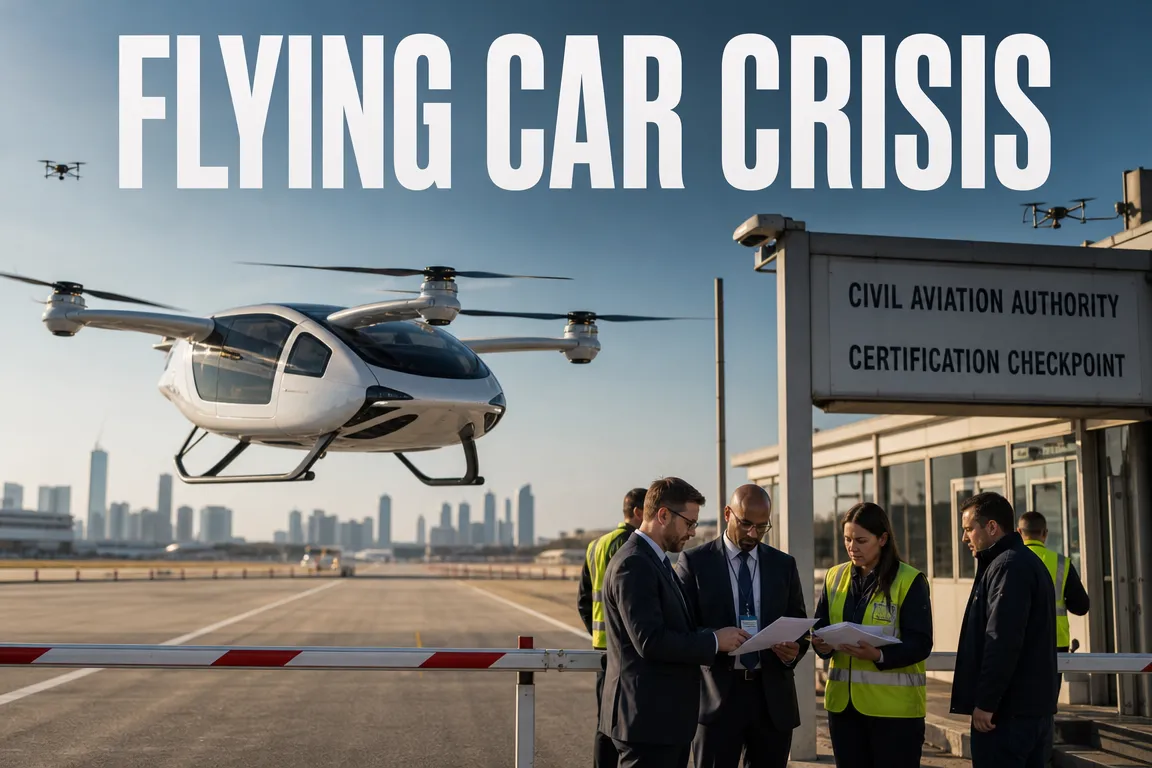
● Flying Cars, eVTOL, Regulators, Battle, Explode
Will Flying Cars Become a Reality? Companies, Technologies, and Commercialization Outlook
Flying cars have entered the flight-testing stage, but widespread commuter use will require overcoming regulatory and certification barriers that may be more difficult than the battery challenge.
This report compares the technologies and commercialization prospects of Alef Aeronautics’ vertical-takeoff flying car, Joby Aviation’s air taxi, and EHang’s autonomous aircraft.
It also examines Tesla’s potential participation, differences between Chinese and U.S. certification timelines, and the limitations of using pre-order figures as an investment indicator.
The decisive factor may not be which vehicle flies first.
The industry’s eventual leaders will likely be determined by how quickly governments establish rules for vehicles operating on both roads and in the air.
1. Alef Aeronautics’ Flying Car
California-based Alef Aeronautics is developing an electric vehicle designed to operate on public roads and take off vertically when required.
The vehicle has a conventional steering wheel for road use and separate flight controls.
Its most distinctive feature is the mesh-like body structure.
Multiple propellers inside the vehicle must push air downward, requiring a body structure that permits sufficient airflow.
Electric motors connected to the wheels provide road propulsion, while embedded propellers enable vertical takeoff.
The concept effectively combines an electric vehicle with a large drone.
2. Battery Weight Is the Primary Technical Constraint
The principal challenge is not simply lifting a vehicle into the air.
The aircraft must carry passengers, take off safely, remain airborne for a practical period, and land with adequate energy reserves.
Adding batteries increases range but also raises vehicle weight.
Additional weight requires more energy for lift, potentially creating a cycle in which further battery capacity becomes necessary.
Alef has considered extensive use of carbon fiber to reduce weight while maintaining structural strength.
Electric vehicles can tolerate heavy batteries on roads, but aircraft weight directly affects endurance, performance, and safety.
Flying-car adoption therefore depends less on total battery capacity than on improvements in energy density by weight.
3. Alef and Tesla May Not Compete in the Same Market
The source material stated that Tesla demonstrated a Roadster using compressed-gas propulsion to lift the vehicle and that Alef viewed this as the beginning of flying-car competition.
However, the timing and nature of that demonstration were not clearly documented. It should not be interpreted as evidence of production-ready technology or an officially certified flight test.
Tesla has previously discussed propulsion systems intended to enhance Roadster acceleration, but briefly lifting a vehicle is fundamentally different from sustained flight.
Alef aims to develop a vehicle capable of road travel, vertical takeoff, and airborne transportation to a destination.
A propulsion system that lifts a vehicle for only a few seconds would not constitute a practical aviation platform.
Alef’s chief executive has acknowledged Tesla’s automotive capabilities while emphasizing Alef’s focus on aircraft design.
Competition would ultimately be determined by sustained-flight capability, fault-tolerant systems, aviation certification, and operational viability.
4. Interpreting Alef’s Price and Pre-Orders
Alef’s projected selling price has been reported at approximately $300,000, with around 3,600 pre-orders.
Pre-orders should not be treated as confirmed sales or revenue.
Investors should assess whether deposits are refundable, whether customers have signed binding purchase agreements, and whether the vehicle has completed certification.
Alef plans to begin with limited production at a research facility rather than immediately manufacturing thousands of units at a large-scale plant.
This approach may support early quality control but could result in high production costs and slow deliveries.
Initial buyers are therefore more likely to be high-net-worth technology adopters or recreational users than mainstream consumers.
5. Comparison of Major Flying-Car Companies
| Company | Primary Aircraft | Technology | Key Feature | Primary Challenge |
|---|---|---|---|---|
| Alef Aeronautics | Model A Series | Electric road propulsion and vertical takeoff | Road travel and flight integrated into one vehicle | Weight, range, and aviation certification |
| Samson Sky | Switchblade | Folding wings and runway takeoff | Wings remain folded during road travel and deploy at an airport | Airport access and amateur-built aircraft regulations |
| Klein Vision | AirCar | Conversion from automobile to fixed-wing aircraft | Automated wing deployment | Runway dependence and country-specific certification |
| Aska | A5 | Vertical and runway takeoff | Targeted four-seat capacity and hybrid power system | Structural complexity and high development costs |
| XPeng AeroHT | Land Aircraft Carrier | Separate ground vehicle and aircraft | A large vehicle transports a detachable flight unit | System cost and operational space requirements |
6. Samson Sky’s Switchblade
Samson Sky’s Switchblade is a two-seat flying car with wings that fold into the vehicle body.
It operates as a road vehicle and deploys its wings and tail at an airport or airfield.
Its runway-based design reduces some of the technical complexity associated with vertical takeoff.
However, it cannot take off directly from dense urban areas.
The basic kit has been priced at approximately $200,000. The company has considered an amateur-built aircraft certification pathway requiring the owner to complete a specified portion of assembly.
This model is both a sales strategy and a potential method of reducing the burden associated with conventional aircraft type certification.
7. Klein Vision AirCar and Flight Certification
Slovakia-based Klein Vision is developing the AirCar, which converts from a road vehicle into a fixed-wing aircraft.
Its wings deploy in approximately two minutes, after which the aircraft takes off from a conventional runway.
AirCar reportedly received an airworthiness certificate from Slovak authorities in 2022.
This represented an important milestone demonstrating that the aircraft had reached an operational flight standard.
Certification in one country does not automatically authorize operations in other jurisdictions.
Entry into the United States, the European Union, and other major markets would require additional regulatory approvals.
8. Different Strategies from Aska A5 and XPeng AeroHT
Aska’s A5 is being developed as a four-seat aircraft capable of both vertical and runway takeoff.
Its proposed hybrid system combines batteries with a range-extending engine to address the limitations of all-electric flight.
Aska has reportedly received a special airworthiness certificate for flight testing from the U.S. Federal Aviation Administration and has conducted road tests in California.
China’s XPeng AeroHT has chosen to separate the aircraft from the road vehicle rather than combine both functions in one platform.
The Land Aircraft Carrier transports a small aircraft inside a large ground vehicle and deploys it at an appropriate operating location.
This approach may reduce the weight and structural compromises associated with integrating automotive and aviation functions.
However, ownership and maintenance of two separate platforms could increase acquisition and operating costs.
9. Why Flying Cars Are Not Yet Operating on Public Roads
A flying car is both a motor vehicle and an aircraft.
Road operation requires compliance with crashworthiness, braking, steering, and vehicle-registration standards.
Flight operation requires validation of structural integrity, propulsion, emergency landing capability, stability, maintenance systems, and pilot qualifications.
A robust automotive body adds weight that is undesirable in an aircraft, while lightweight aircraft structures may be insufficient for road-vehicle crash standards.
Meeting both regulatory frameworks can sharply increase vehicle weight and production costs.
The central commercialization challenge is therefore the creation of a new certification framework bridging automotive and aviation regulations.
10. Early-Market Strategies Using Ultralight Regulations
Alef has reportedly considered using U.S. ultralight aircraft regulations to support limited early deliveries.
U.S. ultralight rules allow aircraft that meet strict requirements for seating capacity, weight, speed, and fuel capacity to operate under a different regulatory framework from conventional aircraft.
However, ultralight aircraft are primarily intended for recreational and sporting use.
They are not authorized for unrestricted commuting over congested urban areas or controlled airspace.
Deliveries under ultralight rules would therefore represent limited deployment and validation rather than mass adoption.
A special airworthiness certificate for testing also does not authorize unrestricted consumer sales or commercial operations.
11. The eVTOL Air-Taxi Market May Develop First
Electric vertical takeoff and landing aircraft, or eVTOLs, have stronger near-term commercialization prospects than privately owned flying cars.
eVTOL developers eliminate road-driving capability and focus exclusively on aircraft design and certification.
This reduces the need to comply simultaneously with automotive and aviation requirements.
The initial market is more likely to develop through professionally operated urban air-taxi services than private ownership.
Operations between designated vertiports would make routes, charging, maintenance, and safety management easier to standardize.
This model is considered a practical starting point for the future urban air mobility, or UAM, market.
12. Commercialization Competition Between Joby Aviation and EHang
U.S.-listed Joby Aviation is developing an electric aircraft designed for one pilot and four passengers.
Joby is conducting flight tests and preparing for production while progressing through the FAA type-certification process.
Type certification verifies that an aircraft’s design meets applicable safety standards and is a critical requirement for commercial operations.
China’s EHang is developing an autonomous air taxi designed to carry two passengers without an onboard pilot.
The company has received design-related type certification and production approval from Chinese aviation authorities. Certain operators have also advanced toward the approvals required for commercial service.
Regulatory approval should not be equated with large-scale commercial deployment.
Further requirements include expanded operating zones, weather resilience, traffic-management systems, liability frameworks, and passenger acceptance.
13. Why Chinese Certification Appears Faster Than U.S. Certification
China uses a centralized strategy in which demonstration projects and commercialization can proceed in government-designated regions.
This enables selected companies and cities to coordinate flight zones, tourism services, and infrastructure development.
The U.S. FAA follows a more conservative, multi-stage validation process that can extend commercialization timelines.
However, successful FAA certification can provide significant credibility in global aviation markets and among investors.
China may open selected markets earlier, while the United States may develop a more internationally scalable certification framework over a longer period.
14. Key Issues Often Overlooked in Flying-Car Coverage
First, certification strategy determines product design.
Folding wings, vertical takeoff, assembly kits, and detachable aircraft are technical choices shaped by the regulatory framework each company intends to use.
Second, there is a significant gap between pre-orders and recognized revenue.
Certification or manufacturing delays can cause cancellations, while higher-than-expected production costs may change final pricing.
Third, battery improvements alone will not enable mass adoption.
Airfields, vertiports, charging systems, maintenance personnel, insurance, noise standards, traffic control, and liability rules must develop simultaneously.
Fourth, companies with aviation-certification expertise may hold an advantage over conventional automakers.
Automakers have stronger mass-production capabilities, but aviation experience is more relevant to flight safety and airworthiness certification.
Fifth, professionally operated air taxis are more likely to scale before privately owned flying cars.
Centralized ownership allows operators to control routes, maintenance, and safety during the market’s initial phase.
15. How AI Could Transform the Flying-Car Industry
Artificial intelligence is likely to be applied first to safety management and operational optimization rather than fully autonomous flight.
AI can analyze vibration, motor temperature, battery condition, and sensor data in real time to identify potential failures before they occur.
Urban aircraft must detect buildings, power lines, drones, and other aircraft while continuously calculating collision risks.
AI can also optimize routes and energy consumption based on changing weather conditions.
Over the longer term, autonomous flight could reduce pilot costs and eliminate the need for a dedicated pilot seat, improving air-taxi economics.
However, aviation systems require substantially higher validation standards than road-based autonomous driving because minor errors can result in severe accidents.
16. Investment Metrics for Flying-Car and eVTOL Companies
Investors evaluating flying-car and eVTOL stocks should prioritize certification milestones over prototype demonstrations.
Key indicators include type-certification progress, flight-test hours, accident records, production approvals, and available cash.
For pre-revenue companies, research and development spending and cash-burn rates may have a greater valuation impact than current revenue.
Certification delays may require additional financing and equity issuance, potentially diluting existing shareholders.
U.S.-listed eVTOL companies offer long-term growth exposure but remain sensitive to interest rates and capital-market conditions.
Higher interest rates reduce the present value of future revenue and increase financing costs for loss-making companies.
Certification progress, government contracts, manufacturing partnerships, and secured operating routes may support valuation reassessments.
17. Flying-Car Commercialization Outlook
Near-term services are unlikely to involve vehicles taking off directly from congested roads.
Initial adoption is more likely in tourism, airport-to-city transportation, island routes, emergency medicine, and logistics, where the economic benefits are clearer.
Privately owned flying cars may first be sold for recreational or specialized applications because of high prices and restricted operating areas.
Expansion into the broader consumer market will require improvements in battery performance, noise, insurance, and air-traffic management.
The industry’s leader may not be the company with the most visually compelling prototype.
The likely winners will be companies that complete certification, achieve repeatable production, and establish safe operating networks.
Announced launch and delivery dates should be treated as corporate targets based on conditions at the time of publication.
Investors and prospective buyers should verify current certification status and official disclosures before making decisions.
< Summary >
Flying cars have reached the flight-testing stage, but widespread use as urban commuting vehicles remains distant.
The primary technical constraints are battery weight and flight range, while the main commercial barrier is the need to satisfy both automotive and aviation certification requirements.
Alef integrates road travel and vertical takeoff into one platform, while Samson Sky and Klein Vision use folding wings and runway takeoff.
XPeng AeroHT separates the ground vehicle from the aircraft to reduce design complexity.
eVTOL air taxis from companies such as Joby Aviation and EHang are more likely to reach commercial deployment before privately owned flying cars.
Investors should prioritize certification milestones, cash-burn rates, production approvals, and operating permits over pre-order figures.
[Related Articles…]
*Source: [ Maeil Business Newspaper ]
– 하늘을 나는 차, 정말 현실이 될까?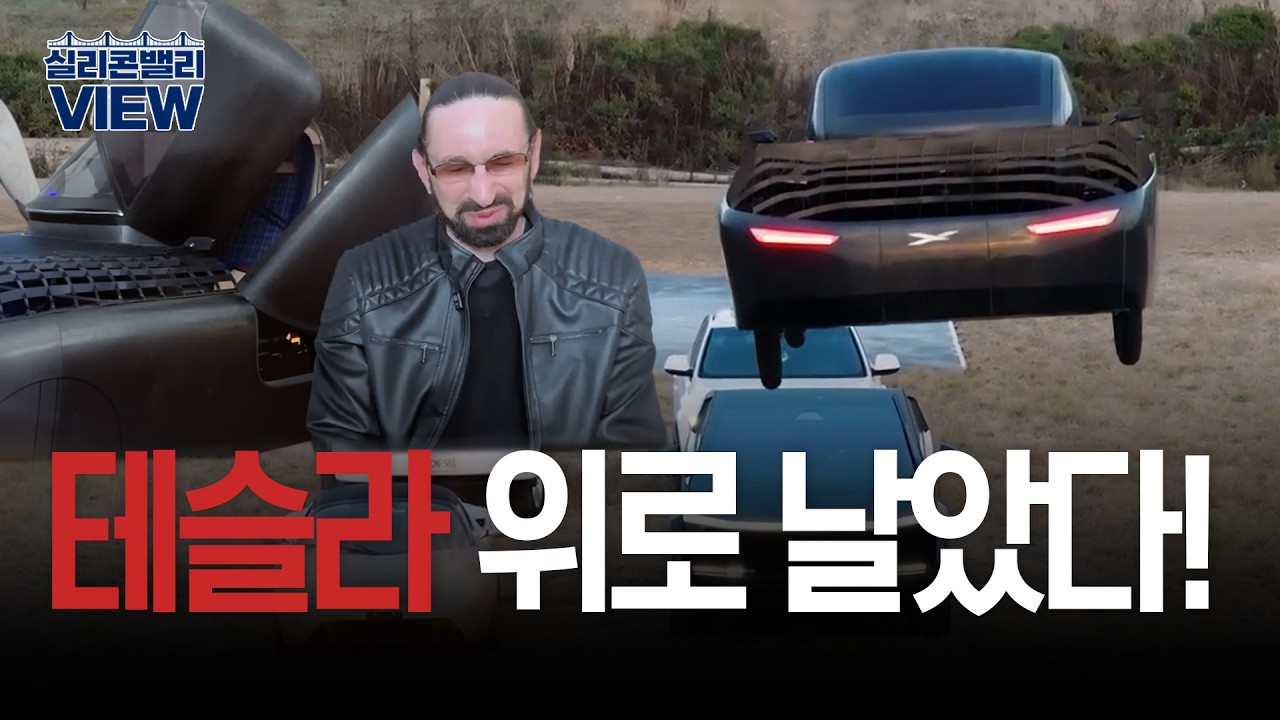
● North Korea Shock, Markets on Edge
Kim Yo Jong Coup Claims and the Truth Behind Kim Jong Un’s China Visit | Implications of North Korean Leadership Instability for South Korea’s Economy
Expressions such as “Kim Yo Jong’s coup begins,” “Kim Jong Un death rumors,” “Kim Han Sol emerges,” and “Pyongyang devastated” may suggest that a leadership transition is already underway in North Korea.
However, a close review of the provided video descriptions and remarks shows that verified facts are mixed with expert scenarios.
This report assesses whether there is sufficient evidence for claims of a Kim Yo Jong-led coup, why a potential meeting between Kim Jong Un and Xi Jinping has drawn attention, and whether Kim Han Sol could realistically enter North Korea’s succession process.
It also examines how a sudden North Korean crisis could affect the USD/KRW exchange rate, South Korean equities, defense companies, AI semiconductors, and global supply chains.
1. Key Claims Presented in the Video
The source material describes a full-length compilation of four video segments featuring North Korea analyst Cho Han-bum.
The videos were reportedly recorded on October 29 and released between October 30 and November 5.
Because the year is not specified, the content should not be treated as reporting on the latest developments.
- Claims that Kim Jong Un’s China-related activities included unusual elements
- An assessment that Kim Jong Un’s failure to meet Xi Jinping would be highly unusual in North Korea-China relations
- Claims that rumors of Kim Jong Un’s death and Kim Yo Jong’s succession were spreading simultaneously
- A forecast that Kim Han Sol, the son of Kim Jong Nam, could emerge as an alternative North Korean leader
- The possibility of military conflict involving the United States, Iran, and Saudi Arabia
The first distinction is that the video titles do not necessarily correspond to verified events.
The source material provides no evidence that Kim Yo Jong has launched a coup or that armed conflict has occurred in Pyongyang.
2. Has a Kim Yo Jong Coup Been Confirmed?
The provided material contains no direct evidence of an ongoing coup.
A credible coup assessment would require multiple concurrent indicators, including abnormal troop movements, communications restrictions, border closures, senior-level purges, and changes within the Workers’ Party or military command.
A temporary absence from Kim Jong Un’s public schedule or an increase in political statements by Kim Yo Jong is insufficient to establish that a coup is underway.
North Korea tightly controls information about its leader’s movements and strategically determines when public appearances are disclosed.
Consequently, gaps in public activity should not be treated as evidence of death or removal from power.
3. Why Kim Yo Jong Attracts Attention
Kim Yo Jong’s importance extends beyond her status as Kim Jong Un’s sister.
She has issued direct statements concerning South Korea and the United States and has communicated the leadership’s position on major foreign policy and security issues.
Her symbolic connection to the ruling Kim family and experience within the party structure could allow her to assume a central role if Kim Jong Un became incapacitated.
This does not establish that she would secure a unilateral succession or successfully seize power.
North Korea’s political system reflects overlapping interests among the Workers’ Party, the military, state security institutions, the cabinet, and senior elites.
Potential outcomes include an interim administration led by Kim Yo Jong, a collective leadership structure, or a regency centered on one of Kim Jong Un’s children.
4. Why a Kim Jong Un-Xi Jinping Meeting Matters
The source argues that Kim Jong Un’s failure to meet Xi Jinping would represent an unusual development in bilateral relations.
It also suggests that Kim’s potential visit may have coincided with an important Chinese political schedule.
If a meeting with a foreign leader did not occur immediately before a major Chinese leadership conference, it could be interpreted as a sign of bilateral strain.
However, if scheduling constraints or protocol issues prevented a meeting, the absence should not be overstated as a diplomatic dispute.
A proper assessment requires confirmation of the visit’s purpose, whether an official invitation was issued, the location of Kim’s stay, and the Chinese Communist Party’s schedule.
The remarks include claims that “October 26 and 29 would be decisive meeting dates for Xi Jinping” and that “Kim Jong Un would arrive on the 24th.”
However, the meeting’s official name, the relevant year, and Kim Jong Un’s confirmed schedule are not provided, preventing a conclusive assessment.
5. Key Indicators in North Korea-China Relations
China’s continued material support for North Korea is more important than whether Kim Jong Un and Xi Jinping meet in person.
- Volumes of cross-border freight trains and trucks
- Changes in Chinese oil and food assistance
- Employment and repatriation of North Korean workers in China
- China’s position on United Nations sanctions against North Korea
- Changes in Chinese Foreign Ministry language following North Korean nuclear or missile tests
- Frequency of senior-level delegation exchanges
If these channels remain active, the absence of a summit would not indicate a fundamental collapse in bilateral relations.
Conversely, simultaneous declines in trade, energy supplies, and diplomatic protection would place substantially greater pressure on North Korea’s economy and political stability.
6. Could Kim Han Sol Become North Korea’s Successor?
Kim Han Sol is the son of Kim Jong Nam, Kim Jong Il’s eldest son.
Although he is a descendant of Kim Il Sung, there is no verified evidence that he has an internal North Korean power base.
The source refers to claims that Kim Han Sol is under CIA protection and could become North Korea’s leader because of his symbolic status as the eldest grandson in the family line.
The CIA protection claim has not been publicly verified.
Even if Kim Han Sol is protected overseas, he would struggle to exercise authority without control over North Korea’s party, military, and security institutions.
North Korean succession requires more than senior lineage. It also depends on designation by the incumbent leader, domestic propaganda, organizational control, and military loyalty.
Kim Han Sol could therefore be presented as a symbolic alternative during a sudden political crisis, but available evidence does not support classifying him as a leading succession candidate.
7. Plausible North Korean Leadership Scenarios
Scenario 1. Continuation of the Kim Jong Un System
The baseline scenario is that Kim Jong Un remains in power, supported by Kim Yo Jong and senior officials.
Recurring rumors concerning his death or health could quickly subside following renewed official appearances.
Scenario 2. Interim Administration Led by Kim Yo Jong
If Kim Jong Un were suddenly incapacitated, Kim Yo Jong could use the ruling family’s legitimacy to manage an interim government.
However, without support from the military and party apparatus, sustaining long-term unilateral rule could prove difficult.
Scenario 3. A Regency Centered on Kim Ju Ae
Kim Jong Un’s daughter, Kim Ju Ae, could be promoted as the symbolic successor while Kim Yo Jong or senior Workers’ Party officials oversee state affairs.
Given Kim Ju Ae’s age and limited official status, a regency would be more plausible than immediate independent rule.
Scenario 4. Party-Military Collective Leadership
If a leadership vacancy occurred without a designated successor, the Workers’ Party, military, and security institutions could form a collective leadership structure.
Internal conflict over control of nuclear weapons could sharply increase geopolitical risk on the Korean Peninsula.
Scenario 5. Political Transition Using an External Figure
An overseas figure such as Kim Han Sol could be presented as a symbolic leader.
This scenario would require support from internal North Korean factions and agreement among neighboring powers, making it relatively unlikely.
8. The Most Important Issue Often Overlooked
The central issue in a sudden North Korean crisis is not the successor’s identity but control over the country’s nuclear weapons.
Kim Yo Jong, Kim Ju Ae, and Kim Han Sol are politically prominent names, but their individual profiles are secondary to command-and-control continuity.
The first priority for South Korea, the United States, and China would be to determine whether North Korea’s nuclear command system and missile units remained under effective control.
China would be concerned about refugee inflows and the potential northward movement of United States forces.
South Korea and the United States would prioritize the risks of nuclear weapons or materials leaving secured facilities and the possibility of unauthorized missile launches.
Russia could also intervene to protect its military cooperation with North Korea and its regional influence in Northeast Asia.
A North Korean leadership transition would therefore become an international security issue involving the United States, China, and Russia rather than remaining a purely domestic matter.
9. Implications for South Korea’s Economy and Financial Markets
If reports of leadership instability remain unverified rumors, their effect on financial markets is likely to be limited and short-lived.
If military activity or instability in the nuclear command structure is confirmed, South Korea’s geopolitical risk premium could increase.
USD/KRW Exchange Rate
Heightened tensions on the Korean Peninsula could prompt foreign investors to reduce exposure to risk assets, placing depreciation pressure on the South Korean won.
South Korean Equities
The KOSPI and KOSDAQ could face foreign capital outflows and weaker risk sentiment.
Tourism, aviation, retail, and domestic consumption sectors could experience short-term deterioration in investor sentiment.
Defense Industry
Defense companies could attract investor interest on expectations of higher defense spending and increased geopolitical risk.
However, valuation volatility could rise when share-price gains are driven primarily by thematic trading rather than earnings fundamentals.
Sovereign Credit Risk
If the threat of military conflict becomes more credible, South Korea’s credit default swap premium and foreign-currency funding costs could increase.
This could affect corporate financing conditions and broader financial-market liquidity.
10. Global Economic and Supply Chain Implications
A material crisis on the Korean Peninsula would have implications beyond South Korea’s financial markets.
South Korea is a major producer of semiconductors, batteries, automobiles, displays, and ships.
If military tensions disrupted production or logistics, global supply chain diversification could accelerate.
United States and European companies could face greater pressure to diversify production from South Korea toward Japan, the United States, and Southeast Asia.
China would also be concerned about the impact of North Korean instability on the economies of its northeastern provinces and cross-border trade.
If these risks materialized, they could become an additional downside factor in the global economic outlook.
11. Implications for AI Semiconductors and the Technology Sector
A crisis on the Korean Peninsula could indirectly affect the global AI industry.
South Korean companies play a critical role in high-bandwidth memory and advanced memory semiconductor markets.
If military instability caused production disruptions, global AI semiconductor shortages and price volatility could increase.
Political tensions alone would not necessarily stop production. Equity-market reactions should therefore be distinguished from actual supply disruptions.
Over the longer term, the United States and Europe could strengthen policies designed to attract domestic semiconductor production and reorganize technology supply chains around allied countries.
12. How to Verify North Korea-Related Information in the AI Era
Advances in generative AI and image-editing technology are making fabricated North Korea-related reports and manipulated videos increasingly sophisticated.
North Korea’s limited transparency creates favorable conditions for sensational and difficult-to-verify content to spread rapidly.
- Confirm whether the recording date and upload date are identical.
- Compare headline claims with the statements made in the content.
- Check for official announcements from the Korean Central News Agency and other North Korean state media.
- Review official briefings from the South Korean government and Joint Chiefs of Staff.
- Examine commercial satellite imagery for unusual troop or vehicle movements.
- Compare changes in language used by the Chinese and Russian foreign ministries.
- Cross-check claims against multiple independent news sources.
AI-generated summaries can introduce unsupported claims or combine dates from unrelated events.
AI summaries should therefore be used as an initial research tool, while final assessments should rely on official materials and multiple credible sources.
13. Claims Concerning Iran and Saudi Arabia Require Separate Verification
The source material includes segment titles suggesting a United States order to attack Iran and a Saudi Arabian bombing of Iran.
However, the excerpts provide no dates, locations, operation names, or official statements confirming such events.
These titles should not be cited as evidence that military attacks occurred.
Any actual conflict should be verified through statements from the United States Department of Defense, the Iranian government, the Saudi Arabian government, and major international news agencies.
A confirmed conflict could materially affect oil prices, shipping costs, energy prices, inflation, and the interest-rate outlook.
14. Indicators Investors Should Monitor
Investors should avoid purchasing defense stocks or selling South Korean equities solely in response to sensational North Korea-related headlines.
Priority should be given to determining whether multiple indicators emerge simultaneously.
- An emergency meeting of South Korea’s National Security Council
- A material increase in South Korea-United States reconnaissance activity and military readiness
- Tighter Chinese controls along the North Korean border
- Large-scale replacement or purging of senior North Korean officials
- Troop movements near Pyongyang and major military facilities
- Concurrent increases in the USD/KRW exchange rate and South Korean credit-risk indicators
- Route changes by international airlines and shipping companies
The alignment of multiple indicators is significantly more important than any single signal.
< Summary >
The provided material does not verify a coup led by Kim Yo Jong or armed conflict in Pyongyang.
The absence of a Kim Jong Un-Xi Jinping meeting should be assessed in the context of China’s political schedule and diplomatic protocol.
Kim Yo Jong could assume an interim role if Kim Jong Un became incapacitated, but there is insufficient evidence to establish her as the confirmed sole successor.
Kim Han Sol has symbolic relevance but lacks a verified domestic power base, limiting the practical probability of succession.
In a sudden North Korean crisis, control over nuclear weapons and the military command structure would be more important than the successor’s identity.
A confirmed crisis could affect the USD/KRW exchange rate, South Korean equities, defense stocks, semiconductor supply chains, and the global economy.
Investors should prioritize cross-verification of recording dates, official announcements, satellite imagery, military activity, and financial-market indicators over sensational headlines.
[Related Articles…]
North Korean Succession Risks and Implications for Regional Markets
AI Semiconductor Supply Chains and the Global Economic Outlook
*Source: [ 달란트투자 ]
– 김여정 쿠데타 시작에 발칵 초토화된 평양 실제 상황 | 조한범 박사 풀버전 1