● AI ROI Anxiety
OpenAI Revenue Shortfall of 30 Trillion Won Controversy: The Real Issue Is Not ‘Inflated Revenue,’ but the Speed of AI Investment Payback
Viewing today’s decline in the U.S. stock market simply as “OpenAI revenue came in lower than expected” misses the key point.
On the surface, news that OpenAI’s annualized revenue is around $50 billion rather than $70 billion appears to be the cause of the semiconductor stock plunge.
But the actually more important point is how quickly AI companies can recover the astronomical costs of data centers and GPUs they have invested in.
This issue combines accounting treatment, the ARR concept, the AI infrastructure investment cycle, and pressure on big tech cash flow all at once.
In other words, what the market is worried about right now is not “Did OpenAI lie?” but “Can AI investment really make money?”
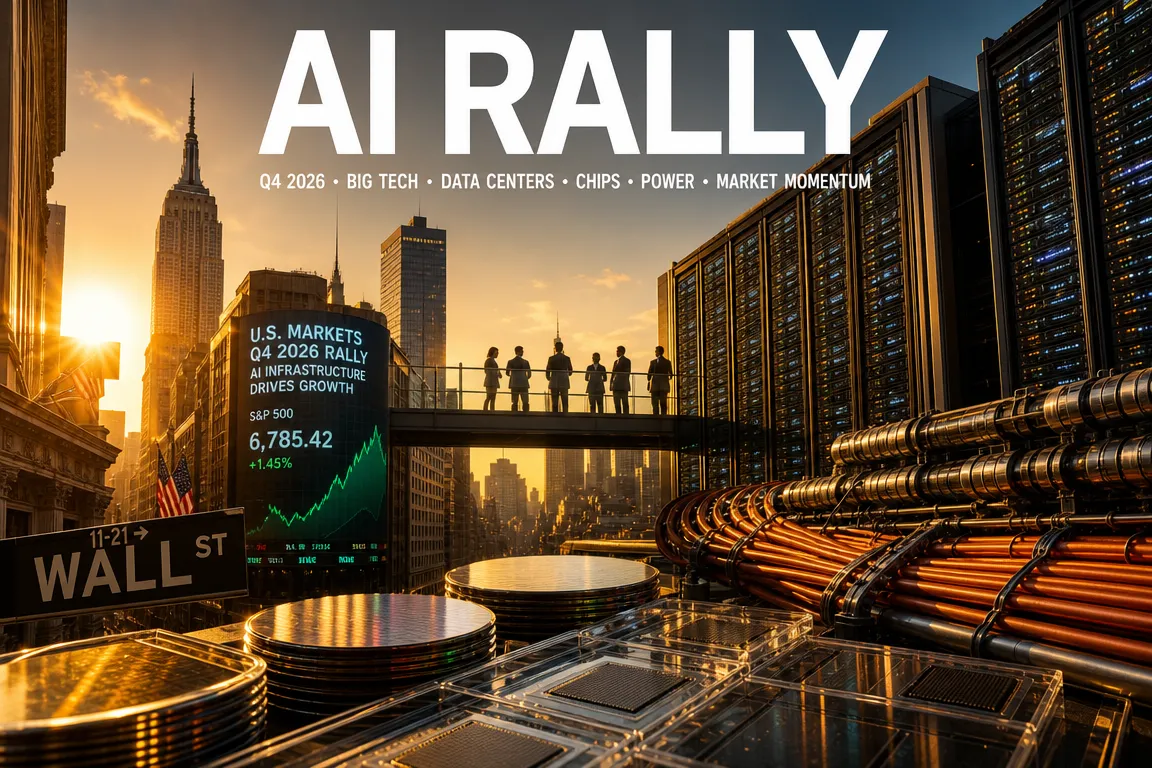
1. The apparent reason for today’s U.S. stock market decline: AI semiconductor stocks plunge
The U.S. market showed a broadly chaotic trend.
In particular, semiconductor stocks and AI infrastructure-related names at the center of the artificial intelligence investment theme were hit hard.
- Nvidia fell about 3%.
- Broadcom fell about 4%.
- Micron fell about 5%.
- SK Hynix ADR also slipped by nearly 5%.
- Meanwhile, Palantir showed some strength as its target price was raised to $230.
The market is finding the cause of this drop in the OpenAI revenue controversy.
The interpretation is that concern about AI demand grew after reports said OpenAI’s annualized revenue was close to $50 billion, not the previously believed $70 billion.
In won terms, this was received as if revenue expectations of nearly 100 trillion won had been lowered to around 70 trillion won.
But it is hard to explain the broad decline in the U.S. stock market, especially AI semiconductors and data center-related stocks, with just this one piece of news.
That is because Nvidia and TSMC had recently hit all-time highs, increasing short-term profit-taking pressure.
In the end, the market was already due for a correction, and the OpenAI revenue controversy seems more naturally understood as a justification for that correction.
2. The really strange part: interest rates actually moved lower
The factor that had been pressuring the U.S. stock market most strongly recently was the 10-year U.S. Treasury yield.
As the 10-year yield rose to around 5.3%, it placed heavy pressure on growth and tech stocks.
When interest rates rise, the present value of future earnings falls, which is especially unfavorable for AI growth stocks.
But today, yields moved lower instead.
The 10-year U.S. Treasury yield adjusted from around 5.3% to about 5.23%.
Normally, that would ease the burden on tech stocks.
Of course, the roughly 4% rise in international oil prices is a headwind.
Higher oil prices stoke inflation concerns and can also affect future rate expectations.
Still, that alone does not fully explain why AI semiconductor stocks fell together.
So this decline looks more like a correction driven by accumulated fatigue, overbought conditions, and debate over AI investment payback, rather than a single negative catalyst.
3. OpenAI revenue of $70 billion vs. $50 billion: the key takeaway is ARR
To understand this controversy, you first need to understand ARR.
ARR stands for Annual Recurring Revenue.
Simply put, it is a figure that takes the latest monthly revenue and multiplies it by 12 to express it as annual revenue.
For example, if an AI company generated $100 million in monthly revenue in December, it could simply multiply that by 12 and describe it as $1.2 billion ARR.
This is not the cumulative revenue actually earned over a year, but annualized revenue assuming the current pace continues for the full year.
This metric is often used for high-growth AI companies.
That is because January and December revenue can be completely different in fast-growing businesses.
If a company that made 1 million won in January can make 10 million won in December, then simple annual cumulative revenue does not accurately show the current growth pace.
That is why the market looks at ARR annualized based on the latest monthly revenue.
This ARR concept is extremely important when evaluating a hyper-growth company like OpenAI.
Any investor analyzing AI-related companies in the U.S. stock market must understand this metric.
4. The interpretation that OpenAI inflated revenue is too hasty
The core of this controversy is not whether OpenAI manipulated revenue.
In reality, it is closer to a difference in revenue recognition method.
Some reports suggested OpenAI recorded revenue at the $70 billion level, but the Financial Times pointed out that the actual number may be closer to $50 billion.
As a result, the market interpreted this as “Did OpenAI inflate revenue?”
But it is hard to regard this as accounting fraud or number manipulation.
It is also important that some data sites had already been showing OpenAI revenue at around $50 billion.
In other words, this was less a completely new shocking development and more a case of the market reacting sensitively with a delay.
5. The most important difference: gross revenue versus net revenue
The essence of this issue is whether it is a gross basis or a net basis.
Simply put, when a customer pays $100, is the full amount recorded as revenue, or is only the company’s share after excluding the partner’s portion recorded as revenue?
AI companies have complex revenue-sharing structures with cloud partners.
OpenAI is linked with infrastructure partners like Oracle, and Anthropic is linked with partners like Google and Microsoft.
Even if a customer pays $100 to use an AI service, part of that amount goes to the cloud partner.
- Anthropic’s approach is closer to recording the entire $100 paid by the customer as revenue and treating the partner’s share as an expense.
- OpenAI’s approach is closer to recording only the $70 left after the partner’s share as revenue.
In this case, Anthropic uses a gross basis, while OpenAI uses a revenue recognition method closer to a net basis.
It is hard to say one is absolutely right and the other wrong.
It can vary depending on company structure, contract terms, and accounting standards.
Ultimately, this controversy is closer to a matter of whether payments to cloud partners are treated as cost of revenue or as expenses, rather than “inflated revenue.”
6. What the market is really worried about: AI investment ROI
The real background behind this decline is AI investment ROI.
ROI means return on investment.
Right now, the biggest question surrounding big tech and AI companies is one simple thing.
“We are pouring so much money into AI, but can we really recover it?”
This question is shaking tech stock prices recently.
Big tech companies like Microsoft, Google, Amazon, and Meta are building data centers and AI servers through massive capital expenditures.
The problem is that these investments do not translate into profit immediately.
AI semiconductors, servers, power equipment, cooling infrastructure, and network gear all require money up front.
By contrast, actual service revenue begins in earnest only after data centers are completed and begin operating.
This time gap is making the market uneasy.
AI infrastructure investment typically has a lag of at least two years.
Even if money is invested today, meaningful revenue recovery is likely to begin in earnest only two years later.
7. The data center investment cycle: right now is not the time to earn money, but to build
At present, big tech companies are pouring enormous amounts of capital into data center construction.
In the process, a large portion of operating cash flow is being diverted into capital expenditures.
As a result, some companies’ free cash flow can come close to zero or come under pressure.
Based on the original text, AI-related investment of about $791 billion in 2026 alone is mentioned, nearly 1,000 trillion won in Korean currency.
Next year, an even larger investment may be needed.
Some companies may have to consider new borrowing because their own cash flow alone may not be enough.
From the market’s perspective, it is natural to worry.
“Is investment moving faster than revenue?”
“Will AI data centers really generate enough returns later?”
“Could semiconductor demand be temporarily overheated?”
These questions are increasing volatility in semiconductor stocks and AI infrastructure companies recently.
8. But AI cost recovery potential may be higher than expected
To judge the recoverability of AI investment, you need to look at inference margin.
Inference is the computation that occurs when users actually use AI services like ChatGPT or Claude.
Unlike training a model once, inference is a core part of service revenue that continues to occur as the number of users increases.
According to ARK Invest data, Anthropic’s inference margin is estimated at around 88%.
There may be somewhat aggressive assumptions included, but the overall direction is similar to SemiAnalysis’s analysis.
To simplify, if revenue is $100, the computing cost required for actual inference services is estimated at around $12.
If model training costs are about $18, the remaining margin is around 70%.
Of course, this calculation may be somewhat backward-looking.
That is because inference is likely to become much more important than training going forward.
Even so, if inference margins remain around 60%, AI companies’ profitability would still be quite strong.
The reason this matters is clear.
Once AI services start attracting users, revenue can expand through subscriptions, APIs, enterprise solutions, coding automation, customer support, search, and productivity tools.
And if high-margin economics are maintained, today’s large-scale AI investment may be recoverable over time.
9. The growth rates of Anthropic and OpenAI are still abnormally high
Anthropic is mentioned as having annual revenue growth of 14 times.
With a growth rate like that and a possible net margin of around 60%, it is not strange that the market gives it a high valuation.
Some even mention a $2 trillion IPO valuation for Anthropic.
It is an extremely aggressive figure, but it shows how highly the market values the growth of AI platform companies.
There is also a forecast that next year’s revenue could grow another 10 times, though that is a very optimistic scenario.
More realistically, even 4x growth would already be hyper-growth difficult to compare with ordinary companies.
The growth rates shown by OpenAI and Anthropic are different from the growth curves of traditional software companies.
That is because AI is closer to infrastructure that changes enterprise workflows themselves, not just a simple app or SaaS.
10. The paid AI usage rate among U.S. households is still only 2.2%
There is also a reason to believe the AI market is far from saturated.
Currently, only about 2.2% of U.S. households are said to use paid AI services.
The median monthly spending is around $20.
This figure shows that the AI market is still in its early stages.
Right now, most revenue is coming from enterprise customers, especially in areas like coding and improving development productivity.
But if it expands broadly into the consumer market in the future, revenue could grow much larger.
People who already use AI deeply in their work feel that it is hard to go back to the old way.
That is because the productivity difference in report writing, coding, data analysis, marketing copy creation, research, translation, and customer support is so large.
In the end, AI demand is more likely to create an exponential growth curve at some point rather than increase linearly.
11. The core point not often discussed in other coverage: the AI payback debate depends on ‘user experience’
There is a very important part of this controversy that is not well covered.
Judgment about the recoverability of AI investment changes completely depending on how deeply someone has actually used AI.
People who actively use AI at work often believe payback is possible.
That is because they are already experiencing the productivity gains directly.
They know AI functions not just as a simple chatbot, but as a practical work automation tool.
On the other hand, people who use AI only as a free chatbot tend to see it differently.
“Who would pay for this?”
“Wouldn’t it just require a lot of server costs and be hard to monetize?”
That kind of judgment is easy to make.
That is why opinions in the market are so polarized.
The side that views AI as productivity infrastructure sees current investment as advance capture of future revenue.
The side that views AI as a simple consumer chatbot sees current investment as a cost bomb.
This difference is exactly what shakes valuations for semiconductor stocks, data center-related names, and cloud companies.
12. How should this decline be viewed?
This decline is difficult to explain with just one OpenAI revenue shock.
Rather, it is more reasonable to view it as a correction where short-term profit-taking in already much-risen AI-related stocks combined with market anxiety.
Companies like Nvidia, TSMC, Broadcom, and Micron have risen strongly on recent AI optimism.
In such a situation, even a small piece of news can become the justification for a large correction.
What matters is not whether OpenAI’s revenue is $70 billion or $50 billion.
More important is how quickly AI companies can expand paid users, grow inference revenue, and recover data center investment costs.
If AI usage continues to increase and enterprise AI adoption expands, then the current data center investment and semiconductor demand can be justified.
On the other hand, if AI usage grows more slowly than expected or price competition intensifies, the market could be shaken hard again.
13. Key indicators to watch from an investment perspective
- ARR growth rates at OpenAI and Anthropic
- Paid conversion rates for AI services
- Growth rate of enterprise AI API usage
- Speed of decline in inference costs
- Balance between GPU supply and demand
- Growth rate of big tech capital expenditures
- Timing of data center activation and revenue recognition
- Movement in the 10-year U.S. Treasury yield
- International oil prices and inflation pressure
- Free cash flow at cloud companies
In particular, going forward, simply saying “AI is growing” will not be enough.
The market is now beginning to look not just at AI growth rates, but also at profitability, cash flow, and the payback period.
This shift is the most important turning point in AI stock investing.
14. Conclusion: the OpenAI revenue controversy is more of an excuse, and the essence is AI investment payback
This OpenAI revenue controversy became a chance for the market to re-examine the AI investment boom.
But interpreting it as accounting fraud or revenue manipulation is excessive.
The key point is the difference between gross and net basis, and it is closer to a question of how cloud partner costs are handled.
The essence of the decline in the U.S. stock market is anxiety over AI investment payback.
Whether hundreds of billions of dollars of data center investment can actually be converted into revenue and profit is the market’s biggest concern.
That said, paid AI usage is still very low, enterprise AI demand is growing quickly, and inference margins may well be high enough.
Therefore, in the long run, AI industry growth potential can still be seen as large.
This correction looks less like a sign of an AI bubble burst and more like a period in which investors, after a sharp rally, are trying to confirm ROI.
Going forward, the key question for AI stocks is likely to be not “Who invests more?” but “Who recovers their investment faster?”
< Summary >
Controversy over OpenAI’s revenue being around $50 billion rather than $70 billion became a justification for the decline in AI semiconductor stocks.
But this is closer to a difference in accounting treatment between gross and net basis than to inflated revenue.
What the market is really worried about is whether AI companies and big tech can recover the enormous cost of data center investment.
AI infrastructure investment has a lag of about two years before revenue is reflected, and this is increasing pressure on cash flow.
However, paid AI usage is still low, and inference margins may be high, so the long-term growth potential remains large.
This decline is more reasonably viewed as a correction combining post-rally profit-taking with debate over investment payback rather than as a collapse in AI growth potential.
[Related Articles…]
- AI Data Center Investment Cycle and Semiconductor Stock Outlook
- How U.S. Treasury Yields Are Changing Tech Stock Valuations
*Source: [ 월텍남 – 월스트리트 테크남 ]
– 예상보다 30조 매출이 부족?.. “진실은 이렇습니다.”