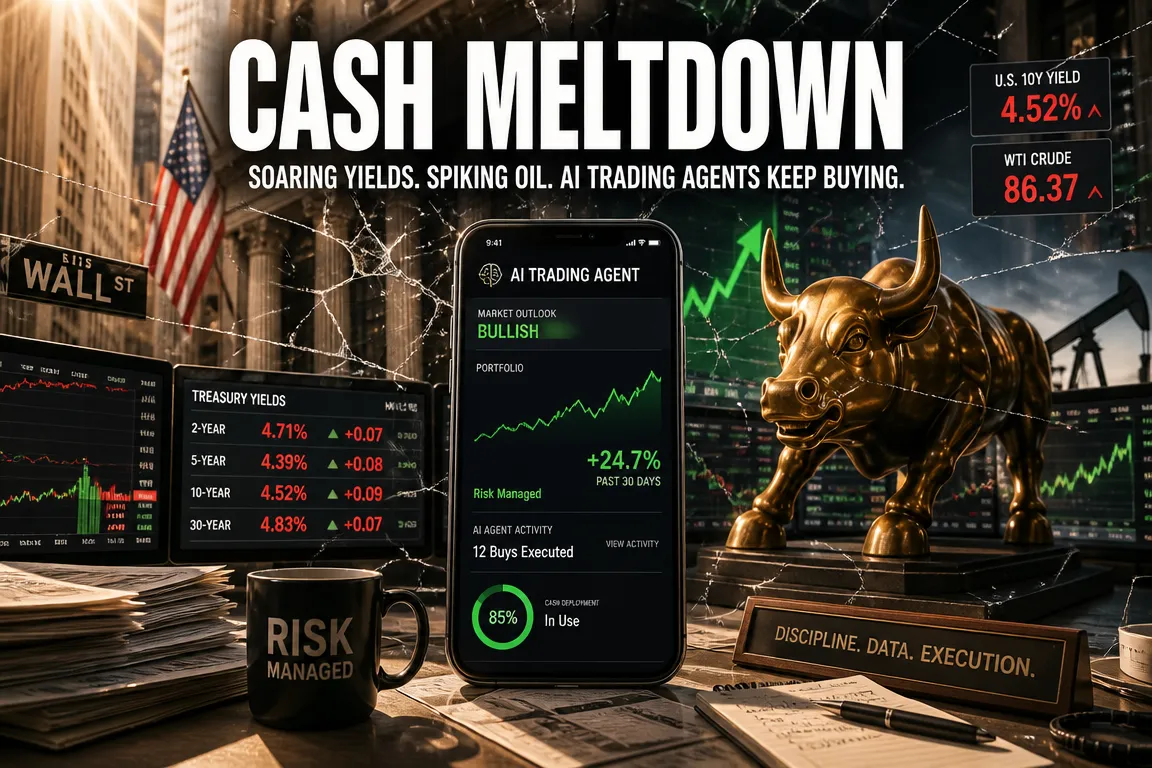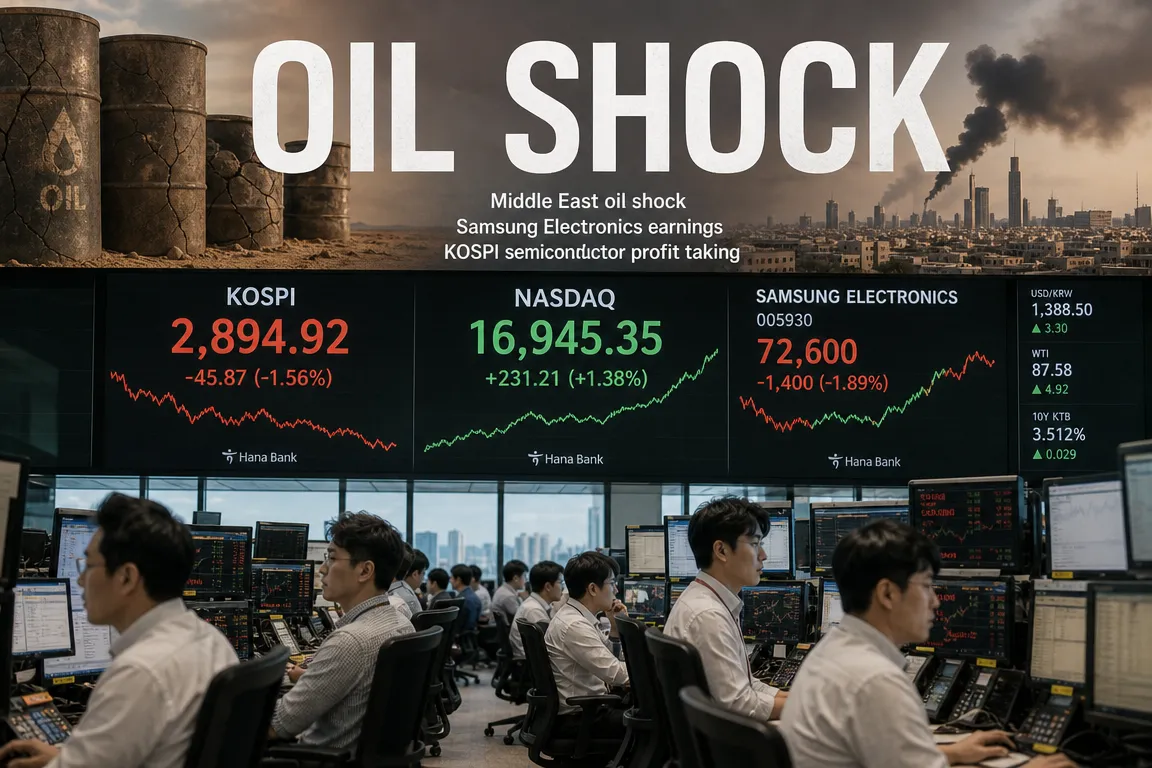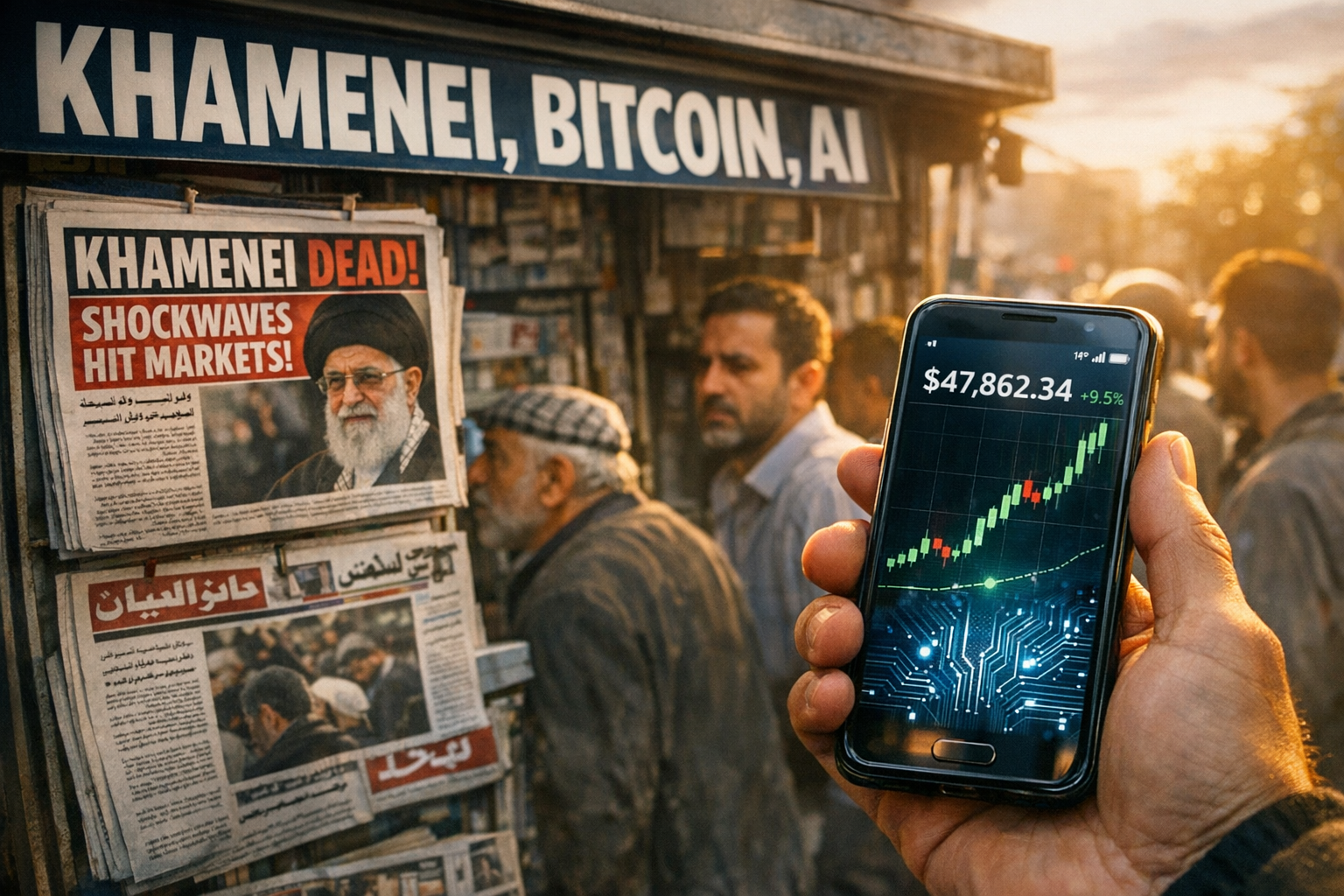
● Khamenei Dead, Hormuz Shock Clock, Oil Slump, Rate Cuts, Big Tech Surge
Three Factors Markets Must Monitor After the “Formal Confirmation” of Khamenei’s Death: ① A Timeline for Hormuz Risk ② The Oil–Inflation–Rates Chain Reaction ③ Post-War Capital Rotation (Refiners → Technology)
One-sentence summary:
“The war itself matters less than the way it ends (regime change vs. continued IRGC presence), which will differentiate the paths of oil, interest rates, and U.S. equities (especially AI and mega-cap technology).”
Key points covered:
– How the announcement signals potential disruption in Iran’s command-and-control (C2)
– The economic rationale behind a “regime-change without ground troops” approach attributed to Trump
– How Hormuz closure fears transmit into oil via insurance and shipping decisions
– The linkage: war conclusion → lower oil → easing inflation → increased room for rate cuts
– Triggers for capital rotating back from refiners into AI/technology equities
– Additional under-discussed but market-relevant considerations (separately summarized)
1) News Briefing: First-Order Market Impact of “Khamenei Death” Being Formalized
The market-relevant signal is not physical confirmation, but the implication that the U.S. knew the “pattern and location” and executed a targeted strike.
If accurate, markets will focus less on the binary question of death and more on the probability that senior Iranian command-and-control (C2) has been disrupted.
References to multiple senior figures being removed within 24 hours reinforce an interpretation of a conflict oriented toward a political end state (system change) rather than a prolonged war of attrition.
Iran faces a signaling dilemma: rapid “proof of life” media can increase targeting risk. As a result, markets may price directionality before definitive confirmation, increasing short-term volatility.
2) Strategic Intent (As Presented): “Induce Regime Change Without Ground Forces”
The cited message—encouraging citizens to take to the streets after strikes—highlights both the constraints of U.S. military options (targeted strikes on nuclear sites, air defense, and leadership) and the stated reluctance to deploy ground troops.
The lowest-cost victory condition can be summarized as:
– No ground deployment
– Internal collapse (civil mobilization plus defections from regular forces)
– Reconstitution toward a pro-U.S., or at minimum non-hostile, governing posture
If this framework holds, the U.S. could expand leverage across energy corridors, maritime routes, and sanctions mechanisms, while simultaneously tightening constraints on China and Russia. The core market variables become the U.S. dollar, energy prices, and inflation expectations.
3) Why Iran Is a Global Supply-Chain Variable, Not Only a Geopolitical Headline
The emphasized point is Iran’s role as a key node linking Russia’s southward access and China’s Belt and Road corridors. A shift in Iran’s alignment could drive structural changes larger than the conflict itself.
– China: disruption to sanctions-evasion and energy procurement routes implies higher long-run costs
– Russia: risk of deeper isolation amid the Ukraine war context
– United States: stronger leverage over energy, sea lanes, and financial sanctions architecture
Rising uncertainty typically increases demand for perceived safe assets; this dynamic can support relative attractiveness of U.S. assets through risk-off capital flows.
4) With the IRGC Intact, Hormuz Risk Does Not Immediately Drop to Zero
Even under regime instability, the Islamic Revolutionary Guard Corps (IRGC) is unlikely to disappear quickly. As long as it remains operational, threats to the Strait of Hormuz and shipping lanes may persist.
Mentions of “closure warning broadcasts” and “vessels anchoring” are significant because oil can react even without kinetic attacks, via risk premia and operational disruptions.
Why vessels pause operations:
– Insurance terms can differ materially depending on whether losses occur while anchored versus transiting under elevated risk, affecting liability and claims treatment
– For carriers, the risk premium can become economically prohibitive, leading to self-imposed توقفs in passage decisions
Near term, crude prices become the primary barometer of perceived escalation: resilience implies persistent risk; sustained declines imply markets are pricing a path toward stabilization.
5) If the War Concludes: Oil Down → Inflation Eases → Greater Room for Rate Cuts
Translated into market mechanics:
– The fading of a “war premium” increases the probability of lower oil prices
– Lower oil reduces inflation pressure
– Easing inflation expands central-bank flexibility, particularly for the Federal Reserve, to consider rate cuts
Markets are most sensitive to the re-anchoring of rate-cut expectations, as policy rates drive equity discount rates. Growth, technology, and AI-linked equities typically exhibit higher sensitivity to changes in rates.
Accordingly, this is not solely a geopolitical event; it can function as a variable that alters the expected interest-rate path.
6) Capital Flows Around the Event: Refiners → (On Confirmed De-Escalation) Rotation Back to Technology
A key observation is that capital had already shifted into refining and energy exposures ahead of the event, with indications that refiners recently approached local peaks.
Inverted implication:
Once markets gain confidence that the conflict is definitively ending, short-term capital allocated to refiners may rotate back toward AI, mega-cap technology, and Nasdaq exposures.
War resolution can therefore act not merely as “removal of a headwind” for technology, but as an event that provides justification for reallocating capital from where it previously sought war-linked protection or upside.
7) AI Cycle Consideration: To What Extent Rate Cuts Defer AI Investment Concerns
The core claim is that AI investment—particularly when supported by leverage or debt—faces pressure from rising financing costs and uncertain return profiles; incremental rate cuts can reduce the immediate burden and push risk concerns further out in time.
Simplified mechanism:
– High rates: leveraged investment structures face immediate stress
– Lower rates: those structures gain time and reduced carrying costs
Thus, the sequence—war resolution → lower oil → easing inflation → stronger rate-cut expectations—can translate into improved AI equity sentiment via the cost-of-capital channel.
8) Checkpoints: Five “Confirmation Signals” Markets Are Likely to Demand
Trend formation is likely to depend less on headlines and more on observable confirmation signals. The following may rise in importance sequentially:
- Actual Strait of Hormuz throughput and normalization of shipping (not “warnings,” but resumed passage)
- Evidence of weakening organized IRGC resistance (C2 breakdown, defections, changes in engagement patterns)
- A credible interim governance framework to fill Tehran’s power vacuum (elections, security, administrative restoration)
- The direction and volatility regime of oil (sustained downtrend vs. brief drop followed by renewed spikes)
- A shift in Federal Reserve tone such that rate cuts regain status as the base case
9) Under-Discussed but Market-Critical Point (Separate Summary)
The most important mechanism is not simply “closure vs. no closure,” but the structure by which insurance, shipping operations, and financing costs move oil prices first.
Many narratives stop at “Hormuz closure would spike oil.” In practice, markets can react earlier:
– Shipping slows on perceived probability before closure is a fact
– Slower shipping lifts insurance premia and freight rates
– These costs transmit into physical pricing, moving oil benchmarks
Accordingly, the primary indicator is not missile headlines but whether vessels begin moving again, signaling the unwind of the risk premium. Once visible in operational data, the oil decline becomes more defensible as a market regime shift rather than a narrative.
A second under-emphasized point: the largest beneficiary of war resolution may be rate-sensitive growth equities (Nasdaq, AI) rather than refining companies. Refiners may have rallied on war premia; a confirmed end state can remove that premium.
< Summary >
The formalization of Khamenei’s death signals a potential breakdown in senior command-and-control, and the stated U.S. objective is framed as inducing regime change without deploying ground forces, reshaping Iran’s strategic posture.
Near-term variables are the persistence of the IRGC and the risk profile of the Strait of Hormuz, with shipping activity and insurance pricing acting as leading indicators for oil.
If the conflict resolves into a confirmed end state, the likely chain is lower oil → easing inflation → increased room for rate cuts, creating conditions for capital rotation from energy/refining exposures back into Nasdaq, AI, and technology.
[Related…]
- Oil Volatility Expands: Reviewing Inflation and Rate-Cut Scenarios
- AI Investment Cycle Outlook for 2026: Big Tech CAPEX and Monetization Pace
*Source: [ Jun’s economy lab ]
– 하메네이 사망, 트럼프의 진짜 의도와 이란 전쟁이 종료되면 벌어질 일
● Trump Claims Khamenei Dead Bitcoin Jumps Middle East Shock 72 Hour Watch
Reasons the Market Remained “Surprisingly” Calm After Trump’s Truth Social Post Announcing Khamenei’s Death: Bitcoin Strength, Middle East Risk, and 72-Hour Checkpoints
This note focuses on three points:
1) The geopolitical signal implied by Trump’s “official announcement” of Khamenei’s death (escalation vs. managed containment)
2) Why Bitcoin did not sell off and instead rose after the headline (a re-framing of risk-on/risk-off)
3) The key under-discussed variable: Iran’s power vacuum, “spillover risk,” and how markets discount it
1) Headline Summary: What Happened
1) Trump: “Official announcement” of Khamenei’s death
Trump posted on Truth Social, implying confirmation via “reliable sources.” The message framed the event as political legitimacy: “one of the most evil figures” had died and that it represented “justice” for Iran, the U.S., and the world.
2) Trump: References to cooperation with Israel, tracking systems, and location identification
Explicit mention of “advanced tracking systems” and “close cooperation with Israel” signals operational intent rather than commentary. For markets, this simultaneously implies (i) potential follow-on strikes and (ii) an intent to manage escalation.
3) Trump: Exit messaging toward “peace, not escalation”
Comments suggesting parts of the IRGC and security/police structures “no longer want to fight” and seek immunity imply a pivot toward internal fragmentation and regime pressure rather than sustained external escalation.
4) Reza Pahlavi (exiled former royal heir): supportive statement
He asserted that the Islamic Republic had effectively ended and urged military, police, and security institutions to side with the public, highlighting an attempt to catalyze elite defections.
5) Market reaction (key point): Bitcoin rose modestly without a shock
After an initial drawdown at the onset of the Iran-related developments, Bitcoin recovered. Following the “death announcement” headline, Bitcoin saw no additional shock and moved higher.
2) Why Bitcoin Rose: Why the “War Headline = Sell-Off” Heuristic Failed
In geopolitical shocks, risk assets typically weaken. Bitcoin holding steady or rising suggests the market interpreted the event less as “risk expansion” and more as “uncertainty reduction.”
1) Uncertainty reduction (scenario pricing): the probability of a worst-case outcome fell
Markets price the next step rather than the event itself. If the death is credible, near-term command-and-control disruption could reduce Iran’s capacity for immediate, large-scale retaliation. This shifts pricing toward a managed-risk scenario.
2) Changing competition within “safe-haven” behavior: differentiation across USD/gold/Bitcoin
USD and gold often react first, but Bitcoin can trade as a political-risk hedge in certain regimes despite remaining a high-volatility asset. In restricted market-hours environments, Bitcoin’s 24/7 liquidity can become a primary venue for immediate repricing.
3) Liquidity expectations continue to provide downside support
Crypto is increasingly sensitive to macro variables (U.S. monetary policy, USD trends, bond yields). Even if geopolitical risk triggers a short-term shock, if markets expect financial conditions not to tighten materially, Bitcoin often exhibits rapid mean reversion. Key linkages: U.S. rates, inflation, USD strength, recession risk, and global supply chains.
3) Iran Domestic Dynamics: Implications of Reports of “Celebratory” Street Scenes
Reports citing celebratory activity in parts of Iran carry two implications for markets.
1) Visible internal division undermines regime stability
If the public response is not uniformly mournful, it suggests weaker internal cohesion. Markets can simultaneously price:
- Near term: reduced external escalation capacity due to internal disruption (risk mitigation)
- Medium term: increased probability of internal conflict, coup risk, or hardliner consolidation (risk re-expansion)
2) Pahlavi’s messaging functions as external political leverage
Exiled figures rarely shift power directly, but they can shape international narratives and diplomatic framing. Calls for security forces to side with the public represent a standard pressure tactic aimed at elite fragmentation.
4) Market Checklist: Key Items Over the Next 72 Hours (and Into Next Week)
1) Level of official confirmation
Trump’s statement is strong, but markets will focus on confirmation from state-level actors and intelligence-linked channels. Higher-confidence confirmation can reduce volatility by compressing uncertainty.
2) Succession mechanics in Iran (speed and clarity of transition)
The critical variables are who assumes authority, by what process, and how quickly. A smooth transition can enable policy continuity or renewed external assertiveness; a contested transition can divert resources toward internal control.
3) Energy pricing (oil) and shipping risk
The primary financial-market transmission channel in Middle East events is oil and maritime logistics. Stable oil supports recovery in risk assets; oil spikes can re-ignite inflation concerns and re-price the U.S. rate path more hawkishly.
4) Crypto as an early risk-sentiment signal
Because crypto trades continuously, Bitcoin can reflect shifts in risk appetite ahead of cash markets. This should be treated as a directional hint rather than confirmation.
5) Most Important Under-Discussed Point
The core issue is not the “death headline” itself, but whether markets treat it as an escalation catalyst or as a transition toward reduced uncertainty.
1) Markets price policy reaction functions, not moral narratives
Rhetoric about “justice” is secondary to expected actions: additional sanctions, additional strikes, negotiation pathways, or support for internal transition dynamics.
2) A power vacuum can be short-term risk-down, medium-term risk-up
Command disruption may reduce near-term conflict intensity, but medium-term incentives can shift toward external confrontation to restore legitimacy. A near-term Bitcoin rally should not be interpreted as definitive risk resolution.
3) Bitcoin strength may reflect positioning rather than improved fundamentals
Short covering, ETF/spot flows, or institutional re-risking after “event digestion” can drive faster-than-expected rebounds. Market focus should remain on key technical levels reclaimed or lost rather than headlines.
6) Practical Actions for Investors
1) Portfolio framing
As Middle East risk rises, allocation discipline across “cash-like USD exposure + gold + high-volatility assets (equities/crypto)” becomes more important. Oil volatility can alter the inflation trajectory.
2) Three indicators to monitor
- Oil (WTI/Brent): spike risk
- Dollar Index (DXY): renewed USD strengthening
- Bitcoin: resilience under adverse headlines
3) Near-term headline scenarios
- “Succession confirmed”: potential volatility compression
- “Retaliation/terror/shipping-lane risk”: potential inflation shock repricing
Summary
Following Trump’s announcement of Khamenei’s death, Bitcoin advanced without a shock response, suggesting markets initially interpreted the development as uncertainty reduction rather than escalation. However, a leadership vacuum can reduce risk in the immediate term while increasing medium-term tail risks depending on succession outcomes and retaliation choices. Key checkpoints are the strength of official confirmation, the speed of succession, and the trajectory of oil and the U.S. dollar.
Related Links
- Bitcoin outlook: ETF flow and volatility checkpoints (https://NextGenInsight.net?s=Bitcoin)
- U.S. rate scenarios: inflation and recession risk framework (https://NextGenInsight.net?s=Rates)
*Source: [ Maeil Business Newspaper ]
– [속보] 하메네이 사망 발표 이후 비트코인 상승 I 홍장원의 불앤베어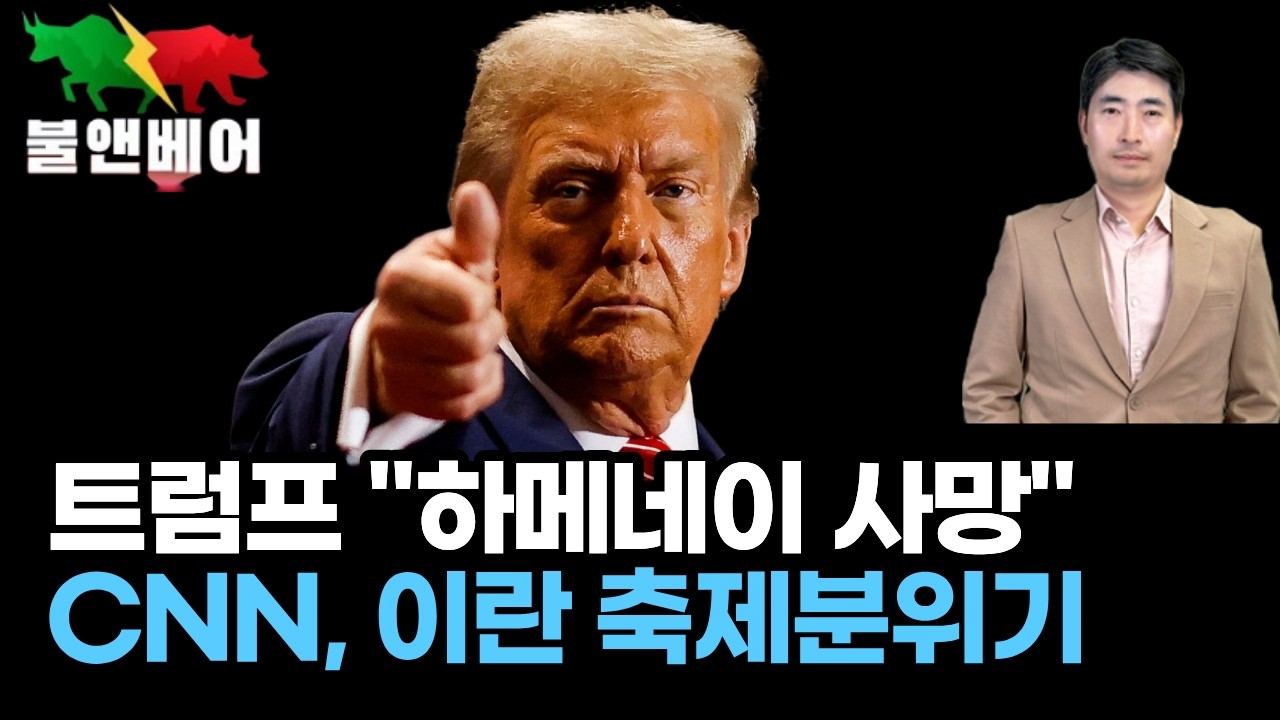
● AI Supercycle, Foreign Money Flood, Japan ReRating Boom
A Leading Candidate for “Global No. 1” Over the Next Five Years: The Core Thesis Is a Three-Part Alignment — “AI Supercycle + Foreign Capital Inflows + Japan Re-rating”
This report covers:
1) Why aggressive claims such as “a double within a year” appear, analyzed structurally rather than by headline numbers
2) What “record-level foreign net buying” signals, and the next triggers to monitor
3) How to distinguish “AI names that have already re-rated” from “early-cycle opportunities” across materials, equipment, and power infrastructure
4) The inflection point around 2026: demand (data centers) vs supply (power, components) vs capital (FX, rates)
5) A separate summary of the single most important risk-management principle
1) Core claim: “Record foreign buying -> 2x one year later -> a five-year trend” — the underlying logic
The recurring message is straightforward:
“Record foreign net buying in January -> this pattern has historically led to strong returns one year later -> the trend may persist for five years or more.”
The argument is less about one specific company and more about the combined effect of:
AI industry demand expansion + capital flow dynamics (foreign investors) + structural changes in the Japanese equity market,
which may produce a category-leading winner (i.e., “global No. 1” caliber performance).
Global equity markets increasingly treat AI as a new demand cycle. Japan is positioned to exhibit amplified sensitivity to that cycle under current market conditions.
2) Fact-based market framing: what is occurring in practice
2-1. AI supercycle: the investment flow extends beyond chips to power, materials, and manufacturing equipment
AI investment (particularly data centers) typically propagates through three layers:
1) Compute (semiconductors/accelerators)
2) Connectivity (networking/optical components/advanced packaging)
3) Operations (power/cooling/materials/components/automation)
References to “AI materials” indicate that market attention is broadening from “chips” to “infrastructure.”
The key condition for durability is whether AI spend becomes embedded in confirmed corporate CAPEX. Once CAPEX is committed, the theme tends to transition from cyclical narrative to multi-year industrial cycle.
2-2. What record foreign net buying may imply
Sustained foreign inflows typically coincide with:
1) A globally legible growth narrative (AI)
2) Re-rating potential (Japan governance reform, buybacks, ROE improvement)
3) An FX and rate environment perceived as investable
The more relevant inference is not the magnitude of buying alone, but whether global capital is structurally allocating to the “Japan + AI” combination.
This remains tactical if unsupported; it becomes durable if earnings delivery and CAPEX momentum validate the thesis.
2-3. Practical criteria: “already re-rated AI exposure” vs “early-cycle exposure”
The distinction can be framed operationally:
A. Already re-rated (overheating risk indicators)
- Price appreciation driven primarily by multiple expansion rather than revenue/earnings growth
- Price action driven by announcements/partnership headlines/keywords rather than shipments and orders
- Rising risk of margin peak-out as competitors add capacity
B. Early-cycle (cycle-start indicators)
- Demand transitioning from pilot to mass deployment
- Customer concentration declining as adoption broadens (multi-customer structure)
- Front-loaded investment and cost preceding earnings realization by 1–2 years
“Early” should be interpreted as an order and adoption structure moving into diffusion, not as sentiment.
3) Why a “market sweep” scenario may be plausible around 2026: bottlenecks and power constraints
AI discussions often concentrate on leading chip vendors. Around 2026, two variables may be more decisive:
1) The binding constraint for data-center buildout may shift from chip supply to power, cooling, and components
- Grid interconnection, transformation, distribution, and protection equipment can delay entire projects
- Firms controlling these bottlenecks can compound returns over longer horizons
2) Manufacturing automation and precision components can be structurally sticky once standardized
- Qualification and certification cycles are lengthy in semiconductors and electronics equipment
- Once adopted, repeat orders tend to persist, supporting multi-year visibility
Japan has competitive positioning in precision manufacturing, materials, equipment, and component supply chains.
4) Macro variables determining whether the cycle can persist “five years or more”
Long-duration equity narratives are ultimately sensitive to macro conditions. Three variables are critical:
4-1. Rate cuts
- Higher growth multiples are rate-sensitive; easing can support renewed multiple expansion
4-2. Inflation
- Higher costs in power, equipment, construction, and copper can alter data-center CAPEX ROI assumptions
4-3. FX
- JPY direction materially affects Japan equity returns for foreign investors
- JPY weakness supports exporters operationally but introduces FX translation risk for offshore holders
Strong claims such as “doubling every year” require not only earnings execution but also a supportive alignment of rates, inflation, and FX.
5) The most important point often omitted: characterize the inflow, not just its size
More important than “record foreign buying” is identifying which industries and which positioning (core vs satellite) the capital is entering.
- Foreign buying can be driven by ETF/index rebalancing, which can lift the market but does not necessarily identify a single global champion
- A more durable signal is when a specific segment (e.g., AI infrastructure, precision equipment, power systems) shows:
- upward earnings estimate revisions, and
- institutional accumulation as a core, long-term position
The principal diagnostic is:
Is price appreciation driven by flows, or by upward earnings revisions?
This distinction often separates multi-year compounding from short-term momentum.
6) Implementation checklist: translating “all-in” language into investable conditions
Convert promotional language into condition-based risk controls:
Condition 1) Earnings visibility
- Are forward 12-month earnings estimates rising consistently?
Condition 2) Bottleneck economics
- Does incremental AI CAPEX translate into both volume and pricing power?
Condition 3) Valuation justification
- Even at elevated multiples, is the valuation supported by earnings growth?
Condition 4) FX and rate risk
- Avoid structures highly exposed to abrupt JPY moves or rate shocks through leverage or refinancing sensitivity
When these conditions align, a higher portfolio weight may be analytically defensible.
7) Conclusion: “Global No. 1” outcomes are more likely among firms that control AI’s cost structure
Over a five-year horizon, likely winners are not simply firms “doing AI,” but those that reduce the operating cost of AI or remove supply-chain bottlenecks across power, cooling, manufacturing, components, and logistics.
A disciplined restatement of the thesis:
If foreign inflows provide sustained support and AI-driven CAPEX continues to expand, a representative leader could plausibly deliver global top-tier performance.
< Summary >
- The AI supercycle is expanding beyond chips into power, cooling, materials, and precision equipment.
- Record foreign buying may indicate structural allocation to the “Japan + AI” exposure set.
- Around 2026, the key differentiator may be data-center bottlenecks in power, components, and supply chains.
- For a multi-year thesis, prioritize earnings estimate revisions over flow-driven price action.
- Key macro variables: rate cuts, inflation, and FX.
[Related Articles…]
- https://NextGenInsight.net?s=AI
- https://NextGenInsight.net?s=FX
*Source: [ 달란트투자 ]
– 앞으로 5년 내내 전세계 1위는 ‘이 주식’이다. 그냥 눈감고 묻어만 두세요|서병수 애널리스트 3부