● OpenAI Ad Gamble
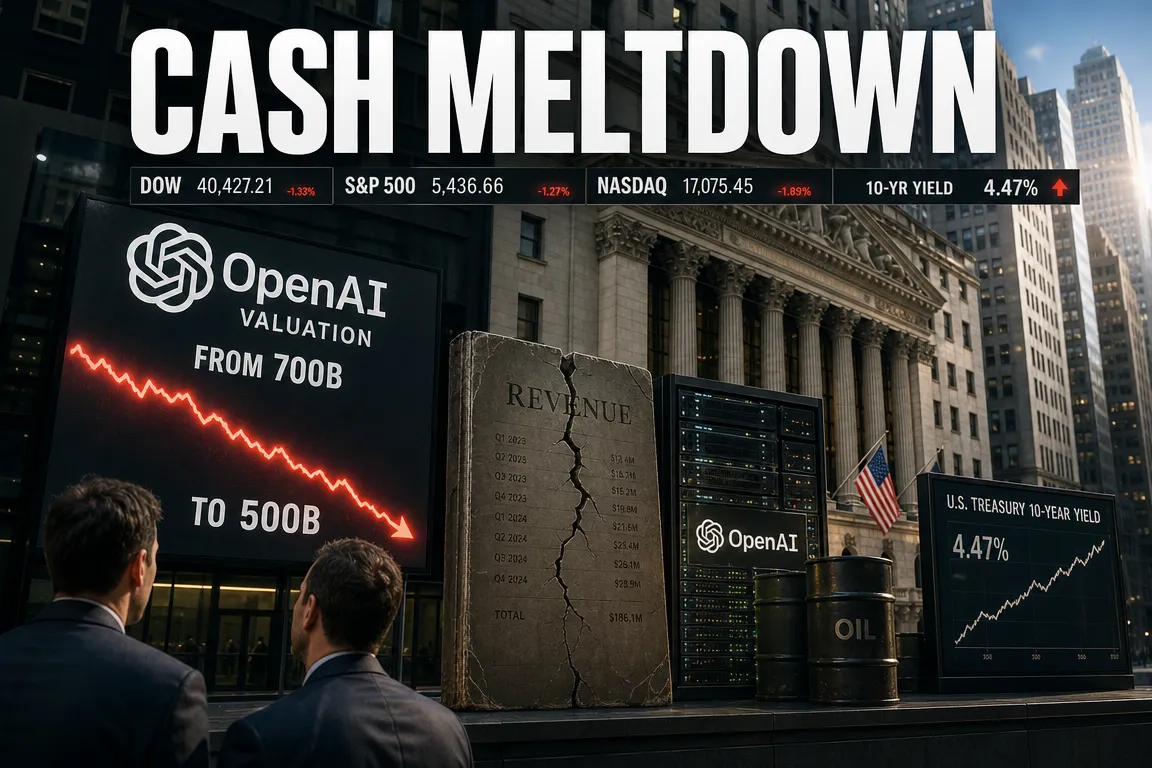
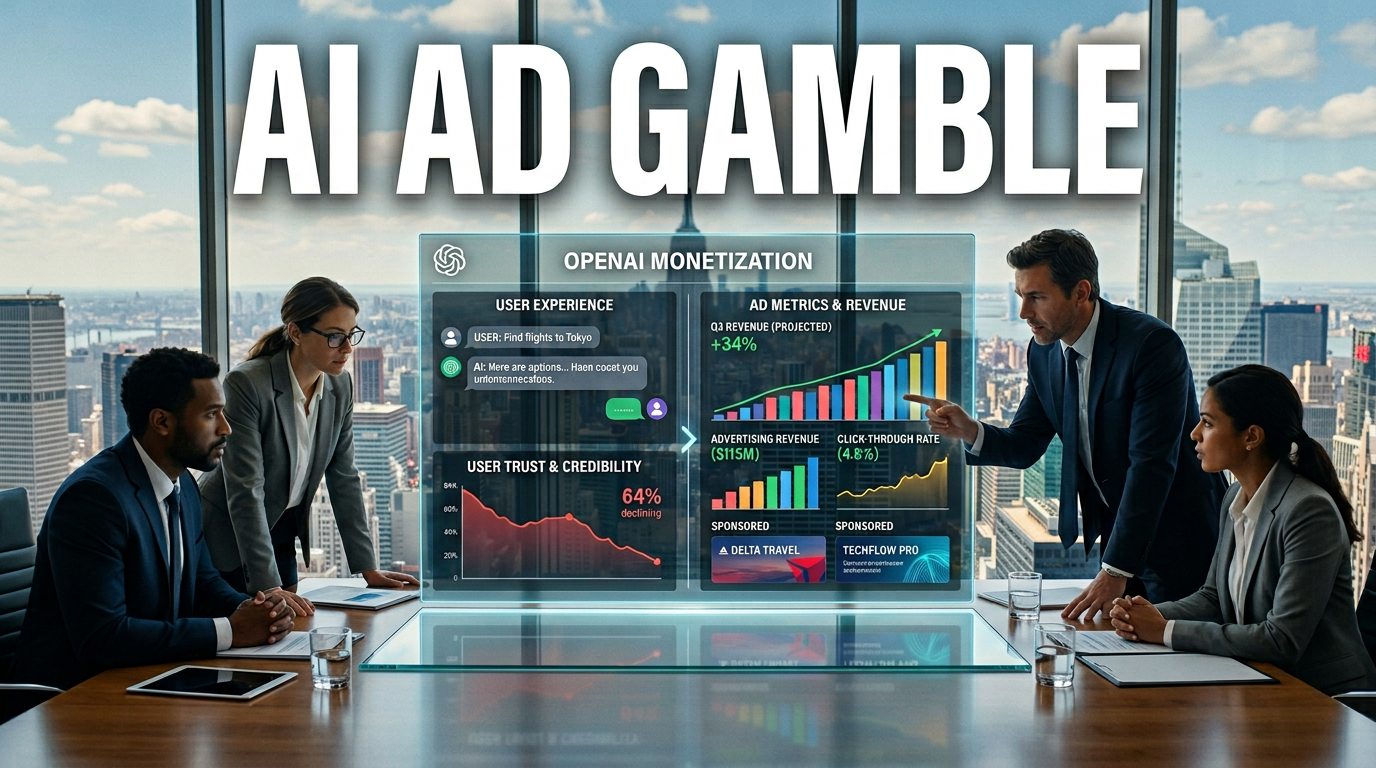
Can OpenAI navigate the crisis with an advertising model?…A game-board shift created by the end of Sora, pulling back from B2C, and the lack of a revenue model
The first thing I want to highlight in this post is three key points.
First, OpenAI is making the choice to shut down “not profitable” B2C one after another.
Second, in the end, it has elevated the advertising model to a “mandatory survival option” as a breakthrough.
Third, the scenario is that even if advertising succeeds and creates growth momentum, if it fails, it can shake even more due to the trust/cost structure.
And the core point is that this flow isn’t just an OpenAI issue—there’s a possibility it could become a variable that flips the entire AI ecosystem, from Microsoft to Amazon, Google, and Anthropic.
1) The reality of OpenAI’s crisis: The “revenue model” broke first, not “business expansion”
Based on the original content, OpenAI’s problem isn’t that it lost in the technical race; it’s closer to the idea that the timing for designing the BM (revenue model) was late, and that the structure where money doesn’t come in kept showing up even as it expanded into new areas.
1-1. Ending an SNS app based on Sora: Not “popularity,” but “continued losses” are the reason for the shutdown
- The Sora-based SNS app managed to make itself felt against competitors (TikTok/Instagram Reels/YouTube Shorts) at launch.
- But the key point was this: the amount of content production provided for free (around 30 per month) didn’t enable a paid upgrade, and as a result, daily losses kept accumulating.
- The estimated losses presented in the original content are about around $15 million per day.
In other words, there was a wide gap between “people did use it” and “it makes money in a sustainable way.”
1-2. Pulling back/pausing after a sprawling B2C expansion: Roadblocks from SNS to commerce to healthcare
- OpenAI expanded into B2C areas like e-commerce, hiring, and healthcare, but the flow is described as starting to get steps all tangled up—unable to break through properly one by one.
- In particular, there are diagnoses that it lacked the “brain/experience” needed to dominate the consumer market.
You can build with large-scale investment and product development, but this is the point where results may differ from organizations that have accumulated B2C experience.
1-3. “Code red”/project stop: Spreading resources when focus is needed
- In the original content, it mentions that OpenAI activated a kind of emergency mode (code red), and as a result, certain projects were halted or put on hold.
- Google has examples where it triggered a code red in the past, like “DeepMind + strategy integration,” and Anthropic is contrasted as taking a focused strategy (code-centric/Codex-code-focused) in a “only sell this one thing” manner.
2) OpenAI vs Anthropic: The game of “depth” is turning into a game of “revenue speed”
The important comparison point here is not just technical performance, but differences in revenue and operating approach.
2-1. Anthropic may have a larger growth range centered on enterprise
- The original content emphasizes that Anthropic’s revenue mix has a stronger enterprise share than B2C.
- There’s a frame included that drills into depth with a “focus only on code” approach and then grows explosively within the enterprise.
2-2. OpenAI, on the other hand, is “in a hurry for revenue,” while B2C is blocked and time keeps piling up
- The diagnosis is that although OpenAI pursued many different projects, costs grew accordingly and the speed of revenue conversion didn’t keep up.
- Ultimately, it leads to the logic that some model/app must reliably make money in order to flip the board.
3) So the takeaway is: Advertising—why it emerged as OpenAI’s “survival-type revenue model”
The core of the original content is this.“OpenAI can get out of the crisis only if the advertising model succeeds.”
3-1. Testing has started… but the response isn’t as good as expected
- OpenAI has been testing the advertising model since February, and evaluations in the U.S. suggest the response is “not yet sufficiently satisfactory.”
- There are also concerns that inserting ads when the consumer market lacks brand/marketing/conversion experience could make results even harder.
3-2. A Netflix-style “subscription + ads” structure, and the problem of massive traffic from free users
- The original content points out that, assuming a structure where “most users are free users,” the traffic costs may be hard to bear.
- That then connects to the logic that advertising should recoup costs even from free users.
- It mentions a way to combine it with a subscription model (a premium tier without ads).
3-3. The biggest barrier isn’t “performance,” but “trust”: The issue of inserting ads in the middle of a conversation
There’s a point readers should especially pay attention to here.For ads to succeed, the “quality of the conversation” can’t be shaken, and if “trust” breaks, it can become even more dangerous.
- It’s not just simple banners—an approach where ads/brand suggestions are inserted inside the conversation flow has a big UX risk.
- The example mentioned in the original content is a “structure that hands off the conversation partner in another way so the ad follows naturally,” and the key is testing how naturally people will accept it.
4) OpenAI’s “retreat from commerce” as reallocation rather than failure?…Amazon and reviews are the key link
The interpretation is that when OpenAI closes down the e-commerce side, it doesn’t mean it’s “giving up on commerce.”
4-1. Shutting ACP and moving the purchase “to Amazon”
- The agentic commerce protocol (ACP) that OpenAI was pushing didn’t move smoothly, and the original content says it gives the strong impression of effectively passing purchases to Amazon.
- It also mentions competing axes like Google’s UCP, including comparisons that each has a different sales/payment structure.
4-2. Amazon’s investment ($30 billion) and the “transfer to the existing pillar”: a combination of brand + recommendations + reviews
- The most important business logic in the original content is “the power of reviews.”
- Amazon has accumulated review data, making it strong in refining recommendations, and there’s a perspective that if OpenAI’s recommendations are combined with that, personalization quality could improve further.
- In particular, the explanation is that the more reviews there are, the better it can categorize items by preferences (taste) and categories like durability/design/sportiness, enabling hyper-personalized recommendations.
The important message here is one thing.If OpenAI can’t break through on its own for commerce, it might be a strategy to “attach the AI for recommendations to Amazon’s purchase infrastructure + review data” and win.
5) Competitive landscape with Google and Google-affiliated players: UCP vs ACP, and options that can spread to Korean commerce too
The original content emphasizes that “play options” are increasing even for Korea.In other words, the logic is that as the OpenAI-Amazon alliance and the Google alliance each reorganize the commerce front in different ways,domestic companies will also have more choices.
5-1. UCP gives a seller-friendly impression, while ACP gives a seller-hostile impression (structural differences)
- There’s an interpretation that ACP may create tension in the relationship with sellers because purchases appear as if they are completed in the chat/conversation flow.
- The comparison says that UCP is more likely to have purchases happen at the point of sale and operate mainly through infrastructure fees, making it look more seller-friendly.
5-2. Korea: Naver is not shutting off AI—it’s shifting toward “holding the line in commerce”/defense
- The original content frames it as: even if Naver chooses to shut down chat/booking-related things in B2C,it isn’t choosing to shut down AI itself.
- There’s an explanation that it’s a strategy to defend by focusing its AI capabilities on commerce like the Naver Store.
5-3. Coupang/Naver/Google/OpenAI: the possibility that “alliance vs defense” strategies could split
- The view is that Coupang could face “strategic turning points” like the possibility of an alliance with Google, or negotiation options with OpenAI.
- That is, in future domestic commerce competition, it may come down not only to “AI model performance,” but also to the “revenue-sharing structure, payment structure, and data ownership.”
6) AI companions (boyfriend/girlfriend) & adult mode being held back: even profitable areas depend on timing
The original content says there was a flow where OpenAI touched adult mode (or a similar service controversy),but the interpretation adds that in the current crisis situation, it may be a decision to “hold off for now by looking ahead to the future.”
- In the U.S., there are also controversies mentioned that combine with ideological/political leanings (Democratic Party support = Anthropic/Claude frame, Republican Party support = ChatGPT/Grok frame, etc.).
- As the AI companion market grows, it was covered in the media using expressions like “a-t-re mode,” and the context is that this could create risk to the service image/trust.
- In conclusion, the key judgment point is framed as whether “even if it’s a market that makes money, can OpenAI handle it right now (brand risk + operational risk).”
7) OpenAI expanding into robotics/physical AI: but there’s still no “performance relative to spending”
The original content says OpenAI is continuing to touch the hardware side too (humanoids/devices).But even here, the core is the same.until revenue is attached, only “investment and costs” can increase.
- There seem to be many “growth options,” like world foundation models, physical AI, and humanoid investments, but the original content summarizes it with the view that it’s “cultivating too many illnesses at the same time.”
- It also includes a warning that this competitive landscape could turn into a head-on battle with strong players like Tesla (robots), Google/Meta (platforms), Apple (SNS/ecosystem), and Nvidia (model ecosystem/hardware).
8) Then the conclusion: If advertising succeeds, OpenAI’s “direction change” could begin
The tone the original content leaves at the end is this.“If it manages to build even one thing that succeeds, the growth momentum can return.”
- There’s a sense of problem awareness that OpenAI has poked at many things, but it hasn’t had “a clear success” yet.
- But if the advertising model takes hold in a meaningful way, it could spread globally, and with that money there would be room to test other areas of commerce/recommendations/content again.
- However, the success condition isn’t just revenue—it’s user trust (maintaining conversation quality) and natural ad UX.
9) (Outside the content mentioned in the original text) My additional wrap-up: the single most important line
OpenAI’s next win depends less on model performance and more on whether it can scale conversational advertising without damaging trust.
If it fails, the loss structure will keep going, and the cycle of ‘B2C pullback → advertising conversion’ is likely to repeat.
On the other hand, if it succeeds, it can become a revenue engine that connects everything—from recommendations and commerce to subscriptions and enterprise use cases.
And the reason this matters is that it’s not a problem of any one individual company, but because the weight in the AI subscription economy can shift toward an ad-based revenue model. This trend can naturally shake investments in semiconductors/data centers and also the global competitive landscape (Google vs Amazon/OpenAI vs Anthropic).
(5 key economic/AI keywords naturally inserted) Generative AI, AI subscription economy, data centers, semiconductor cycles, ad monetization.
< Summary >
– OpenAI has seen issues grow from “continued losses” rather than “popularity,” with actions like ending the Sora SNS app, and the B2C expansion flow has also been destabilized one after another.
– Anthropic is presented as potentially growing faster with deeper focus centered on enterprise.
– OpenAI’s breakthrough is ultimately the advertising model, and because the share of free users is high, the cost structure is hard to manage without advertising.
– The biggest risk of advertising is trust/conversation quality (UX), and the key is having a natural “ad insertion” structure.
– Commerce is interpreted as having its key linkage not in a standalone win, but in combining with Amazon (investment of $30 billion), especially refining recommendations based on review data.
– In Korea, options expand as seen in differences between UCP/ACP structures, and strategic splits for Naver/Coupang may emerge.
[Related Posts…]
OpenAI’s ad model monetization: Can conversational ads get past the “trust” problem
*Source: [ 티타임즈TV ]
– 돈 못버는 오픈AI 광고모델 성공할 수 있을까? (강정수 블루닷 AI연구소장)