● Stagflation-Shock, Rate-Hike-Fears, Supply-Chain-Crisis
Why Korea’s Asset Markets May Diverge in 2026: Inflation, Rates, Real Estate, and Supply-Chain Shocks in One Framework
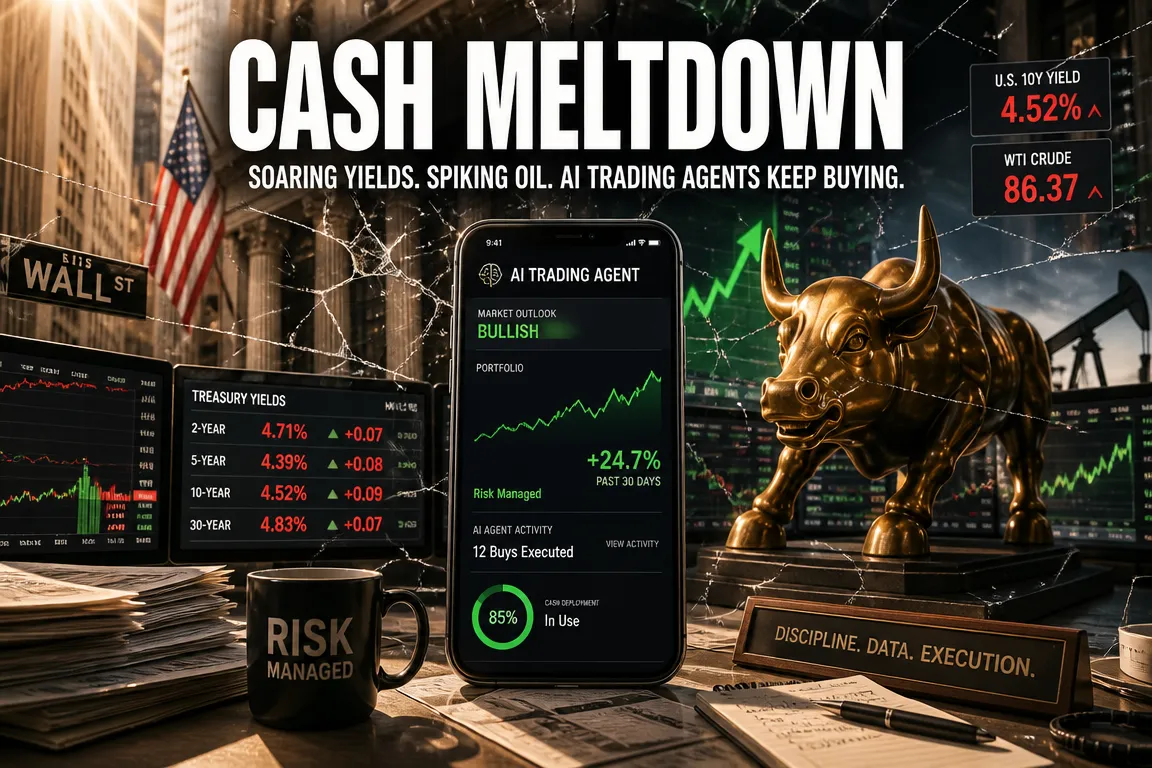
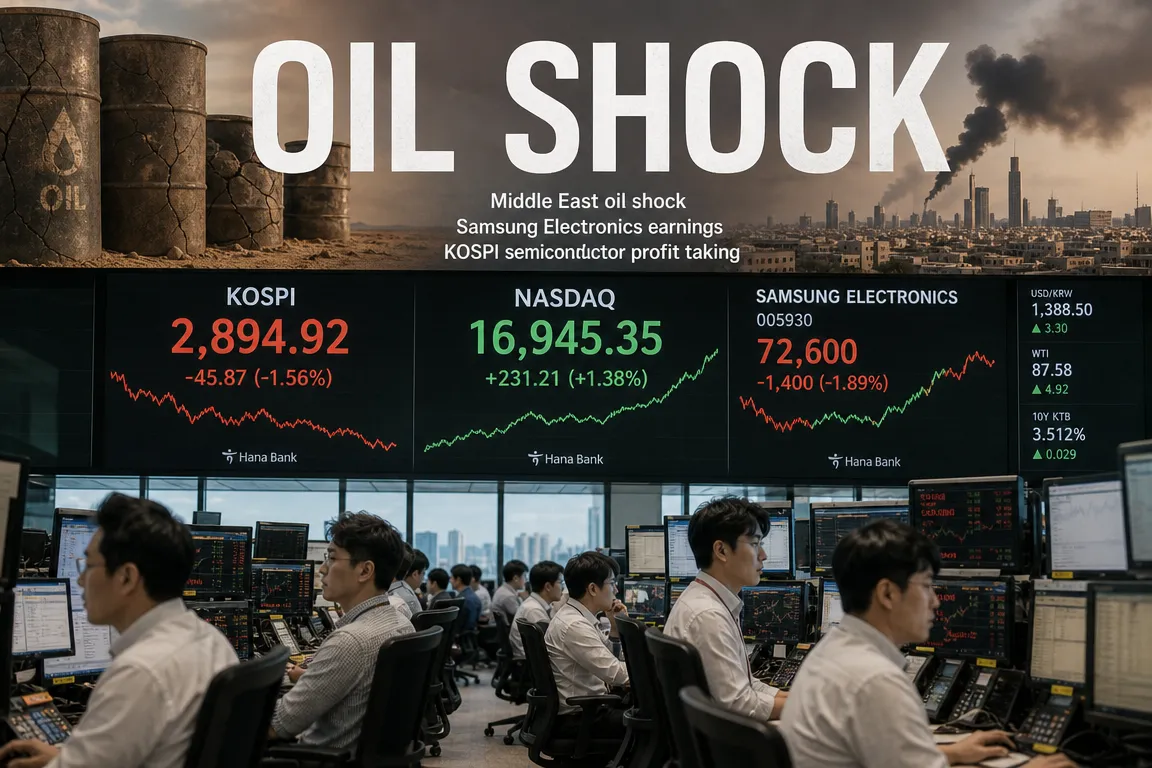
The key issue is not simply “higher oil prices.” The relevant chain is: prolonged Middle East conflict risk → renewed inflation pressure → a shift from expected rate cuts toward “higher for longer” (or hikes) → differentiated outcomes across equities and real assets. Korea may face amplified effects due to energy import dependence, FX sensitivity, and shipping-cost pass-through. In real estate, the core theme is not uniform price moves but widening dispersion (new vs. old stock; preferred vs. non-preferred areas), with villa supply disruption emerging as a structural constraint.
1. Executive Market Summary: Why the Regime Is Shifting
- The shock originates in geopolitical risk in the Middle East, with limited near-term resolution potential due to layered political and sectarian dynamics.
- Markets increasingly treat this as a persistent supply shock rather than a short-lived event.
- Unlike typical “risk-off” episodes where sovereign yields fall, flows have shown stronger bias toward commodities than duration, indicating inflation risk is being prioritized over growth slowdown.
- The macro characterization is closer to “inflation pressure + growth deceleration” (stagflationary features) than a pure recession shock.
2. Why This Conflict Can Reignite Inflation
2-1. Concurrent volatility in oil and natural gas
- The key risk extends beyond crude oil to natural gas.
- Higher oil prices feed through to transportation, industrial inputs, petrochemicals, construction materials, and packaging.
- Natural gas is critical because it links directly to fertilizer economics and agricultural production costs.
2-2. Natural gas → ammonia → fertilizer → grains → food inflation transmission
- Nitrogen fertilizer economics depend heavily on ammonia, which is tightly linked to natural gas.
- Higher natural gas prices or disrupted supply raise fertilizer prices, which can reduce or delay planting and input usage.
- Lower crop output pressures grain prices; higher grain prices raise feed costs; this can transmit into meat, processed foods, and food-away-from-home inflation.
- Agricultural timing constraints matter: missed planting windows can create delayed but persistent supply-driven inflation.
2-3. Supply shortfalls can be more disruptive than price increases
- The core risk is not only “more expensive inputs” but potential shortages that interrupt production.
- Vulnerable categories include petrochemical derivatives and broad industrial inputs (e.g., plastics, packaging, coatings, building components, tires).
- Supply-chain shocks can produce both affordability constraints and outright unavailability.
3. Why Korea Is Potentially More Exposed
3-1. Low energy self-sufficiency and high Middle East dependence
- Korea’s low energy self-sufficiency, high reliance on Middle Eastern crude and LNG, and manufacturing-heavy structure accelerate cost pass-through from imported inputs to domestic inflation.
3-2. Korea’s import-price shock is a function of oil × FX × shipping
- Korea’s effective import cost is driven by:
- spot/physical energy prices,
- KRW-USD exchange rate,
- ocean freight and insurance premia.
- A simultaneous rise in these variables can produce outsized import-cost inflation versus peers.
3-3. The shock’s center of gravity may differ from 2022
- In 2022, Europe was disproportionately affected due to Russian energy exposure.
- Under a Middle East-driven shock, Asia—especially manufacturing economies with high Middle East energy dependence—may experience more direct pressure.
4. Rates Outlook: Why “Cuts” Are Less Certain Than “Hold/Hike”
4-1. Central banks prioritize preventing a renewed inflation rebound
- If supply-driven inflation re-accelerates, rate cuts become harder to justify even amid slowing growth.
- The debate can shift from “how many cuts” to “whether cuts are feasible,” including the risk of extended holds or renewed hikes.
4-2. The Bank of Korea faces tighter constraints due to FX
- Policy constraints are broader than inflation: KRW weakness can raise import inflation.
- In a scenario of persistent KRW depreciation and higher import prices, maintaining restrictive policy (or tightening) can become more likely despite growth headwinds.
5. Implications for Equities and AI Exposure
5-1. Growth and AI are rate-sensitive
- AI and related innovation themes remain structurally supportive over the long term.
- However, higher discount rates reduce the present value of long-duration cash flows, raising volatility for high-multiple growth segments (e.g., mega-cap tech, AI, robotics).
- Strategy emphasis shifts from “theme validity” to balance-sheet strength and funding resilience under higher rates.
5-2. AI cycle may shift from broad beta to selection
- In a higher-rate, supply-uncertain environment, the market may increasingly favor AI businesses with:
- visible revenue,
- durable margins,
- demonstrable cash generation,
- infrastructure and enabling-layer exposure.
- The likely pattern is dispersion within AI rather than uniform appreciation.
6. Korea Real Estate: Dispersion Matters More Than a Single Direction
6-1. Higher-for-longer rates remain a headwind
- Elevated policy rates increase debt-service burdens and weaken marginal housing demand.
- Older stock and non-preferred locations are more vulnerable if growth slows concurrently.
6-2. New-build units can remain relatively resilient
- Higher energy and commodity costs increase construction costs (rebar, cement, coatings, plastics, windows, logistics, equipment operation).
- Rising build costs can slow new supply and raise replacement costs, potentially supporting relative pricing of new stock.
- Result: wider price gaps between new-build and older units, even within the same area.
6-3. Redevelopment and reconstruction face cost-driven feasibility risk
- Cost inflation raises member contributions and lowers project economics.
- This can delay or halt projects, widening the gap between policy announcements and realized housing completions.
- A supply shock can deepen this implementation gap.
7. Villa Supply Disruption: A Structural Variable Often Underweighted
7-1. Villa market stress can distort the broader housing market
- Reduced villa demand following fraud incidents and risk aversion weakens liquidity in sales and deposits.
- Developers’ capital recovery worsens, reducing new villa starts and pipeline supply.
- Villas function as a mid-step in the housing ladder; disruption impairs mobility for younger and lower-income households.
7-2. Villa pricing can influence the lower bound for apartments
- If apartment prices fall near villa price levels, households often substitute toward apartments.
- Villa pricing and availability can therefore help define the effective floor for nearby apartment pricing.
- Reduced villa supply and firmer remaining villa pricing can indirectly lift the apartment downside floor.
7-3. A shift from deposits to monthly rent weakens household capital formation
- If both villa purchases and deposit-based leasing are avoided, households may be pushed toward monthly rent.
- Sustained rent outflows slow savings accumulation, extending the time required to move up the housing ladder.
- This is a structural issue affecting asset formation and mobility, not only a segment-level housing concern.
8. Broader Global Implications: US-China Dynamics and Policy Signaling
- The shock may interact with US-China diplomacy, mediation attempts, and strategic competition.
- Given strong bipartisan consensus in the US on China competition, geopolitical optics and timing can affect diplomatic scheduling and risk premia.
- Markets may monitor whether these dynamics delay or reshape major bilateral engagements.
9. Core 2026 Asset-Market Scenario Framework
More plausible than a single-track “gradual cuts + risk-on recovery” is a multi-factor regime:
1) Prolonged Middle East risk sustains supply shocks across oil, gas, agriculture inputs, and logistics.
2) These shocks can re-accelerate Korea’s import and consumer inflation.
3) Central banks, including the Bank of Korea, may tilt toward extended holds or potential hikes rather than cuts.
4) Equity markets may see higher volatility, particularly in growth and AI-linked themes.
5) Real estate outcomes may be dominated by dispersion: new vs. old, apartments vs. villas, preferred vs. non-preferred areas.
10. Key Points Typically Underemphasized
1) The core risk is supply-chain disruption, not the oil price level alone.
2) Natural gas stress can translate into food inflation via fertilizer economics.
3) Korea’s vulnerability is oil × FX × freight/insurance, not oil in isolation.
4) Real estate risk is less about uniform price declines and more about housing-ladder disruption and segmentation.
5) AI is unlikely to “move as one”; higher rates favor cash-flow-proven winners.
11. Indicators to Monitor
- Physical/spot oil pricing trends (not only futures)
- KRW-USD exchange rate; ocean freight and insurance premia
- Natural gas, fertilizer, and grain price linkages
- Bank of Korea communication on inflation and FX sensitivity
- New-build presale pricing, construction costs, and redevelopment contribution trends
- Villa transaction volumes and new supply contraction
- Within AI: dispersion toward companies with revenue visibility and cash-flow strength
12. One-Line Conclusion
Korea’s 2026 asset-market regime may be defined by a supply-driven inflation impulse that alters the rate path and increases cross-asset and within-asset dispersion, making supply chains, inflation transmission, FX, and housing-ladder dynamics critical variables.
< Summary >
- Prolonged Middle East conflict risk is a supply-chain shock, not merely an oil-price story.
- Oil and natural gas instability can feed into fertilizer, grains, and food prices, re-pressuring inflation.
- Korea’s impact can be amplified by import dependence, FX sensitivity, and shipping-cost pass-through.
- This reduces confidence in rate cuts and increases the probability of extended holds or potential hikes.
- Real estate is likely to be driven by segmentation: relative strength in new-build vs. older stock.
- Villa supply disruption can impair the housing ladder and indirectly raise the downside floor for apartments.
- AI remains a long-term theme, but higher rates likely intensify selection toward cash-generative businesses.
[Related Articles…]
- https://NextGenInsight.net?s=inflation
- https://NextGenInsight.net?s=AI
*Source: [ 경제 읽어주는 남자(김광석TV) ]
– [풀버전] 인플레가 다시 오고 금리도 다시 오른다. 2026년 한국 자산시장은 완전히 다른 경로로 들어섰다 | 경읽남과 토론합시다 | 박정호 교수
● Middle East Shock, Hormuz Tension, Market Jolt
Monday Market Open (First 30 Minutes): Middle East Risk Inflection Point — Strait of Hormuz, Trump’s 48-Hour Ultimatum, and Key Global Market Variables
This is not a routine geopolitical headline.
Key variables that can affect market direction immediately after the Monday open include: potential constraints on Strait of Hormuz transit, Trump’s 48-hour ultimatum, Iran’s selective de-escalation approach, the risk of crude-driven inflation pressure, and cross-asset linkages spanning U.S. equities, Korean equities, and commodities.
This report focuses on: (i) why Iran is signaling partial access rather than a full blockade, (ii) why markets prioritize actual shipping normalization over the fact of military tension, and (iii) why the first 30 minutes of Monday trading may be an elevated-risk window. It also distinguishes between political rhetoric and measurable market impact.
1. Current Situation: Key Developments
Market attention is centered on renewed Middle East tension, reduced near-term prospects for U.S.-Iran negotiations, and rising systemic risk tied to potential disruptions in Strait of Hormuz transit.
Based on the source content, expectations for a possible meeting in Islamabad did not materialize. Iran argued it did not reject talks outright, but that conditions were not aligned.
For markets, this implies optionality in messaging but limited near-term probability of resolution.
2. Trump’s 48-Hour Ultimatum: Why Early Monday Trading May Be High Risk
The most immediate catalyst is Trump’s statement.
According to the source, Trump gave Iran a deadline to reach an agreement or address Strait of Hormuz-related issues, indicating the possibility of a tougher response after 48 hours.
On that timeline, U.S. Monday morning becomes a potential inflection point. Market participants may treat roughly the first 30 minutes after the U.S. open as a psychological deadline window for new statements, escalation signals, or action.
Even without confirmed events, the perceived timing risk can trigger moves first in futures, crude, and safe-haven assets. Potentially sensitive instruments include Nasdaq and S&P 500 futures, crude benchmarks, gold, and the U.S. dollar.
3. Iran’s Position: Signaling Selective Controls, Not a Full Blockade
Iran’s messaging is calibrated: it emphasizes that the Strait of Hormuz has not been fully closed.
Iran frames restrictions as targeted at adversaries rather than a blanket cutoff of maritime traffic. This distinction matters because a sustained crude spike typically requires verified, broad-based shipping disruption, not only heightened military risk.
Current signaling suggests Iran aims to maintain pressure while avoiding a full blockade that would unify broader international opposition.
4. Iraq Vessel Exemption: Implications for Iran’s Strategy
Iran’s decision to exempt Iraqi vessels from restrictions should be viewed as an operational signal of selective access.
Characterizing Iraq as a close partner reflects regional political alignment and provides a basis for differentiated treatment.
Two market-relevant implications:1) Iran seeks to justify constraints as adversary-focused while signaling to regional and international actors that it is not pursuing comprehensive economic disruption.2) Selective exemptions may be intended to contain commodity-market panic and reduce the probability of extreme price outcomes.
Iran also faces trade-offs: a sharp oil spike can accelerate global inflation and strengthen the political and military justification for countermeasures by the U.S. and allies.
5. Reports of Japanese and French Vessels Transiting: Why This Matters
Reports that Japanese and French vessels transited the strait function as a partial stabilizer for risk pricing.
If continued passage by non-belligerent flags is corroborated, markets may interpret conditions as “restricted transit under tension” rather than “effective closure.”
The difference is material:
- Full blockade: sharp crude rally, higher freight and insurance costs, supply-chain disruption, and rising global recession risk.
- Restricted transit: elevated risk premium, but reduced likelihood of worst-case outcomes.
For equities, this may translate into sector dispersion rather than indiscriminate sell-offs.
6. Priority Global Market Checkpoints
6-1. Direction of Crude Oil
Crude is the primary transmission channel. Even absent a verified closure, the Strait of Hormuz typically commands a risk premium.
If escalation risk is reaffirmed into Monday, energy prices may rise first. This can revive inflation concerns and reduce expectations for near-term rate cuts.
6-2. U.S. Equities and Nasdaq Sensitivity
In geopolitical risk episodes, Nasdaq often reacts strongly, particularly when valuations are extended and risk-off flows accelerate profit-taking.
Energy, defense, and select commodity-linked equities may outperform on relative terms. Index-level volatility may coexist with rotation rather than broad uniform declines.
6-3. Implications for Korean Equities
Korean equities are highly sensitive to external shocks; early Monday trading will likely be driven by foreign flow dynamics.
A combination of higher crude and a stronger dollar typically pressures the KOSPI via risk-off positioning and currency effects. Conversely, confirmation of easing transit conditions could support faster stabilization after initial volatility.
Key drivers are oil, FX, and foreign index futures positioning rather than headlines alone.
7. News-Style Key Points
- U.S.-Iran talks did not proceed; Iran stated the issue was conditions, not an outright rejection.
- Trump issued a 48-hour ultimatum, increasing perceived escalation risk.
- Iran is framing actions as selective controls targeting adversaries, not a comprehensive closure.
- The Iraq exemption supports the narrative of partial access and selective normalization.
- Reports of Japanese and French vessels transiting suggest the strait is not in a full blockade state.
- Markets prioritize actual oil-shipping disruption over conflict rhetoric.
- The period immediately after the Monday open may see elevated volatility due to deadline framing and futures positioning.
8. Under-Discussed Point: Rhetoric vs. Measurable Market Impact
Markets are typically more sensitive to observable logistics disruption than to escalation language.
Many commentaries emphasize extreme scenario language; for investment decisions, higher-signal indicators include: the extent of actual transit disruption, which flags are permitted passage, changes in insurance premia and freight rates, and real-time shipping flow data.
Political pressure may be maximized while operational actions remain constrained. Similarly, strong statements do not mechanically translate into large-scale military action; a pattern of heightened rhetoric with limited kinetic steps has precedent.
Primary real-time indicators for Monday:
- Crude oil futures
- U.S. dollar index
- Gold
- U.S. equity index futures
- Shipping and transit updates for the strait
9. Investor Checklist (Actionable Monitoring)
- Confirm whether crude opens with a gap up.
- Monitor U.S. index futures, particularly Nasdaq futures, for downside acceleration.
- Track concurrent USD strength and KRW weakness.
- Watch for short-term flow concentration into defense, energy, and shipping equities.
- Monitor incremental reporting on vessel transits.
- Track whether messaging shifts toward “full blockade” versus “selective controls.”
- Assume volatility can rise on rhetoric alone, even without confirmed military action.
10. Conclusion: Monday Requires Interpretation Over Fear
The market focus is not binary conflict vs. negotiation. The key variable is whether Iran moves toward broad disruption or maintains selective controls with partial access to preserve leverage while limiting systemic blowback.
Trump’s language can increase volatility, but the primary determinants of market direction are the operational status of Strait of Hormuz transit and crude price reaction.
For Monday, priority should be given to cross-checking oil, FX, index futures, and shipping flows rather than relying on headlines.
< Summary >
With renewed Middle East risk, volatility may increase immediately after the Monday open. Trump’s 48-hour ultimatum affects sentiment, but the core market variable is whether Strait of Hormuz conditions reflect selective controls and partial access rather than a full blockade.
Iran’s Iraq exemption and continued passage by certain non-adversary vessels may help limit extreme oil-price outcomes. Investors should prioritize crude, the dollar, U.S. futures, and shipping flow data over escalation rhetoric.
[Related Links…]
- Rate outlook and key shifts in global equities: https://NextGenInsight.net?s=%EA%B8%88%EB%A6%AC
- AI industry trends and semiconductor investment considerations: https://NextGenInsight.net?s=AI
*Source: [ Maeil Business Newspaper ]
– [홍장원의 불앤베어] 월요일 증시 개장 직후, 지옥불 여부가 결정된다
● Battery-Boom, Shipbuilding-Surge
Ecopro, Secondary Batteries, and Shipbuilding: What Matters Most in the Current Market
This issue is not limited to whether Ecopro’s share price will rise or fall. It should be assessed as a single connected flow across signs of a secondary-battery recovery, rapid ESS expansion, the strategic value of European production footprints, and the shipbuilding supercycle.
The current market environment is less theme-driven and more defined by the overlap of earnings normalization, industrial restructuring, and global supply-chain reconfiguration.
1. Key Headlines at a Glance
First, secondary batteries are showing signals of bottoming and entering a recovery phase.
EV-demand concerns persist, but the more relevant shift is demand diversification rather than a structural collapse.
Second, ESS is expanding faster than expected.
ESS revenue is projected to grow from KRW 3 trillion last year to KRW 9 trillion this year, indicating ESS is becoming a core demand pillar rather than a secondary driver.
Third, cathode-material players with European onshore production are gaining strategic value.
A production base in Debrecen, Hungary can improve responsiveness to European demand and reduce logistics costs, tariffs, and supply-chain risk.
Fourth, shipbuilding equities are increasingly incorporating a defense premium.
Beyond orders and vessel pricing, naval vessels, special-purpose ships, and maritime defense capabilities are becoming part of valuation frameworks.
Fifth, the possibility that the combined operating profit of Korea’s top three shipbuilders exceeds KRW 10 trillion next year could materially shift market perception.
If earnings rise while valuation remains moderate, the investment case strengthens.
2. Secondary Batteries: Is a Recovery Underway?
A gradual recovery trajectory is plausible. However, the market is shifting from broad multiple expansion to earnings-, order-, and supply-chain-competitiveness-driven selection.
2-1. EV-Only Framing Can Misread the Battery Cycle
Historically, the sector traded as a proxy for EV sales. The demand base is broadening to ESS, grid stabilization, data-center power reliability, and renewable integration.
The sector is better characterized as end-demand rebalancing rather than simple deceleration.
2-2. Why ESS Is a Material Tailwind
ESS stores excess electricity for later use and becomes essential as intermittent renewables expand.
The projection of KRW 3 trillion to KRW 9 trillion suggests ESS can function as a main industry growth axis.
Key implications:
1) Partial offset to EV-demand volatility.
Grid and infrastructure investment can remain resilient even if auto demand softens.
2) Potential shift in profitability structure.
Utility-scale projects, systems integration, and maintenance can expand the value chain beyond cell supply.
3) Clear linkage to policy-driven investment.
The US and Europe are prioritizing grid resilience and decarbonization, supporting ESS deployment through policy and capital allocation.
4) Exposure to AI-era power constraints.
AI data-center growth increases power demand and raises grid stability requirements, supporting ESS as enabling infrastructure.
2-3. Ecopro: Key Points to Monitor
Ecopro should be analyzed within the cathode-material value chain, focusing on adaptability to shifting demand and localization requirements.
As European demand normalizes, onshore production capability, delivery reliability, and customer responsiveness become direct drivers of earnings quality and valuation.
The competitive variable is increasingly where production occurs, not only technology.
3. Why the Debrecen, Hungary Plant Matters
Europe is accelerating efforts to localize EV and battery supply chains. Carbon regulation, subsidies, resilience requirements, and geopolitical risk all raise the value of European production footprints.
3-1. Strategic Significance of Debrecen
1) Improved proximity to customers.
Faster response to European OEMs and cell manufacturers.
2) Higher logistics efficiency.
Reduced exposure to maritime shipping costs and volatility.
3) Better regulatory positioning.
Europe is increasingly emphasizing origin rules, carbon footprint disclosure, and local sourcing.
4) Higher operating leverage in a demand rebound.
Local capacity can translate into faster earnings recovery when European volumes improve.
The relevant question is not only whether Europe recovers, but which companies are structurally positioned to supply Europe locally.
4. Variables That Matter in the Battery Cycle
Recovery narratives require confirmation through operational indicators:
4-1. Inventory Normalization Is More Important Than Spot Pricing
The sector cannot be explained solely by lithium or nickel price moves. A more critical signal is whether customer inventory correction has ended and order volumes are recovering.
4-2. Slower EV Growth Is Not Identical to Lower Battery Demand
Even with slower EV penetration, batteries can remain supported by hybrid expansion, ESS growth, and commercial/industrial storage demand.
4-3. Recovery Is Likely to Be Company-Specific
Within the sector, performance dispersion will depend on local production footprints, customer diversification, product mix, and vertical integration.
5. Shipbuilding: A Structural Regime Shift
Shipbuilding is being re-rated as a structural earnings improvement sector rather than a short-cycle rebound trade.
Two points are central:
(1) A defense premium is being applied to parts of the sector.
(2) The combined operating profit of the top three Korean shipbuilders may exceed KRW 10 trillion next year.
5-1. Drivers of Shipbuilding Strength
1) High-price orderbooks are being recognized in earnings.
Lower-priced legacy orders are rolling off, while higher-priced contracts are increasingly reflected in reported profitability.
2) Persistent demand for LNG carriers, eco-friendly vessels, and special-purpose ships.
Energy security and environmental regulation support demand for high-value-added ships.
3) Capacity constraints.
Limited labor, dock availability, and production capacity can support pricing and margins if demand remains firm.
4) Earnings visibility is improving.
Equities ultimately track earnings, and shipbuilding is increasingly supported by both narrative and realized results.
5-2. What “Defense Premium” Implies
Defense sectors typically receive valuation support from geopolitical risk, rising defense budgets, and export contract momentum. Some shipbuilders are now being viewed through a similar lens due to exposure to naval vessels, submarines, special-purpose ships, MRO, and maritime defense systems.
This can shift shipbuilding from a cyclical frame toward a multi-layer premium as a strategic national industry, export industry, and defense-adjacent industry.
5-3. Implications of a KRW 10 Trillion Operating Profit Outlook
If realized, this can reset valuation baselines:
First, it supports the view that earnings power is not purely cyclical.
Second, it increases the scope for valuation re-rating.
Third, it can facilitate institutional capital inflows due to stronger earnings credibility.
6. Common Threads: Secondary Batteries and Shipbuilding
Despite different industries, both sectors are aligned with:
6-1. Beneficiaries of Global Supply-Chain Reconfiguration
Secondary batteries benefit from localization in Europe and the US, while shipbuilding benefits from energy transport demand and maritime security priorities.
6-2. Policy and Industrial-Strategy Exposure
Secondary batteries are central to energy transition and storage infrastructure; shipbuilding is strategic for exports, defense linkage, and energy logistics.
6-3. A Market Regime Focused on Earnings
Market leadership is shifting from expectation-driven rallies to companies with confirmed orders and profitability.
7. Underappreciated Core Points
7-1. The Primary Battery Tailwind Is Grid Infrastructure, Not Only EVs
ESS and grid investments may become the dominant expansion vector due to renewable penetration, AI-driven load growth, and rising grid stability needs.
7-2. European Production Footprints Can Command a Valuation Premium
Debrecen-type assets are not only capacity additions; they embed customer relationships, compliance positioning, supply reliability, and long-term contracting advantages. The gap between companies with and without such assets may widen during recovery.
7-3. Shipbuilding May Be Reframed as a Strategic Industry
Shipbuilding intersects with clean shipping, LNG logistics, defense, maritime security, and supply-chain strategy, extending beyond a pure order-cycle business.
7-4. The AI Trend Extends Beyond Semiconductors
AI data-center scaling increases power demand and grid stress, supporting an investment chain:
AI expansion → power infrastructure buildout → ESS demand growth → secondary-battery sector re-rating
8. Investment Framework: Practical Monitoring Points
8-1. Secondary Batteries: Prioritize Company Selection Over Sector Beta
Different recovery speeds are likely across cathodes, electrolytes, copper foil, cells, and equipment. Key screens include European localization, ESS exposure, and customer diversification.
8-2. Shipbuilding: Valuation Versus Earnings Trajectory
Even after strong performance, re-rating potential remains if earnings growth outpaces price appreciation. Monitor the direction of operating profit revisions for the top three shipbuilders.
8-3. Macro Variables Remain Relevant
Improved rate-cut expectations can support both growth and cyclicals. However, commodity prices, FX levels, European growth conditions, and US policy remain key variables.
9. One-Sentence Summary
Secondary batteries are transitioning from EV-centric dependence toward ESS and grid-infrastructure demand, while shipbuilding is entering a re-rating phase supported by earnings momentum and defense-linked premiums.
10. Key Points for Investor Use
Checkpoint 1. The core signal for secondary-battery recovery is ESS and grid-infrastructure expansion, not only EV sales.
Checkpoint 2. European onshore production assets (e.g., Debrecen) can affect both earnings and valuation.
Checkpoint 3. Shipbuilding is moving beyond the cyclical framework as defense premiums begin to apply.
Checkpoint 4. A potential KRW 10 trillion combined operating profit for the top three shipbuilders next year is a meaningful re-rating catalyst.
Checkpoint 5. AI-driven power demand can accelerate grid investment and ESS adoption, linking AI infrastructure to secondary-battery fundamentals.
< Summary >
Secondary batteries appear to be recovering, with the center of gravity shifting from EVs toward ESS and grid infrastructure.
Cathode-material players, including Ecopro, may be differentiated by the presence of European production footprints.
European plants such as Debrecen can strengthen supply-chain resilience and improve responsiveness during demand normalization.
Shipbuilding is entering a re-rating phase as high-price orderbooks translate into earnings and defense premiums emerge.
A potential KRW 10 trillion combined operating profit for Korea’s top three shipbuilders could materially change market perception.
The dominant lens is the intersection of supply-chain reconfiguration, energy transition, and AI-driven power infrastructure demand.
[Related Articles…]
Ecopro momentum and key shifts in secondary-battery fundamentals: https://NextGenInsight.net?s=Ecopro
Shipbuilding supercycle and defense premium beneficiaries: https://NextGenInsight.net?s=Shipbuilding
*Source: [ 달란트투자 ]
– “에코프로 신의 한수” 2차전지 뜻밖의 호재 터졌다 곧 상상도 못할 일 벌어진다 | 김지훈 대표 2부