● Iran Chaos, Oil Shock, Market Jitters
Iran Internet Restoration Controversy Is Reshaping the Middle East Negotiation Landscape: Key Market Points Driving Crude Oil, US Equities, and Bitcoin
This is not a routine domestic political story in Iran.
This report consolidates: the power friction between Iran’s president and the IRGC, Trump’s broader Middle East framework, implications for the Strait of Hormuz and global oil, spillovers to US equities and Bitcoin, and the most underpriced structural risk in current market positioning.
Although headlines may read as “negotiation progress,” the core issue is decision-right ambiguity and a dual power structure that can materially slow execution.
Market sentiment is currently skewed toward optimism, but investors should prioritize structural uncertainty and implementation risk.
1. What happened: headline-level recap
- Former President Trump stated that negotiations with Iran are proceeding well.
- He also signaled a broader agenda that extends beyond the nuclear file, referencing regional states including Saudi Arabia, Qatar, Turkey, and Pakistan.
- In effect, the Iran track is being positioned as part of a wider Middle East realignment initiative, including renewed reference to the Abraham Accords framework.
Iran’s internal dynamics remain complex:
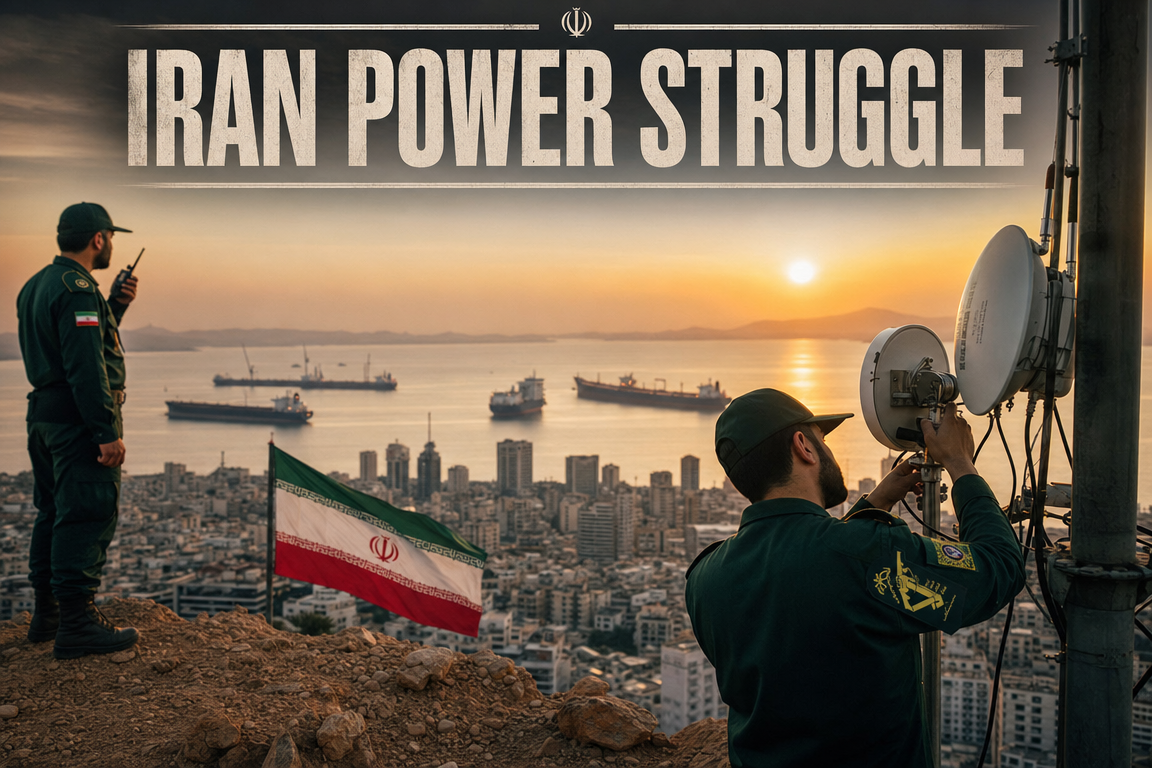
- Iran’s president ordered restoration of internet access to prior levels.
- Media aligned with the Islamic Revolutionary Guard Corps (IRGC) publicly countered that the president lacks authority to do so.
This indicates non-unified decision-making. External dialogue may continue, but internal final-approval capacity and execution discipline appear unstable.
Initial market reaction has been constructive:
- Crude oil eased after an earlier surge.
- US equity futures were comparatively stable.
Investors are currently assigning higher probability to extended de-escalation or a limited arrangement rather than near-term full escalation.
2. Trump’s strategic objective: scaling Iran talks into a regional realignment framework
2-1. From a nuclear negotiation to a Middle East transformation frame
The key development is a reframing of the negotiating agenda.
Typical Iran negotiations focus on operational items: nuclear material constraints, sanctions, the Strait of Hormuz, and frozen assets. The new messaging broadens the scope by explicitly linking Iran to a regional political and economic order involving multiple states.
This reframing has political optionality: success can be presented as a historic peace initiative; setbacks can be attributed to partial non-cooperation within an intentionally expansive package.
2-2. Why markets respond to this framing
In risk episodes involving the Middle East, the market sequence is usually:
1) crude oil
2) inflation expectations
3) rate path expectations
4) US equity volatility
The pullback in crude from peak stress levels suggests markets are not pricing an immediate, sustained disruption to the Strait of Hormuz as the base case. This is supportive for growth-sensitive segments such as the Nasdaq, as oil stabilization can reduce inflation pressure and revive rate-cut expectations.
3. Core negotiation constraint: nuclear material removal vs Iran’s staged approach
3-1. US position
The US view is that nuclear constraints must be central to any agreement. Sanctions relief or partial arrangements without nuclear material removal (or functionally equivalent verification and control mechanisms) are difficult to accept due to medium-term tail-risk reaccumulation.
3-2. Iran position
Iran appears to prefer sequencing:
- Phase 1: de-escalation measures (including Hormuz-related stability), practical economic relief, and frozen-asset actions
- Phase 2: nuclear issues later
This sequencing is consistent with domestic constraints, where the nuclear file is highly sensitive within Iran’s internal power structure.
3-3. Why rapid resolution is unlikely
Even with visible negotiation signals, the internal approval pipeline in Iran may remain slow:
- decision-making is tightly controlled, security-centric, and opaque
- minor wording changes can require extended clearance cycles
Markets often reprice quickly on “talks” headlines, but the pace of finalized, executable policy documentation can diverge materially.
4. Iran’s internal power friction: President vs IRGC
4-1. Significance of the internet restoration directive
Restoring internet access is not a routine administrative step. It can be interpreted as signaling:
- partial relaxation of domestic controls
- renewed external connectivity
- prerequisites for stabilization in commerce, finance, trade operations, and information flows
4-2. Implications of the IRGC pushback
The immediate public rebuttal matters:
- the claim: the directive did not pass the Supreme National Security Council and the administration lacks authority to implement or reverse such decisions
This reinforces that in security-linked domains (communications, national security, and external negotiations), influence is concentrated around the IRGC and the Supreme Leader’s apparatus, not the elected executive.
4-3. Investor-relevant takeaway
Iran-related agreements should not be assessed based on presidential statements alone. Binding execution likely requires passage through:
- the Supreme National Security Council
- IRGC-aligned power centers
- Supreme Leader approval channels
Therefore, optimistic headlines and implementable outcomes should be treated as separate variables. This is a recurring market mispricing vector.
5. Strait of Hormuz and crude oil: stabilization is not resolution
5-1. Short-term calm, medium-term fragility
The immediate fear of full Hormuz closure appears to have eased, and crude has moved off peak stress pricing. This reflects “not worst-case today,” not “risk removed.”
Hormuz is a critical global energy chokepoint. Renewed tension can transmit through:
- crude supply expectations
- shipping and insurance costs
- broader supply-chain costs
These feed into inflation and rate expectations, then into global risk-asset pricing.
5-2. Why lower oil does not imply safety
A near-term pullback in oil reflects negotiation probability, not structural de-risking. Volatility risk remains elevated:
- oil can reprice sharply if Iran’s internal power conflict intensifies or nuclear talks show breakdown signals
- current conditions resemble an event-driven regime more than a stable trend regime
6. Implications for US equities, Bitcoin, and broader risk assets
6-1. US equities
US equities are less sensitive to geopolitical headlines per se than to the inflation-and-rates transmission channel:
- oil stability can support disinflation narratives and ease rate-path concerns, favoring growth equities
- renewed oil spikes can pressure duration-sensitive valuations, particularly in technology
6-2. Bitcoin
Bitcoin behavior in this regime is primarily driven by liquidity and risk appetite:
- de-escalation and a less aggressive USD impulse can be supportive
- renewed escalation and a rapid shift to safe-haven positioning can increase drawdown risk and near-term volatility
Bitcoin should not be treated solely as a geopolitical hedge; its risk-asset characteristics remain material.
6-3. Korea-based investor considerations
Korea-linked exposures should be assessed through:
- KOSPI risk sentiment
- semiconductor beta to global risk appetite
- KRW FX sensitivity
Oil stabilization is supportive for an energy-import-dependent economy. Re-escalation can amplify FX volatility and foreign flow instability. Large-cap equities (e.g., Samsung Electronics) may be impacted more via FX and global risk sentiment than via direct Middle East revenue exposure.
7. The most underemphasized risk: authority to execute, not the existence of talks
The primary variable is not whether talks occur, but who has the authority to implement outcomes.
If the president’s internet directive can be openly blocked by IRGC-aligned channels, then any negotiation message faces elevated implementation risk. In such a structure:
- partial agreements may be announced
- execution can be delayed, diluted, or reversed
Markets typically price “agreement headlines” earlier and “implementation failure” later, creating asymmetric repricing risk. The key monitoring item is alignment (or lack thereof) within Iran’s decision-and-enforcement hierarchy.
8. Key scenarios to monitor
8-1. Constructive scenario
- extended de-escalation or limited stabilization measures
- reduced Hormuz risk premium
- initial operational agreements (e.g., frozen assets and selective sanctions adjustments)
- crude stability and supportive conditions for US equities
8-2. Base/neutral scenario
- continued dialogue with limited progress on nuclear constraints
- internal Iranian power frictions delay final documentation
- range-bound markets with event-driven oil swings
8-3. Adverse scenario
- breakdown over nuclear material removal/verification
- hardline IRGC posture becomes dominant
- renewed Hormuz risk premium and crude re-acceleration
- broad risk-off across US equities, Bitcoin, and emerging-market assets
9. Consolidated conclusion
Markets are currently reacting to the possibility of reduced Middle East risk. The binding constraint is Iran’s internal power fragmentation.
Trump is positioning the Iran track within a broader regional realignment narrative, and markets are partially pricing that optionality. However, if Iran’s presidential, IRGC, and Supreme Leader-aligned structures remain misaligned, near-term closure is likely to be slower and less reliable than implied by headlines.
Investor priorities:
1) Do not treat a temporary crude pullback as resolution.
2) Maintain awareness of re-escalation risk even during equity rebounds.
3) Weight execution-capable governance signals above negotiation headlines.
< Summary >
- The central issue is Iran’s internal power conflict rather than the existence of negotiations.
- Trump is expanding the Iran file into a broader Middle East realignment framework.
- Markets are focusing on oil stabilization and potential support for US equities, but nuclear constraints and execution authority remain uncertain.
- The IRGC pushback against the president’s internet directive highlights that any agreement announcement may not translate into timely implementation.
- Current positioning warrants greater emphasis on decision-and-enforcement alignment within Iran.
[Related Articles…]
-
Global crude oil trends and Middle East variables: key points frequently missed by the market
https://NextGenInsight.net?s=international%20crude%20oil -
Bitcoin and geopolitical risk: reassessing risk-asset dynamics
https://NextGenInsight.net?s=bitcoin
*Source: [ Maeil Business Newspaper ]
– [속보] 이란 대통령 “인터넷 재개” vs 혁명수비대 “당신 권한 없어” I 홍장원의 불앤베어