● Middle East Shock, Oil, Stablecoins, Bitcoin, Dollar Power
Focusing on interest rates alone misses the primary market drivers. After the Middle East conflict, the critical transmission channels are liquidity, control of maritime logistics, USD stablecoins, and their linkage to Bitcoin.
This situation should not be reduced to the Middle East conflict or crude oil prices alone.
While the surface narrative centers on Iran-Israel risk, key market sensitivities relate to potential changes in the Strait of Hormuz passage regime, US redesign of dollar dominance, stablecoin expansion strategy, US Treasury demand, and liquidity concentration into mega-cap assets.
This report consolidates: (i) why US priorities may tilt more toward USD stablecoins than Bitcoin, (ii) why a “tolling” framework is a more practical market scenario than a full closure of Hormuz, and (iii) why inflation is not mechanically bearish for equities but can intensify internal dispersion within the S&P 500 and Nasdaq.
In summary, this is less a war headline than a concurrent restructuring of global macro-finance and the financial order emerging alongside the AI cycle.
1. The first perspective shift required
More important than rates: who controls logistics and who governs settlement
Many investors still anchor on rate cuts/holds and central bank communication.
Rates remain important; however, when geopolitics and payment rails move together, a rate-only framework is incomplete.
Three core points:
- First, the Strait of Hormuz is not only a military flashpoint but a strategic node in logistics power.
- Second, the US is likely focused on building a new dollar regime via USD stablecoins rather than “growing Bitcoin” as an end goal.
- Third, cost pressures originating in the Middle East may not be uniformly negative; they can widen earnings dispersion and favor firms with pricing power.
Markets may react less to “war” per se and more to:
- which settlement instruments gain adoption,
- which firms increase pricing power,
- which assets attract incremental liquidity.
2. Strait of Hormuz: the key issue is a “toll regime,” not a total closure
Why tolling is more realistic than closure
Hormuz is a critical corridor for global energy flows.
A full closure would be an extreme shock: oil price spikes, logistics disruption, insurance cost surges, and renewed supply-chain stress.
Such an outcome is costly for all parties, including the US and Iran. A more actionable scenario is continued passage with added costs (tolls/security fees).
For markets, uncertainty is the primary risk. A complete shutdown is difficult to price; a fee-based framework is quantifiable.
Why both the US and Iran could have incentives to support a toll model
Iran may seek fiscal resources for post-conflict repair.
The US faces constraints: full withdrawal is difficult, while absorbing all regional security costs is politically and fiscally challenging.
A plausible compromise is a de facto restructuring of passage management that produces a revenue model.
Potential incentives:
- Iran: a narrative and mechanism to secure funds.
- US: justification to maintain maritime influence and enforcement capacity.
- Markets: preference for measurable, rule-based cost structures over binary disruption.
This converts tail risk into managed risk.
Practical power dynamics may matter more than legal doctrine
Whether tolling is cleanly justified under international law is separate from whether it can be implemented.
Recent precedents (sanctions, asset freezes, maritime controls) indicate power realities often lead formal rules. Markets typically price implementability ahead of legal elegance.
3. Why the US may prioritize USD stablecoins over Bitcoin
The objective is not “Bitcoin primacy” but a dollar upgrade
Pro-Bitcoin rhetoric does not imply the strategic endpoint is an expanded Bitcoin ecosystem.
The US core objective remains the dollar. If legacy dollar dominance relied on SWIFT and traditional banking, the next phase may extend dollar reach into digital settlement and commerce via USD stablecoins.
Bitcoin may function as a transitional mechanism rather than the strategic anchor.
Why USD stablecoins matter
USD stablecoins can simultaneously support:
- digital expansion of dollar settlement,
- incremental demand for US Treasuries,
- reconfiguration of cross-border trade settlement.
Stablecoin issuance generally requires reserve assets, commonly short-dated US Treasuries. As stablecoins scale, a new structural buyer base for Treasuries can expand.
Given heightened focus on US debt sustainability and marginal Treasury demand, this linkage is material. This also helps explain the policy urgency around stablecoin regulatory frameworks.
Why this connects to Iran
Iran operates with limited access to the traditional financial system:
- currency weakness,
- constrained access to USD settlement due to sanctions and reduced SWIFT connectivity.
This increases incentives to use digital assets.
However, preferences may diverge:
- Iran: likely preference for censorship-resistant rails such as Bitcoin.
- US: preference for instruments that preserve dollar influence, such as USD stablecoins.
In practice, if stablecoin diffusion increases dollar usage in trade settlement, the US may face tradeoffs between sanctions enforcement and dollar-network expansion.
4. Bitcoin and stablecoins: transitional coexistence rather than pure competition
Why the US may not want to suppress Bitcoin in the near term
Even if the long-term objective is mainstream USD stablecoin adoption, current market structure links stablecoin growth to crypto-market activity.
When Bitcoin activity strengthens, broader crypto engagement rises, often increasing stablecoin issuance and usage.
Bitcoin can function as an onboarding channel for liquidity and adoption, while stablecoins migrate usage into more regulated, payments-oriented rails.
Parallel to historical dollar anchors (gold-dollar, oil-dollar)
Historically, dollar credibility was supported by gold convertibility; after that weakened, the petro-dollar framework reinforced dollar demand.
A potential next phase is a “USD stablecoin–US Treasury” linkage, with Bitcoin serving as an early-stage attention and liquidity magnet.
Framework:
- Early: Bitcoin concentrates attention and liquidity.
- Mid: Stablecoins expand into real-economy settlement.
- Long: US prioritizes dollar-based digital settlement over Bitcoin-centric architecture.
5. The market impact of Hormuz tolling: earnings structure matters more than spot oil
Cost inflation is not uniformly negative
The common chain is:“oil up -> inflation up -> rates stay high -> equities down.”
This is directionally coherent but incomplete. The key variable is pricing power.
Firms able to pass through higher costs can sustain or expand nominal revenue and margins; firms without pricing power face immediate margin compression.
Why mega-caps and large-cap technology can benefit on a relative basis
Companies such as Apple, Microsoft, and Nvidia often exhibit strong pricing power via brand, technology leadership, ecosystems, and market concentration.
By contrast, smaller firms, low-margin manufacturing, and domestically constrained sectors may struggle to pass through costs.
Result: Middle East-driven cost shocks may increase index-level dispersion rather than trigger uniform index downside, potentially reinforcing concentration within the S&P 500 and Nasdaq.
Why the S&P 500 and Nasdaq can remain resilient
Index resilience can reflect the dominance of constituents with pricing power and stronger cash-flow durability.
In this regime, inflation may widen the performance gap between strong and weak firms, allowing headline indices to hold up even as underlying breadth deteriorates.
6. The US strategic frame: simultaneous retooling of industrial, financial, and logistics power
Industrial power: re-centering on AI after semiconductors
The US is shifting the strategic center from traditional manufacturing toward AI, cloud, semiconductor design, data centers, and software ecosystems.
This is a national strategy, not only a technology race, as control of AI infrastructure can shape productivity, security, financial services, and automation.
Financial power: stablecoins as a post-SWIFT extension
Legacy dollar dominance relied on settlement networks, banking, and Treasury-market credibility.
Over time, alternative settlement initiatives expand:
- China: broader RMB settlement ambitions,
- sanctioned states: continued search for de-dollar pathways.
US strategy may therefore extend beyond “legacy dollars” toward a digital dollar ecosystem, potentially driven by regulated, privately issued USD stablecoins.
Logistics power: an India–Middle East–Europe corridor versus China’s connectivity strategy
Logistics control is a core pillar.
China advanced broad overland and maritime connectivity. In response, US-aligned strategy emphasizes alternative corridors linking India, the Middle East, and Europe.
Within this structure, Hormuz remains a critical node not only for oil but for broader supply-chain reconfiguration and maritime control.
7. Investor focus areas
1) Look beyond rate headlines to new liquidity channels
Markets may increasingly weigh not only central bank liquidity but also:
- expansion of digital settlement instruments,
- structural Treasury absorption via stablecoin reserves,
- stablecoin supply growth.
The key is not only “where money is created,” but “who structurally absorbs it.”
2) Inflation can amplify dispersion; pricing power assets tend to outperform
Inflation regimes tend to produce wider gaps between strong and weak assets.
Attributes favored include:
- brand strength,
- platform dominance,
- global revenue mix,
- cash-flow resilience,
- market power.
3) Crypto outlook requires joint analysis of Bitcoin and stablecoins
Bitcoin price alone is insufficient.
Key variables:
- stablecoin supply and turnover,
- US regulatory trajectory,
- linkages to the US Treasury market,
- real-economy settlement adoption.
Bitcoin can attract liquidity; stablecoins can bridge that liquidity into regulated payment usage.
4) Signals of conflict de-escalation may create selective upside
Markets respond strongly to reduced uncertainty.
If Hormuz outcomes converge toward a managed cost framework rather than closure, potential beneficiaries include segments of energy, logistics, mega-cap technology, payment infrastructure, and parts of digital assets.
8. Under-emphasized but critical points
Core point 1: The US may use Bitcoin tactically while optimizing for stablecoin-led dollar expansion
Public positioning can differ from strategic objectives. A stablecoin-centered digital dollar framework is consistent with preserving dollar influence.
Core point 2: Hormuz tolling can become a testbed for next-generation trade settlement
The method of collecting tolls is not only a shipping-cost issue; it can prototype future settlement rails.
Possible rails include USD stablecoins, Bitcoin, or hybrid structures. Successful implementation could diffuse to other corridors.
Core point 3: Inflation can support index resilience while worsening internal polarization
Inflation is not inherently index-destructive; it can strengthen the relative advantage of firms with pricing power, producing resilient indices alongside weakening breadth and widening wealth effects.
Core point 4: Stablecoin-driven Treasury demand may be viewed as part of the US debt-demand solution set
The era of unconditional global Treasury absorption is weakening.
Expanding stablecoin issuance can mechanically increase short-dated Treasury demand via reserve requirements, with significant implications for the global financial system.
9. Final synthesis: markets are pricing “power linkages” more than rates
The Middle East shock is not only geopolitics.
It links maritime logistics, oil, dollar dominance, US debt, stablecoins, Bitcoin, and AI-era industrial strategy.
Key questions:
- Will Hormuz shift toward closure risk or a managed revenue/toll framework?
- How far will the US leverage Bitcoin, and when does stablecoin primacy become explicit?
- Is oil-driven inflation uniformly bearish, or does it reinforce large-cap earnings dispersion?
- Who becomes the marginal stabilizing buyer of US Treasuries?
- How do these shifts connect to AI infrastructure and mega-cap liquidity concentration?
In this regime, structural change often precedes headline data in market pricing.
< Summary >
After the Middle East conflict, the market focus extends beyond interest rates to the Strait of Hormuz, logistics power, USD stablecoins, US debt dynamics, and the Bitcoin–stablecoin linkage.
A Hormuz outcome featuring tolling is more realistic than full closure and can convert uncertainty into a priceable cost structure.
US strategic priorities likely favor USD stablecoins as an instrument to modernize dollar dominance rather than expanding Bitcoin as an endpoint.
Middle East-driven cost pressures may not be uniformly negative; they can benefit firms with strong pricing power, potentially favoring mega-caps and widening dispersion inside major indices.
US equities, oil, crypto, US debt, and AI should be analyzed as a connected system rather than isolated themes.
[Related Articles…]
- Stablecoin competition and dollar-dominance restructuring: key pillars of the 2026 financial order (NextGenInsight.net?s=stable)
- AI infrastructure investment expansion and US equity outlook: the next variable for mega-cap earnings (NextGenInsight.net?s=AI)
*Source: [ 경제 읽어주는 남자(김광석TV) ]
– 금리만 보면 시장 놓칩니다. 중동 전쟁 이후 꼭 봐야 할 변수 | 경읽남과 토론합시다 | 성상현 부부장[2편]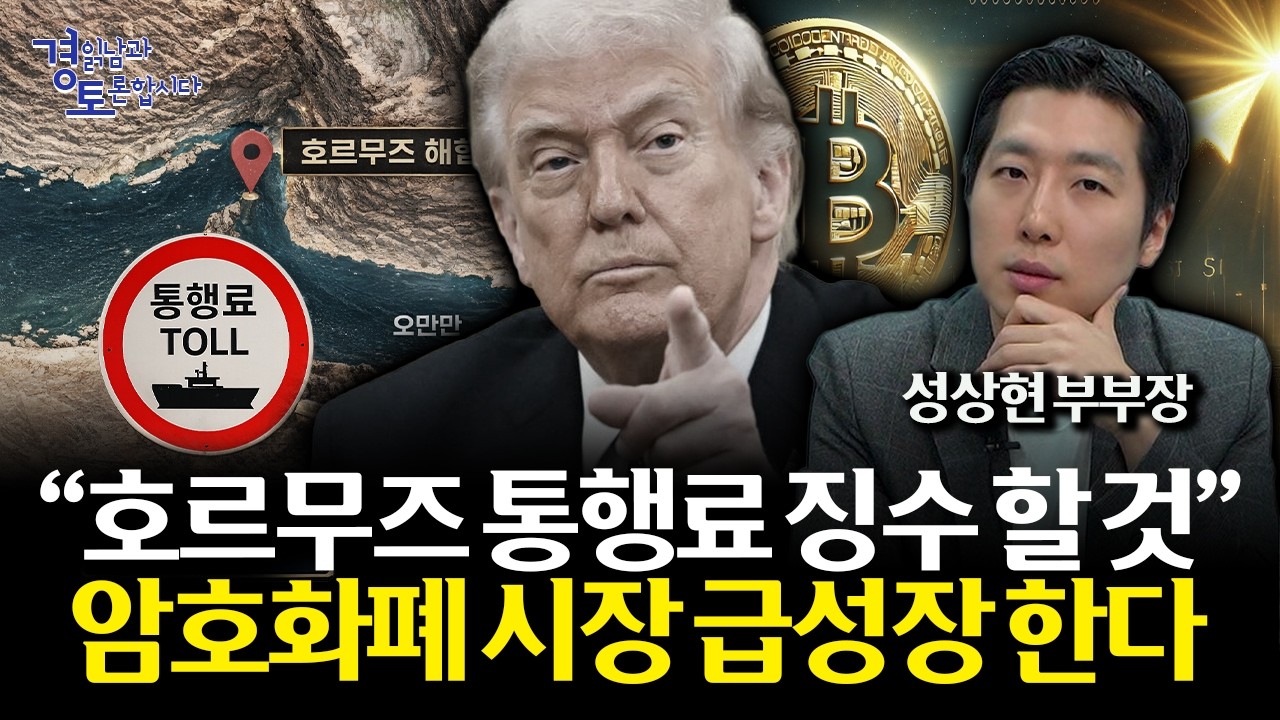
● Hyundai, US Surge, EV Gamble, Hybrid Power, AI Shift
Will Hyundai Motor Become a Major Winner in the U.S.? A 2026 One-Stop Summary: U.S. Performance, Hybrid Strategy, EVs, and Autonomous Driving
Hyundai Motor should not be viewed solely as an automaker; its current positioning reflects a broader strategic shift.
This report consolidates (i) why Hyundai has strengthened in the U.S. market, (ii) why hybrids have re-emerged as a core lever, (iii) how Hyundai may position itself during the EV transition, and (iv) why autonomous driving and physical AI should be assessed together.
Unlike coverage that stops at “Hyundai is performing well,” this report also addresses U.S.-concentration risk, the structural gap in China, and the role of hybrids not as a transitional product but as a profitability and survivability asset.
In summary, Hyundai is executing across five axes simultaneously: U.S. share expansion, EV transition, hybrid profitability, autonomous driving capability, and global supply chain reconfiguration.
1. Executive Brief: The Most Material Points
Hyundai Motor Group’s sales momentum and market presence in the U.S. are increasing rapidly in 2026.
The U.S. is the world’s second-largest auto market after China. Hyundai’s move into a sustained top-tier competitive set in the U.S. is the key strategic development.
The gap versus Ford has narrowed to a level where a top-3 position in the U.S. is increasingly discussed as a realistic scenario.
This is more than near-term sales strength. Market perception is shifting toward valuing Hyundai as one of the few OEMs with breadth across ICE, hybrids, battery EVs, and hydrogen.
Post-EV “chasm,” consumers are not transitioning to full EVs in a single step; hybrids are gaining share as the pragmatic alternative. In this environment, Hyundai and Kia are positioned among the most advantaged players alongside Toyota.
Risks remain material: weak share in China and rising dependence on the U.S. Strong U.S. performance is both a strength and an emerging concentration risk.
2. Why Hyundai Has Strengthened in the U.S.: Structural Drivers Beyond Headline Numbers
2-1. The U.S. Market Prioritizes Product Over Heritage Branding
Compared with Europe, U.S. consumers tend to prioritize tangible product attributes over legacy brand heritage.
Purchase drivers include warranty terms, pricing, safety, features, fuel economy, and real-world ownership satisfaction. Hyundai and Kia have improved materially across these dimensions over multiple years.
The accumulated “high value at a rational price” perception has translated into improved brand equity.
2-2. SUV and Hybrid Lineup Expansion Was Decisive
Historically, Hyundai’s U.S. weakness included SUVs and pickup trucks. Pickups remain a structurally important segment where Hyundai is still relatively underexposed.
Despite this, sales expanded as SUV competitiveness improved and hybrid demand accelerated.
Given U.S. preferences for larger vehicles, competitiveness in mid-size and large SUVs is critical. Palisade, Santa Fe, Tucson, and Kia’s SUV lineup have benefited from this trend.
2-3. Hyundai Has Moved Beyond a “Value Brand”
Hyundai is increasingly perceived not only as affordable but also as credible in quality and technology.
In autos, brand perception shifts can compound over time, supporting sustained share gains and longer-term brand value accumulation.
Korea’s broader country brand uplift (content, technology, semiconductors, batteries, and AI collaboration narratives) has also contributed to trust in Korean companies.
3. Why Hybrids Are Core Again: Not a Transition, but a Cash-Generation Lever
3-1. Consumers Transition More Gradually Than the EV Narrative Implies
The market is not well explained by a simplistic “immediate EV era” narrative.
EV adoption remains constrained by charging infrastructure, charging time, subsidy volatility, purchase price, used-vehicle residual values, and cold-weather efficiency.
At the same time, some consumers view pure ICE purchases as misaligned with longer-term policy and technology direction. Hybrids therefore represent a natural compromise for a broad customer base.
3-2. For OEMs, Hybrids Function as a “Durability Card”
EV programs often remain margin-challenged for many OEMs due to battery costs, high development spend, and significant retooling/transition capex before scale economics fully materialize.
Accordingly, EVs may be strategically necessary but not immediately high-profit.
Hybrids can provide near-term profitability and volume resilience, enabling continued EV investment through the transition period. This supports Hyundai’s decision to expand hybrids in parallel with EVs.
3-3. Portfolio Breadth Is Hyundai’s Structural Advantage
Few global OEMs maintain meaningful breadth across ICE, hybrids, BEVs, and hydrogen.
Toyota leads in hybrids but is often viewed as slower in BEV acceleration; Tesla remains concentrated in BEVs.
Hyundai’s diversified powertrain portfolio provides optionality under demand uncertainty, a material advantage in the current transition phase.
4. U.S. Demand Winners and Internally High-Regarded Models
4-1. U.S. Sales Drivers: Ioniq 5, SUVs, and Hybrids
On the EV side, the Ioniq 5 is the flagship. Kia’s EV lineup is also scaling in market presence.
Large SUVs and hybrids further reinforce the sales mix. Large SUV hybrids are comparatively under-supplied in the market, offering Hyundai potential relative advantage.
4-2. Models Viewed Positively Internally
Within Hyundai, Grandeur and Santa Fe are frequently cited for practicality and product strength.
Genesis is recognized for premium experience and brand satisfaction.
The Ioniq 5 N is viewed as strategically significant, reflecting efforts to translate internal-combustion driving sensations into an EV context (e.g., simulated shifting and engine sound), differentiating on driving engagement.
5. Will the EV Market Re-Accelerate? A Post-Chasm Interpretation
5-1. The Transition Has Not Stopped; It Has Slowed
The EV “chasm” is better characterized as a slower-than-expected adoption curve rather than a reversal.
The long-term direction likely remains toward electrification, but adoption speed differs by region, and OEM financial endurance varies.
5-2. The Key Variable Is Endurance
In the transition period, financial resilience can be as important as technology.
The ability to sustain development, production scaling, and pricing competition under weaker near-term margins becomes decisive.
OEMs that secure profits via hybrids while continuing EV investment are structurally advantaged; Hyundai is relatively well positioned under this framework.
6. Why Japanese OEMs Moved Slower on EVs and Toyota’s Calculus
6-1. Toyota’s Pace Reflects Deliberate Risk Management
While Japanese OEMs are widely viewed as lagging in EVs, Toyota’s approach partially reflects a deliberate assumption that global markets will not electrify at the same speed.
Differences in infrastructure, grid capacity, charging environments, and income levels increase the risk of a BEV-only strategy.
6-2. Perfectionism Can Create Opportunity Cost
Toyota’s emphasis on technical completeness and durability has strengths.
However, the industry’s shift from ICE to EVs is a platform-level transition. Missing early-mover advantages can raise catch-up costs.
As platforms, batteries, and software experience become more important than legacy brand attributes, timing risk increases.
7. Why China’s EV Threat Is Structural, Not Just Price-Based
7-1. China Has Already Achieved Scale Economics
China’s advantage is not merely low pricing; it is scale.
As the largest auto market, China has built large-volume EV production, lowering unit costs and strengthening supply chain leverage in batteries, motors, and key components. Lower prices are an outcome of scale.
7-2. Policy Support Has Lifted the Full Industry Stack
Long-duration government support has included not only consumer subsidies but also low-cost financing, tax incentives, land/facility support, and R&D funding.
This reduces OEM cost burdens and enables aggressive pricing strategies.
7-3. Chinese OEMs Are More Disruptive in Emerging Markets
Regulation and brand barriers in the U.S. and Europe limit Chinese penetration.
In emerging markets (e.g., India, ASEAN, Russia, Latin America), purchase decisions can be more price- and terms-driven, creating a larger opening for Chinese OEMs.
The next major competitive battlefield may be emerging markets rather than developed markets.
8. The “Tesla Risk” Narrative and Hyundai’s Opportunity
8-1. Tesla Is Repositioning from Auto OEM to AI Platform
Tesla increasingly frames itself beyond vehicle sales, emphasizing autonomous software, subscription monetization, robotaxis, and an AI platform strategy.
The objective is to increase software-derived revenue versus hardware margins.
8-2. Hyundai Can Target the Middle Segment Between Tesla and Low-Cost China
Strategically, Hyundai may capture a sizable middle market: Tesla competing at the top with software/autonomy, Chinese OEMs competing at the bottom with pricing.
Hyundai can differentiate on high build quality, safety, durability, rational pricing, and reliability, positioning as “high-trust EVs with fewer quality and software issues.”
9. Autonomous Driving and Physical AI: Why Hyundai Should Not Be Assessed Only as an Automaker
9-1. Autonomous Driving Is Pre-Mass Commercialization, but Directionality Is Clear
In Korea, autonomy remains early-stage in terms of regulation, insurance, and service business models.
Pilot zones and testing exist, but broad paid consumer-scale services remain limited.
9-2. Hyundai Appears More Risk-Controlled Than Aggressive
Hyundai tends not to prioritize “first-to-market at any cost” autonomy launches.
The company appears sensitive to brand-damage risk; major accidents or recalls could impair trust and premium positioning.
This cautious posture can be a constraint, but also signals a quality-first approach.
9-3. Hyundai’s Potential Advantage in the Physical AI Era
Vehicles are evolving into mobile AI devices, linking sensors, semiconductors, batteries, software, robotics, autonomy, and factory automation.
Hyundai’s strategic interest extends beyond vehicle manufacturing into integrated mobility and robotics, implying a pathway toward a physical AI-oriented enterprise.
This optionality may not yet be fully reflected in market expectations.
10. Hyundai’s Key Risks: U.S. Concentration and the China Gap
10-1. Rising Dependence on U.S. Volumes
Hyundai’s increasing U.S. mix is both a success and a risk.
Policy changes, tariffs, labor issues, immigration enforcement, and domestic political cycles can introduce earnings volatility.
U.S. manufacturing, employment, and supply chains are increasingly politicized, raising exposure to non-market variables.
10-2. Weak Positioning in China Could Be Structurally Constraining
Hyundai’s current share in China is very low.
Given China’s status as the largest auto market, maintaining a global top-tier position is difficult while effectively absent in China.
Even without returning to prior peak levels, rebuilding a meaningful presence may be necessary to avoid a long-term ceiling in global ranking and scale.
11. How Far Can Rankings Move?
11-1. A Top-3 Position in the U.S. Is Plausible
Given the narrowed gap versus Ford and Hyundai’s momentum in hybrids, SUVs, and brand strength, a top-3 U.S. outcome appears attainable.
Ford’s perceived strategic inconsistency across EVs and hybrids is a relative advantage for Hyundai.
11-2. Longer-Term, Competition with Toyota May Become More Direct
If hybrid strength persists, Hyundai-Toyota competition in the U.S. may intensify.
As BEV adoption re-accelerates, a new competitive map may form among Tesla, GM, Hyundai, and Chinese OEMs.
Whether Hyundai can compete for a top-2 U.S. position will depend on BEV scaling and progress in autonomy and software capability.
12. Lessons from Honda and Nissan Share Declines
Honda and Nissan have faced pressure partly due to higher China exposure and the rapid rise of domestic Chinese EV brands.
Chinese consumers increasingly choose domestic EV brands, weakening the historical assumption that foreign brands structurally win in China.
Hyundai’s reduced China exposure since the THAAD-related disruption mitigated some near-term impact, but a full China exit is unlikely to be strategically optimal; re-entry remains important.
13. Key Points Often Missed in General Media Coverage
- Hyundai’s core strength is portfolio diversification, not a single EV model.
- Hybrids are not merely transitional; they are a cash-flow mechanism that can fund EV investment during margin pressure.
- Strong U.S. performance increases exposure to policy and geopolitical risk as concentration rises.
- China underperformance is less about near-term earnings and more about long-term scale and global ranking constraints.
- Hyundai’s future competitive set extends beyond automakers to include AI, robotics, software, and battery supply chain competition.
Hyundai is being re-rated from “a company that sells cars well” to “a company with high strategic flexibility through an uncertain transition,” with flexibility likely to be a key advantage over the next several years.
14. Conclusion: Further U.S. Upside Is Likely; the Next Phase Determines Strategic Outcomes
Hyundai has credible potential to move up another tier in the U.S. market. SUVs, hybrids, EVs, brand perception, pricing, and quality confidence are supportive factors, and a top-3 U.S. position is achievable.
However, the decisive phase comes after further U.S. gains: renewed EV acceleration, intensified autonomy/software competition, and deeper Chinese EV penetration into emerging markets.
Hyundai’s medium-to-long-term outcome will depend on (i) how it addresses the China gap, (ii) how effectively hybrid profitability is converted into sustainable EV competitiveness, and (iii) how rapidly it evolves for the physical AI era.
Performance to date has been strong. The next period is likely to be driven more by strategic execution quality than unit sales growth.
< Summary >
Hyundai is rapidly expanding sales and brand presence in the U.S. market in 2026.
Growth is being driven by hybrids and SUVs, and a top-3 U.S. market position is increasingly credible.
During the EV transition, hybrids are emerging as a key lever for both profitability and resilience.
Hyundai’s principal advantage is a broad portfolio spanning ICE, hybrids, EVs, and hydrogen.
Rising U.S. dependence and weak positioning in China are material medium-to-long-term risks.
Hyundai’s decisive competitive test will be its ability to adapt across EVs, autonomous driving, physical AI, and global supply chain restructuring.
[Related Articles…]
https://NextGenInsight.net?s=Hyundai%20U.S.%20market%20share%20expansion%20and%20future%20strategy%20analysis
https://NextGenInsight.net?s=EV%20post-chasm%20global%20OEM%20competitive%20landscape
*Source: [ Jun’s economy lab ]
– 현대차 앞으로 미국에서 큰일 낼 겁니다(ft.우수연 작가 1부)