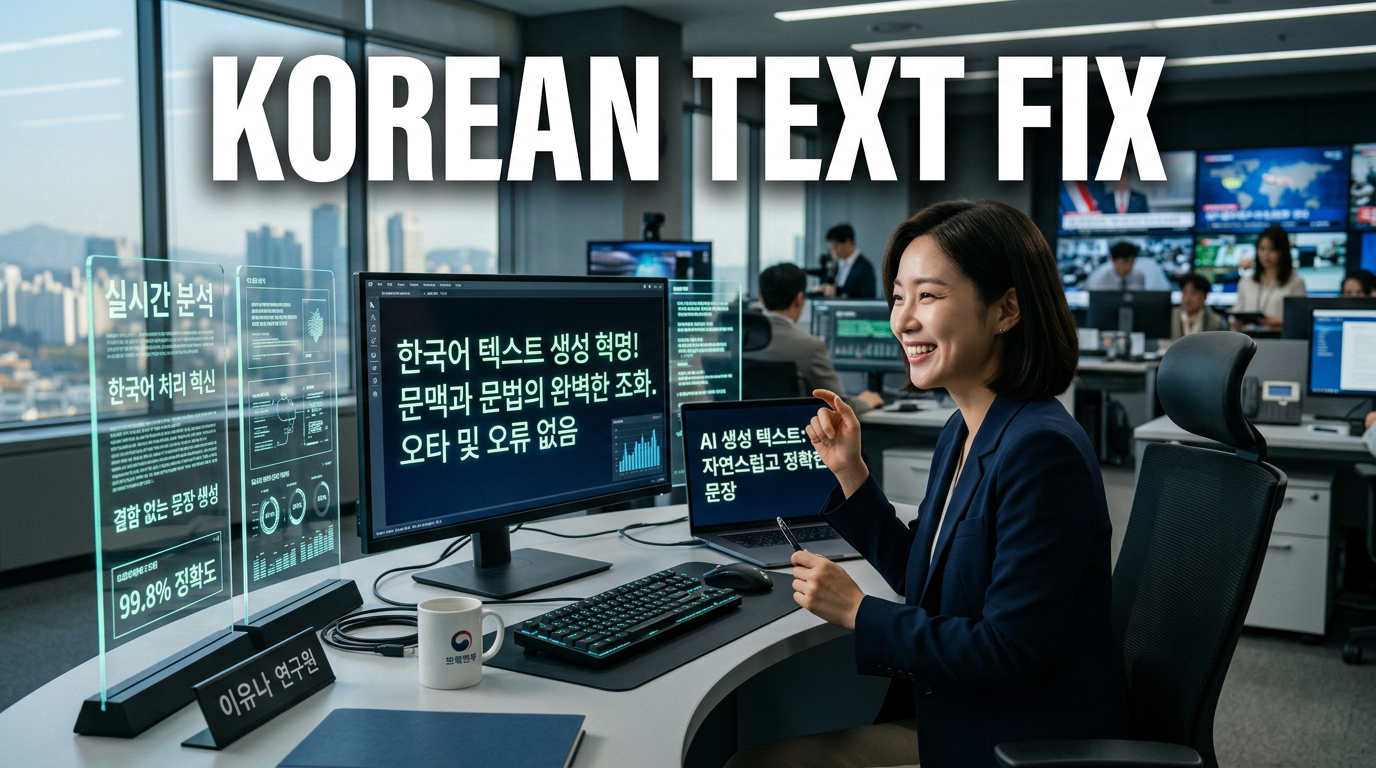
● GPT Image 2 Font-Accuracy Breakthrough
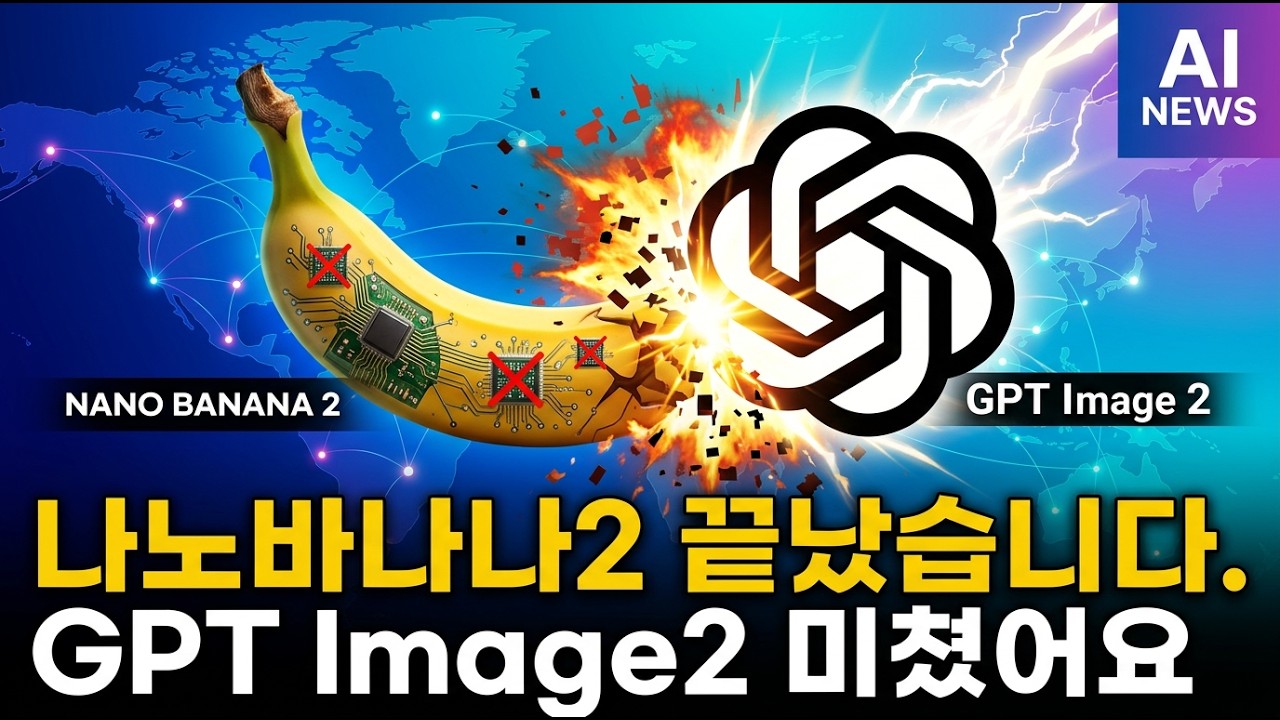
GPT Image 2 Release… Will the Image Generation Landscape Change with Korean “Garbling/Hallucination Zero”?
5 Points You Need to Know Now (the Core of This Article)
- The claim that the quality of Korean image generation has gone beyond the level of “character garbling” is the core point.
- Even up to transforming a paper into a Korean PPT slide deck, a workflow that turns document understanding into visual artifacts was demonstrated.
- The “production pipeline” that continues from image → 15-second video (combined with Seedance) was introduced.
- How to use it directly for marketing/e-commerce fieldwork (product detail pages, recipe posters, thumbnails) is laid out.
- The structure that gathers 127 prompts for free makes it practical for real use.
News Headline: GPT Image 2, Focus Intensifies on Korean Support “Precision”
- The recent issue is the news about “the release of ChatGPT image 2 (GPT Image 2).”
- In the video/demonstration, it emphasizes that compared with models previously mentioned as strong in image generation, there is almost no collapse (garbling) or typo-like hallucination in Korean.
- In particular, the key battle was whether Korean is preserved even when the text is small (dense) and the information volume is high.
One line from an economic/industry perspective:
The image generation market is shifting competition from “believable pictures” to “a level where you can use text/layout directly for commercial purposes.”
That’s why text quality immediately connects to marketing productivity.
1) Product Update: ChatGPT’s Image Generation Approach Expands
- After entering image generation on the ChatGPT screen, features like photo conversion, comic/graphic style transformation, and idea visualization are mentioned.
- It also provides presets, lowering the “initial entry barrier.”
- Ultimately, users can boost productivity by
- (1) using prompts directly,
- (2) leveraging presets/guides, or
- (3) refining the generated results again
to improve output efficiency.
2) Performance Validation: Real-World Conversion from Paper → Korean PPT Slides
-
The demonstration content is “upload an arbitrary paper (PDF) → generate Korean PPT slides.”
-
The goal isn’t just a simple image; the results come out closer to slide structure (table of contents/figures/captions/key sentences).
-
In particular, the following is emphasized.
-
Instead of generating one slide at a time, generate multiple slides at once
-
Structure the generated slides so that the core flow is visible at a glance
-
And above all, Korean doesn’t break (a claim of hallucination zero)
-
The example paper topics introduced included something in the realm of “LM-based automatic ontology construction,”
and it appears that slide types like limitations/architecture/pipeline/experimental results/advantages and conclusions were reproduced.
Why this matters:
In corporate training/report/sales material production, converting “text-based documents” into “visual materials” takes quite a lot of time.
But when image generation enters this area too, content production costs and lead time can drop dramatically.
This point is exactly the most money-making segment in the latest AI trends.
3) The Korean Quality Showdown: A Moment That Demonstrated “Small Text Doesn’t Break” in Real Use
- The most impressive comparison point in the demonstration is “small characters + high-information-density layouts.”
- In the video, it claims there were
- no smearing of Korean
- no replacement of characters (typos)
- no appearance of nonexistent characters (hallucination)
- At the same time, there’s a nuance that the previous generation (NanoBana 2) might show “some garbling.”
One line summary from an economic/industry perspective here:
Image generation model performance is now judged not only by “emotion,” but by “typographic/advertising-grade character accuracy.”
So when these improvements appear, there’s a good chance the production methods for design/marketing roles will change.
4) Drama Scene Image → Seedance Video: Image-Based Ultra-Short Content Production
-
The demonstration is a workflow: generate a prompt to recreate a “Winter Sonata” scene → pick images with GPT Image 2 → produce a video with Seedance.
-
When combined with Seedance, it’s described as a flow where
-
a few images/sequences
-
video generation prompts (style/direction)
-
you can produce a 15-second video with a click
are all possible. -
What’s important here is the tone that says a certain level of video output comes even without crafting the prompt extremely precisely.
-
In other words, it becomes easier for general users to acquire a content production pipeline.
Looking at it through the lens of latest trend keywords:
Image generation isn’t limited to text-to-image anymore.
By expanding to video (image-to-video), competition in “content production automation” accelerates.
5) Commercial Use Cases: From a Kimbap Recipe Vintage Poster to Product Detail Pages
- The most “hands-on/practical” part in the demonstration is creating e-commerce/marketing deliverables.
- By inserting a kimbap recipe prompt, the workflow results in
- a vintage illustration style
- a Korean food poster tone
- recipe composition (order/texture/copy)
- generating a poster where Korean doesn’t get garbled
- It also mentions a tip for “converting a Japanese prompt into Korean and using it.”
- And in practice,
- YouTube thumbnails
- prompt structures collected from case examples on Twitter
- prompts for product detail pages
are introduced as an organized structure.
The key is this.
Most people aren’t the ones who “write prompts well”; they’re the ones who “need to produce outputs quickly.”
If you provide prompt templates/libraries, then from that moment, AI becomes not just a tool but a work system.
6) 127 Free Prompts Provided: The Core of “Execution Power” Is Templates
- The demonstrator introduces a site that compiles GPT Image 2 prompt sets, and guides how to use it by
- copying and using prompts that produce good image results
- editing if needed
- handling Japanese phrases with instructions like “convert to Korean”
- It also mentions providing free access or credit payments through “membership/sign-up.”
- It also says it will keep updating.
One line from an industry perspective here:
Competition among AI tools depends not only on model performance, but on “workflow standardization” and “reusable prompt assets.”
So providing templates is an attractive point not only for individual users, but also for businesses.
7) Execution in the AI Era: From “Knowing” to “Making”
- At the end of the video, it emphasizes the message that to avoid falling behind in the AI era, you should
- follow trends, but
- ultimately connect it to execution (application).
- It also connects the viewpoint of “starting a business/prototyping” with claims like
- building a homepage within a few hours
- producing a service in a short time if the idea is clear
This part is quite important from an economic outlook perspective.
When productivity (time savings) + lower content costs + reduced entry barriers happen at the same time more experiments and faster productization will appear in the market.
8) Future Scenarios: Competition Rekindles with Google and Other Global Models
- The demonstration also mentions the possibility that “Google may counterattack soon.”
- The image generation market will likely remain intense across axes like
- text accuracy
- style diversity
- speed/cost
- multimodality (image-to-video, etc.)
- At the same time, there’s a tone that Chinese companies’ models are rising quickly too.
- In the end, from the user’s perspective, it matters less “which model is #1,” and more
- which workflow helps your work (marketing/education/e-commerce) achieve results faster
is what becomes more important.
Blog Perspective: “Key Content I Want to Convey” (Reinterpreting the Core, Less Mentioned Elsewhere)
- The real meaning of GPT Image 2 isn’t “it draws better pictures,” but that Korean/text precision has risen to commercial production standards.
- So the future battle is less about design sensibility than
- template-based production
- automating document → slide/content conversion
- combining an image → video pipeline
- connecting directly to marketing operations
which is very likely. - Especially from a Fourth Industrial Revolution perspective, AI is now absorbing not just the “generation” stage, but the “production pipeline.”
- This shift may be felt faster by small and medium-sized enterprises and individual business owners than by macro variables like stocks/interest rates.
- Finally, as these tools spread, the key metric ultimately changes from “model performance” to
how you can deliver results faster, cheaper, and more reliably with which workflow.
That’s my conclusion about the latest market.
SEO Keywords You Should Naturally Take Note Of (Reflected in the Article)
- Image generation AI
- Multimodal AI
- Generative AI trends
- Marketing automation
- Text-to-image
< Summary >
- With the release of GPT Image 2, a demonstration claiming that there is almost no garbling/hallucination in Korean has become a hot topic.
- A workflow was introduced that converts papers into Korean PPT slides, emphasizing quality even with small fonts/high-density layouts.
- With the Seedance combination, the flow continues to image → 15-second video, forming an ultra-short content production pipeline.
- The method for creating e-commerce/marketing practical deliverables like a kimbap recipe poster and product detail pages is presented concretely.
- Providing 127 prompts for free (including a membership/credit structure) signals an expansion from a “tool only great users can use” to a “work system.”
[Related Article…]
*Source: [ AI 겸임교수 이종범 ]
– 챗GPT 이미지 2(GPT Image 2) 공개! 한글 완벽 지원으로 나노바나나 2 뛰어넘은 최강 이미지 생성 AI 총정리