● Musk-SpaceX Shock, Tesla Tumbles, 1.75 Trillion Power Play
The Real Reason Musk Avoided a Direct Answer on a Merger: The Implications of a $1.75 Trillion SpaceX Valuation and Tesla at ~$404
The key takeaways are threefold:
1) Why SpaceX is increasingly being re-rated not merely as a launch provider, but as a prospective AI infrastructure company.
2) Why Elon Musk did not explicitly dismiss the possibility of a Tesla–SpaceX merger.
3) What Tesla shareholders should focus on while the stock consolidates around the $404 level.
This is not a binary “merge or not” discussion. The relevant framework links U.S. Treasury yields, a technology-led equity pullback, AI infrastructure competition, space-based solar power, the possibility of a SpaceX IPO, the valuation of Tesla’s related exposure, and broader long-cycle macro conditions.
A critical point often underemphasized: the core issue is less the merger itself and more that Musk has begun publicly framing control of energy bottlenecks as central to the AI era.
1. Market context: it was not Tesla alone
Tesla closed near $404.12 and traded briefly below $400 intraday. The broader interpretation is a market-wide risk-off move rather than an isolated Tesla event.
1-1. A surge in U.S. Treasury yields pressured growth equities
A primary driver was the rise in long-end U.S. yields, particularly the 30-year. Higher long-term rates increase the opportunity cost of holding high-duration growth assets, typically weighing first on Nasdaq, semiconductors, AI, and EV-related equities.
Accordingly, Tesla’s move is more consistent with valuation compression under shifting macro discount-rate conditions than with company-specific deterioration.
1-2. Oil and geopolitical risk added to inflation sensitivity
Renewed Middle East risk supported oil prices, reviving inflation concerns and potentially weakening expectations for near-term rate cuts. This creates a dual headwind for equities via both higher input-cost expectations and a higher discount-rate regime.
1-3. Positioning ahead of Nvidia earnings
Ahead of Nvidia earnings, risk appetite across AI-linked equities was cautious. The market focus extends beyond one company’s results to the durability of the AI capex cycle. Tesla, which carries an AI-related premium, is not insulated from that sentiment.
2. The core message from the interview: SpaceX framed as AI power infrastructure, not only rockets
In the Forbes interview, the most consequential element was how Musk contextualized a $1.75 trillion SpaceX valuation. He emphasized SpaceX less as a launch business and more as a long-horizon solution to AI-era constraints in power and compute.
2-1. The argument followed a three-step structure
1) As AI advances, power demand and compute requirements scale sharply.
2) On Earth, expanding energy supply faces physical, environmental, and political constraints.
3) Therefore, space-based solar power and orbital infrastructure could become a long-term solution.
Under this framing, SpaceX is positioned as a builder of the energy and logistics backbone for an AI-driven economy.
2-2. Why the Kardashev scale was referenced
Musk cited the Kardashev scale, which categorizes civilizations by energy utilization capacity. The implication is a shift from “within-Earth energy competition” toward “solar-system-scale energy access” as a prerequisite for ultra-large AI systems. This functions as a valuation narrative, not merely rhetorical flourish.
2-3. Strategic relevance of space-based solar power
Terrestrial solar is constrained by intermittency, weather, and grid bottlenecks. In contrast, space-based solar is presented as more stable and scalable in principle.
The proposed sequence is broadly:
- Use Starship to enable low-cost, high-cadence mass-to-orbit.
- Deploy large-scale solar-based AI satellites in orbit.
- These satellites provide compute capacity and/or act as energy infrastructure.
- Over time, extend to lunar presence and in-situ production.
If credible, SpaceX transitions from a space transportation company to a critical AI infrastructure platform.
2-4. Interpreting the magnitude: direction over absolute numbers
Musk suggested Starship could enable construction of ~1 TW of space power capacity per year, with a longer-term pathway to ~1 PW if lunar production becomes feasible.
For investors, the key is not the literal precision of the figures but the directional thesis: AI bottlenecks may shift from GPU supply to power availability and physical infrastructure. Control over scalable energy supply would translate into strategic leverage across the AI value chain.
In that context, $1.75 trillion can be viewed less as a reflection of current earnings power and more as an embedded option value on future energy infrastructure.
3. Is a $1.75 trillion SpaceX valuation excessive or defensible?
On conventional financial metrics, $1.75 trillion is difficult to justify today. However, markets often price platform control and optionality ahead of near-term fundamentals during regime shifts.
3-1. Existing fundamentals underpinning SpaceX value
SpaceX already has tangible businesses:
- Dominance in reusable launch services
- Starlink global connectivity platform
- U.S. defense and government contracts
- Starship-enabled heavy-lift logistics potential
This is not purely narrative-driven valuation.
3-2. An AI infrastructure premium is emerging
The interview signals a reframing: from space transport and communications to a candidate provider of AI-era power supply and infrastructure. This premium can connect themes across AI, semiconductors, data centers, energy, and communications, implying a “platform-of-platforms” interpretation.
4. Why Musk avoided a definitive merger answer
When asked about reuniting Tesla and SpaceX, Musk did not issue an unambiguous denial. Instead, he cited constraints around comments involving public companies and potential listing scenarios.
4-1. The market focus: “not denied”
If a scenario were categorically off the table, an explicit “no plan” statement would be straightforward. The absence of a direct denial is therefore treated by some investors as a non-zero probability signal, though it is not confirmation.
4-2. Practical constraints on public commentary
Tesla is public; SpaceX is private with recurring IPO speculation. Direct commentary on mergers, restructurings, or share-exchange concepts can raise regulatory issues and create material-information concerns under U.S. securities rules. The more conservative interpretation is: “even if possible, it is not appropriate to discuss.”
5. What matters most for Tesla shareholders now
The decision framework is not “sell Tesla and wait for a SpaceX IPO,” but portfolio construction under multiple scenarios.
5-1. If a merger proceeds
A merger could transmit SpaceX value to Tesla shareholders via an exchange ratio. Exiting Tesla to re-enter through a future IPO could be inefficient due to taxes, timing risk, and transaction costs.
5-2. Even without a merger, Tesla may not be structurally excluded
Tesla is viewed as having partial exposure to SpaceX-related value through associated assets and market expectations. If SpaceX is formally re-rated via listing or financing marks, Tesla could see indirect benefit through sentiment and perceived linkage.
5-3. Separate short-term from long-term drivers
Near-term headwinds:
- High-rate environment
- Elevated valuation sensitivity
- Short interest dynamics
- Potential capital diversion if a SpaceX IPO absorbs liquidity
Long-term upside drivers:
- Robotaxi expansion
- FSD regulatory progress
- Optimus commercialization
- Potential re-rating tied to AI infrastructure narratives
Tesla’s investment case increasingly depends on platform optionality rather than auto-cycle metrics alone.
6. Material obstacles to a merger remain
6-1. Shareholder approval risk
A merger would require broad Tesla shareholder support across jurisdictions with differing tax and portfolio constraints. Some cohorts may view a transaction as value-dilutive or tax-inefficient.
6-2. Valuation and exchange-ratio complexity
Both Tesla and SpaceX trade heavily on forward narratives. Determining a perceived “fair” exchange ratio would be contentious and could trigger meaningful opposition.
6-3. Governance and regulatory complexity
Combining autos, AI, robotics, launch, satellite communications, and defense-related contracts would elevate antitrust, national security, and regulatory scrutiny. The stance of U.S. authorities would be a significant variable.
7. The most important under-discussed point
7-1. The core issue is power dominance, not the merger headline
Media coverage tends to center on merger speculation. The more consequential development is Musk’s explicit pivot: AI constraints are moving from chips to power and physical infrastructure. This expands the AI theme into generation, transmission, cooling, logistics, and potentially space-based energy.
7-2. The most realistic integration point may be capital markets structure
Beyond technological synergy, a key commonality is capital intensity. AI, robotics, autonomy, satellite networks, launch systems, and energy infrastructure require sustained, low-cost capital and long duration. The strategic question may be how to finance and package these long-cycle assets within public markets.
7-3. Silence may also function as expectation management
Given that narrative and directionality materially influence both Tesla and SpaceX, leaving optionality open may help preserve strategic flexibility and market premiums, independent of legal constraints.
8. How Tesla shareholders should interpret the ~$404 level
The priority is scenario discipline rather than price anchoring.
8-1. Conservative view
Rates and valuation remain meaningful constraints. SpaceX-related attention could also be interpreted as a catalyst for capital rotation away from Tesla. Further volatility is plausible.
8-2. Constructive view
Tesla retains multiple long-dated options: autonomy, robotaxis, humanoid robotics, energy storage, and AI training data. Additional linkage to SpaceX narratives could support multiple expansion under favorable conditions.
8-3. The deciding factor is time horizon
Short-term outcomes are driven by rates and flows. Long-term outcomes depend on execution and commercialization milestones, plus potential infrastructure convergence. Mixing horizons increases behavioral error risk.
9. Key items to monitor
9-1. U.S. rates and inflation
High-duration growth equities remain highly sensitive to changes in discount rates. U.S. Treasury yields and Federal Reserve guidance remain primary indicators.
9-2. Durability of the AI capex cycle (including Nvidia)
Monitor whether AI spending persists and how far data center and power infrastructure investment expands, as this supports the broader infrastructure thesis.
9-3. Signals around a SpaceX IPO
Even absent formal timelines, changes in financing activity and Musk’s messaging cadence will remain market inputs.
9-4. Tesla progress on robotaxi, FSD, and Optimus
The most direct drivers of Tesla valuation remain autonomy commercialization and robotics progress. Merger optionality is secondary to execution.
10. One-line conclusion
The key development is not merger speculation, but Musk’s explicit reframing of SpaceX as a prospective AI-era space power and infrastructure platform; for Tesla shareholders, this raises the probability of indirect benefit from SpaceX re-rating, while near-term performance remains constrained by rates, valuation, and potential IPO-related flow dynamics.
< Summary >
Tesla’s decline reflected rising U.S. long-term yields and a broader technology pullback more than isolated company-specific issues.
Musk framed SpaceX as an AI-era power and compute infrastructure platform rather than solely a rocket company.
A $1.75 trillion SpaceX valuation can be interpreted as incorporating Starlink and launch fundamentals plus an embedded option on space-based solar and AI infrastructure.
Musk’s refusal to deny merger prospects is viewed as a signal by markets, though legal and regulatory constraints likely limit direct commentary.
Tesla shareholders may benefit via exchange-ratio transmission if a merger occurs, and may still see indirect uplift from SpaceX re-rating even without a merger.
The central theme is that the next AI bottleneck may shift from semiconductors toward power and physical infrastructure.
[Related Articles…]
https://NextGenInsight.net?s=Tesla
https://NextGenInsight.net?s=AI
*Source: [ 오늘의 테슬라 뉴스 ]
– 머스크가 합병 질문에 침묵한 날 — SpaceX $1.75조의 진짜 이유, $404 테슬라 주주는 지금 어떻게?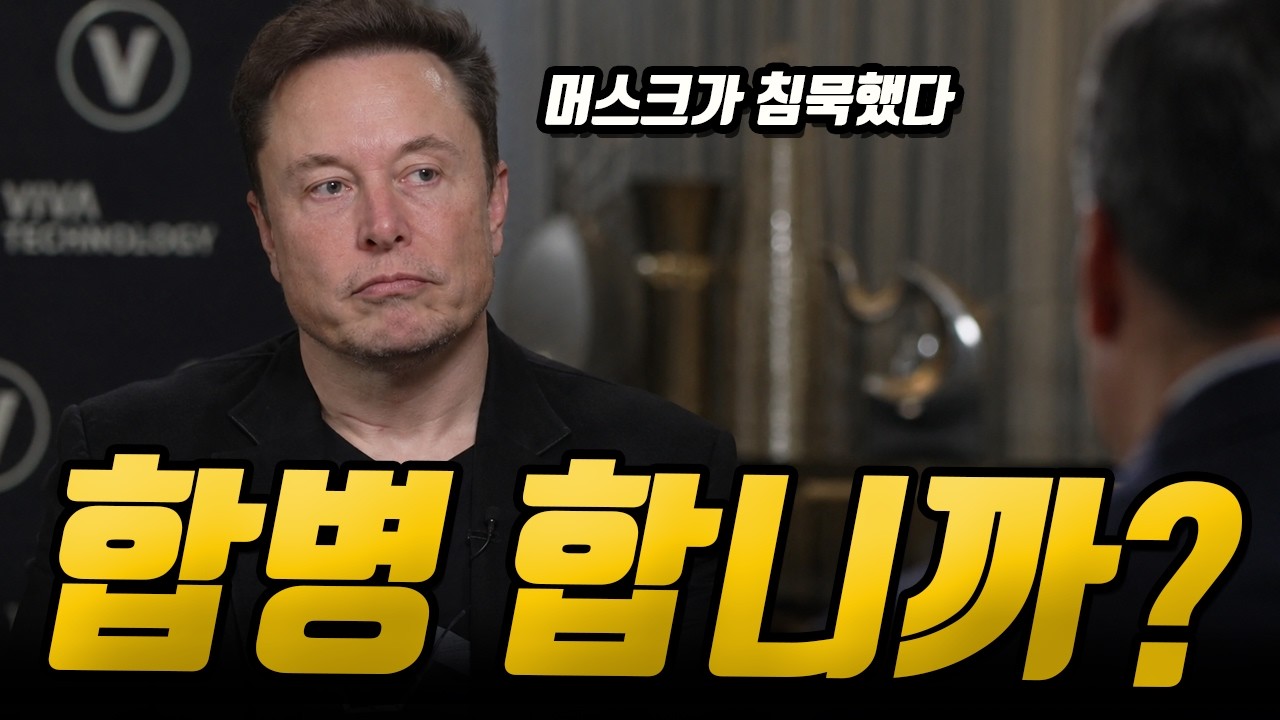
● Samsung labor crisis, total strike, supply shock, markets shaken
Samsung Electronics Labor Talks Collapse; Nationwide Strike Risk — Key Implications for Korea’s Economy, Semiconductor Supply Chains, and Equity Markets
This issue extends beyond a standard wage negotiation dispute.
This report consolidates the core points on why a Samsung Electronics strike could escalate into a macro-level risk for Korea, how it may disrupt semiconductor supply chains, its potential impact on the KOSPI and investor sentiment, whether the government’s emergency arbitration powers are a viable option, and the most material risk factors the market may be underpricing.
In particular, the primary concern may not be “production disruptions” alone, but the potential erosion of trust among global customers, share gains by competitors, and internal compensation conflicts that could weigh on long-term strategy execution.
1. Situation Overview: Why Negotiations Ultimately Failed
Wage negotiations between Samsung Electronics and its labor union collapsed after the National Labor Relations Commission’s second post-mediation process.
The central dispute was whether performance bonuses should be paid to loss-making units within the Device Solutions (DS) division, particularly System LSI and Foundry (non-memory businesses).
The union accepted the mediation proposal and stated that management did not make a final commitment.
Management indicated it accepted a substantial portion of the proposed bonus scale, but rejected extending the same compensation principle to loss-making units, citing the “pay for performance” management standard.
The union stated it would proceed with a strike as planned. Management indicated it would keep dialogue open. The commission has not fully ruled out additional mediation.
2. Why This Is Not a Routine Labor Dispute
The market treats this dispute as higher severity because it can affect Korea’s export-led structure and the broader manufacturing ecosystem.
2-1. Samsung Electronics Is Systemically Important
Samsung Electronics has an outsized influence on Korea’s equity market, exports, investment sentiment, employment, and supplier networks.
Semiconductors are central to Korea’s exports, and memory semiconductors remain a key source of global competitiveness.
Accordingly, operational disruptions are not solely a firm-level issue; they can transmit into growth expectations, trade balance outlooks, earnings forecasts, and equity-market performance.
2-2. Semiconductor Operations Are Difficult to Stop and Restart
Semiconductor manufacturing is a precision, continuous process.
Disruptions at any step can cause direct losses (e.g., wafer scrappage). Abnormal line stoppages can require significant time and cost to stabilize and restart.
Capacity cannot be easily “made up” through short-term overtime, making operational stability and customer confidence critical.
3. If a Strike Materializes: Four Transmission Stages
3-1. Stage 1: Direct Impact on Samsung Electronics
Production disruptions and earnings pressure would emerge first.
Lower output or schedule slippage can delay revenue recognition, while fixed costs remain, compressing operating profit.
Despite a cyclical recovery in semiconductors, the divergence between memory and non-memory performance makes incremental operational risk more market-sensitive.
3-2. Stage 2: Spillover to Suppliers and Local Economies
Samsung’s supply chain spans equipment, materials, components, logistics, maintenance, and cleanroom services.
If production weakens, suppliers may face lower revenue, utilization declines, and cash-flow pressure, with broader impacts on SME and mid-cap manufacturing ecosystems and regional economies.
3-3. Stage 3: Downstream Production Risk
Semiconductors are foundational inputs for autos, smartphones, consumer electronics, servers, data centers, telecom equipment, and industrial devices.
If supply becomes unstable, downstream firms may need to adjust inventories and production plans, extending disruptions to global customers.
3-4. Stage 4: Financial Markets and Risk Sentiment
Samsung Electronics is a KOSPI heavyweight; a decline in its share price can materially pressure the index.
If Korea’s semiconductor sector risk premium compresses, foreign and institutional rebalancing could amplify volatility.
Foreign investors often price supply stability and policy risk faster than near-term earnings, potentially increasing Korea’s valuation discount.
4. Core Issue: Why Performance Bonus Allocation Is Highly Sensitive
While framed as wages and bonuses, the dispute is fundamentally about the principles used to allocate value across the semiconductor organization.
4-1. Union Position
Employees work within the same DS division, and large compensation gaps driven by business-unit profitability are viewed as inequitable.
Non-memory businesses may remain loss-making while being strategically essential; tying compensation strictly to current P&L may conflict with long-term competitiveness objectives.
4-2. Management Position
Paying performance bonuses to loss-making units could dilute the performance-linked compensation principle and set a precedent affecting broader HR policy.
Given the capital-intensive nature of semiconductors, bonuses interact with profitability, investment pace, R&D spending, capacity expansion, and shareholder return policies.
5. Principal Risk: Customer Defection Rather Than Short-Term Output Loss
The higher-impact risk is a shift in global customer perception toward weaker supply reliability.
5-1. Semiconductor Buyers Prioritize Reliability
Large customers in memory and foundry markets prioritize consistent quality and on-time delivery.
In AI semiconductors, server memory, mobile, and automotive applications, delays can disrupt product launch schedules.
Once confidence weakens, customers may build inventories or diversify suppliers, shifting volume to competitors.
5-2. Competitors Can Capture Share
Potential beneficiaries include SK hynix and Micron in memory, and Taiwan- and China-based players in non-memory and foundry.
The industry is undergoing rapid changes driven by AI infrastructure investment, HBM demand growth, advanced packaging competition, and process-node transitions. Prolonged internal disruption can accelerate share loss.
5-3. Regaining Lost Customers Is Slow
Semiconductor sourcing requires testing, qualification, yield validation, quality audits, and long-term contracting.
Once supply chains shift, recovery can take multiple cycles, making the risk structurally relevant rather than a one-off event.
6. Implications for Korea: Growth, Exports, and Industrial Sentiment
6-1. Pressure on an Export-Led Economy
Korea remains highly sensitive to export momentum, with semiconductors a key driver.
If production stability weakens, expectations for an export recovery may deteriorate.
6-2. Downside Risk to Growth Forecasts
Recent growth narratives have relied more on export recovery than domestic demand.
Greater uncertainty in semiconductors can introduce downside risks to GDP forecasts and elevate perceived policy and industrial stability risk.
6-3. Impact on Corporate Investment
Semiconductors depend on sustained R&D and capex.
Prolonged labor conflict can lead to more conservative internal decision-making and reduce strategic clarity in capital allocation, potentially affecting productivity and competitiveness.
7. Equity Market View: Not Only a Single-Stock Issue
7-1. A Variable That Can Move the KOSPI
Given Samsung’s index weight, price declines can directly weaken the KOSPI.
If sector-wide sentiment deteriorates, foreign flows and institutional rebalancing may reinforce the move.
7-2. Potential Pressure on Large-Cap Semiconductors
Markets often extrapolate firm-specific events into sector risk.
Supply stability concerns may widen to the broader Korean semiconductor complex, increasing volatility in related names, including SK hynix.
7-3. Foreign Investors Prefer Predictability
Global investors emphasize rule clarity and predictability.
A combination of labor conflict escalation, potential government intervention, and legal uncertainty can increase the perceived risk premium for Korean equities.
8. Government Response: Emergency Arbitration Powers and Constraints
8-1. Definition
Emergency arbitration powers allow the government to suspend strikes for a period and impose compulsory mediation when a dispute is deemed to threaten the national economy.
8-2. Why It Is Being Discussed
A disruption in Samsung’s semiconductor operations could affect exports, supply chains, employment, and financial markets, supporting an argument for national-economic relevance.
8-3. Practical Limitations
- Appropriateness may be challenged if invoked before disruptions become material.
- Potential friction with international labor standards may be raised.
- Forced suspension may reduce near-term disruption but does not resolve underlying trust and incentive alignment.
9. Broader Context: Semiconductor Leadership in the AI Era
This dispute matters more because it coincides with an AI-driven restructuring of the semiconductor industry.
Global dynamics include AI infrastructure capex, data-center expansion, rising demand for high-performance memory, and intensified advanced foundry competition. Semiconductors function as foundational infrastructure.
9-1. Strategic Control of the AI Value Chain
Market focus is shifting from DRAM pricing alone to identifying long-term core suppliers for AI servers and high-performance compute.
Internal instability can affect execution capacity in technology roadmaps and investment prioritization.
9-2. The Non-Memory Loss Issue Is Strategically Material
System LSI and Foundry are central to the dispute.
In the AI era, competitiveness depends on design, foundry, advanced packaging, and customer-specific solutions—not memory alone. Loss-making units may reflect investment phases rather than dispensable cost centers.
10. Underemphasized Market Considerations
10-1. Compensation Is Also a Question of Strategic Priorities
The dispute reflects a structural tension between memory-centric profit allocation and the strategic necessity to scale non-memory capabilities.
10-2. Labor Risk Can Function as Competitor Marketing
Customers may accept higher prices for higher reliability, creating an opening for competitors to expand share.
10-3. Markets Penalize Uncertainty More Than Quantified Losses
The potential for further labor escalation, government intervention, legal disputes, and customer shifts can reduce valuation multiples even before measurable operational damage.
10-4. A Test Case for Industrial and Labor Policy Trade-Offs
Advanced-industry scaling requires large investment and agile decision-making, while labor rights are foundational to democratic economies.
The policy challenge is establishing mechanisms that balance both when conflicts arise.
11. Key Indicators to Monitor
11-1. Evidence of Actual Production Disruption
Market reaction will differ meaningfully depending on whether line operations are materially impaired or the impact remains limited.
11-2. Resumption of Negotiations and Further Mediation
A move toward compromise versus escalation can rapidly change risk pricing.
11-3. Government Signaling on Emergency Arbitration
Whether authorities progress from verbal guidance to formal action will shape perceived policy risk.
11-4. Global Customer and Competitor Responses
Monitor order reallocations, competitor share signals, external media tone, and any early indications of supply-chain reconfiguration.
12. Conclusion: The Market Focus Should Be on Second-Order Effects
A strike at Samsung Electronics would not be a standard labor headline.
It can affect Korea’s economy, semiconductor supply stability, KOSPI direction, policy credibility, and AI-era industrial competitiveness.
Near-term effects would likely appear through operational disruption and equity volatility. Medium- to long-term risks are more directly tied to global customer confidence, competitive share shifts, and Samsung’s execution capacity in strategic initiatives.
< Summary >
- Labor talks collapsed over performance bonus criteria, particularly whether to extend payouts to loss-making non-memory units; the union indicated it will proceed with strike action.
- The risk extends beyond wages to semiconductor supply chains, Korea’s export outlook, KOSPI performance, investor sentiment, and policy response.
- The most material risk is not short-term production loss but potential erosion of global customer trust and competitor share gains.
- Emergency arbitration may be considered but faces legal, political, and international-standard constraints; it is not a comprehensive solution.
- The dispute functions as a stress test for Samsung’s strategic execution in the AI-era semiconductor race and, by extension, Korea’s macro and industrial stability.
[Related Articles…]
- Semiconductor cycle outlook and key themes in global supply-chain reconfiguration: https://NextGenInsight.net?s=semiconductor
- AI industry transformation and Korea equity beneficiaries: https://NextGenInsight.net?s=AI
*Source: [ 경제 읽어주는 남자(김광석TV) ]
– [속보] 삼성전자 노사 협상 결렬. 총파업 현실화 [즉시분석]