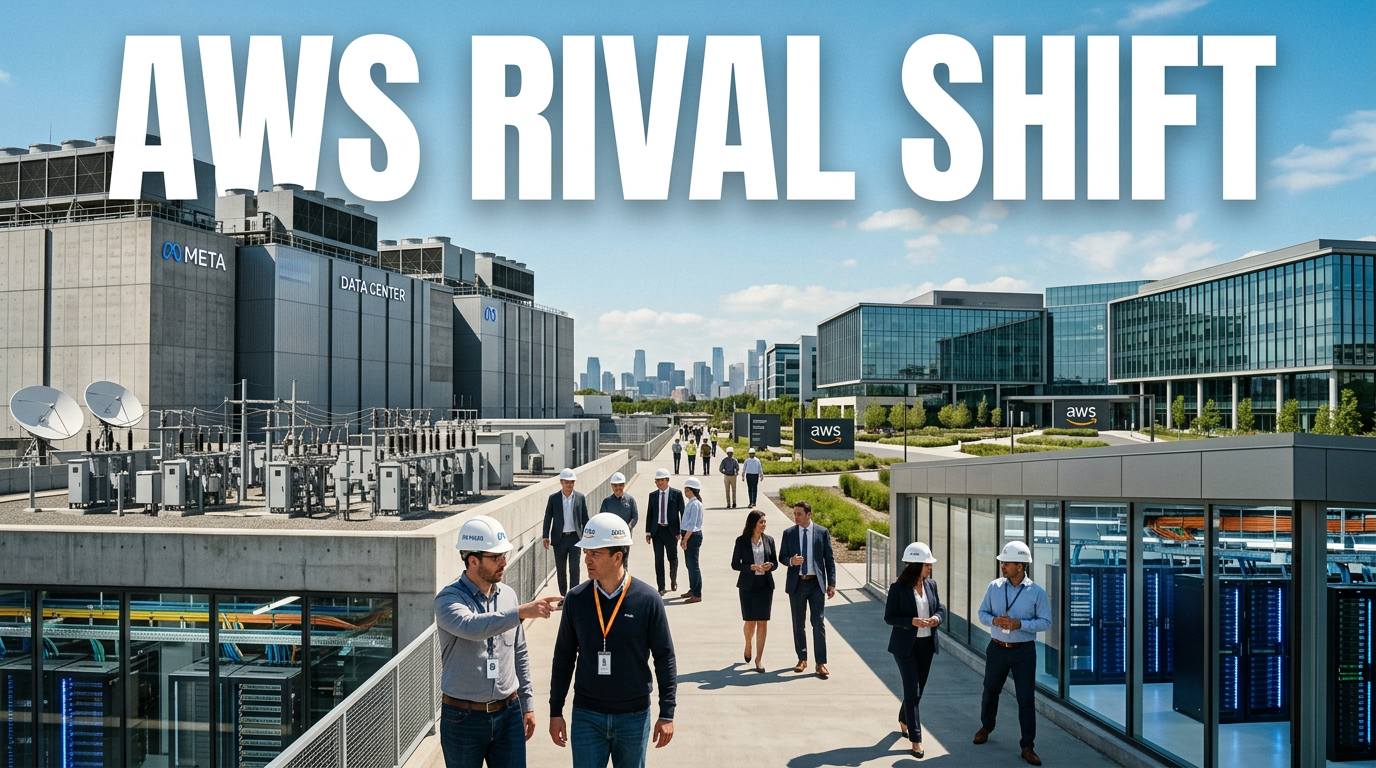

● Meta’s AI Cloud Push
The Real Strategic Move Behind Meta’s KRW 225 Trillion AI Investment… Why “Entering the Cloud Business” Could Change the Market Landscape
Why Meta Is Considering the Cloud Business Now
Meta is moving beyond simply scaling AI models and appears to be trying to turn AI infrastructure itself into a business.
The core point is large-scale data centers and AI chips.
Its capital expenditure this year alone is estimated at around $145 billion, equivalent to about KRW 225 trillion, showing just how aggressively it is pouring money into this area.
At first glance, this may look like excessive spending, but Meta’s calculation is that it will not simply absorb this massive cost.
By selling surplus computing resources to external customers, it can recover part of its AI investment costs.
In other words, Meta’s latest move is not just a simple business expansion, but closer to a strategy to redesign the AI investment recovery structure.
Meta’s Plan Can Be Divided Into Two Main Businesses
1. An Open AI Model API Platform
This is a model in which Meta allows external developers to use its in-house AI model, Muse Spark, through an API.
Simply put, developers would be able to rent and use AI created by Meta.
If this model takes hold, Meta could secure a new revenue stream as an AI model provider.
This is not merely about an advertising company using AI. It is an attempt to reposition itself as an AI platform company.
2. A Cloud Business That Rents Out Data Center Computing Resources
The second approach is more direct.
Meta would rent out the computing power of its data centers to external companies.
In this case, Meta would effectively be entering the cloud computing market.
This market is currently led by AWS, Microsoft Azure, and Google Cloud.
If Meta enters this space, it could create cracks in the existing Big Three structure.
Why This Matters: Meta Resembles Neo-Cloud Companies
Meta’s plan is also similar to the neo-cloud model used by companies such as CoreWeave and Nebius.
Rather than broadly selling general-purpose services like major cloud providers, neo-cloud companies are strong at quickly providing AI-focused GPUs and high-performance computing resources.
Today, AI companies struggle to secure as many GPUs and computing resources as they need.
In this environment, if a company like Meta, with massive infrastructure, releases resources to the outside market, those resources themselves become commercially valuable.
In other words, Meta has the potential to transform from a simple platform player into an AI computing supplier.
Meta’s Real Intention Is to Ease Concerns Over “Excessive AI Investment”
The hidden meaning behind this move is also important.
In the market, concerns have continued to grow that Big Tech companies are spending too much money on GPUs and data centers.
In this situation, Meta is presenting the logic that “we are not just investing; we can monetize surplus resources by selling them.”
This logic is quite important for investors.
That is because it can reduce doubts about AI investment profitability.
Ultimately, Meta is trying to create the perception that it is not just a “company that spends money,” but a “company that can turn infrastructure into cash.”
Market Impact: Meta May Benefit, While Infrastructure Stocks Could Come Under Pressure
Market reactions are already mixed.
Meta’s stock has shown a sharp upward move, while AI infrastructure stocks such as Micron have come under pressure.
The reason is simple.
If Meta emerges as a cloud supplier, more computing resources could become available in the market.
If that happens, concerns over AI infrastructure oversupply could reappear over the medium to long term.
In particular, investors are likely to become more sensitive toward stocks related to GPUs, memory, data centers, and power infrastructure.
The Three Things the Market Should Watch Most Closely Going Forward
1. Whether Meta Actually Launches the Cloud Business
There is a huge difference between the planning stage and actual commercialization.
The first key turning point is whether Meta moves beyond internal review and begins offering services to external customers.
2. Whether Computing Resource Rental Prices Hold Up
In the AI cloud business, price competitiveness and supply stability are ultimately the key factors.
It is important to see whether Meta can secure customers while maintaining high prices.
If prices fall quickly, profitability could be weaker than expected.
3. Whether the Market Dominance of AWS, Azure, and Google Cloud Is Shaken
Meta’s entry does not mean the existing three-power structure will collapse immediately.
However, the competitive structure could change in the AI-dedicated computing market.
Especially in areas with high demand for AI training GPUs, Meta could gain considerable bargaining power.
From an Economic and AI Trend Perspective, This Issue Has an Even More Important Point
Meta’s latest move is not just a corporate strategy.
From a broader perspective, it can also be seen as a signal that the financialization of AI infrastructure is beginning.
In other words, data centers and GPUs are now becoming revenue-generating assets rather than just cost items.
This also carries significant meaning for the global economic outlook.
As long as AI investment continues to increase, capital is likely to keep flowing heavily into semiconductors, power, servers, data centers, and cloud infrastructure.
Put differently, in the future AI market, the more important question may shift from “who can build the better model” to “who can supply computing power more cheaply and reliably.”
This is the real core point.
The Most Important Point That Other News Often Misses
Meta Could Evolve From an AI Model Company Into an AI Power and Computing Distribution Company
Many analyses only say that “Meta is entering the cloud business.”
But the more important point is that Meta could become not just a company that builds AI, but a company that distributes AI infrastructure.
This is a matter that could completely change its revenue structure.
If a company that has relied on advertising revenue creates new revenue pillars through cloud services, APIs, and computing rentals, its valuation itself could change.
The Next Battle in the AI Market Is Not Model Performance, but “Computing Monopoly Power”
On the surface, this looks like a generative AI competition, but in reality, it is a battle over who can secure more GPUs and data centers.
A company like Meta, which owns large-scale infrastructure, can sell those resources externally instead of using them only internally.
At that moment, the market shifts beyond simple technology competition into an AI supply chain competition.
If you miss this point, you are only understanding half of the future AI trend.
If Supply Increases, AI Infrastructure Stocks Also Need to Be Revalued
Right now, there is a widespread expectation that AI-related stocks will rise simply because of the AI boom, but the logic changes once supply increases.
If Meta begins supplying computing resources externally in earnest, related equipment and component companies could face both demand expansion and pricing pressure at the same time.
In other words, AI infrastructure investment stocks should not be viewed simply as beneficiaries. Investors also need to consider the supply cycle.
In Summary, Meta Is Preparing a New Landscape for the AI Cloud Era
Meta’s latest move is not just simple business diversification.
It is an attempt to recover massive AI investment costs while also creating cracks in the market dominated by AWS, Azure, and Google Cloud.
It is also sending investors the message that “AI investment is not excessive spending, but a monetizable asset.”
Going forward, investors should watch whether Meta actually launches the service, whether it can maintain price competitiveness, and whether the AI infrastructure market shifts toward oversupply.
Ultimately, this issue could change both the restructuring of the cloud market and the direction of AI infrastructure investment.
< Summary >
Meta is seeking to monetize surplus computing resources behind its KRW 225 trillion AI investment by selling them externally.
The core point is opening AI model APIs and renting out data center computing resources.
If this strategy becomes reality, a new competitor will emerge in a market centered on AWS, Azure, and Google Cloud.
At the same time, it could help ease concerns over excessive AI infrastructure investment.
However, over the medium to long term, concerns over AI infrastructure oversupply and greater volatility in related stocks could also emerge.
[Related Articles…]
- Meta Accelerates AI Cloud Monetization Strategy
- Cloud Market Reshaping as Big Tech Infrastructure Competition Intensifies
*Source: 서울경제TV