● Seoul Boom, K-Culture Goes Viral
South Korea’s Second Hallyu Wave Is Returning in the U.S., with “Seoul Lifestyle” Now Gaining Traction Beyond K-pop
The key point in this shift is not simply that foreign audiences like Korea.
What is changing is that Americans who visit Seoul increasingly adopt Korean food, language, cafe culture, skincare, convenience stores, public transit, and everyday consumption habits.
In other words, Hallyu is moving beyond content consumption into lifestyle replication.
This trend has implications for Korea’s tourism industry, cultural exports, global consumer trends, AI recommendation systems, and longer-term macroeconomic outlook.
All observations are based on conditions as of August 27.
1. Key Summary: The Second Hallyu Wave Is Becoming a Desire to Live in Seoul
The current pattern in the U.S. suggests that consumers exposed to Korean content are moving beyond fandom.
Many Americans who visit Seoul return with a desire to “live like Koreans.”
Whereas the first Hallyu wave was driven by K-pop, dramas, and films, the second wave is centered on Seoul itself as a consumer and lifestyle brand.
- They do not only eat Korean food; they adopt Korean meal routines.
- They do not only watch K-dramas; they seek to experience the settings and atmosphere firsthand.
- They learn Korean not only for exams or employment, but to understand it more intuitively.
- Seoul travel is increasingly consumed as a lifestyle experience rather than conventional tourism.
- Korea is increasingly perceived not as a country, but as a brand and a distinctive cultural reference point.
Seoul is therefore becoming less a destination and more an operating system that visitors want to experience.
2. The Main Difference Between the First and Second Hallyu Waves
The first Hallyu wave was content-driven.
It was built on exposure to dramas, idol groups, films, and entertainment programs.
The second wave extends into everyday life after content exposure.
- First Hallyu: BTS, BLACKPINK, Squid Game, and Parasite introduced Korea globally.
- Second Hallyu: Viewers now emulate Korean daily life, consumption, language, aesthetics, and urban experience.
This distinction matters because it changes the flow of money.
A single content hit may be temporary.
However, when a lifestyle is exported, it affects food, cosmetics, fashion, education, travel, platforms, payments, lodging, and distribution.
Korean cultural content is therefore evolving from entertainment into an economic infrastructure that reshapes consumption patterns.
3. Why the Phrase That Americans Are “Caught” by Seoul Keeps Appearing
The phrase used in the video does not refer to a literal illness; it indicates that the Seoul experience leaves a strong and lasting impression.
Common post-trip responses among Americans can be summarized in four points.
- First, they want to return.
Seoul is increasingly seen as a place for repeat visits rather than a one-time trip. - Second, they begin learning Korean.
They want to understand not only translated meaning, but also tone and nuance. - Third, they bring Korean consumption habits into daily life.
Ramen, kimbap, tteokbokki, iced Americano, beauty routines, and convenience-store culture expand abroad. - Fourth, they remember Seoul as an ideal urban experience.
Public transit, safety, nightlife, cafe density, and fast service are consumed as a single package.
Korean tourism is therefore shifting away from conventional sightseeing toward an experience of living like a local for a day.
4. Why Seoul Has Become a Site of Desire for U.S. Consumers
Seoul’s appeal is not based only on visual aesthetics or modernity.
It is a city where tradition and advanced urban systems operate simultaneously.
- Hanok houses and high-rise towers coexist.
- Palaces and pop-up stores can be part of the same travel itinerary.
- Traditional markets and luxury department stores fit into the same day.
- 24-hour cafes, convenience stores, delivery services, and the subway network are highly integrated.
- Spaces that are photogenic and spaces that are practical coexist.
Compared with many U.S. cities, which are more dispersed and car-dependent, Seoul offers a dense set of experiences within a short time frame.
For foreign visitors, food, shopping, culture, nightlife, filming locations, beauty services, and transportation can all be experienced within a single day.
This density is one of Seoul’s strongest competitive advantages.
5. Why Rising Interest in Korean Language Matters
The increase in Korean language learning signals more than general cultural interest.
Language study is one of the strongest forms of fandom behavior.
People do not typically learn the language of a country they merely like.
They learn it when they want direct access to the culture’s emotions, humor, social codes, and communication style.
- They want to understand K-drama dialogue in the original language.
- They want to grasp the nuance of K-pop lyrics.
- They want to communicate naturally with Korean peers.
- They want to behave like locals when visiting Seoul.
- They want a deeper understanding of Korean brands and society.
This trend has implications for education markets.
It supports demand for Korean language apps, online courses, AI translation services, tutoring, and study-abroad programs.
From an AI perspective, Korean language demand may also support speech recognition, real-time translation, and personalized language-learning platforms.
6. Economically, the More Important Metric Is Not Tourist Count, but Spending Patterns During the Stay
The fact that more than 10 million foreign visitors traveled to Korea is important.
However, the more important question is what they buy, where they stay, and which experiences they pay for.
- Beauty: Demand rises for Olive Young, dermatology, skincare, and color cosmetics.
- Food: Kimbap, tteokbokki, fried chicken, ramen, dining, and convenience-store food become tourism products.
- Fashion: Streetwear and designer brands in Seongsu, Hongdae, Hannam, and Apgujeong gain visibility.
- Lodging: Demand rises for hotels, aesthetic accommodations, serviced residences, and long-stay spaces.
- Content tours: Drama filming locations, idol-related sites, and pop-up stores become travel drivers.
- Medical and wellness: Demand expands for skincare, health screening, weight management, massage, and cosmetic procedures.
Tourism is now broader than flights and hotels.
Everyday consumption in Seoul is becoming an exportable product for foreign visitors.
7. The Nature of the “Rumors” About Korea Spreading in the U.S.
The video refers to positive rumors about Korea spreading across the U.S.
These typically take the following form.
- Korea is perceived as relatively safe at night.
- Public transportation is viewed as convenient and clean.
- Food is seen as diverse and high in value for money.
- Cafes, convenience stores, and retail spaces are considered highly developed.
- Korean style and self-care culture are seen as distinctive and attractive.
Such first-hand accounts are more influential than traditional advertising.
They spread through personal experience shared on TikTok, YouTube Shorts, and Instagram Reels.
“I went there myself, and it was really good” often moves faster than official promotion.
8. How AI Recommendation Systems Are Accelerating the Second Hallyu Wave
The second Hallyu wave cannot be explained without AI-driven recommendation systems.
In the past, broadcasters, labels, and film distributors controlled content expansion.
Today, recommendation engines on TikTok, YouTube, Netflix, Instagram, and Spotify connect interests automatically.
- After watching one K-drama clip, users are recommended Korean food videos.
- After watching Korean food content, Seoul travel vlogs appear.
- After watching Seoul travel videos, Korean language learning content is recommended.
- After engaging with language-learning content, users are exposed to Korean study, work, and lifestyle information.
As a result, Hallyu is evolving from a single content category into an integrated interest ecosystem.
AI systems detect interest in Korea and continue linking related content.
That makes it difficult for users to disengage once the cycle begins.
This is why the phenomenon is often described as highly immersive.
9. The Core Point Often Missed: Korea Has Begun Exporting a Lifestyle Standard, Not Just Culture
The most important point is that Korea is no longer exporting only cultural products.
It is increasingly exporting a standard of living.
- It changes expectations about what to eat.
- It changes expectations about how to dress and present oneself.
- It changes perceptions of what makes a city desirable.
- It changes priorities around which language to learn.
- It changes what counts as a worthwhile travel experience.
This shift is more durable than short-term popularity.
When lifestyle standards change, consumption becomes repeated.
When consumption repeats, brands emerge.
When brands emerge, industries expand.
When industries expand, national image and export competitiveness also improve.
From this perspective, the second Hallyu wave is not just a cultural phenomenon but a new growth channel for the Korean economy.
10. Opportunities for Korean Companies
This trend is not limited to large conglomerates.
It also creates opportunities for small brands, local businesses, and individual creators.
- Beauty brands: Explain ingredients, usage, and routines in English-language content.
- Food brands: Repackage spicy foods, ready meals, frozen products, and convenience-store items for global markets.
- Tourism operators: Build products around daily lifestyle routes rather than only landmark-based tours.
- Education providers: Develop AI-based content that combines Korean language learning with cultural understanding.
- Local businesses: Improve booking, payment, menu, and review systems for foreign users.
- Content companies: Design dramas and variety shows so that locations, products, and food convert into real-world consumption.
Korean companies should not stop at the fact that foreign audiences like Korea.
They need to identify why they like Korea, break it down into data, and convert it into purchasable products.
11. The Meaning of Hallyu in the Global Economic Outlook
From a global macroeconomic perspective, Hallyu is not only cultural exports but also an expansion of service exports.
It adds culture, tourism, education, healthcare, platforms, and data industries to a manufacturing-led export structure.
- Rising tourism supports domestic consumption.
- Higher brand awareness can increase export pricing power.
- Demand for Korean language learning can support education services exports.
- K-beauty and K-food have potential as repeat-purchase consumer categories.
- AI recommendation platforms can continue expanding exposure to Korean content.
For Korea, where population decline and weak domestic demand are structural concerns, foreign consumption of Korean lifestyles can serve as an important offset.
Spending occurs inside Korea, but the demand originates overseas.
12. Key Factors to Watch Going Forward
For the second Hallyu wave to remain durable, experience quality will matter more than popularity alone.
If foreign visitors encounter inconvenience in Korea, expectations may fade quickly.
Conversely, strong experiences can turn individual travelers into informal ambassadors for Korea.
- Foreign-language guidance and booking systems need improvement.
- Access beyond major tourist areas must improve.
- Ordering and payment should be easy for non-Korean speakers.
- The gap between content-driven expectations and on-the-ground travel experience should narrow.
- The model should shift from short-term trend to repeat visits, extended stays, and recurring consumption.
The decisive factor is not content, but execution.
Seoul’s advantage depends on how conveniently, safely, and naturally that experience can be delivered.
13. Conclusion: Seoul Has Shifted from a City to Observe to a City People Want to Emulate
The essence of the second Hallyu wave is not simply the popularity of Korean content.
It is the emergence of Seoul and Korean daily life as a premium lifestyle reference.
Foreign visitors are increasingly coming not to observe Korea, but to live like Koreans for a day.
They learn Korean, eat Korean food, visit Korean-style cafes, and follow Korean self-care and consumption patterns.
This creates a significant opportunity for the tourism and cultural industries.
Combined with AI trends, the effect may scale further and faster.
The next phase of Hallyu is likely to center on lifestyle, urban experience, and consumption patterns rather than only music and drama.
Companies and regions that recognize this earliest are likely to capture the greatest economic upside.
< Summary >
The second Hallyu wave is expanding beyond K-pop and dramas into the adoption of Seoul lifestyle patterns.
U.S. consumers increasingly perceive Seoul not as a tourist destination, but as a place where they want to live like Koreans.
Korean language learning, K-beauty, K-food, cafe culture, convenience-store consumption, and urban experience are spreading together.
AI recommendation systems are linking Korean content with travel, language, and consumption, accelerating diffusion.
The key development is that Korea is beginning to export a lifestyle standard rather than only culture.
This trend is likely to create new opportunities in tourism, cultural content, education services, and beauty and food exports.
[Related Articles…]
- Hallyu’s Impact on Global Consumer Trends
- AI Recommendation Systems and the Future of Content Industries
*Source: [ 달란트투자 ]
– “2차 한류 열풍 또 터졌다” 서울 다녀간 미국인들 다 걸렸다 미국에서 벌어지는 이상 현상 | 김상조 교수 3부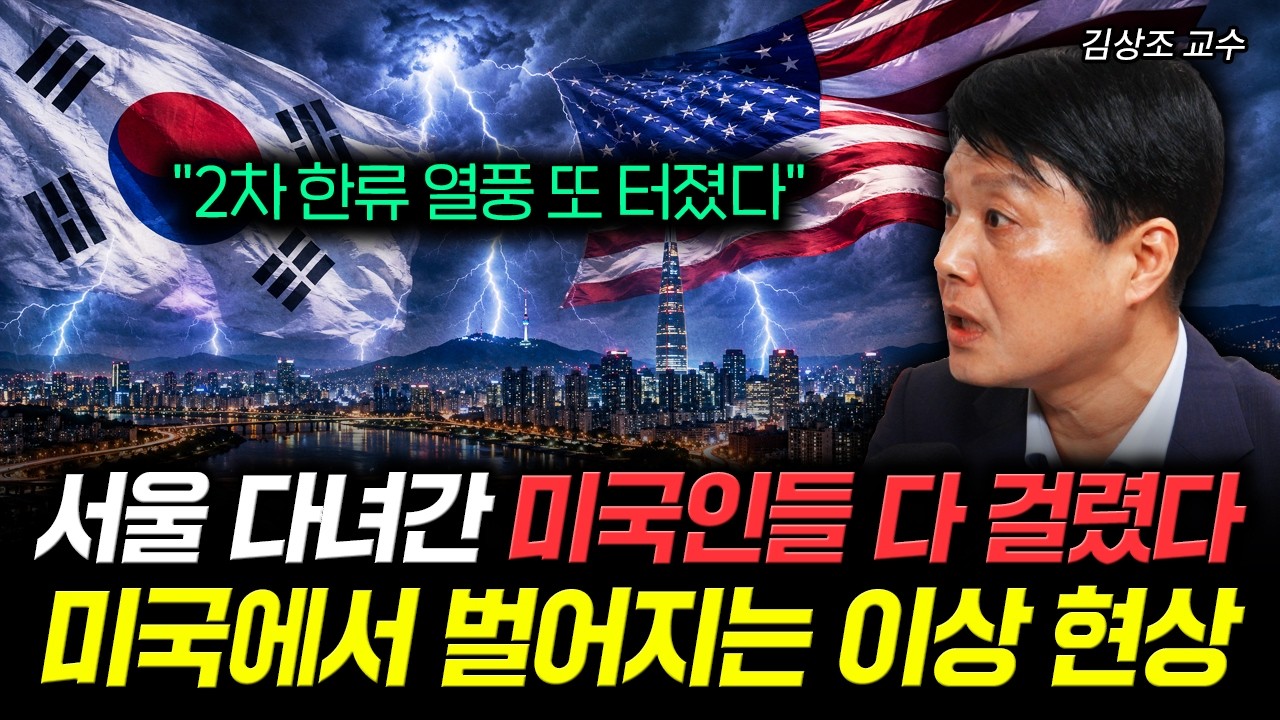
● AI-Data-Center, Power, Bottleneck
AI Data Center Shutdown Risk, but the Core Issue Is Power Grid Bottlenecks, Not China’s Information Campaign
This issue should not be reduced to a conspiracy-style claim that China is obstructing U.S. AI data center construction.
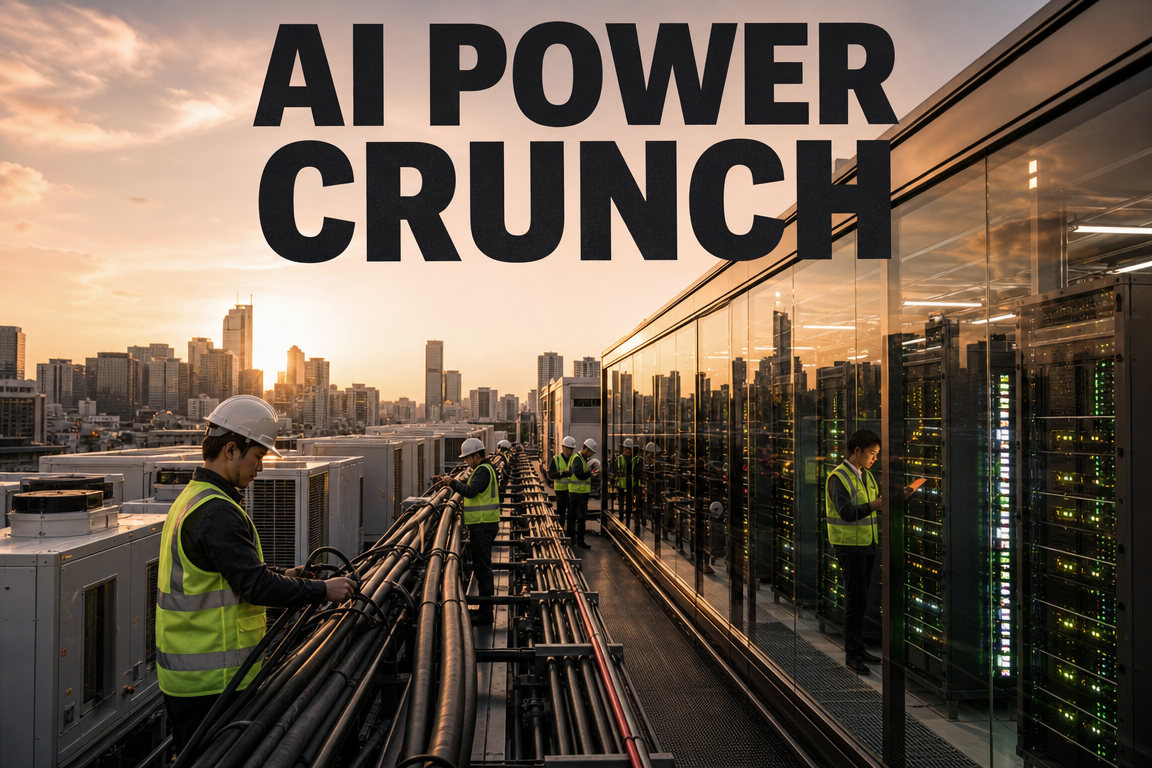
The more important point is that U.S. AI data center buildout is now tied to politics, electricity rates, water use, local opposition, power infrastructure constraints, and the U.S.-China AI competition.
On the surface, this appears to be a backlash against data centers. In reality, it connects U.S. reindustrialization, semiconductor supply chains, energy security, big tech capital allocation, and the power grid investment cycle.
The conclusion is straightforward: a full shutdown of AI data center construction is unlikely.
Going forward, the key competitive advantage may shift from securing more GPUs to securing power and land first.
1. The Trigger: Allegations That China-Linked Accounts Amplified Anti-Data Center Sentiment in the U.S.
Recent reports claimed that accounts suspected of having ties to China were amplifying opposition to AI data center construction in the United States.
The core message was simple.
AI data centers consume large amounts of electricity and water, and those costs are being passed on to ordinary U.S. households through higher utility bills.
These messages reportedly spread through posts and comments on X, Reddit, and other online communities.
According to the original report, OpenAI said the accounts originated in China and were linked to a social media team at a Chinese technology company.
Some operators reportedly used VPNs to access ChatGPT from China and shared documentation on methods to avoid detection.
After this became public, House Republican leadership requested an FBI investigation.
The rationale was that an external actor was attempting to slow down the construction of U.S. AI infrastructure.
At that level, the narrative becomes one of China trying to obstruct U.S. AI development through information operations.
However, the underlying reality is far more complex.
2. More Important Than China’s Campaign: Strong Domestic Opposition Already Existed
Even if China-linked accounts did exist, U.S. opposition to data centers was not created from scratch abroad.
Local opposition in the United States was already substantial.
According to a Gallup survey, more than 70% of Americans opposed having an AI data center in their area.
This opposition was not limited to one political party.
Majorities of Democrats, Republicans, and independents all expressed opposition.
This resembles a classic not-in-my-backyard dynamic: people may accept the need for the infrastructure, but do not want it nearby.
Residents are mainly concerned about three issues:
- Potential increases in electricity bills
- Higher water consumption and pressure on local water supplies
- Noise from cooling equipment and broader environmental disruption
In other words, China may have added fuel, but the combustible material was already present inside the U.S.
This distinction matters.
External information operations likely intensified existing concerns rather than creating opposition from nothing.
3. AI Data Centers Have Become a Political Issue Ahead of the U.S. Election Cycle
The data center issue has moved beyond technology and become a political issue.
Some Democrats have discussed even a moratorium on construction until electricity and water concerns are addressed.
By contrast, Republicans are calling for an FBI probe, arguing that China-linked actors are targeting U.S. AI infrastructure.
The key point is that data centers are politically easy targets.
They are highly visible.
The buildings are large, cooling systems can be noisy, and the image of heavy electricity use is easy to communicate.
For politicians, it is easier to blame data centers for higher utility bills.
In reality, electricity price increases reflect a much more complicated mix of factors.
Aging transmission infrastructure, new generation investment, fuel costs, rising demand, distribution expenses, and regional regulation all play a role.
For voters, however, it is far easier to say that a massive data center is driving bill increases than to explain the full utility cost structure.
4. Do Data Centers Really Raise Electricity Bills?
The key question is whether AI data centers are actually raising household electricity bills in the United States.
According to research cited in the original text from SemiAnalysis, the answer is that data centers alone cannot be identified as the main driver of higher rates.
Some regions have seen electricity bills rise by more than 20%, but it is difficult to attribute that entirely to data centers.
Utility demand forecasting errors, transmission investment costs, generation expansion, and fuel price volatility all contribute.
In some regions, data centers also generate substantial fiscal benefits for local governments.
For example, Loudoun County, Virginia, is reported to derive a significant share of its general fund from data center-related revenue.
In the cited 2026 data, data center revenue accounted for roughly 38% of the general fund and nearly 50% of property tax revenue.
That level of contribution indicates that data centers are not merely electricity-consuming facilities, but a core part of the local fiscal base.
Construction also creates jobs for electricians, construction workers, plumbers, cooling-system technicians, security staff, and operations personnel.
From a U.S. economic perspective, AI data centers are not just server buildings; they are industrial assets that bring in jobs, tax revenue, and grid investment.
5. Water Use: Do Data Centers Consume Excessive Water?
Water use is another central argument against data centers.
Data centers use cooling systems to remove heat generated by servers.
Some cooling methods require water, which raises concerns about local water scarcity.
However, the original text argues that data center water use is often overstated relative to other industries.
It cites examples such as agricultural operations, almond farms, and golf courses using far more water than data centers.
One comparison suggests that golf courses use more than 20 times as much water as data centers.
This does not mean water issues are irrelevant in every region.
In drought-prone or water-constrained areas, cooling methods can become a genuine source of conflict.
That said, major operators are increasingly adopting water recycling, wastewater reuse, air cooling, and closed-loop cooling systems.
Microsoft’s water recirculation approach at a data center in Washington State is one example.
AI cloud companies such as Nebius and CoreWeave are also moving toward systems that reduce reliance on local groundwater extraction.
Going forward, data center approvals may depend as much on how sustainably they cool as on how much electricity they consume.
6. The Trump Administration’s AI Infrastructure Fast-Track and Democratic Pushback
The original text cites Executive Order 1418 as an important policy backdrop.
Large AI data center projects exceeding 100MW of electricity demand may be classified as critical infrastructure for national security and economic growth.
That classification can lead to faster permitting and possible tax incentives or regulatory relief.
This policy is being pushed by the Trump administration, which has intensified the political dispute.
For Democrats, large data centers represent local backlash, environmental concerns, and criticism over preferential treatment for big tech.
There is also growing resistance in places such as New York City, where some local actors strongly oppose new data center construction.
As a result, AI data centers are no longer just a technology-sector issue.
They are now a politically relevant issue in presidential, midterm, and local elections.
7. Historical Parallel: The Transcontinental Railroad and AI Data Centers
An interesting comparison is the 1862 Transcontinental Railroad.
At the time, private companies built the railroad, but the federal government supported the project through land grants and bonds.
The government viewed the railroad as a strategic asset for military and economic purposes, accelerating U.S. westward expansion and industrialization.
There was also opposition.
Concerns about favoritism, land disputes, local conflict, and political resistance all existed.
The current AI data center debate follows a similar pattern.
Private companies build the infrastructure, but it is also relevant to national security and economic competitiveness.
Government support creates concerns about subsidies and special treatment.
Local communities worry about environmental impact and higher living costs.
Over the long term, however, these projects could reshape national infrastructure priorities.
If railroads were a growth engine for the 19th-century U.S. economy, AI data centers and the power grid may become the foundation of 21st-century U.S. reindustrialization.
8. Messages from Investors and Jensen Huang: Data Centers as a Core Part of U.S. Reindustrialization
Investor Edwin Baker expressed a strong view on data centers.
He argued that they can revive small towns, create blue-collar jobs, lower electricity costs, and use very little water.
He also said that politicians who oppose data centers are unfit for office.
He later softened his language, but the core message remained the same: AI data centers are a key part of rebuilding the U.S. industrial base.
NVIDIA CEO Jensen Huang has made a similar argument.
He sees AI as bringing back industries that moved offshore for decades.
As power, energy, semiconductor fabrication, and data center investment return to the U.S., they are supporting reindustrialization.
He also emphasized that engagement with local communities remains essential.
Even if the technology is directionally sound, implementation will be difficult without local consent.
9. The White House Compromise: Big Tech Should Pay for Data Center Costs
The U.S. government is also aware of local opposition.
One compromise is to require companies to bear the cost of power generation and distribution needed for data centers.
In practice, this means that if big tech wants to build AI data centers, it should not shift grid expansion costs onto household electricity bills.
If companies pay for generation, transmission connections, and distribution upgrades, the government can accelerate permitting.
This approach is politically pragmatic.
Residents can be told that their utility burden will not increase.
Companies can be told that speed will be granted in exchange for paying the cost.
The government can pursue AI infrastructure expansion while managing voter backlash.
Going forward, the real competitive advantage in AI data centers may be less about capital and more about the ability to structure agreements with utilities and local communities.
10. The Problem with Cancellation Headlines: Many Projects May Be Phantom Data Centers
Recent headlines have claimed that more than half of AI data center projects have been canceled.
At first glance, this suggests that the AI data center boom is fading.
However, the original text interprets the data differently.
Texas’s grid reportedly received more than 410GW of large-load applications.
That is far larger than available supply and is not a normal level of demand.
Why did this happen?
Because the same projects were often submitted to multiple sites and multiple utilities.
Like applying to several universities, developers file multiple applications where possible.
Some proposals are submitted before land, power infrastructure, or financing is actually secured.
The original text refers to these as phantom data centers.
Therefore, reports about cancellations should not automatically be read as a collapse in real AI demand.
Projects with secured land, power, funding, and customer contracts are still likely to move ahead.
11. The Key Investment Insight: Power Infrastructure Is Becoming a Bigger Bottleneck Than GPUs
In the early phase of AI expansion, GPUs were the main bottleneck.
Competitive advantage depended on securing NVIDIA GPUs quickly and in volume.
Now the bottleneck is shifting toward power infrastructure.
GPU supply is not enough if there is no electricity to run the data center.
Land is not enough if transmission interconnection is delayed.
Even if power is approved, local opposition can slow the timeline.
As a result, the premium in AI infrastructure investment is likely to move toward the following areas:
- Data center sites with already secured power access
- Power infrastructure firms with transmission and substation buildout capabilities
- Distributed power solutions such as gas turbines, reciprocating engines, small modular reactors, and battery storage
- Cooling technologies that reduce water consumption
- Developers capable of negotiating taxes, utility costs, schools, and job commitments with local communities
In particular, companies that can secure power first may command a premium in the market.
AI data center competition is becoming an energy security and grid access competition, not just a race to build more servers.
12. Cleaner Power Solutions Will Shape Data Center Approval Speed
The original text also references battery-based solutions from companies such as Blue Energy.
Such systems may enjoy stronger community acceptance than gas turbines or reciprocating engines, which can raise pollution concerns.
If the main objections to data centers are electricity bills, water use, noise, and air pollution, then technologies that reduce those concerns will also improve permitting prospects.
Going forward, simply arguing that AI infrastructure is necessary will not be enough.
Developers will need to present concrete packages such as paying for grid upgrades, supplying excess power to the local community, investing in schools or public facilities, and minimizing water use.
In many U.S. regions, such negotiations are already underway.
They are unlikely to be easy.
Residents will seek higher compensation, while companies will try to limit costs.
Still, firms that manage this negotiation well may be able to build faster than competitors.
13. What Many Reports Miss
Many reports on this issue focus only on surface-level narratives, such as China trying to obstruct U.S. AI data centers or residents opposing higher utility bills.
The more important points are different.
- First, the key bottleneck in AI data centers is shifting from GPUs to the power grid.
As AI models become more compute-intensive, power delivery and transmission access may increasingly determine firm valuation.
- Second, opposition to data centers cannot be explained solely by foreign manipulation.
China-linked accounts may have amplified the issue, but concerns over electricity and water were already part of domestic politics.
- Third, cancellation statistics may include a large amount of noise.
Projects filed multiple times across regions can make the market appear weaker than it really is.
- Fourth, the U.S. government views AI data centers as critical infrastructure.
Because the U.S. cannot afford to fall behind China in AI, construction is likely to continue despite political friction.
- Fifth, big tech competitiveness will increasingly depend on community negotiation skills.
Who pays for grid costs, what benefits residents receive, and how cooling is designed will become central variables.
14. Global Economic Outlook: AI Data Centers as a Symbol of U.S. Reindustrialization
AI data center investment is not just a technology theme.
It is directly linked to U.S. reindustrialization.
Semiconductor fabs, power grids, substations, gas-fired generation, nuclear power, battery storage, cooling systems, and construction labor markets all move together.
The U.S. is trying to build AI computing infrastructure domestically to avoid losing ground in competition with China.
In that process, energy security and industrial policy are becoming one system.
More data centers mean more power demand, which leads to more investment in generation and transmission.
That creates opportunities for copper, transformers, power equipment, grid software, and cooling technology firms.
Ultimately, the benefits of AI will extend beyond NVIDIA and cloud providers.
They may also spread to power infrastructure, energy systems, industrial automation, semiconductor supply chains, and data center REITs.
15. Final View: A Full Shutdown Is Unlikely; the Real Debate Is About Speed and Cost Allocation
A full halt to AI data center construction appears unlikely.
The reason is clear.
For the United States, AI is not just an industry; it is a strategic asset.
Core AI models, semiconductors, data centers, and the power grid are all tied to national competitiveness.
As competition with China intensifies, the U.S. is more likely to accelerate data center construction than stop it.
That said, not every project will proceed smoothly.
Sites facing strong local opposition may be delayed.
Projects with difficult grid interconnection may be canceled.
Regions with serious water constraints may require new cooling designs.
There will also be ongoing debate over how much of the infrastructure cost big tech should bear.
Investors should therefore avoid simplistic conclusions such as “the data center boom is over” or “it will continue without interruption.”
The key issue is bottlenecks.
Companies that secure power, land, transmission access, cooling solutions, and local agreements first are likely to lead the AI infrastructure race.
In the AI era, the real premium is shifting away from computing power itself and toward the infrastructure required to run it.
< Summary >
Opposition to AI data centers in the U.S. cannot be explained solely by China-linked accounts.
Domestic concerns over electricity costs, water use, noise, and local disruption already existed, and external information operations likely amplified them.
Data centers are not the sole driver of rising electricity bills, but they have become a politically easy target.
Cancellation statistics may include many phantom projects submitted multiple times across regions.
Projects with real land, power, and financing are still likely to move forward.
The main bottleneck in AI is likely shifting from GPUs to power grids, cooling, permitting, and community agreements.
Because the U.S. views AI as strategic infrastructure, a full stop in data center construction is unlikely.
From an investment perspective, power infrastructure, energy security, semiconductor supply chains, data center cooling, and transmission-related companies should all be monitored.
[Related Articles…]
- AI Data Center Grid Bottlenecks and Investment Opportunities
- U.S. Reindustrialization and Semiconductor Supply Chain Reallocation
*Source: [ 월텍남 – 월스트리트 테크남 ]
– AI 데이터센터 전면 중지 위기의 전말