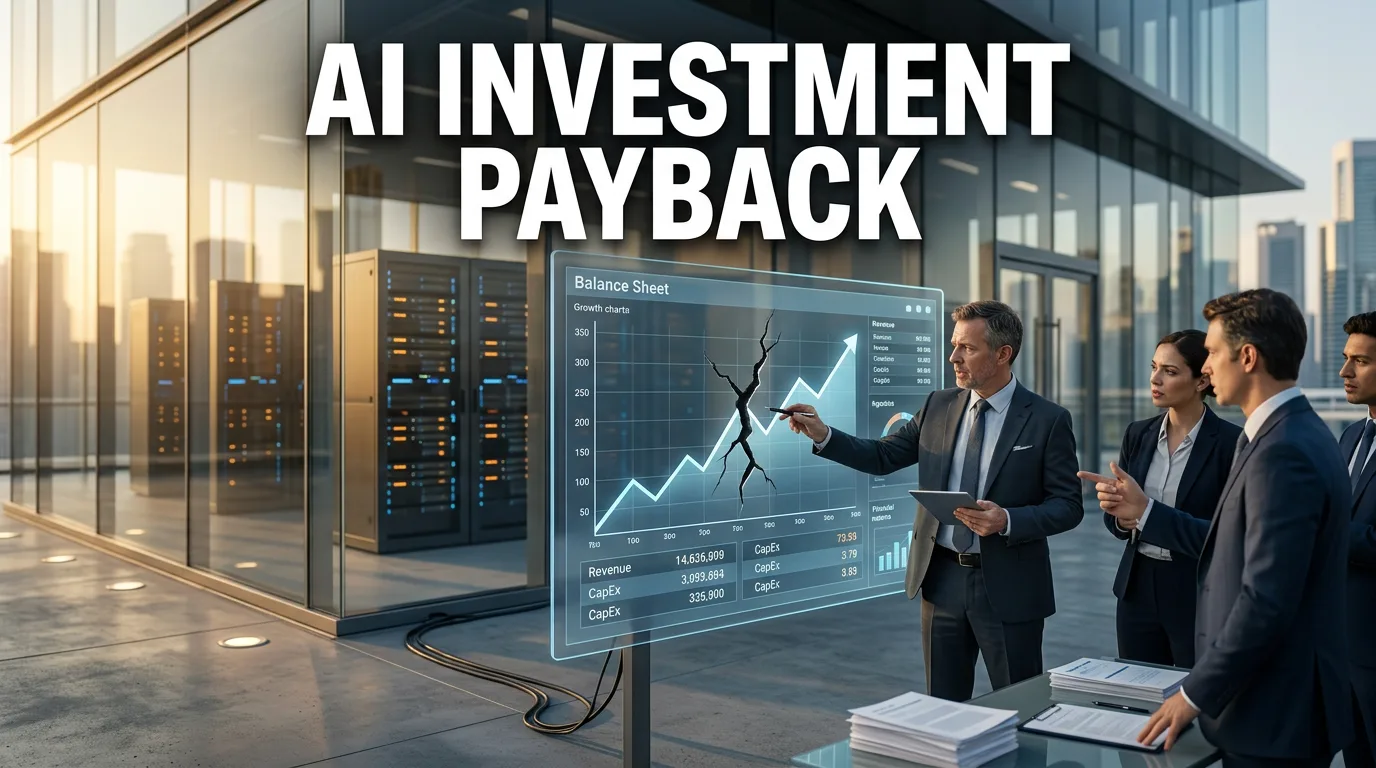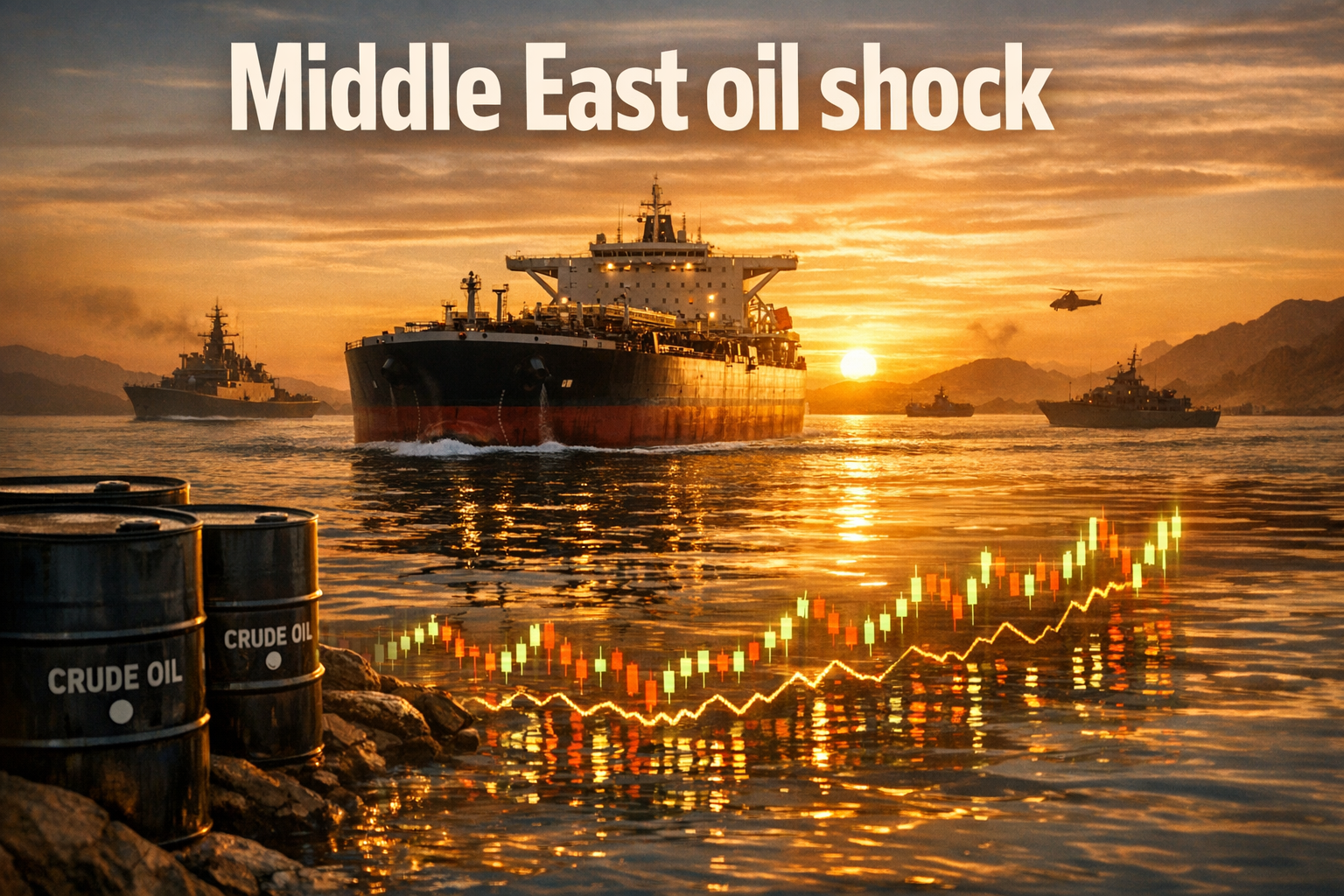
● Mideast Shock, Oil Surge, AI Risk
Middle East Conflict, Oil Prices, Private Credit, and AI Infrastructure: Key Market Fault Lines
The market narrative is dominated by the Middle East conflict and crude oil, but the more material transmission channels are moving simultaneously: delayed rate cuts, FX instability, private credit risk, and a potential deceleration in AI infrastructure investment.
This report goes beyond a “war lifts oil” framing and focuses on how these factors can alter the path of the global economy, why Korea and Asian emerging markets are more exposed, how private credit stress can affect AI investment expectations, and why the setup differs from an immediate systemic crisis while remaining economically consequential.
Particular emphasis is placed on:
- the link between AI infrastructure investment and private credit
- the structural weak points obscured by war headlines
- why the key risk may be growth downgrades and tightening liquidity, not an immediate 2008-style collapse
1. Core market driver: why the Middle East conflict is not just geopolitics
Wars typically raise recession risk. The Middle East is distinct because it is closely tied to oil supply and often amplifies supply-chain disruption.
As a result, it can weaken growth while lifting inflation, a combination that complicates policy. This is not demand-driven inflation; it is a supply shock scenario where activity slows but prices remain sticky.
If sustained, central banks face a constraint: they may want to ease due to softer growth, but higher oil and weaker FX can re-ignite inflation pressure and delay rate cuts.
Accordingly, the Middle East risk functions as a key variable influencing inflation, rate expectations, FX, and equity volatility.
2. Why Korea is particularly sensitive: the critical risk is oil + FX simultaneously
Korea has high energy import dependence, significant exposure to Middle East crude, and shipping routes that often pass through the Strait of Hormuz. Escalation therefore increases the probability of a direct macro shock.
2-1. First-order shock: higher import prices
Rising crude prices raise input costs (raw materials, freight, manufacturing). Pressure increases across refining, petrochemicals, airlines, shipping, and broader manufacturing, with pass-through to consumer inflation.
2-2. Second-order shock: deteriorating trade balance risk
A sharp rise in energy imports can compress a trade surplus that has been supported by semiconductors. Persistent elevated oil would weigh on the trade balance and may lower growth expectations.
2-3. Third-order shock: KRW depreciation risk
Oil spikes and trade slippage typically create KRW weakness. Because energy imports are USD-settled, a weaker KRW raises local-currency import costs further.
Korea can therefore face a dual shock: higher oil and higher USD/KRW, magnifying imported inflation and constraining the central bank’s ability to cut rates.
3. The US is not insulated: higher oil can delay Fed easing
The US is a major producer, but higher oil is not unambiguously positive. The primary channel is consumer inflation sensitivity: gasoline costs transmit quickly to households and can broaden into transportation and living costs.
3-1. Why the Fed becomes more constrained
Markets have priced in easing, but higher oil and higher inflation expectations can shift expectations toward fewer cuts or an extended hold. If hawkish commentary resurfaces, market sensitivity increases.
3-2. Fiscal constraint interaction
A prolonged conflict can increase defense spending. With rates high, interest expense on government debt also rises. This can create a three-way constraint: limited fiscal space, limited monetary easing flexibility, and heightened political sensitivity to inflation.
4. Why Asia and emerging markets may be more exposed: a potentially Asia-centric inflation shock
Where the Russia–Ukraine shock hit Europe hardest due to energy dependence, a Middle East-driven oil shock more directly impacts countries with high reliance on Middle East crude.
4-1. Higher vulnerability: Korea, Japan, Vietnam, Thailand, and others
High energy import dependence, manufacturing-heavy economies, and more limited FX-defense capacity amplify the impact. For emerging markets, USD strength compounds the shock: oil rises while local currencies weaken, doubling import-cost pressure.
4-2. Manufacturing-heavy economies face higher margin pressure
Manufacturing requires stable, affordable energy input. Higher costs compress margins and can weaken export competitiveness, tightening both demand-side and supply-side conditions.
5. The weak link obscured by war headlines: private credit market risk
With attention concentrated on geopolitics, private credit stress has received less focus than it otherwise might. This remains a non-trivial risk factor for risk assets.
5-1. What private credit is
Private credit refers to non-bank lending (asset managers, private funds) to mid-sized firms, private companies, and lower-rated borrowers. Since 2008, tighter bank regulation expanded the role of non-bank credit in corporate financing.
5-2. Why it is a concern now
Private credit expanded rapidly in the high-liquidity period after 2022. Capital inflows likely extended credit to weaker borrowers. Exposure increased to software and growth companies.
With AI reshaping competitive dynamics, concerns have risen about business-model durability, collateral value, and repayment capacity in parts of the software and growth complex.
5-3. Redemption pressure as an accelerant
Many private credit vehicles hold long-duration loans (5–7 years). To attract wealthy investors, some products introduced partial liquidity. The mismatch between illiquid assets and investor liquidity preferences can become acute under stress.
If redemption requests surge, funds may alter terms or impose limits. This can shift sentiment from isolated issues to broader concern about hidden losses and correlated vulnerabilities.
6. Is this another 2008? Similar features, different plumbing
Conclusion: not equivalent to 2008, but not negligible.
6-1. Similarities
- Off-balance-sheet or less-visible risk
- Lower transparency
- Fear of “hidden losses” once stress emerges
- Potential for simultaneous redemption and liquidity pressure
6-2. Differences
- 2008 centered on bank-system solvency and direct systemic linkages
- Current stress is more concentrated in funds and non-bank channels
- Large banks’ capital positions are stronger than in 2008
- Regulators and markets are more aware of the risk category
System-wide collapse risk appears lower at present, but sector-level funding conditions and growth-sensitive investment channels can be materially affected.
7. A key risk factor: limited visibility is itself destabilizing
Private credit is harder to diagnose because pricing and deterioration are less transparent than in public bonds and less standardized than in bank disclosures.
A common concern is the use of PIK (payment-in-kind) structures. When cash interest cannot be paid, interest may be capitalized rather than treated as delinquency. Reported delinquency rates can therefore understate underlying cash-flow stress, reinforcing investor caution.
8. Under-discussed linkage: private credit tightening can affect AI infrastructure investment
This is a critical cross-market transmission channel.
AI is broadly treated as a structural growth theme. Investment plans span semiconductors, data centers, power equipment, servers, and networking. These require substantial capital.
8-1. AI investment demand remains strong
Large technology companies continue to expand AI infrastructure CAPEX: data centers, GPUs, and power/cooling upgrades. This represents an investment cycle rather than a short-term trend.
8-2. Funding channels may tighten
Not all investment can be financed solely with internal cash flows. External financing is required, and private credit has been part of that financing ecosystem.
If private credit conditions tighten, AI infrastructure rollout could face timing risk or pace moderation, with implications for AI growth trajectories and the broader data-center investment cycle.
8-3. Why this matters for Korean equities
Korea is a key supplier in AI infrastructure, particularly in memory semiconductors such as HBM. Equity expectations have incorporated sustained AI CAPEX strength. If financing stress leads to slower AI infrastructure deployment, market expectations for Korean semiconductor demand may be partially recalibrated.
9. Why a US–China leaders’ meeting matters: a joint lever on oil, tariffs, and inflation
This is not only a diplomatic headline; it can affect inflation and growth through tariffs and supply-chain normalization.
9-1. Incentives to de-escalate
For the US, improved access to low-cost consumer goods and smoother supply chains would ease inflation pressure. For China, increased purchases of US energy or agricultural products can function as negotiation levers.
A temporary reduction in tensions could support expectations for lower tariff drag and greater supply stability.
9-2. Interaction with Middle East risk
If Middle East tensions ease while US–China relations stabilize, markets could price in simultaneous improvements: oil stabilization, supply-chain normalization, and reduced inflation pressure. This would support rate-cut expectations and risk appetite.
10. Investor framework: liquidity and sentiment shifts may matter more than crisis timing
The central question is not whether an immediate Lehman-style event occurs, but whether:
- rate-cut expectations are pushed out
- FX volatility increases
- private credit redemption pressure rises
- AI infrastructure optimism moderates
- capital rotates away from risk assets
10-1. Monitoring checklist
- crude oil and long-end Treasury yields rising together
- abrupt USD/KRW appreciation
- equity performance of listed private-credit-related asset managers
- increased headlines on redemption gates or structural term changes
- signs of slower funding for AI infrastructure projects
- post-summit direction on tariffs and energy-related commitments
11. Interpretation: risk awareness is warranted; excessive panic is not
Current conditions reflect a coherent risk chain: Middle East escalation lifts oil, complicates disinflation, delays easing, destabilizes FX, and interacts with private credit stress that can spill into AI investment expectations.
This does not yet imply a 2008-style systemic collapse. A more plausible near-term risk is downward revision in growth expectations and slower liquidity, leading to valuation compression and more selective risk-taking.
12. Retail investor positioning: diversification over concentration; time horizon discipline
In high-volatility regimes, portfolio structure often matters more than short-term forecasting.
12-1. Reduce leverage
When rates, oil, and FX are moving together, leverage tends to amplify drawdowns more than it improves risk-adjusted returns.
12-2. Prefer diversification over single-theme concentration
Recent performance has been heavily concentrated in US mega-cap technology. A broader mix across commodities, selective emerging exposure, value-oriented equities, and cash-like instruments can improve resilience.
12-3. Separate long-horizon and short-horizon capital
Long-duration capital (e.g., retirement accounts) typically benefits from disciplined accumulation into high-quality assets. Short-horizon capital should prioritize liquidity and volatility management.
13. Most important points often under-emphasized in general media
- the key risk is not the conflict headline, but the potential re-acceleration or persistence of inflation via the oil channel
- for Korea and Asian emerging markets, the primary vulnerability is the oil + FX combination
- private credit risk is more informative when framed as a channel into AI infrastructure funding and growth expectations, not only as a systemic-crisis analog
- uncertainty is amplified by limited transparency; the absence of clean metrics increases risk premia
- a US–China leaders’ meeting can move inflation, tariffs, energy flows, and rate expectations simultaneously
14. One-page news-style summary
1) Middle East conflict escalation risk
Higher crude and supply-chain disruption increase the probability of renewed inflation pressure.
2) Rising burden for Korea and Asian emerging markets
Energy import dependence plus currency weakness increases inflation and FX stress concurrently.
3) Higher hurdle for Fed and Bank of Korea rate cuts
Even with softer growth, unstable inflation dynamics may delay the pivot to easing.
4) Private credit market stress
Concerns around software and growth borrowers, with redemption pressure worsening sentiment.
5) Systemic crisis risk still limited
Direct bank-system linkage is weaker than in past crises, but funding and investment channels are vulnerable.
6) New variable for AI infrastructure investment
If private credit tightens, data center and AI equipment financing can slow relative to prior expectations.
7) Focus on US–China summit outcomes
Tariffs, energy purchasing, and supply-chain normalization can materially affect inflation and market sentiment.
< Summary >
The Middle East conflict is a macro-critical variable influencing crude oil, inflation, rate expectations, and FX.
Korea and Asian emerging markets are more exposed due to energy import dependence and the risk of currency depreciation.
Private credit stress is more relevant as a channel for slower AI infrastructure investment and weaker growth expectations than as an immediate systemic-crisis signal.
The probability of delayed Fed easing has increased; markets are focused on both inflation dynamics and funding conditions.
Investors may benefit from lower leverage, greater diversification, and time-horizon-based portfolio segmentation.
[Related Articles…]
- International crude oil surge and scenarios for Korean equities and FX: https://NextGenInsight.net?s=international%20crude%20oil
- AI infrastructure investment deceleration risk and semiconductor market restructuring outlook: https://NextGenInsight.net?s=AI
*Source: [ 경제 읽어주는 남자(김광석TV) ]
– [모아보기] 중동 전쟁이 사모대출 리스크 키우나? 국제유가가 금리 인하를 막고, 금융위기로 번지나… | 경읽남과 토론합시다 | 오건영x목대균
● Easy-Money-Avoidance
The Fourth Principle That Separates Skilled Equity Investors: Avoiding the “Easy Profit” Mindset
This report consolidates the factors that typically distinguish investors who remain durable across cycles from those who generate short-term gains and then exit. It covers disciplined investing, financial statement fundamentals, the role of flows and sentiment, scenario thinking for the AI era, and methods to convert mistakes into an actionable knowledge base. It also links these principles to recent market sensitivity to interest rates, FX, KOSPI, Nasdaq, and U.S. equities.
Key Point: Sustainable equity performance requires deliberate effort, not opportunistic “easy wins”
The core message is operational rather than motivational. Gains achieved by following temporarily rising names are structurally different from returns generated through research, risk control, and repeatable decision-making. In a higher-volatility environment, where U.S. equities and the Nasdaq can reprice rapidly on rate expectations and KOSPI reacts to FX and global growth narratives, weak analytical foundations tend to increase behavioral and positioning errors.
Why “avoiding easy profits” matters
1. Easy gains are often not skill-based
In strong risk-on regimes, many investors appear effective. When conditions reverse, it becomes evident whether performance was driven by liquidity beta or by analysis. Returns earned through process leave reusable decision rules; those rules improve survivability in subsequent cycles.
2. A researched 10% return is more durable than an accidental 20%
The emphasis is on repeatability rather than headline return. Investors who understand the drivers behind a moderate gain can typically reapply the framework under similar conditions. This underpins long-horizon compounding, asset allocation, and risk management.
3. Avoiding large drawdowns raises long-term win rates
Identifying leaders early is valuable, but downside control frequently dominates outcomes. In markets with uncertain rate direction, FX volatility, and earnings-driven dispersion, portfolio construction and hedging become more important than maximizing single-trade upside.
Three foundational efforts investors should implement
1. Financial statement analysis is non-negotiable
The report stresses basic verification through financials. Investing without reviewing revenue, operating profit, net income, leverage, and cash flow increases exposure to narrative-driven mispricing, particularly in theme-heavy areas such as AI, nuclear, shipbuilding, and other story-led segments.
Minimum checks:
- Evidence of realized revenue growth
- Operating margin trajectory
- Debt burden and refinancing risk
- Cash flow stability and quality
- Whether results validate market expectations and valuation
2. Combine fundamentals with flows and investor psychology
Strong businesses can remain range-bound, while weaker fundamentals can rally early. The difference is often positioning and sentiment. Investors should assess whether institutions are accumulating, whether foreign flows are persistent, whether retail expectations are overheated, and whether fear is excessive. For KOSPI and Nasdaq, where regime shifts can occur quickly, valuation-only approaches often miss timing and sizing decisions.
3. Build scenario imagination to identify future industrial leadership
Effective investors do not only analyze current numbers; they formulate structured views on how industry profit pools may shift. With AI adoption accelerating, investors should evaluate which sectors benefit first, which capture second-order demand, which firms control platforms, and where incremental value accrues.
Building AI-era scenario thinking: Practical methods
1. Maintain a dedicated “scenario file”
Unstructured mental models decay. A written file should capture hypotheses and transmission mechanisms, for example:
- How AI diffusion changes semiconductor demand
- Whether rising data-center power consumption supports nuclear and grid equipment
- Which occupations strengthen or weaken under automation
- Which software models capture productivity gains
- Where AI-linked beneficiaries appear in U.S. equities and domestic sectors
The objective is not prediction accuracy but structured thinking that compounds over time.
2. Scenario thinking is a function of information accumulation
It is generally produced by repeated exposure to news flow, data, and domain knowledge until relationships connect. Example linkages include: easing-rate expectations supporting growth multiples; FX stabilization improving foreign flows; AI infrastructure capex lifting semiconductors and power equipment concurrently. Recognizing these connections early is a competitive advantage.
3. Convert forecasts into repeatable questions
A scenario file should be question-driven:
- Which sectors realize earnings uplift first from AI adoption?
- Which second-order beneficiaries remain underpriced?
- How do regulation and compliance shift competitive advantage?
- Which business models remain resilient under a global slowdown?
- Are relative strength patterns (KOSPI vs. U.S. equities) structural or cyclical?
Why failure logs become investable assets
1. Preserve incorrect views and diagnose them
Investors often retain only profitable trades and suppress losses. Skill development typically comes from post-mortems. Because regimes change and cognitive biases repeat, documenting why a thesis failed reduces recurrence.
2. A failure log is data, not emotion
It should document the decision process and missing variables:
- Why the position was initiated
- Which factor was underweighted (earnings, flows, rates, FX)
- Why the news was directionally correct but price action did not follow
- Whether the catalyst magnitude was overestimated
- Whether the broader tape overwhelmed the idiosyncratic thesis
3. Scenario files plus failure logs create an operational research system
Scenario thinking alone can become unfalsifiable; failure logs alone can induce excessive conservatism. Combined, they generate opportunity identification plus disciplined validation, producing an independent investment framework.
Why this principle matters more in the current market
1. Faster markets and information overload increase error rates
Information volume has increased, but edge has not become easier. Without a defined framework, investors tend to overreact to the same AI headline in divergent ways, increasing churn and drawdowns.
2. Rapid industrial change elevates the value of recorded reasoning
AI, semiconductors, power infrastructure, robotics, biotech, defense, and nuclear may remain focal, but leadership within each theme rotates. Investors benefit from tracking why a theme moves, not only which ticker moved, to avoid late-cycle chasing.
3. Macro variables must be integrated
Single-stock analysis is insufficient. Fed policy, USD dynamics, FX direction, global liquidity, recession risk, and earnings recovery expectations interact. Equity investing has become a multi-factor system spanning company fundamentals, industry change, macro conditions, and sentiment.
News-style summary: Key takeaways
- First, long-term equity success requires deliberate effort rather than seeking easy profits.
- Second, financial statement analysis is foundational; expectation-only trades are higher risk.
- Third, price formation is heavily influenced by flows and sentiment; fundamentals alone are incomplete.
- Fourth, AI-era investing rewards structured scenario thinking about future industries.
- Fifth, maintain a personal scenario file and record forecasts.
- Sixth, document incorrect decisions in a failure log to convert mistakes into process improvements.
- Seventh, portfolio construction and risk management improve long-term survival odds.
Practical implementation: A repeatable routine
1. Study one industry per week
Select a sector (e.g., AI, semiconductors, nuclear, shipbuilding, biotech, financials) and map value-chain economics: who captures profit, who bears costs, and who holds durable positioning.
2. Write short scenario notes
Use prompts such as “What changes over the next three years due to AI diffusion?” Focus on frameworks, not definitive answers.
3. Maintain a structured loss-review notebook
For each losing position, record entry rationale, failure drivers, and the next verification step required before re-entry.
4. Use a macro checklist
Track rates, FX, USD, earnings seasonality, foreign flows, and relative direction in KOSPI and Nasdaq to contextualize single-name decisions.
5. Review portfolio exposures continuously
Avoid single-theme concentration. Maintain defensive assets and cash management to reduce regime-risk drawdowns.
< Summary >
The fourth key principle in equity investing is avoiding the pursuit of effortless gains and instead building process-based skill through disciplined work. Financial statement analysis, the integration of flows and sentiment, and scenario thinking for AI-driven structural change are central. Maintaining both a scenario file and a failure log supports a durable, independent research and decision system that is more resilient across market regime shifts.
[Related Articles…]
- https://NextGenInsight.net?s=AI
- https://NextGenInsight.net?s=interest%20rates
*Source: [ Jun’s economy lab ]
– 주식 투자에 성공하려면 지켜야 될 네 번째(ft.양양스승님)
● Fortress,Privacy,AI Shield
Why Affluent Americans Turn Homes into “Fortresses”: Key Takeaways on Gated Communities, Privacy, and AI Security
U.S. housing should not be interpreted as a uniformly “open, fence-free culture.” A structural distinction exists: many middle-income neighborhoods appear visually open, while affluent enclaves often adopt controlled-access designs and layered security. This report summarizes the drivers linking property valuation, risk management, privacy economics, socioeconomic separation, and AI-enabled security infrastructure.
1. Executive-style key points
In typical U.S. middle-class suburbs, front lawns often flow into the street with relatively loose physical boundaries between neighboring lots. By contrast, areas such as Alpine (NJ) and the Hamptons frequently feature large gates, dense tree barriers, sightline-blocking layouts, “private property” warnings, and access-control systems.
This pattern is not primarily cultural preference. It reflects differences in legal enforcement, community rules, asset scale, security economics, and the monetized value of privacy. Fence presence is best viewed as a class-differentiated implementation of risk management within U.S. capitalism rather than as aesthetics.
2. Why many U.S. neighborhoods have few fences
2-1. “Invisible fences”: law and institutions
A major driver is strong legal protection of private property. Trespassing is treated seriously, and some jurisdictions have robust self-defense doctrines. In many communities, legal deterrence substitutes for physical barriers.
2-2. Curb appeal as a pricing mechanism
“Curb appeal” materially affects neighborhood image and home valuation. Open lawns and visible, well-maintained facades can support price stability. Tall fences are often viewed as detrimental to visual cohesion and marketability in standard suburban markets.
2-3. HOA constraints are often binding
Homeowners Associations (HOAs) can regulate exterior appearance in detail, including fence height, placement, color, and even whether fences are permitted. Individual discretion is frequently secondary to community covenants.
2-4. Security spend is optimized differently
For typical households, the cost of gates, tall fences, landscape screening, and ongoing maintenance is weighed against alternatives such as policing, insurance, and neighborhood-level monitoring. The perceived cost-benefit often favors openness.
3. Why affluent households prioritize concealment and control
3-1. Primary risk shifts from theft to exposure
For high-net-worth households, risk extends beyond burglary or property damage. Exposure of location, routines, visitors, and personal networks can be the dominant risk category. The objective is to reduce unsolicited contact and surveillance opportunities.
3-2. Privacy is treated as an asset
Privacy is valued as a protective and economic asset. The disclosure of residence details, vehicle movement, household composition, and daily patterns increases security, reputational, and legal risk. This applies not only to celebrities but also to entrepreneurs, finance professionals, and individuals with elevated litigation exposure.
3-3. Prevention over remediation
Where mainstream markets rely on post-incident responses (police reports, insurance claims), affluent markets emphasize pre-emptive exclusion. Gates, guards, landscape screening, CCTV, and visitor registration operate as a coordinated risk-reduction system.
4. “Non-obvious denial” techniques common in affluent enclaves
4-1. Vegetative barriers can matter more than walls
In many high-end areas, the preferred approach is not a visibly aggressive wall but mature landscaping that functions as a privacy hedge and access impediment. This reduces intimidation while preserving a premium aesthetic and limiting sightlines.
4-2. Security as part of property branding
Security design supports brand value. Limited visibility and controlled access reinforce exclusivity and scarcity, which can translate into pricing premiums. In weaker macro periods, non-price attributes such as privacy and control can contribute to resilience at the top end of the market.
5. Post-2026 relevance: digital fortification and AI security
5-1. Smart gate adoption is already underway
High-end gated communities increasingly use digitized entry systems: license-plate recognition, pre-registered visitor verification, real-time access logs, and remote approvals. Access becomes a data-recorded process rather than a simple lock-and-key function.
5-2. AI shifts security toward predictive systems
AI-enabled security is moving from passive surveillance to anomaly detection, including repeated drive-bys, irregular visit patterns, and deviations from normal movement. This reflects the broader trend of AI integrating with physical-world infrastructure, not only generative applications.
5-3. “Control” may outperform “size” as a luxury differentiator
Historically, luxury value concentrated on lot size, interior area, and school districts. Increasingly, the ability to control exposure and access through automation and privacy engineering may become a differentiating factor in premium residential real estate.
6. Economic interpretation
6-1. Inequality materializes in spatial form
Gated communities and “fortified” neighborhoods represent wealth stratification embedded in the built environment. Higher asset levels increasingly purchase separation and controlled boundaries, not merely better finishes or larger floor plans.
6-2. Why ultra-prime housing can remain firm under inflation and higher rates
During inflationary and high-rate regimes, mid-market housing can face sharper affordability constraints. Ultra-prime housing is supported by non-substitutable attributes such as privacy, security, scarcity, and signaling value, producing divergent performance within the same housing market.
6-3. Wealth management extends to residential control systems
For ultra-high-net-worth households, managing information exposure and contact risk is part of capital preservation. Residential design and security architecture function as operational risk controls alongside financial portfolio and tax planning.
7. Implications for Korean readers and cross-market interpretation
7-1. Different starting points for boundary norms
Korea often relies on physical access controls (apartment entry systems, guards, CCTV) as default safety infrastructure. Many U.S. middle-class areas rely more heavily on legal enforcement, insurance frameworks, and community governance (HOA) rather than visible walls.
7-2. Photos are insufficient for property assessment
A fence-free exterior does not necessarily imply weak security, and high barriers are not purely conspicuous consumption. Accurate interpretation requires HOA rules, trespass enforcement, insurance structure, local crime statistics, locational attributes, and concentration of high-net-worth residents.
8. Under-discussed core point
Affluent “fortress homes” are typically a calculated economic decision rather than a pure expression of fear. Risk definitions differ by wealth tier: mainstream households emphasize intrusion and loss events; affluent households emphasize exposure, observation, access, and unsolicited contact. Therefore, barriers function as relationship-and-information filters as much as physical security devices.
More broadly, premium residential competitiveness may shift from area and interior quality toward selective connectivity and controllable exposure. This is a signal of how wealth increasingly expresses itself through spatial governance.
9. Conclusions (one line each)
- Low fence prevalence in mainstream U.S. neighborhoods reflects legal deterrence, HOA constraints, curb-appeal economics, insurance, and cost efficiency.
- Affluent enclaves prioritize privacy and access denial; gates, landscaping, signage, and AI security serve as asset-protection infrastructure.
- Gated communities are a visible manifestation of inequality in the spatial structure of cities.
- AI-enabled access control, surveillance, and data-driven security are likely to become more important luxury differentiators.
- Fence presence is primarily a difference in risk management models by socioeconomic tier, not a matter of taste.
< Summary >
Mainstream U.S. neighborhoods often have fewer fences due to legal protections, HOA rules, curb-appeal incentives, and insurance-based risk handling. Affluent neighborhoods “fortify” homes with gates, landscape barriers, private-property warnings, and AI security because exposure and 접근 risk are priced as more material than theft. The phenomenon reflects inequality, wealth management priorities, privacy economics, and the structure of real-estate premiums. Luxury housing may increasingly be valued for automated security and selective external control rather than size alone.
[Related Articles…]
-
https://NextGenInsight.net?s=AI
AI security and the evolving premium residential market -
https://NextGenInsight.net?s=real-estate
Structural reasons ultra-prime housing premiums persist in the U.S.
*Source: [ Maeil Business Newspaper ]
– “담장 없으면 안 불안해?” 미국 부자는 집을 요새로 만든다 | 홍키자의 美쿡 | 홍성용 특파원