● Explosive,Oil Shock,Middle East Crisis
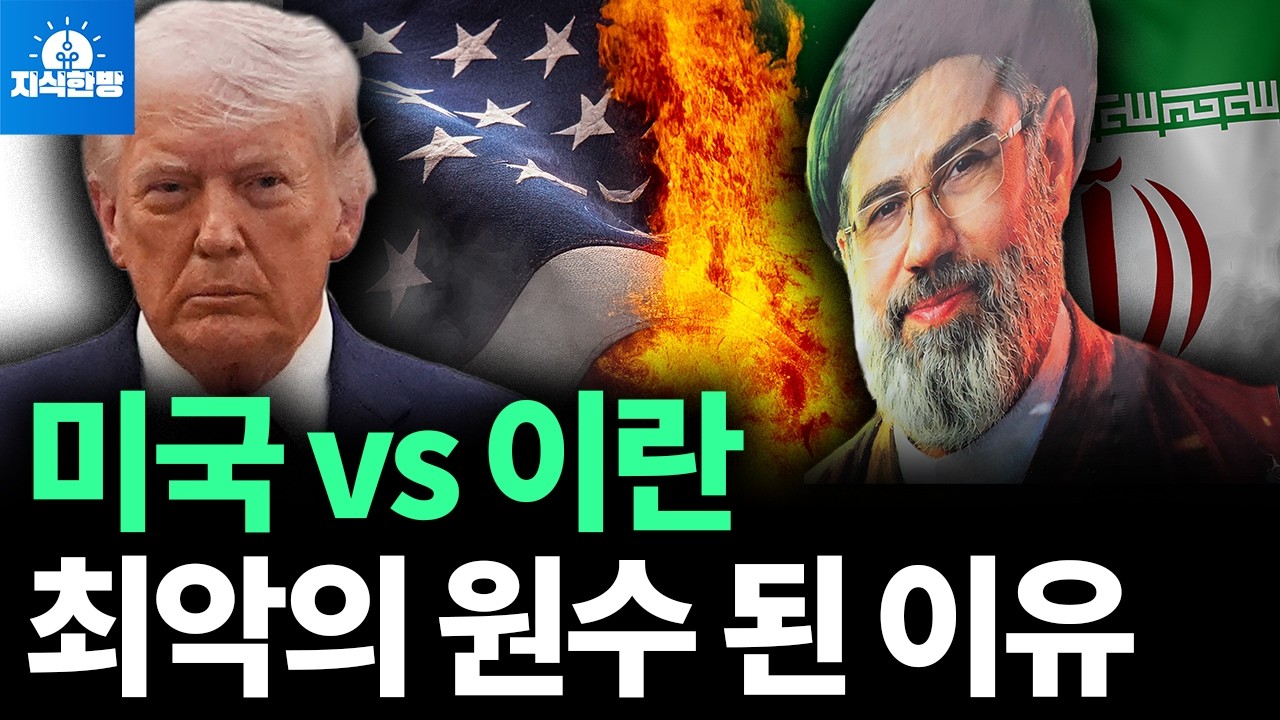
Why the United States and Iran Reached This Point: Oil, the 1953 Coup, the Strait of Hormuz, and the Core Drivers of Today’s Middle East Risk
This is not a standalone regional dispute. It links oil-market leverage, the overthrow of an elected government, entrenched mutual distrust, potential disruption risk in the Strait of Hormuz, and direct spillovers to global financial markets and energy prices. This report summarizes (i) why the U.S.–Iran relationship became structurally adversarial, (ii) why the 1953 CIA-backed coup remains central to Iran’s strategic memory, (iii) the transmission channels to crude prices and the global economy, and (iv) the key considerations for Korea as an energy-import-dependent economy.
1. Key Points at a Glance
The U.S.–Iran rivalry did not originate from recent wars or sanctions. Its foundations trace back to early 20th-century oil development, British dominance over Iranian oil concessions, and the 1953 overthrow of Iran’s elected government.
Four core drivers:1) Resource-power competition centered on oil.
2) Iran’s historical memory of U.S. involvement in removing a democratically legitimate government.
3) Post-1979 revolutionary ideology embedding anti-U.S. identity into the state system.
4) Ongoing systemic risk from the Strait of Hormuz and broader Middle East supply chains to the global economy.
2. Oil as the Starting Point: How a Strategic Asset Became a “Resource Curse”
2-1. Iran as an Early Middle East Oil Pioneer
While Saudi Arabia dominates contemporary perceptions of Middle East oil, Iran held early symbolic and economic significance as a major producer during the initial phase of global oil development.
A key structural issue was distribution: oil rents flowed primarily to foreign stakeholders, while domestic gains were limited. British capital effectively controlled extraction rights and captured a disproportionate share of profits.
2-2. Why Iran’s Public Memory Frames the West as an Extractive Actor
From Iran’s perspective, oil represented not national prosperity but a system in which external powers extracted wealth while domestic living standards lagged.
This framing is not primarily religious; it is rooted in economic extraction and later reinforced by political intervention. These historical dynamics continue to inform today’s energy-security narratives and explain why Middle East shocks translate rapidly into global macro and market volatility.
3. Mosaddegh: Iran’s Attempt to Reassert Oil Sovereignty
3-1. Mosaddegh’s Political Profile
Mohammad Mosaddegh remains a central figure in modern Iranian political history. He is typically characterized as a legally trained, parliamentary-based leader who achieved office through democratic procedures. He was not uniformly aligned with the Soviet bloc and opposed Soviet oil demands, complicating simplistic ideological labeling.
3-2. The 1951 Oil Nationalization
In 1951, Mosaddegh nationalized oil assets previously controlled by British interests, framed domestically as economic sovereignty and national dignity. For the United Kingdom, it represented the loss of a strategic asset and triggered immediate countermeasures.
4. The U.K. Response: Economic Warfare as a Precedent
4-1. Measures Implemented
The U.K. pursued broad economic retaliation: constraining Iranian oil exports, withdrawing technical personnel from refinery operations, freezing external assets, and applying diplomatic pressure. The practical effect was severe economic impairment.
4-2. Enduring Relevance
Iran internalized a key lesson: external powers can impose existential pressure without direct military intervention. This informs Iran’s current emphasis on regime survival under sanctions and its resistance to concessions perceived as opening the door to escalating demands.
5. The 1953 CIA-Backed Coup: The Structural Break in U.S.–Iran Relations
5-1. Why the United States Intervened
U.S. alignment with the U.K. hardened over time. Cold War containment logic and oil-related strategic interests converged. While anti-communism was the public rationale, control over energy and regional influence is widely viewed as a primary underlying factor.
5-2. Operation Ajax: Mechanisms
In 1953, the CIA supported the removal of Mosaddegh through Operation Ajax, later substantiated through declassified documentation. Tactics included influence operations, media manipulation, political payments, mobilization of religious networks, and support for monarchical restoration.
5-3. The Trust Deficit
For Iran, the coup is a defining historical proof point: the United States is viewed as willing to undermine democratic governance to secure strategic and resource interests. This perception remains embedded in elite and public narratives and continues to shape threat assessment and negotiation posture.
6. The Pahlavi Monarchy and Deepening Authoritarianism
6-1. Why the Shah’s System Collapsed
With U.S. support, the Pahlavi regime consolidated power and expanded repression through security institutions, including surveillance, detention, and coercive tactics. For many Iranians, domestic authoritarianism and U.S. backing became inseparable, forming a key precondition for the 1979 revolution.
6-2. Anti-U.S. Sentiment Was Not Primarily Religious
A frequent analytical error is attributing Iranian anti-U.S. sentiment solely to the Islamic Revolution. The sentiment was reinforced by earlier experiences: perceived economic extraction, political overthrow, and support for authoritarian rule. Religion served as a mobilizing framework, but sovereignty and economic control were core drivers.
7. The 1979 Islamic Revolution: Why a Broad Anti-Authoritarian Coalition Produced a Theocratic State
7-1. A Multi-Faction Revolutionary Coalition
The revolution involved a wide coalition: secular leftists, nationalists, liberals, bazaar merchants, and religious groups united against monarchy and repression. Post-revolution, the clerical faction led by Ayatollah Khomeini consolidated power.
7-2. Post-Revolution Governance Outcomes
Despite earlier commitments to political openness, the new regime institutionalized clerical authority, marginalized secular and leftist actors, and imposed more conservative social regulations, including constraints on women’s rights. The net outcome was the replacement of one authoritarian structure with another.
8. Why Many Iranians Oppose the Theocratic System Yet Still Distrust U.S.-Led Change
Domestic dissatisfaction with the political system is significant, including preferences for liberalization and broader civil freedoms. However, U.S.-led regime change is widely distrusted due to historical experience suggesting that external intervention prioritizes strategic alignment and resource control over durable democratic outcomes.
This dynamic limits the effectiveness of simplistic assumptions that anti-regime sentiment equates to pro-U.S. alignment.
9. The Event That Hardened U.S. Public Opinion: The 1979 Hostage Crisis
The seizure of the U.S. embassy in Tehran and the detention of personnel for 444 days created a lasting shock in the United States and became a defining symbol of Iran as a hostile, difficult-to-negotiate adversary. It also strengthened domestic political incentives for sustained hardline policy.
10. The 1988 Downing of an Iranian Civilian Airliner: A Deepening Iranian Trauma
In 1988, U.S. forces shot down an Iranian civilian airliner, killing 290 people. The United States characterized it as an accidental engagement; Iran perceived insufficient accountability and apology. Beyond compensation, the episode reinforced Iranian perceptions that strategic considerations outweighed the value assigned to Iranian lives.
11. Why De-Escalation Remains Structurally Difficult
11-1. U.S. Strategic Framework
From the U.S. perspective, Iran represents risk through nuclear capability potential, support for armed non-state actors, and its role in regional instability. Deterrence and containment often dominate over accommodation.
11-2. Iran’s Strategic Framework
From Iran’s perspective, the United States is an actor with a historical record of regime intervention and current sanction-based pressure aimed at weakening state survival. Concessions can be interpreted as increasing vulnerability to additional demands.
11-3. The Strait of Hormuz as a Recurring Lever
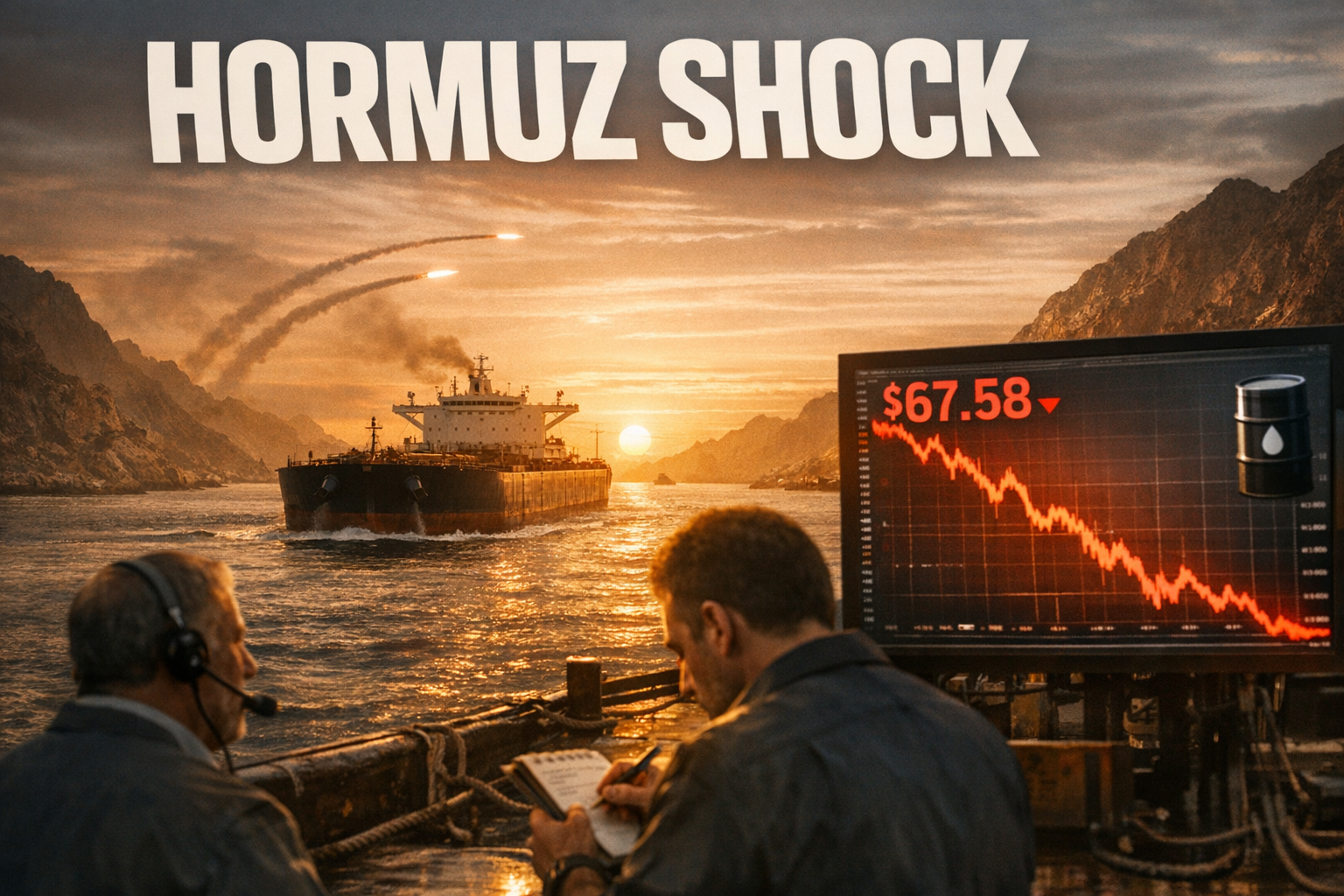
Iran is militarily asymmetrical versus the United States, but retains leverage through the Strait of Hormuz. Even without full closure, credible disruption risk can add a geopolitical premium to oil prices and raise global market volatility.
For Korea, this is directly material: energy import dependence makes Hormuz-related risk a transmission channel into import prices, corporate cost structures, trade balances, and inflation.
12. Implications for Korea and the Global Economy
12-1. Oil Prices and Inflation
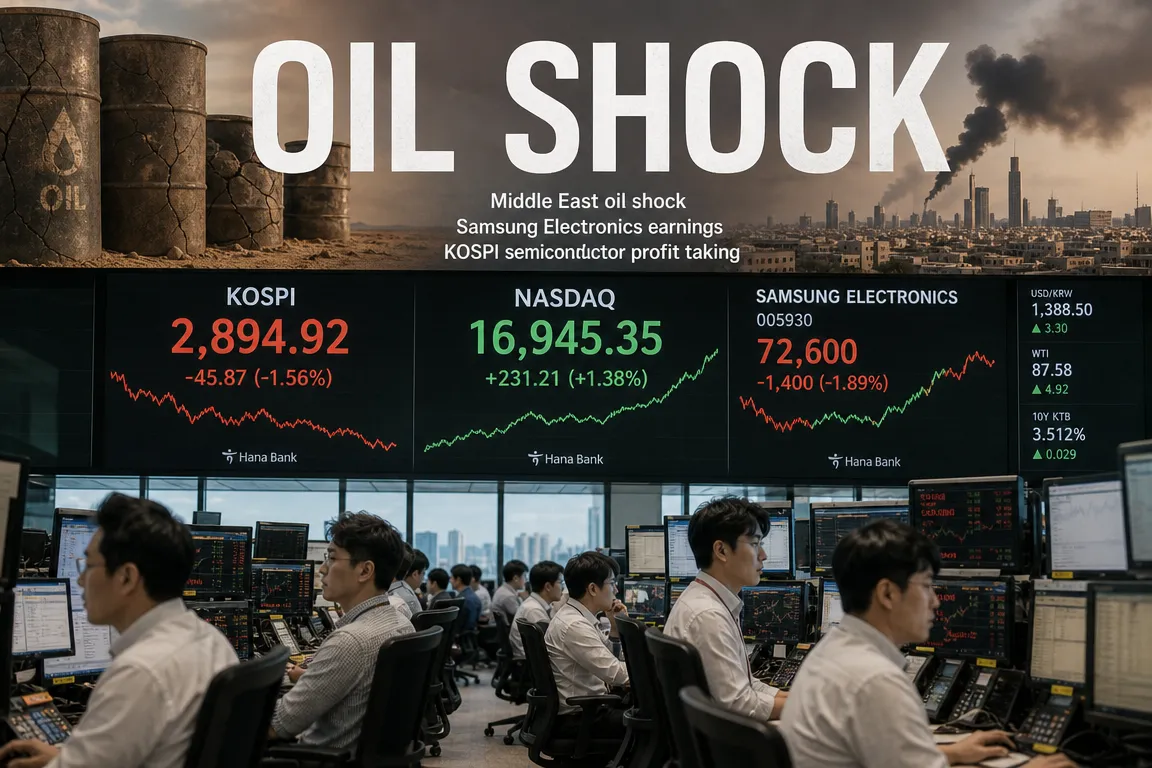
Rising Middle East tensions typically translate first into higher crude prices. Higher energy costs propagate via freight, petrochemical feedstocks, power generation, and manufacturing inputs, raising inflation pressure and potentially influencing central bank rate paths. Spillovers affect equities, fixed income, FX, and consumer sentiment.
12-2. Financial Market Risk and Safe-Haven Flows
Elevated geopolitical risk can drive USD strength, higher gold prices, and increased risk-asset volatility. Import-dependent economies and many emerging markets are particularly sensitive.
12-3. Sectoral Exposure in Korea
Key sectors include refining, petrochemicals, shipping, aviation, autos, and semiconductors. Direct effects arise through input-cost inflation; indirect effects include weaker demand and margin pressure. In a slowing-growth environment, oil price increases are more likely to be a net macro headwind.
13. Forward Watchlist
13-1. Near-Term
Key variables: the degree of disruption risk in the Strait of Hormuz, the intensity of U.S. military responses, and Iran’s internal cohesion. Sustained cohesion increases the likelihood of prolonged tension rather than rapid normalization.
13-2. Medium-Term
Critical factors: diplomatic positioning by China and Russia, U.S. election dynamics and Middle East strategy adjustments, and regional balance involving Saudi Arabia. China’s approach is shaped by energy security and the strategic expansion of non-USD settlement mechanisms.
13-3. Long-Term
Structural variables include generational change and regime fatigue within Iran. However, stronger external pressure can reinforce internal consolidation rather than reform, implying that pressure does not mechanically translate into pro-U.S. democratization.
14. Undercovered but Material Analytical Points
14-1. This is a “Memory-Driven” Conflict, Not Only a Current-Events Conflict
Coverage often focuses on nuclear programs, drones, missiles, and sanctions. The 1953 coup remains a central anchor in Iran’s strategic worldview and helps explain persistence that can appear economically costly in the short term.
14-2. Anti-Regime Sentiment Does Not Equal Pro-U.S. Sentiment
Domestic opposition to the current political system does not imply endorsement of U.S.-backed intervention. This is a frequent analytical gap in Western narratives.
14-3. Hormuz Is Both a Military and a Market-Psychology Instrument
Even limited disruption risk can reprice oil through risk premium dynamics. Iran can influence both physical flows and expectations.
14-4. Oil Is a Sovereignty and Legitimacy Issue
In Iran, oil is not only revenue; it is tied to sovereignty, resistance narratives, and perceptions of betrayal. This makes oil-related bargaining politically identity-linked, not purely technical.
15. Core Takeaway: Why Durable Reconciliation Is Unlikely in the Near Term
The United States tends to view Iran as a threat to regional order. Iran tends to view the United States as a persistent threat to sovereignty and regime survival. When both sides perceive the other as an existential risk, temporary tactical de-escalation is possible, but structural reconciliation is difficult.
The primary roots extend beyond religion to oil control, economic sovereignty, the 1953 coup, and the legacy of support for authoritarian governance. Investors should evaluate not only proximate triggers but also the historical memory structures that shape decision-making, as these directly influence oil risk premia, global macro conditions, and energy-security outcomes.
< Summary >
The adversarial U.S.–Iran relationship is rooted in early oil extraction dynamics and crystallized through the 1953 CIA-backed coup. Mosaddegh’s oil nationalization represented an attempt to reclaim economic sovereignty but was reversed through U.K. and U.S. intervention. Subsequent U.S. support for the Pahlavi monarchy, the 1979 Islamic Revolution, the hostage crisis, and the 1988 civilian airliner shootdown entrenched mutual distrust.
Current risk is not limited to the nuclear file; it includes historical memory, regime survival incentives, the Strait of Hormuz, oil-price transmission, and global financial-market volatility. For Korea, the issue is directly linked to energy imports, inflation, FX dynamics, and export competitiveness. Key analytical points include: domestic anti-regime sentiment in Iran does not imply pro-U.S. alignment, and the conflict functions as a structural variable capable of shifting global economic conditions.
[Related Articles…]
-
Middle East risk and crude oil outlook: key summary
https://NextGenInsight.net?s=Middle%20East -
How AI leadership competition affects the global economic outlook
https://NextGenInsight.net?s=AI
*Source: [ jisik-hanbang ]
– 미국과 이란은 어쩌다 최악의 원수가 됐나 (박종훈의 지식한방)