● Tesla Plunges, SpaceX IPO Shock, Musk AI Moonshot, FSD Breakthrough
Why Tesla Fell ~3% After Morningstar’s Comment
Key takeaways on the SpaceX IPO, Musk’s AI-satellite concept, and European FSD approvals
The primary issue was not simply Tesla closing at $396.68, down roughly 3%. The more relevant questions were: why Tesla traded lower as SpaceX IPO expectations increased; why Morningstar argued that, in a merger, Tesla shareholders should receive 66%; and why Musk’s AI-satellite concept could support a long-duration growth premium while also increasing near-term valuation scrutiny.
Separately, Denmark’s formal approval of supervised FSD reinforces that the commercialization path for autonomy in Europe is increasingly driven by regulatory rollout speed rather than technical capability alone.
This is not a single-company headline. It links US equity flows, EV demand, AI infrastructure build-out, orbital compute concepts, autonomous-driving regulation, and potential long-term corporate value reassessment.
This note emphasizes (i) the flow-driven mechanics behind Tesla’s decline, (ii) the merger debate as a fair-value dispute rather than a “which company is better” narrative, and (iii) AI satellites as a nearer-term validation risk for SpaceX valuation than a direct Tesla catalyst.
1. Tesla’s decline: the drivers mattered more than the headline number
Tesla closed at $396.68, down about 3%.
US equities were mixed: the Dow edged higher, the S&P 500 was weaker, and the Nasdaq fell nearly 1%, reflecting broad pressure on growth/technology.
Tesla underperformed the Nasdaq, suggesting factors beyond a general tech pullback.
1-1. Driver #1: potential capital rotation ahead of a SpaceX IPO
As SpaceX IPO expectations rise, some investors may raise cash by trimming liquid holdings, including Tesla.
This is primarily a flow and positioning issue rather than a fundamental deterioration signal.
For investors positive on both Tesla and SpaceX, a large IPO can create temporary selling pressure in existing winners to fund new allocations.
Interpretation: “selling a high-quality asset to finance participation in another high-profile offering.”
1-2. Driver #2: Morningstar’s valuation pushback amid elevated expectations
SpaceX expectations are already substantial.
Morningstar effectively warned that implied market valuation may be overheated.
Because the report addressed potential Tesla–SpaceX integration and their operational linkages, it likely affected Tesla sentiment as well.
2. Morningstar’s core claim: in a merger, Tesla shareholders should receive 66%
Market perception has often been: SpaceX is so highly valued that a merger could disadvantage Tesla shareholders.
Morningstar reached the opposite conclusion. On a fair-value basis, it argued a merger exchange ratio closer to 66% Tesla / 34% SpaceX would be more appropriate.
2-1. Why Morningstar arrived at that result
The key distinction was between market-implied price and intrinsic/fair value.
A potential SpaceX IPO price around $135 per share has been discussed, implying an equity value on the order of $1.7–$1.8 trillion.
Morningstar applied a DCF framework and estimated SpaceX fair value at approximately $780 billion, or about $63 per share.
In effect: market expectations near $135 versus Morningstar fair value near $63.
2-2. Morningstar’s rationale for potential overvaluation
Morningstar’s reasoning can be summarized in three points:
1) Profitability remains pressured.
Under assumptions such as 2025 revenue of $18.6 billion and a net loss of $4.9 billion, an implied valuation near $1.77 trillion would represent an extreme revenue multiple.
Relative valuation versus Tesla highlights the premium being assigned.
2) The valuation trajectory has been rapid.
A multi-fold increase over roughly a year may reflect sentiment and optionality more than realized validation.
AI-related expectations have been a key premium driver; Morningstar appears to recognize only a portion of that optionality.
3) Capital intensity remains high.
Orbital compute concepts, Starship development, AI infrastructure, and satellite-network expansion are all capital-consuming.
Even with IPO proceeds, high cash burn could necessitate additional financing, which would matter materially if a merger transferred obligations to Tesla shareholders.
2-3. Why the merger framing shifts materially
Using market-implied pricing, a merger could imply Tesla shareholders receiving roughly ~42% of the combined entity.
Using Morningstar’s fair-value approach, Tesla’s share would rise to ~66%.
The gap is material and underscores the report’s message: the outcome depends on valuation discipline rather than headline market pricing.
3. Is a merger practically feasible?
Industrial logic and potential synergies can be articulated; the main constraint is pricing.
3-1. The two businesses are already deeply connected
SpaceX IPO-related disclosures reportedly referenced Tesla multiple times, indicating non-trivial interdependence.
Frequently cited linkage areas include:
- In-vehicle AI services and software ecosystem integration
- Starlink connectivity considerations for robotaxi operations
- Potential Optimus connectivity via satellite networks
- Tangible transactions across supply chain and infrastructure (Megapack, vehicles, related systems)
- Longer-term collaboration on semiconductors and AI-agent platforms
3-2. Primary obstacle: valuation mismatch
SpaceX IPO buyers entering around $135 would likely resist a merger that effectively re-prices the asset toward ~$63 fair value.
Tesla shareholders would also be incentivized to reject a structure that absorbs a perceived overvaluation.
Therefore, merger feasibility is less about strategic fit and more about a mutually acceptable valuation anchor.
4. Denmark’s supervised-FSD approval: implications for European autonomy rollout
Tesla achieved a notable regulatory milestone: Denmark formally approved supervised FSD.
4-1. Why Denmark matters
The importance is less the incremental country count and more the apparent pattern of regulatory convergence.
European jurisdictions are increasingly referencing shared technical assessments (often linked to early-mover reviews), enabling sequential approvals.
4-2. Current structure: national approvals versus EU-wide determination
An EU-wide blanket approval has not yet been finalized, so individual countries proceed with national review processes.
A key risk remains: if the European Commission issues a negative decision, national permissions may be constrained or sunset.
Accordingly, the inflection point remains an EU-level decision.
4-3. Relevance for investors outside Europe
European regulatory outcomes can influence other jurisdictions’ pace and posture.
If EU-wide approval materializes, it could strengthen expectations for broader supervised-FSD availability and monetization optionality across additional markets.
5. Musk’s AI-satellite concept: upside optionality and near-term skepticism
The most forward-looking element was the AI-satellite concept: production of space-based compute satellites via a large manufacturing site in the Bastrop, Texas area.
5-1. Scale and timeline
The plan references large facilities and targets initial production around late 2027, with meaningful expansion thereafter.
If executed, it could introduce a new layer of AI infrastructure beyond terrestrial data centers.
5-2. Why this is a key variable for SpaceX valuation
A central reason for conservative valuation frameworks is limited validation of orbital data center / AI-satellite economics and execution.
In that context, the concept functions as a major value driver if proven and a material risk if delayed or unvalidated.
5-3. Musk’s argument for feasibility
Musk framed AI satellites as an extension of existing capabilities from Starlink: manufacturing, launch cadence, power systems, thermal management, and laser links.
He suggested the architecture could be simpler than communications-focused satellites if it prioritizes compute, power, cooling, and optical interconnect.
5-4. Why the market remains cautious
Investor skepticism reflects execution and timeline credibility, given prior delays across multiple Musk-led programs.
Caveats accompanying the timeline reinforce uncertainty and elevate discount-rate pressure near term.
6. What the market was effectively pricing: SpaceX valuation justification more than Tesla fundamentals
Although Tesla’s price move was the headline, the underlying debate centered on the justification of SpaceX’s implied IPO valuation.
6-1. Near-term: potential headwinds for Tesla
- IPO-related capital rotation can increase Tesla volatility.
- Renewed merger discussion increases uncertainty around exchange ratios and embedded liabilities.
- Uncertainty itself can act as a near-term discount factor.
6-2. Longer-term: potential upside pathway remains
If SpaceX’s initiatives (AI satellites, Starlink) and Tesla’s platforms (robotaxi, Optimus, energy storage) become operationally linked and economically measurable, the market could increasingly treat Tesla as part of a broader AI/robotics/infrastructure ecosystem rather than primarily an auto manufacturer.
This remains conditional on execution and regulatory progress.
7. News-style key points
7-1. Key items
- Tesla closed at $396.68, down about 3%
- US equities: tech/growth weakness; Nasdaq lower
- Morningstar: in a Tesla–SpaceX merger, Tesla shareholders should receive 66%
- Morningstar: SpaceX fair value ~ $63 per share; material gap versus IPO expectations
- Denmark approved supervised FSD
- Europe: rollout progressing; primary inflection remains EU-wide approval
- Musk outlined AI-satellite production plans at a large Texas facility
- AI satellites represent both the primary upside narrative and the principal validation risk for SpaceX valuation
7-2. Investor monitoring checklist
- Tesla flow volatility around a SpaceX IPO window
- Valuation-driven friction if merger narratives intensify
- EU-wide supervised-FSD determination as a catalyst for broader European rollout and potential spillover effects
- Execution/timeline risk for AI-satellite initiatives and associated funding needs
- Separate near-term price action from longer-term value realization
8. Under-discussed but decision-relevant points
8-1. Tesla’s decline was more flow-driven than earnings-driven
The more probable mechanism was pre-IPO cash raising and portfolio rebalancing rather than a Tesla-specific fundamental shock.
8-2. The merger debate is a fair-value dispute, not a prestige comparison
The practical question is pricing discipline and liability transfer, not which company has the stronger narrative.
8-3. AI satellites are a SpaceX valuation stress test
The concept is less a direct Tesla catalyst and more a near-term validation framework for SpaceX’s premium.
8-4. European FSD expansion affects platform perception
Regulatory acceptance supports the framing of Tesla as an autonomy software platform, not solely an EV manufacturer.
9. Scenarios to monitor
9-1. Constructive scenario
- SpaceX IPO performs well and stabilizes
- AI-satellite roadmap becomes more concrete and proceeds on schedule
- European supervised-FSD approvals expand and EU-wide approval advances
Potential impact: higher confidence in an integrated AI–connectivity–mobility ecosystem narrative.
9-2. Base scenario
- Elevated post-IPO volatility
- Merger narratives persist without actionable progress
- Country-by-country approvals continue; EU-wide decision delayed
Potential impact: expectation reset without eliminating long-duration optionality.
9-3. Cautious scenario
- Perception of excessive SpaceX valuation strengthens
- IPO underperforms
- AI-satellite timeline slips and financing concerns rise
Potential impact: spillover pressure on Tesla via sentiment and capital rotation channels.
10. Conclusion
Tesla’s ~3% decline reflected more than a broad tech pullback. Key contributors included potential capital rotation ahead of a SpaceX IPO, Morningstar’s valuation critique, and the simultaneous upside and uncertainty embedded in Musk’s AI-satellite concept.
The market’s focal point was less Tesla’s near-term operating trajectory and more whether SpaceX’s implied pricing is defensible. Denmark’s supervised-FSD approval represents a separate, structurally relevant signal: the autonomy pathway in Europe is increasingly governed by regulatory scaling, with EU-wide approval remaining the central inflection.
< Summary >
Tesla fell about 3% to $396.68; the dominant drivers were likely IPO-adjacent capital rotation and valuation debate rather than Tesla-specific fundamentals.
Morningstar estimated SpaceX fair value materially below market expectations and argued Tesla shareholders should receive 66% in a merger.
Denmark’s supervised-FSD approval advances European rollout, but the key inflection remains EU-wide approval.
Musk’s AI-satellite plan is a high-upside growth narrative and a critical validation checkpoint for SpaceX’s premium valuation.
*Source: [ 오늘의 테슬라 뉴스 ]
– 모닝스타 “테슬라 주주가 66% 받아야” — 머스크 AI 위성 공개한 날 -3% 빠진 이유, $396 주주는?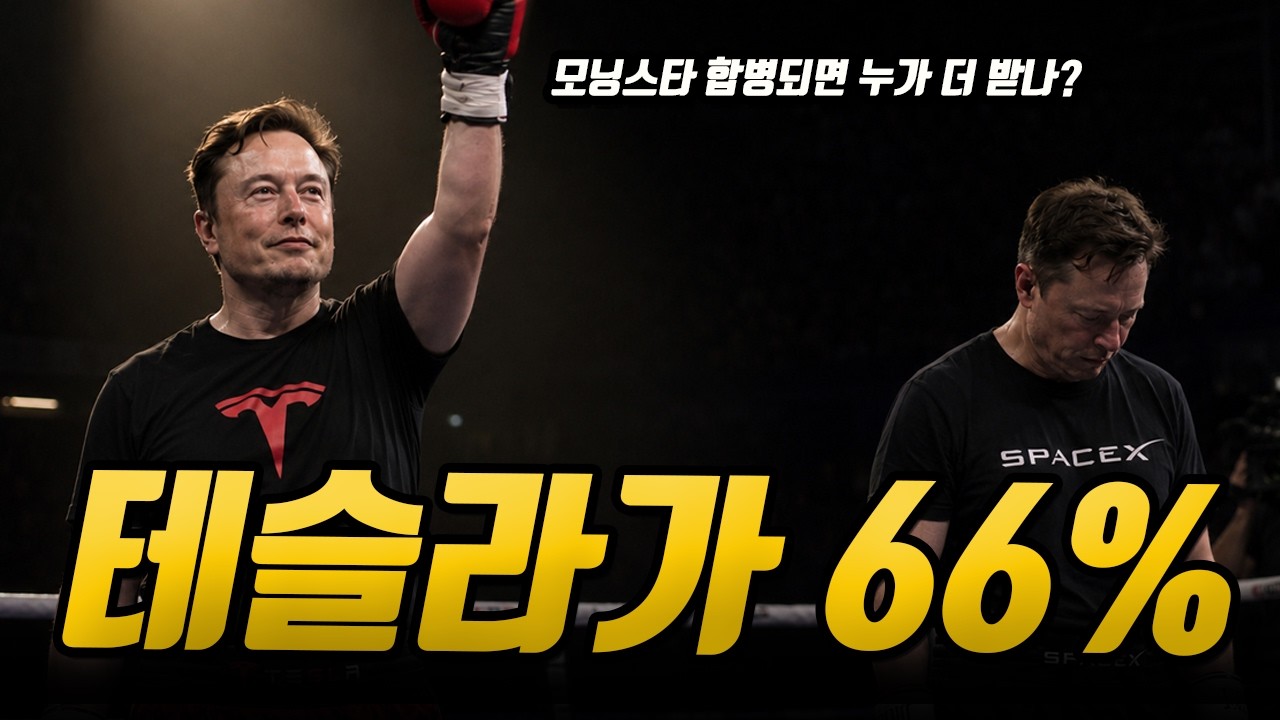
● KOSPI Chaos, VKOSPI 90 Shock, Korea Stocks Whipsawed
Korea’s “Fear Index” Breaks Above 90 for the First Time: Why Markets Are Whipsawing Now — Three Core Drivers of KOSPI Volatility and What Investors Should Monitor
This is not a routine pullback.Geopolitical risk in the Middle East, the upcoming US CPI release, global capital reallocation linked to a potential SpaceX listing, and domestic leverage congestion have converged, sharply amplifying KOSPI volatility.This report summarizes (i) why VKOSPI exceeded 90 for the first time, (ii) why the KOSPI and semiconductor equities are exhibiting extreme swings, (iii) where renewed rate-hike concerns are originating, and (iv) the most decision-relevant variables that are often underweighted in mainstream coverage.
1. Market Snapshot
Risk assets have entered a high-volatility regime, reflected in both price action and positioning.
- VKOSPI (Korea volatility index) exceeded 90 for the first time on record
- KOSPI triggered a buy-sidecar within 12 minutes of the open
- Samsung Electronics and SK Hynix surged, followed by renewed volatility
- US semiconductors weakened (NVIDIA, AMD, Broadcom, Intel)
- Large-cap US technology also softened (Apple, Microsoft, Tesla, Amazon)
- KRW strengthened sharply, but this is insufficient to conclude a durable risk-on shift
- Retail leverage and 2x ETF flows accelerated volatility
Despite seemingly directionless day-to-day swings, volatility is being driven by three identifiable factors.
2. Driver #1: Middle East Conflict Risk and Reduced Confidence in a Near-Term De-escalation
2-1. Markets are more sensitive to duration risk than to the headline event
Escalating tensions involving the US–Iran axis and Israel–Lebanon dynamics have increased the probability assigned by markets to a prolonged conflict.The principal market signal is not a single incident, but the deterioration in expectations for a near-term ceasefire or negotiation path.
Historically, markets can absorb war risk if resolution is perceived as imminent. When de-escalation odds fall, energy, inflation, rates, and equity valuations become mechanically linked.
2-2. Why Middle East risk transmits to both KOSPI and US equities
Geopolitical stress in the region is directly connected to energy pricing. Even absent an immediate oil spike, markets typically price forward.
Duration risk rising→ perceived supply risk→ higher cost expectations→ renewed inflation concerns (including CPI sensitivity)→ higher probability of tighter monetary policy→ increased valuation pressure on equities
Growth and technology equities are rate-sensitive, making semiconductors and mega-cap tech typical first-movers during rate repricing. The rapid reversal in US semiconductor performance is consistent with this channel.
2-3. Key variable: inventory drawdown determines whether oil shock becomes a real-economy shock
The more critical issue is not spot oil price movement, but how long governments and corporates can rely on inventory acquired at lower prices.
When inventories are ample, pass-through from higher crude prices to consumer inflation is slower. If tensions persist into late June and July, restocking at higher prices becomes more likely, raising the probability of broad pass-through into refined products, transportation costs, industrial inputs, and consumer prices.
This is the inflection point between a sentiment shock and an earnings/inflation shock.
3. Driver #2: US CPI and Renewed Sensitivity to Policy Tightening Risk
3-1. Markets can destabilize on probability shifts, even without an actual hike
Equity weakness is being driven by forward repricing rather than realized rate hikes. The focal catalyst is the US CPI release, with elevated consensus expectations reflecting risk aversion.
- Headline CPI expectation: 4.2%
- Core CPI expectation: 2.9%
A print above expectations increases the likelihood of a renewed inflation narrative and raises the probability of a more hawkish policy stance.
3-2. The market’s primary concern: a “hawkish hold”
A policy hold is not necessarily supportive if communications emphasize upside inflation risks and preserve optionality for additional tightening. Under a hawkish hold, yields and the USD typically firm, tightening financial conditions and weighing on growth valuations.
In that scenario, downside in Nasdaq and semiconductors can transmit rapidly to the next-session performance of Korean equities.
3-3. Why KOSPI and US equities are moving in tandem
Korea’s equity market is increasingly driven by global macro variables: US inflation, Fed reaction function, oil, and global risk appetite. Given the large foreign ownership share, CPI outcomes can simultaneously affect FX, foreign flows, and semiconductor sentiment.
4. Driver #3: SpaceX Listing Expectations and the “Capital Vacuum” Effect
4-1. Large IPOs can materially disrupt existing positioning
A large, high-visibility IPO can induce portfolio rebalancing across institutions and retail investors. To fund new allocations, investors often reduce existing holdings, generating profit-taking pressure in crowded or highly liquid exposures.
4-2. Why semiconductors and mega-cap tech are most exposed
Rebalancing typically targets:
- positions with large embedded gains
- high-liquidity positions that can be sold efficiently
Semiconductors and mega-cap technology fit both criteria. This dynamic can increase volatility in US names (e.g., NVIDIA, AMD, Broadcom) and in Korea via Samsung Electronics and SK Hynix. This is more consistent with flow mechanics than fundamental deterioration.
5. Korea-Specific Amplifier: Retail Credit and Leveraged ETF Congestion
5-1. VKOSPI > 90 reflects structural leverage unwind risk, not only fear
Beyond global catalysts, domestic leverage has intensified convexity in index moves. Elevated retail margin and leveraged product exposure can amplify both rallies and drawdowns.
- Approximately KRW 8.7 trillion allocated to leveraged products
- Revolving credit balance near KRW 43 trillion
- Margin financing outstanding: KRW 37.79 trillion
- Brokerage payment defaults (unpaid balances): KRW 1.6245 trillion
These balances function as mechanical accelerants during adverse price moves.
5-2. Why 2x ETFs can generate volatility drag (“negative compounding”)
In high-volatility regimes, leveraged ETFs can structurally underperform due to path dependency. A sequence such as -10% followed by +10% does not restore principal; leverage magnifies the effect, making recovery mathematically more difficult.
Higher leveraged ETF participation can steepen intraday momentum on up days and deepen declines on down days.
5-3. Forced selling mechanisms further increase tail risk
In a credit-heavy market, drawdowns can trigger margin calls, forced liquidation, and cascading sell orders. The resulting feedback loop:
decline→ forced selling→ incremental supply→ index drop→ volatility spike
This can rapidly deteriorate liquidity conditions.
6. Overnight US Session and Domestic Market Moves (News-Style Summary)
6-1. US equities overnight
US equities closed mixed. The Dow was modestly higher, while technology and semiconductors weakened.
- Semiconductor rebound reversed within one session
- Micron declined; NVIDIA, AMD, Broadcom, Intel also weaker
- Apple, Microsoft, Tesla, Amazon broadly lower
- US volatility index rose to the highest level since April
- Ceasefire expectations weakened following political commentary
Price action indicates deterioration in the marginal risk appetite concentrated in technology exposures.
6-2. Korea equity flow picture
Domestic equities rebounded sharply, but flow quality remained mixed.
- KOSPI surged early; buy-sidecar triggered within 12 minutes
- Samsung Electronics up ~8%; SK Hynix up ~15% intraday
- Financial investment institutions supported the index
- Retail turned net seller intraday; foreigners remained net sellers
- KOSDAQ rebounded over 6%, closing near 960
- USD/KRW fell 22.9 to 1,512.1
The rebound should be evaluated as potentially technical, given foreign outflows and unstable retail positioning.
7. Investor Monitoring Checklist
7-1. Focus on conflict duration, not headlines
The key variable is whether the situation extends by days or weeks. Longer duration increases the probability of sustained oil pressure, inflation sensitivity, and rate repricing.
7-2. CPI should be interpreted versus consensus expectations
Direction depends on surprise relative to expectations. Upside surprises tend to trigger hawkish repricing; downside surprises can catalyze relief rallies.
7-3. Semiconductor drawdowns may be flow-driven
Near-term pressure may reflect capital rotation ahead of large events rather than a fundamental demand shock. This distinction matters for positioning and timing.
7-4. In a leveraged market, even positive news can increase volatility
High leverage can accelerate upside through chase-buying and deepen downside through forced liquidation. In this regime, speed and convexity matter more than directional conviction.
8. Underweighted but Decision-Relevant Points
8-1. The market is reacting to an interconnected chain, not isolated shocks
The operative structure is:
Middle East risk→ oil pressure→ inflation sensitivity→ tightening risk→ technology drawdown→ KOSPI weakness→ leverage unwinds and forced selling→ VKOSPI spike
8-2. Inventory depletion may determine the next macro inflection
The path of inflation and rates is more sensitive to inventory dynamics than to spot crude moves alone. As lower-cost inventory is depleted, the probability of broad inflation pass-through rises.
8-3. Korea’s volatility may be amplified more by domestic leverage than by global shocks
Identical external shocks can produce different index outcomes depending on internal market structure. Elevated retail credit and leveraged products can make Korea more mechanically reactive than peers, independent of earnings fundamentals.
9. Forward Scenarios: Relief Rally Potential, but Volatility May Persist
9-1. Constructive scenario
- US CPI does not exceed expectations
- Middle East tensions stabilize without escalation
- Oil prices remain contained
- The Fed maintains a hold without materially hawkish guidance
This mix could support a near-term relief rally, with semiconductors and technology leading.
9-2. Adverse scenario
- US CPI exceeds expectations
- Middle East tensions persist or broaden
- Inventory depletion concerns intensify
- More hawkish signals from the Fed, Japan, and/or the Eurozone
- Domestic forced selling expands via leverage channels
In this scenario, volatility could rise further and evolve from a sentiment correction into a liquidity-driven selloff. With VKOSPI already elevated, incremental risk aversion can produce disproportionate moves.
10. Practical Risk Management Considerations
- Reassess leveraged exposure
- Review any use of margin financing
- Avoid momentum chasing in sharp rallies
- Track CPI, oil, and key geopolitical dates
- Maintain cash buffers and staggered entry/exit plans
In high-uncertainty regimes, survivability of capital and liquidity constraints can be more important than near-term return maximization.
11. Key Takeaways
- Rising duration risk in the Middle East has increased oil and inflation sensitivity
- The US CPI release is a near-term catalyst for repricing tightening risk
- SpaceX-related listing expectations may drive global portfolio rebalancing
- Domestic retail leverage and leveraged ETFs have amplified index-level convexity
Current moves reflect a multi-factor volatility regime in which geopolitics, macro data, flows, and market microstructure interact. For positioning, the critical task is to map each headline into its transmission path through inflation, rates, and cross-border flows.
< Summary >
VKOSPI’s first-ever move above 90 reflects concurrent shocks: prolonged Middle East conflict risk, heightened inflation and tightening sensitivity ahead of US CPI, potential capital reallocation tied to SpaceX listing expectations, and domestic leverage congestion from retail credit and leveraged ETFs.
The most decision-relevant variables are (i) whether oil shock transmits via inventory depletion into broad inflation, and (ii) whether Korea’s leverage-heavy market structure amplifies downside beyond what global risk alone would imply.
While a short-term relief rally remains plausible under benign CPI and de-escalation conditions, elevated volatility may persist. Priority should be risk control and staged execution rather than aggressive momentum exposure.
*Source: [ 경제 읽어주는 남자(김광석TV) ]
– [속보] 변동성 심한 3가지 이유 : 한국형 공포지수 ‘코스피200변동성 지수’ 사상 처음 90 돌파 [즉시분석]