● Apple Rebuilds Siri Into an Agentic AI Execution Engine
The Real Reason Apple Rebuilt Siri: “In AI Assistants, It’s No Longer About Search, It’s About Execution”
The core point right now is simple.
Apple has fully entered the generative AI race through Siri AI,
and at the center of it are
the collaboration with Google Gemini,
a privacy-first AI architecture,
and a new structure that blends on-device AI with cloud AI.
This announcement is not just a feature addition;
it should be seen as
a moment when the definition of the AI assistant itself changes.
In particular, this article also covers
the reality of the Apple-Google AI alliance,
the three-stage routing privacy structure,
the seven core features of Siri AI,
the restructuring of the big tech AI ecosystem,
and the implications for South Korean semiconductors and HBM demand,
so
it is not just a simple IT news item but something you should definitely look at from the perspectives of global economic outlook and AI trends.
1. Apple WWDC 2026: Why Siri AI Was “Completely Rebuilt”
At WWDC 2026, Apple officially announced a new version of Siri, namely Siri AI.
The key takeaway is not that Siri merely became smarter,
but that
it has now become an AI assistant that understands both the user’s personal context and real-time world information.
The old Siri was closer to a voice assistant that executed predefined commands,
but
the new one reads context,
recognizes the screen,
and directly performs tasks inside apps.
In other words, it has moved from an AI that answers questions to an AI that does the work for you.
2. The Core of Siri AI: Personal Context + World Knowledge + Screen Awareness
This new Siri AI is powerful because three axes were introduced at the same time.
① Personal context understanding
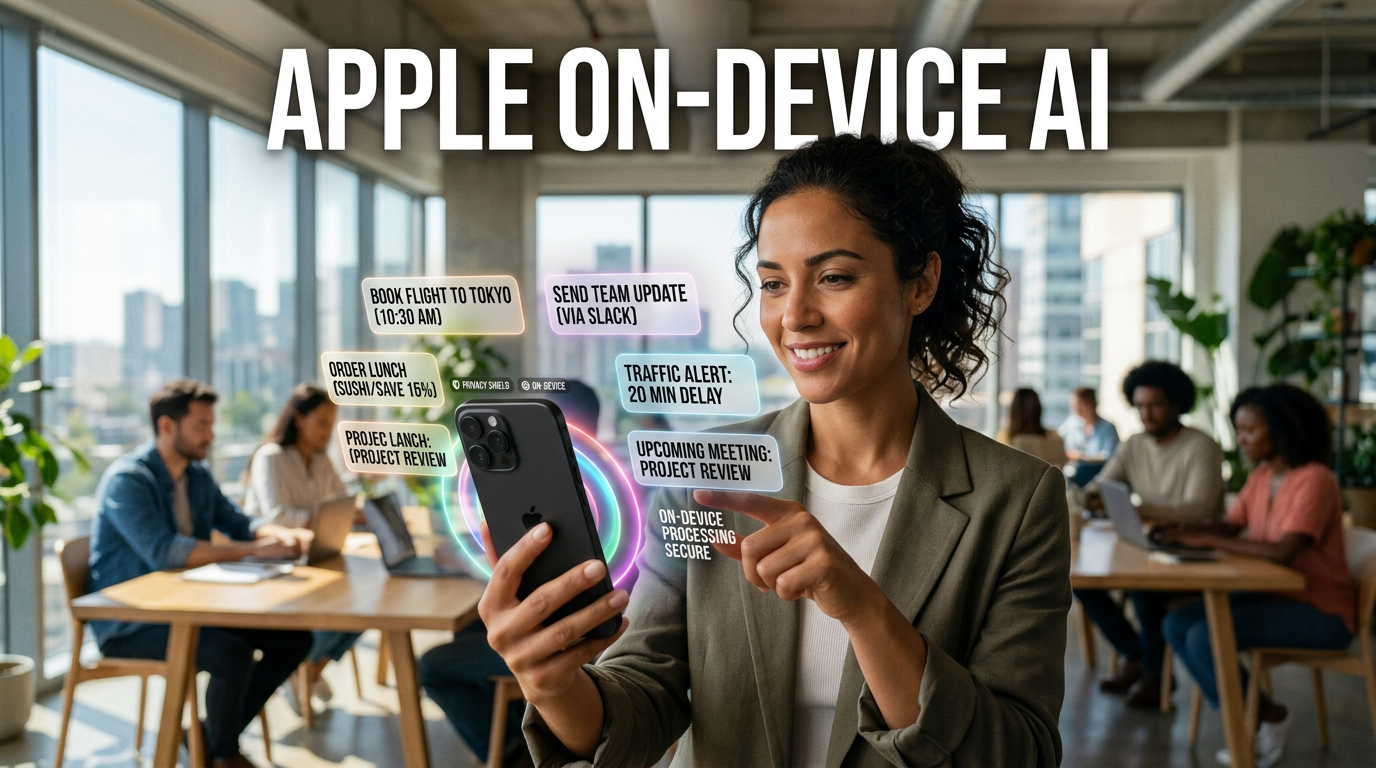
Siri AI combines messages, emails, and photos stored on the iPhone to understand the user’s situation.
For example,
it can find a restaurant recommended in a text message from a friend,
pull a hotel reservation number from an email,
or bring up photos from a previous trip instantly.
This is not simple search but AI based on personal data.
② Screen awareness
It understands what is on the screen you are currently looking at and answers questions on the spot.
For example, if you are looking at a party invitation text,
it can recommend what to bring based on that context,
and even save it directly to the Notes app.
AI is no longer something you open a separate app for to search;
it has become
a tool that attaches itself to the current screen and responds instantly.
③ Broad world knowledge
Siri AI searches the web for the latest information and responds.
Eclipse dates, concert information, schedules, sports, travel, nearby places, and more
can now all be handled with conversational responses that continue into follow-up questions.
This is exactly where AI search and agentic AI meet.
3. The Most Important Structure: Apple’s Three-Stage Routing Privacy Design
The most important part of this announcement is actually the structure rather than the features.
Siri AI is processed in three stages depending on request complexity.
① Simple requests: processed on the device
Tasks like setting timers, playing music, and controlling smart-home devices are handled directly on the iPhone.
Data does not leave the device.
② Moderately complex requests: Apple Private Cloud Compute
Slightly more complex requests go to Apple’s Private Cloud Compute.
There, Apple Silicon-based servers handle the task,
the data is not stored after processing,
and the system is designed so that even Apple employees cannot see the contents.
③ High-difficulty reasoning: sent to Google Cloud
Only the most difficult reasoning tasks are sent to Google Cloud.
Even in this process, the request is anonymized,
disconnected from the Apple ID,
and tokenized before being transmitted.
The important thing is that Google also cannot use this data for training.
In other words, it is a hybrid model that aims to achieve powerful AI performance and privacy protection at the same time.
4. What the Apple-Google AI Alliance Means
This announcement is not just a functional update;
it is a signal that the competitive landscape of big tech AI is changing.
Apple supplemented the limitations of its own model with Google Gemini,
and Google gained access to Apple’s ecosystem of more than 1.5 billion devices.
This is a deal that benefits both sides.
Apple raised AI performance while preserving the user experience,
and Google expanded its global consumer touchpoints.
Ultimately, the battle in the AI era is changing from “who builds the best model”
to
“who creates the widest distribution network and the most natural product experience.”
5. Seven Core Features of Siri AI
① Personal context understanding across messages, emails, and photos
Siri AI connects information scattered across multiple apps into one.
The most useful AI in everyday life is not the one with the flashiest answers,
but the one that quickly finds the information you already have.
② Screen awareness that understands what you are currently viewing
The moment it sees the screen, it provides answers and actions that fit the context.
From a UX perspective, this is a huge change.
③ World-knowledge-based responses with up-to-date information
Search and conversation are combined into one.
From now on, the “AI assistant” may be used more often than the “search box.”
④ Cross-device conversation history syncing
Conversations started on Mac can continue across iPhone, iPad, Apple Watch, and Vision Pro.
This maximizes the power of the multi-device ecosystem.
⑤ Expanded Visual Intelligence
Visual information use has expanded across iPhone, iPad, Mac, and Vision Pro.
You can check the calorie content of food in photos,
process receipts,
and ask questions based on information shown on the screen.
⑥ A unified writing tool that works anywhere
Draft generation and sentence refinement are available in mail, messages, and documents.
The ability to refine writing while considering the tone toward the recipient is especially powerful for real-world users.
⑦ Multi-device access extending to the wrist, car, and earbuds
It connects naturally across iPhone, iPad, Mac, Apple Watch, CarPlay, and AirPods.
Siri is no longer just one app but the interface for the entire Apple ecosystem.
6. The Real Point You Should Not Miss in This Announcement
Here is the key takeaway that other news outlets often skip.
① AI is now more about “deployment competition” than “model competition”
Who built the smarter model matters,
but
what matters even more is which device, which screen, and which moment that model is attached to.
② Privacy is both the main barrier to AI adoption and a weapon
One reason users do not use AI is concern over personal data.
Apple solved this issue through technical design.
③ A hybrid AI architecture is likely to become the standard
A model that mixes on-device processing, in-house cloud, and external cloud may become the default going forward.
Other companies are also highly likely to adopt the same structure.
④ AI demand eventually translates into GPU and HBM demand
The fact that high-difficulty reasoning is handled on NVIDIA Blackwell B200 GPUs in Google Cloud means
that demand for AI infrastructure is not over yet.
From here, we can see the potential for medium- to long-term benefits for South Korean semiconductor companies, especially those supplying HBM.
⑤ Siri AI also creates new opportunities for developers
With Spotlight integration and in-app integration now possible,
third-party apps can also go deeper.
In other words, for app developers, this is both a new acquisition channel and an opportunity to increase engagement time.
7. Implications for the Global Economy and Industry
This development offers important clues not only for AI trends but also for the global economic outlook.
① Big tech can no longer go it alone
Even companies that compete like Apple and Google are now collaborating.
AI is a battle of technology, capital, infrastructure, and ecosystems.
② The AI infrastructure investment cycle continues
GPU, data centers, memory, power, and networks remain core.
In particular, semiconductors, HBM, and AI infrastructure remain valid long-term investment themes.
③ Device companies must become AI companies
Apple used to be a hardware company,
but now it is becoming much more strongly an AI experience design company.
In the future, competition in smartphones, PCs, and wearables will likely be decided by AI user experience.
④ The agentic AI era is beginning in earnest
As AI that searches,
organizes,
and executes on behalf of users spreads,
the structure of search, scheduling, notes, and productivity apps will change dramatically.
8. The One Sentence That Must Be Emphasized in the Blog
The real meaning of Siri AI is not “a smarter assistant,” but
that AI has evolved into an execution-oriented interface that reads human context, understands the screen, and carries out real actions.
< Summary >
At WWDC 2026, Apple unveiled Siri AI and turned the AI assistant from search-oriented to execution-oriented.
The core points are personal context understanding, screen awareness, up-to-date world knowledge, and app execution.
The collaboration with Google Gemini, the three-stage routing privacy structure, and the hybrid AI architecture are the essence of this announcement.
This trend connects to stronger big-tech AI alliances, expanding demand for AI infrastructure and GPUs, and the potential benefits for South Korean semiconductor HBM companies.
[Related Articles…]
Apple’s AI Strategy After Joining Forces with Gemini
How Privacy-First AI Is Reshaping Big Tech Competition
*Source: https://themiilk.com/articles/ad7794421?utm_source=Viewsletter&utm_campaign=7db1de558b-EMAIL_CAMPAIGN_2026_03_17_11_46_COPY_01&utm_medium=email&utm_term=0_-0c2669b0bf-385751177