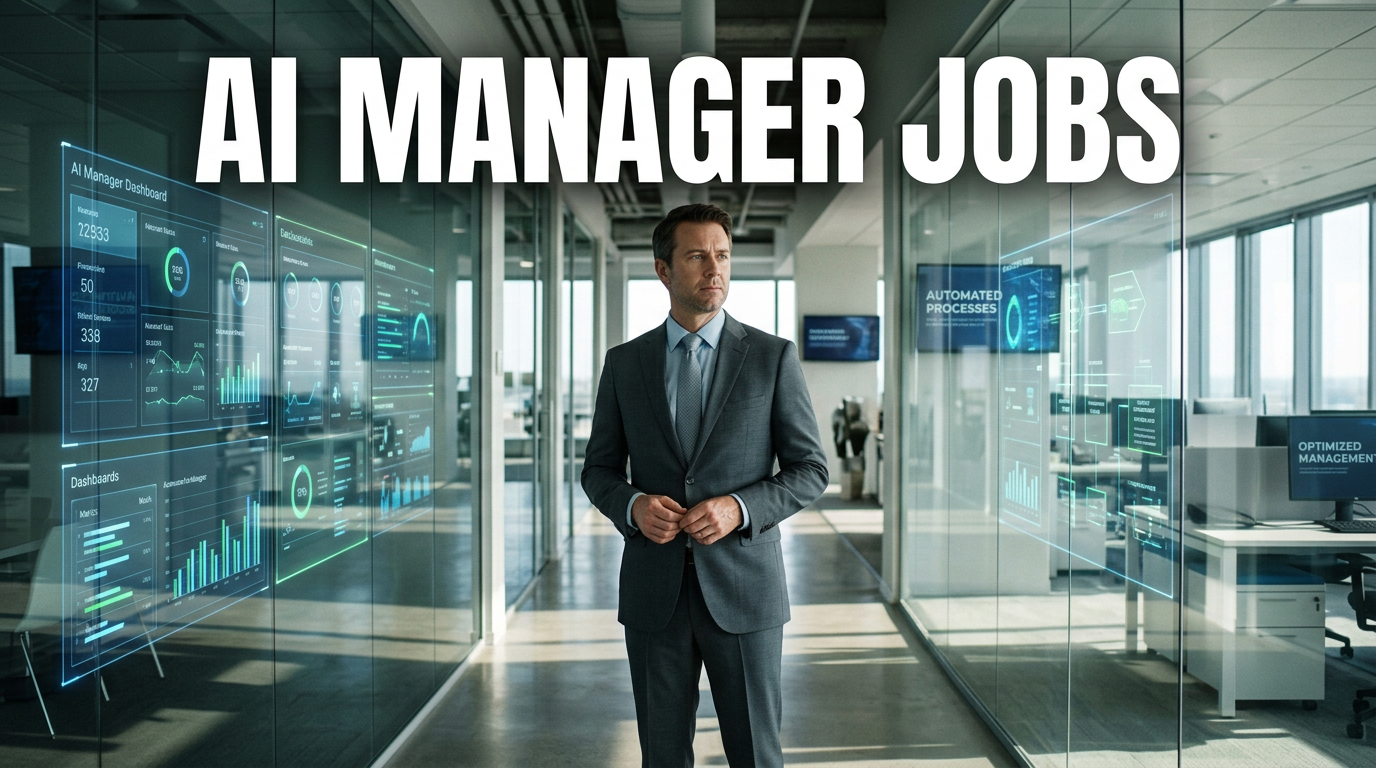
● AI Driven Workforce Cut
“Voluntary retirement is no longer just a story about low performers. Let’s take a complete look at why high-tenure, high-salary middle managers are being cut first, how AI is reshaping the future of managerial jobs, and the cash flow strategies you need to prepare right now.”
1. The biggest change happening in companies right now: the target of voluntary retirement is shifting
In the past, voluntary retirement was mainly applied to employees with poor performance or those who had fallen behind in promotions.
But now the atmosphere is completely different.
Companies are trying to eliminate high-tenure, high-salary, and key managers first.
The reason is simple.
From an organizational perspective, “How long have you worked here?” matters less than “How much value are you creating right now?”
In other words, salary is no longer money that rewards past loyalty; it has become the cost of buying current productivity and ROI.
That is why companies now evaluate employees less like people and more like subscription services that are renewed every month.
They ask whether this role is still cost-effective this month, and if it falls short, they are willing to press the voluntary retirement button.
2. Why are managers in their 40s under the most pressure?
The group under the greatest pressure right now is middle managers in their mid-40s and older.
They sit between frontline execution and management within the organization.
The problem is that precisely this “middle” work is one of the areas most easily replaced by AI and automation.
Gathering materials produced by staff, organizing them into reports, summarizing meeting notes, passing information up the chain, and coordinating schedules and interests are already handled by digital tools in many cases.
In other words, many managerial roles are shifting from human judgment to system-based processing.
3. Which jobs does AI change first?
When many people hear AI, they first think of developers or designers.
But in reality, the area that is shaken first is middle management work.
In particular, the following tasks are at high risk of being replaced by AI.
1) Collecting materials and drafting reports
2) Organizing meeting minutes and managing schedules
3) Coordinating communication between departments
4) Writing repetitive approval documents
5) Assisting with decision-making that follows similar patterns
These tasks may look like the “core” of organizational operations, but in reality they are areas that are easy to standardize and automate.
That is why in the AI era, the managerial function that bundles and passes along work is likely to be reorganized faster than frontline execution itself.
4. What the global economic outlook tells us: even major corporations are not exempt
Looking at the recent global economic outlook, major companies are not simply moving toward hiring more people.
Google, Meta, and Amazon, for example, have carried out restructuring even while posting strong results.
This is not because they lack money.
It is because they want to build a structure that produces greater results with fewer people.
In other words, the goal is not just labor cost reduction, but maximizing productivity through AI.
This trend is not limited to the United States.
It is highly likely to spread to major Korean conglomerates, manufacturing, finance, and platform companies as well.
5. The most important warning for Korean office workers: you can leave before retirement age
Even if the retirement age is raised to 65, that does not mean people will actually stay that long.
In fact, companies try to reorganize their workforce before legal obligations become heavier.
As a result, managers in their late 40s to early 50s are under the greatest pressure first.
This means that the statutory retirement age and the actual perceived retirement age are completely different things.
From the company’s perspective, there is no plan to keep paying for someone until 65.
Instead, they prefer to offer severance or incentives and let people go with relatively little friction.
6. The most important point here: you should not try to prevent retirement, but prepare for it
What is needed now is not a mindset of simply enduring.
The most important thing is to build a structure that still works after retirement in advance.
Relying only on severance pay to start a business is risky.
The key takeaway is to use the money you earn while you still have a salary to build a separate cash flow system.
In other words, you need to prepare a structure in which your life does not collapse even if the company disappears.
Examples include the following.
1) Reducing fixed expenses
2) Building side income streams
3) Accumulating digital assets or content assets
4) Strengthening AI utilization skills
5) Securing skills that can lead to a career transition, not just reemployment
7. Survival strategy in the AI era: cash flow outside your salary is the answer
Going forward, people who can generate income outside the company will become stronger than those who simply stay at one company for a long time.
In particular, people who ride the AI trend well can build sustainable income structures with less time.
What matters here is not starting a business recklessly.
It is much more realistic to keep your main job while steadily building small cash flow streams.
For example, this could take the form of content that organizes your professional knowledge, automation tool usage, lectures or consulting, or blog-based monetization.
In other words, preparing for retirement is really about building both economic independence and AI capability.
8. The core point that other news and YouTube channels often fail to mention: organizations look at “cost structure,” not “people”
This is the most important part.
Many pieces of content stop at saying, “AI is eliminating jobs.”
But the way companies actually operate is much more ruthless.
Companies are not cutting people; they are changing their cost structure.
In other words, AI adoption is not just a technological innovation; it is a restructuring of labor costs.
That is why middle managers, high-salary managers, and report-heavy roles are the first to feel the pressure.
This is not a matter of ability; it is a structural issue.
Therefore, individuals should first ask not “How good am I?” but “How automated is my work?”
9. Five things you should check right now
1) What percentage of my work consists of repetitive tasks?
2) If I were gone, would the organization stop immediately?
3) What percentage of my tasks could be replaced by AI or automation tools?
4) Do I have enough cash to survive for six months after retirement?
5) Do I have the skills or assets to generate income outside the company?
If you cannot answer these five questions, then it is already time to start preparing.
Especially if you are an office worker in your 40s or older, it is better to check sooner rather than later.
10. Conclusion: prepared retirement is not failure, but the beginning of independence
Retirement is not the end.
For those who are prepared, retirement is not a cliff but a new starting point.
Looking at the current economic situation and AI trend, the battle ahead will not be about “how long you stay at a company,” but about “how quickly you build your own system.”
Companies will not take responsibility for my future until the very end.
That is why what is needed now is not endurance, but design.
While the salary is still coming in, build the cash flow that will protect your life.
That is the most realistic form of prepared retirement.
< Summary >
Voluntary retirement is no longer just a problem for low performers.
Due to AI and automation, the pressure is growing first on middle managers in their 40s and 50s, and on high-income roles.
Companies care more about current ROI than past dedication.
Therefore, the key takeaway survival strategy is to prepare both side income cash flow and AI utilization skills in advance.
Only prepared retirement can become the beginning of independence.
[Related Articles…]
Retirement Preparation Strategies You Need to Know Before Leaving
How AI Is Changing Office Worker Survival Strategies
*Source: https://share.google/3fs2EgKQdXR4tlVJh