● Harnes Revolution
Harness Engineering Is Rising: The Blueprint, Orchestration, and Token Efficiency Behind “AI Agent Teamwork”
Key Takeaway You Should Cover Today (Start Reading From Here)
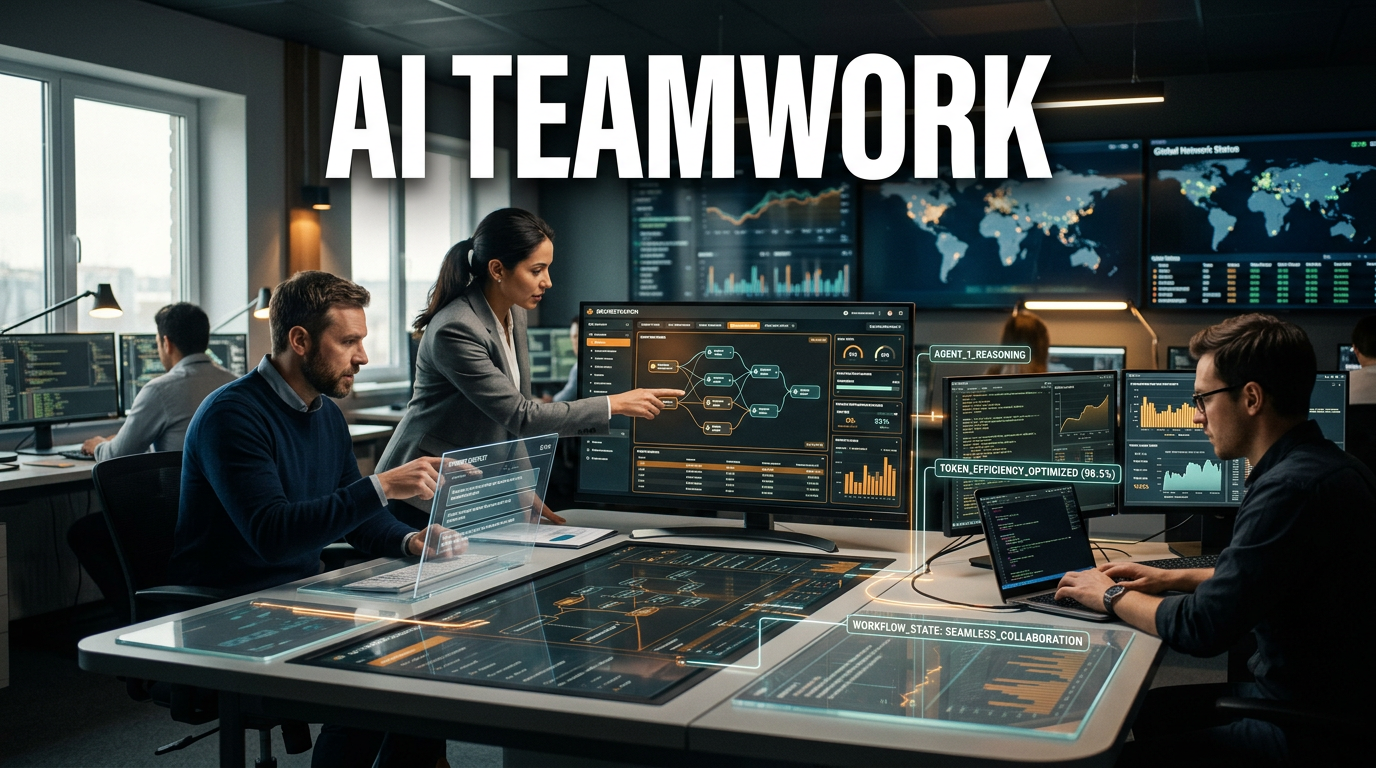
These days, there’s a lot of talk that AI is evolving from a “single assistant” into “a team where multiple agents split responsibilities.” That change is made possible by Harness Engineering, and I’ll neatly summarize the structure in this article like a news brief.
There are exactly 5 most important points included in today’s article.
1) Understand what prompts, context, and harness change, each as a “role”
2) Why the limitations of a single agent arise (long context, large-scale work, quality degradation)
3) How the orchestrator mediates between agents and “re-activates” insufficient tasks
4) A collaboration method that maintains quality and consistency through skill (manual)–based approaches
5) The perspective that what matters is not just token efficiency, but that tokens are spent on things that are valuable in the end
If you nail these 5, you can bring harness engineering not as a trend keyword but as an “execution framework you can apply to organizations.”
News Headline: After Prompts Comes “Context,” Then Comes “Harness”
Recently, among AI practitioners and technical leaders, the momentum that harness engineering is gaining attention—after “prompt engineering” and “context engineering”—has been confirmed.
The core idea is simple. It’s not about doing a single conversation well, but rather designing a structure so that agents form a team to complete the work—that is the essence of harness.
This shift matters because, with a single agent, as production (real-world) level work grows larger, performance starts to wobble.
1) Prompts·Context·Harness: Not “Evolution,” but “Role Expansion”
- Prompt engineering: The step where you write “how to talk/direct” to the AI
→ The accuracy of questions and instructions determines answer quality - Context engineering: The step where you design “what background info and materials to give” the AI
→ It determines the direction and quality of responses - Harness engineering: Not just evaluating AI model performance;
you pre-design “an agent team + work flow + interaction environment”
→ Becomes strong at long tasks, complex outputs, and production tasks like iteration and verification
In other words, if prompts/context are about “input quality,” then harness should be understood as “the way of working itself (workflow structure).”
2) The Limitations of a Single Agent: A Bottleneck That Shows Up as Work Grows
The problem most frequently mentioned in the article/conversation was this.
- As long context gets longer, the AI loses the context direction and performance drops sharply
- In large-scale work (e.g., analyzing thousands of lines of code, writing large documents, creative projects), quality/accuracy limits are exposed
- A method of providing context “just by making it longer” ends up being inefficient in both cost and quality
From here, it naturally moves toward multi-agent. It’s not enough to simply spin up multiple single agents— you have to design them so they communicate with each other and split roles; that’s where harness starts.
3) The Core of Multi-Agent: Role Allocation + the “Orchestrator”
In harness engineering, the most important mechanism is the orchestrator.
The orchestrator isn’t just an “administrator” feeling—it acts like an intermediate control tower that “keeps the flow of work and re-activates agents at the exact moments they’re needed.”
- Example (research–analysis flow)
The research agent investigates from diverse perspectives → the analysis agent organizes the results
But if there’s insufficient data during the analysis,
the orchestrator calls the research agent again to perform “additional research.” - It’s not just about increasing the number of agents— it’s pre-designed so that only the necessary roles run in the required order
That’s why the experience feels different. It becomes closer to “the way the system runs the work,” not “the AI I’m using.”
4) The Agents’ Work Method Is Fixed as “Skills”: A Quality/Consistency Mechanism
In harness, the tasks agents perform are essentially provided as skill units.
- From a human perspective, it’s like the concept of “downloading an expert’s manual”
(Just like you learn how to pilot a helicopter—the work procedures are in a structured state) - Handling repetitive tasks as skills, run according to procedure → maintain quality → secure consistency
- From an organizational collaboration perspective, it feels like people and AI collaborate using the same language (standards)
The connected keyword here is “skill economy.” The World Economic Forum also continues to discuss that a skills-centered economy is coming. So harness aligns well with the flow in the AI era of “designing and sharing work as skill units.”
5) Token Efficiency Issue: The Essence Is “Spending on Value,” Not “Using Less”
When you run multi-agent systems, token usage naturally increases. That’s why “reduce tokens” became a shared concern among executives and practitioners, and that point kept showing up in the conversation as well.
- Optimization techniques (e.g., model tiering/selection) exist, but it’s difficult for individuals to identify and operate them
- The important question was summarized as this. “For every token spent, does the result actually have real value?”
- If you push a token-maxing policy as a performance metric, you can end up wasting effort by pouring out prompts regardless of whether they’re actually important
And here comes a unique perspective. Since it’s unclear what AI does well yet, the philosophy is to “try first (experiment) and discover value along the way.” It may look like busywork, but the claim was that in the long run it helps share insights and accumulate results.
6) Use the Harness Back (Open Source): Start From Research
For people trying harness for the first time, the starting point that’s commonly recommended is “start from research.”
- Compare results between ordinary search (existing tools) and harness-based multi-perspective research, and you’ll feel the difference immediately
- Research isn’t about repeating a single agent; it’s a system where “investigate by perspective → analyze → if insufficient, re-investigate”
- If the orchestrator detects gaps, it adjusts again (re-calls) → the flow steadily improves result quality
So harness shouldn’t be approached as “try it once and stop there”— the bigger effect comes from an iterative structure of comparison–learning–improvement (pruning).
7) Tool/Environment Barrier: If Terminals Scare You, Start With VS Code
In learning harness, a surprisingly large entry barrier is “the environment.” They said many people find it hard because it’s terminal-centered.
- Start with GUI-based tools like VS Code instead of the terminal
- Suggest an “installation-to-run” route, such as using the Claude desktop app / code integration method
- For individuals, accessing the latest models/environments may cost money, but the advice is that “from an investment perspective, trying it first leads to higher learning efficiency”
In student/educational settings, cost and accessibility issues were also mentioned, along with the direction that it would be great if support became more fine-grained.
8) Organizational Application Perspective: AI-Native Collaboration Has Already Started, and Departments May Appear
One of the most realistic parts in this conversation was “organizational change.”
- In some companies, cases have already appeared where the CEO/C-level tries harness directly first
- At the beginning, it sometimes shifts from “studying and getting people to move” to “leaders create it once themselves, then share/spread it”
- Over time, there’s a prospect that inside the company departments centered on AI agents could be created
One more thing. There was also concern that human collaboration might decrease, and it was summarized that the answer isn’t strictly predetermined. However, there was also a signal that some types of collaboration might actually increase (more communication due to tool/scope mismatches). So it’s better to think of it not as “collaboration disappearing,” but as “the form of collaboration changes.”
9) General Harness vs Custom Harness: Quality Improves When You Make It a Perfect Fit
The harness back already feels quite general, having collected cases across multiple domains. Even so, the weight of the direction was on “don’t stop at general use—configure it dynamically for your purpose.”
- General harness helps you get started quickly, but for the highest quality, customization tailored to the domain is necessary
- The next challenge is how to define quality measurement/evaluation criteria
Main Content You Want to Convey (One Line I Reinterpreted)
Harness engineering is not about “getting results because AI performance is good”— it’s an approach that makes production-level outcomes reliably appear because it groups agents into a team and designs orchestration, skills, and workflow.
And yes, the token issue is about reducing tokens too, but more importantly, did you do work that’s genuinely valuable for the tokens you投入?
In conclusion, the fastest next step in real-world practice right now is this. Run it with harness starting from research, confirm the difference in results, and “prune” the necessary skills and flows.
(For reference, the key flow that connects naturally throughout the article is prompt engineering → context engineering → multi-agent based on orchestration, and the perspective that token efficiency should be redefined using “value” as the standard.
< Summary >
- Prompts and context focus on input quality, while harness focuses on designing the work structure of an agent team.
- Single agents reveal limitations in long context and large-scale tasks, making multi-agent systems necessary.
- The key mechanism of harness is the orchestrator, which maintains the work flow and re-calls agents when needed to align quality.
- Agent work is fixed as skills (procedure manuals) to maintain quality and consistency and stabilize repetitive tasks.
- Token efficiency is essential in “spending on valuable work,” not “using less,” and the importance of experimentation and discovery was emphasized.
- Starting by running it with harness from research and comparing with existing results provides the most immediate sense of difference.
- Practical tips were also provided to lower the entry barrier with GUI environments like VS Code.
- In organizations, AI-native collaboration methods spread, and the possibility of creating AI agent–focused departments was mentioned.
[Related Articles…]
- Orchestrator-Based Multi-Agent Operation Strategy
- A Guide to Turning Token Efficiency Into ROI for AI Cost Optimization
*Source: [ 티타임즈TV ]
– 하네스 엔지니어링! 에이전트들끼리 어떻게 일하게 할까? (황민호 카카오 AI네이티브 전략팀 리더)