● Tesla Shockwave, Optimius Audit, FSD Surge
Tesla Optimus: China Supply Chain Audit Begins Before Public Reveal | FSD Expansion in Europe and the AI Agent Market
The key point in this news is not simply when Tesla’s robot will be unveiled.
The more important issue is that China has already begun auditing the supply chain for Tesla’s robot parts, even though Optimus Gen 3 has not yet been publicly revealed.
Combined with Czechia’s decision to provisionally approve Tesla FSD after previously taking a skeptical stance, autonomy and robotics have become major variables for Tesla’s stock.
At the same time, Meta’s agentic AI is reshaping the market, suggesting that the AI trend is broadening beyond GPU demand toward CPU and real-world service deployment.
1. Market Overview | AI Agents Lifted the Nasdaq
U.S. equities posted broad gains.
The Nasdaq rose 2.26%, the S&P 500 gained 1.49%, and the Dow Jones increased 0.17%.
Tesla closed at $375.3, up 3.0%.
Meta was the main driver of the move.
Shares surged 11.3% on expectations for agentic AI that can handle reservations, shopping, and multi-step tasks on behalf of users.
Intel rose 13%, and AMD gained 9%.
The key takeaway is that AI infrastructure investment is gradually expanding beyond graphics chips.
Agentic AI requires not only large-scale training GPUs, but also CPU capacity and server infrastructure to process user requests in real time.
According to Wells Fargo, Meta’s AI Muse reached 438,000 daily users within 10 days of launch.
By comparison, ChatGPT took 49 days to reach a similar level, underscoring the rapid pace of consumer AI adoption.
This trend is also relevant for the broader macro outlook.
As AI shifts from a thematic trade to direct influence on consumption, advertising, commerce, and semiconductor demand, it increasingly affects corporate earnings and capital expenditure cycles.
2. Geopolitical Factors | Oil Fell Despite Middle East Tensions; U.S.-China Summit Still Appears to Be Proceeding
Geopolitical developments also influenced the market.
The Houthi rebels in Yemen attacked Saudi territory over the weekend, and the United States and Iran exchanged warnings.
Even so, West Texas Intermediate crude fell as much as 4% intraday to around $92 per barrel.
Gold also posted modest weakness.
In general, rising Middle East risk tends to push oil and gold higher.
This time, however, concerns about economic slowdown, demand expectations, and supply dynamics appear to have outweighed the usual safe-haven response.
The U.S.-China summit process is also continuing.
The U.S. Treasury Secretary said he met Chinese Vice Premier He Lifeng in New York to finalize pre-summit coordination.
The two sides are also said to be open to discussing shared AI risks.
Of particular note, Elon Musk is reportedly invited to a dinner tied to the U.S.-China summit.
Tesla is deeply connected to China through vehicle production, battery supply chains, autonomous driving data, and humanoid robot components.
As a result, changes in U.S.-China relations could affect Tesla’s stock as well as the broader electric vehicle and robotics sectors.
3. Key Tesla Catalysts | Semi Truck, Cybercab, and Q3 Deliveries Ahead
- September 24, U.S. time
Tesla is scheduled to hold a Semi truck event in Sparks, Nevada.
The event may highlight a production line designed for annual output of 50,000 units. - U.S.-China summit
The summit is expected to take place in Washington, where investors will watch for any comments involving Tesla and Elon Musk. - September 30
This is the deadline mentioned for regulatory feedback on Cybercab self-certification. - Early October
Tesla is expected to report third-quarter deliveries.
Whether it meets market expectations could be an important near-term factor for the stock.
4. Optimus Update | China Supply Chain Audit Started Before the Robot Was Publicly Revealed
The most important development concerns the supply chain audit for Tesla’s Optimus robot.
According to Chinese media reports, Tesla’s robot team recently visited Ningbo in Zhejiang province.
Following that visit, reports emerged that audits began at parts suppliers for Optimus mass production.
21st Century Business Herald reported the story, and The Paper expanded the scope, saying that factories in Ningbo, Hangzhou, and Shanghai across the Yangtze River Delta are being reviewed.
This region is one of China’s most concentrated automotive parts supply-chain hubs.
Three companies were specifically named.
- Tuopu Group
Described as a supplier of drive units for robot joints and automotive chassis components.
It can be viewed as serving a role similar to muscles and joints in the human body. - Joyson
Described as a sensor-related supplier.
It functions like the sensory organs that help a robot perceive its environment. - Sanhua
Described as a thermal management supplier.
It plays a role similar to temperature regulation and heat dissipation in a robot.
These companies are already known to be linked to Tesla’s automotive supply chain.
According to industry sources cited in reports, they had already received robot part orders from Tesla and are now being audited again.
However, one point must be clear.
Tesla declined to comment on the reports.
The current Optimus supply-chain news is therefore based on Chinese media and supplier-side sources, not on an official Tesla announcement.
From an investment perspective, expectations should be separated from confirmed facts.
5. What the Audit Really Means | The Question Has Shifted From “Can It Be Built?” to “Can It Be Built Repeatedly?”
The most important aspect of this news is the nature of the audit.
Tesla has audited Chinese suppliers before.
The audit conducted from September last year through February this year focused primarily on whether the company could manufacture at an automotive level.
At that stage, the focus was on how long it takes to produce one unit, the defect rate, and the cost structure of individual components.
In simple terms, the question was whether the part could be made at all.
This time, however, the question is different.
According to Bloomberg, the focus of the new audit is production consistency and exclusive supply conditions.
In other words, the issue is no longer whether a part can be made once, but whether it can be produced continuously at the same quality.
In practical terms, last year’s audit was like testing whether a chef can prepare a dish.
This year’s audit is more like a franchise inspection: whether every location delivers the same quality, follows hygiene rules, and maintains stable ingredient supply.
This shift is significant.
It suggests that Tesla’s Optimus design may be nearing completion and that the company may now be validating mass production feasibility.
6. Why Exclusive Supply Matters | A Move to Limit Leakage to Chinese Humanoid Robot Competitors
The reported emphasis on exclusive supply conditions is also important.
It suggests Tesla may be seeking to prevent key components from flowing to Chinese competitors while still relying on Chinese suppliers.
China is already moving quickly in humanoid robotics.
Xpeng began operating the production line for its humanoid robot Iron on the 8th of this month and is targeting mass production by year-end.
Elon Musk said during an earnings call in January that the biggest competitor in humanoid robotics would likely come from China.
As in the electric vehicle market, China is likely to rely on speed, lower cost, and strong supply chains in robotics as well.
Tesla therefore needs Chinese parts manufacturing while also managing the risk that critical components could reach competitors.
That is likely why exclusive supply conditions are being treated as important in the current supply-chain audit.
7. Why Tesla Has Not Publicly Revealed Optimus Yet
Elon Musk previously said during a first-quarter earnings call that Optimus Gen 3 would be introduced between June and July.
However, no official public reveal has taken place so far.
Normally, companies show the product first and discuss parts procurement and production afterward.
In this case, the sequence is reversed.
The supply-chain audit is being discussed before the robot has been publicly revealed.
The reason may be found in Musk’s comments.
He has said that competitors analyze Tesla’s videos in detail and copy them, which is why Tesla may avoid showing new versions until mass production is close.
In other words, Tesla may be choosing a strategy of not presenting Optimus as a marketing showcase first, but only after production preparation is largely complete.
Humanoid robots are especially vulnerable to competitor analysis because structure, hands, joints, gait, and task execution are all observable.
8. The Main Challenge in Optimus Production | One Slow Component Can Determine the Entire Output Rate
Musk has said that Optimus contains more than 10,000 parts.
He also noted that production speed is determined by the single slowest component among them.
This is a critical manufacturing point.
Even if 9,999 components are ready, the robot cannot be completed if one essential drive component is missing.
The current China supply-chain audit can be viewed as an effort to identify bottlenecks, confirm supply stability, and verify whether quality remains consistent on a mass-production line.
Tesla is reportedly preparing Optimus production using the Fremont plant lines for Model S and Model X.
Longer term, if a large-scale Optimus factory is completed in Texas, expectations range from several million units per year to even larger production capacity.
That said, Tesla has not officially announced final production volumes or launch timing.
Therefore, figures such as 50,000 units this year or 1,000 units per week in September should be treated as estimates from Chinese media and supply-chain sources.
9. What to Watch in Tesla’s Capital Expenditure | The Q3 Earnings Call Will Matter
Tesla has said it will spend more than $25 billion on capital expenditures this year.
The amount used in the first half was cited at around $8.2 billion.
If that plan remains unchanged, at least $16.7 billion would still need to be spent in the second half, equivalent to roughly 23 trillion won.
The key question is where that money will go.
Vehicle production lines, batteries, AI infrastructure, autonomous driving compute, and Optimus manufacturing facilities are all possible destinations.
If the third-quarter earnings report specifically mentions Optimus-related capital spending or production preparation costs, the market may interpret that as a signal of movement toward mass production.
If there is no such mention, investors may remain cautious about the gap between supply-chain reports and actual manufacturing readiness.
For that reason, the third-quarter earnings call will be more than a vehicle-delivery update.
It may serve as a key event for assessing whether Tesla can be re-rated from an electric vehicle company into an AI robotics platform company.
10. Europe FSD Update | Why Czechia Changed Its Position
Another important development came from the autonomy side.
Czechia has reportedly provisionally approved Tesla FSD.
Czechia had previously been skeptical of Tesla FSD.
It had raised concerns about speed-limit compliance and whether drivers were properly monitoring the system.
When the Netherlands approved it earlier, Czechia also made clear that it would not automatically follow suit.
This time, however, Czechia changed its position.
According to Reuters, the Czech Ministry of Transport made the decision after months of expert review and consultations with other European member states.
In Europe, the Netherlands was followed by Lithuania, Estonia, Denmark, Belgium, and Slovenia in approving Tesla FSD.
Czechia is now the seventh country to join the trend.
11. Czechia’s Three Reasons | It Looked at the Record, Not Tesla’s Claims
Czechia’s decision appears to rest on three factors.
- Actual experience in early-adopter countries
Czechia appears to have observed how FSD performed in other European countries. - Additional data accumulation in Europe
More driving data and operational cases accumulated over time, which likely influenced the decision. - System oversight safeguards
In supervised FSD, driver responsibility and monitoring systems were key conditions.
The important point is that Czechia did not rely solely on Tesla’s claims.
It appears to have reviewed records from other countries.
Tesla has previously said in its own analysis that collisions on the first drive were reduced by 40% in Australia and New Zealand after FSD adoption.
However, this figure is Tesla’s internal analysis, not externally verified data.
Even so, Czechia’s shift is meaningful for the regulatory environment around autonomous driving in Europe.
A country that was openly skeptical changing its position after reviewing data may send a stronger signal than countries that supported the system from the beginning.
12. A Key Point Often Missed | The Criteria for Evaluating Tesla Are Changing
Many headlines focus on when Optimus will be revealed or which countries have approved FSD.
The more important change is that the standards for evaluating Tesla are shifting.
Until now, Optimus has largely been judged by questions such as:
How human-like is its walking?
How well can it grasp objects?
Can it perform useful work in a factory?
Once the company moves into mass production, however, the questions change entirely.
What is the unit cost of a robot?
Is the yield stable?
Where are the production bottlenecks?
How much margin remains?
Can service and maintenance costs be managed?
This is the real investment case for Optimus.
More important than a robot that looks impressive in a demo is whether Tesla can repeatedly produce the same quality robot at low cost.
The same applies to autonomous driving.
What matters more than approval in one country is whether approvals expand, data accumulates, and that data then supports approval in additional markets.
If that virtuous cycle develops, Tesla FSD becomes not just a feature, but a platform for global regulatory data accumulation.
13. Key Items for Investors to Monitor
- Optimus Gen 3 reveal
Investors should watch whether Tesla unveils Optimus Gen 3 around the third-quarter earnings period. - Official confirmation of the supply-chain audit
Current reports come from Chinese media and supply-chain sources.
It will matter whether Tesla officially discusses suppliers, orders, or production plans. - Magnitude of third-quarter capital spending
If capex rises sharply, investors should determine how much is going to Optimus, AI compute, batteries, or vehicle production lines. - Speed of FSD approval expansion in Europe
If more countries like Czechia shift from skepticism to approval, autonomous-driving regulatory risk could decline. - Expansion of the AI agent market
If AI continues moving into actual user task execution, the effects could spread across semiconductors, cloud infrastructure, advertising, and commerce.
14. Conclusion | Optimus Has Moved From a Showcase to a Manufacturing Test
The key point in this Tesla news is not that Optimus has not yet been publicly revealed.
What matters more is that a parts supply-chain audit is taking place before the reveal.
If Tesla truly wants to mass-produce Optimus, it must first solve component quality, cost, yield, supply stability, and exclusive sourcing rather than simply show a compelling robot video.
The China supply-chain audit may indicate that Tesla has entered that phase.
At the same time, Czechia’s provisional FSD approval suggests that Tesla’s autonomous-driving business is steadily overcoming regulatory barriers in Europe through accumulated data.
Optimus requires manufacturing data, and FSD requires driving data.
Tesla’s next stage of growth is therefore likely to depend less on demonstration videos and more on repeatable data and production capability.
< Summary >
Tesla closed at $375.3, up 3.0%.
Reports from China indicate that Tesla has begun a supply-chain audit for Optimus robot components.
The audit reportedly covers drive units, sensors, and thermal management suppliers tied to the robot.
The review appears to focus less on development feasibility and more on mass-production quality and supply stability.
Tesla has not issued an official confirmation, so supply-chain reports should be distinguished from confirmed facts.
Czechia has provisionally approved Tesla FSD after previously taking a skeptical stance.
This is a positive signal for the expansion of autonomous-driving approvals in Europe.
Meta’s agentic AI expansion shows that the AI trend is broadening from GPUs toward CPUs, servers, and real-world services.
Key items to watch include Tesla’s third-quarter capital expenditure, an Optimus Gen 3 reveal, further FSD approval expansion in Europe, and AI infrastructure spending trends.
[Related Articles…]
- Tesla Optimus and the Humanoid Robotics Outlook
- FSD Approval Expansion and the Global Autonomous Driving Market
*Source: [ 오늘의 테슬라 뉴스 ]
– 로봇을 보여주기도 전에 부품부터 모으기 시작했습니다 — 테슬라는 왜 말이 없을까요, $375 주주는?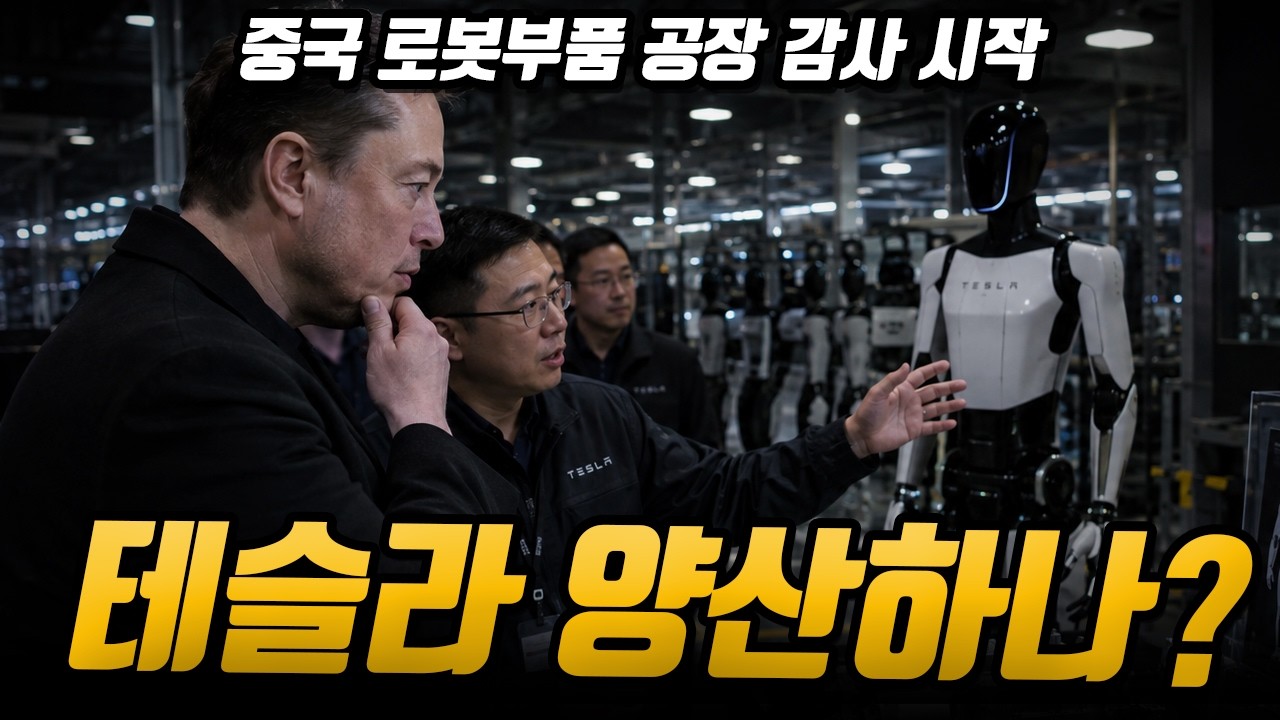
● Retirement Trap, Safe Can Mean Risky
“Principal Protection Can Be the Most Risky” — Investment Misconceptions That Undermine Retirement Planning
The core message is straightforward.
This article examines whether principal-protected products in retirement plans are truly safe, why the difference between annuity savings insurance and annuity savings funds can materially affect long-term retirement assets, and why the U.S. 401(k) system has been so effective in building middle-class wealth.
It also addresses a key point often missed when media and video content focus on market targets, selling decisions, or raising cash allocations.
The central issue in retirement planning is not market timing, but time, compounding, retirement-account structure, and sustained participation in capital markets.
1. Key Issue: Why “Principal-Protected” Retirement Assets Can Be Risky
The main criticism is the heavy preference for principal-protected retirement products.
Many employees feel reassured when they see the term “principal protection” in retirement or pension accounts.
However, such protection applies only to nominal principal.
Ten years ago, 1 billion won and today’s 1 billion won are not equivalent in real terms.
As inflation accumulates, purchasing power declines.
The account balance may remain unchanged, but asset value measured against living costs has effectively fallen.
- Nominal principal may be preserved.
- Real principal, adjusted for inflation, may decline.
- Long-term retirement assets that remain in cash-like products rarely benefit from compounding.
- If retirement capital does not participate in equity markets and corporate growth, it may fall short of long-term financial independence.
In practical terms, while the worker continues to earn income, the capital remains inactive.
This creates a structure in which the investor works, but the money does not.
That is the central problem in retirement asset management.
2. For Money Needed in 20 Years, Time Matters More Than Volatility
Retirement assets are not funds needed next month.
They are typically intended for use in 10, 20, or 30 years.
Accordingly, long-term return is more important than short-term volatility.
The argument is not that every investor should put all assets into equities.
The key point is that the longer the investment horizon, the more reasonable it is to increase exposure to equity-oriented assets rather than principal-protected products.
| Use Horizon | Primary Consideration | Appropriate Approach |
|---|---|---|
| Needed within 6 months | Volatility control | Cash, deposits, short-term safe assets |
| Needed within 5 years | Loss protection and liquidity | Conservative asset allocation |
| Needed in 20 years for retirement | Compounding and growth | Equity ETFs, annuity savings funds, long-term diversified investing |
The key point is that every pool of money has a different purpose and time frame.
Emergency cash and retirement assets should not be managed in the same way.
Short-term funds require stability, while long-term funds require growth.
3. The Marketing Risk Hidden in the Term “Principal Protection”
In Korea, annuity savings insurance, principal-protected retirement products, and deposit-like instruments remain widely used.
The reason is simple.
The phrase “principal protection” is psychologically comforting.
From a retirement-planning perspective, however, this phrase can create a false sense of safety.
Annuity savings insurance conveys stability.
Annuity savings funds, by contrast, appear more volatile.
Yet for a 20-year investment horizon, the focus should be on long-term return and cost structure, not volatility alone.
- Annuity savings insurance is often perceived as principal-protective.
- Annuity savings funds allow participation in capital markets through ETFs and funds.
- Retirement pension DC plans and IRPs can produce very different outcomes depending on personal allocation choices.
- Even with the same salary, retirement assets can diverge significantly over 20 years depending on account management.
In other words, the belief that one has “not lost anything” can itself be misleading.
Even if principal remains intact, inflation, housing costs, and living expenses may erode real value.
4. Why the U.S. 401(k) System Built Middle-Class Wealth
The U.S. 401(k) system is often cited, but its mechanism is not always clearly understood.
Its success did not come simply from strong U.S. equity market performance.
The key was a system that encouraged consistent investing and discouraged early withdrawals.
- Contributions are automatically deducted from wages.
- Early access is limited, preserving compounding.
- Employers often provide matching contributions.
- Workers are naturally connected to capital markets.
- Even during market downturns, accounts remain in place to capture long-term recovery and growth.
U.S. equities were not always strong.
The market experienced Black Monday, the dot-com bubble, and the global financial crisis.
Nonetheless, many workers accumulated wealth over time not because they predicted markets, but because they invested consistently and remained invested in corporate growth.
This has important implications for Korea’s retirement system.
Retirement capital should not remain concentrated in deposit-like products.
A structure is needed that channels funds into equities, ETFs, and annuity savings funds, allowing long-term participation in capital markets.
5. Structural Weakness in Korea’s Retirement System: Capital Does Not Flow to Companies
The issue is that Korea’s retirement pension assets are still heavily managed through banks and insurers.
Banks and insurers have different roles from asset managers designed to pursue investment growth.
If retirement assets are intended to support financial independence in old age, they need to participate in corporate growth over the long term.
For Korea’s capital markets to strengthen further, private pension and retirement assets must flow more productively.
Long-term capital should enter the domestic equity market, support strong companies, and contribute to a larger venture ecosystem.
That process can increase corporate value, expand market capitalization, and improve household retirement wealth.
- Retirement assets remain overly concentrated in principal-protected products.
- Individual participation in capital markets is often distorted toward short-term trading.
- Long-term investment in Korean companies remains limited.
- Preference for stable employment often outweighs support for startups and innovation.
- Insufficient financial education contributes to retirement insecurity and wealth inequality.
The relevant issue is not whether the KOSPI will reach 4,000 or 5,000 in the short term.
The more important question is whether long-term capital can be directed steadily into Korea’s equity market.
Market structure matters more than index targets.
6. Can Long-Term ETF Investing Replace Savings?
Among younger investors, the trend of shifting from savings products into ETFs has intensified.
From a retirement-planning perspective, this is a meaningful shift.
However, if ETF investing is treated as a short-term return game, it creates a different set of problems.
The concern is often that investors focus on short-term gains rather than sustained investing.
For money intended for use in 20 years, the more important question is not whether returns are 20% today, but whether the investment process continues.
- ETFs should be used as a long-term diversified investment tool, not a short-term trading instrument.
- Focusing on 20% gains can make investors vulnerable to 20% losses.
- Long-term investing is a marathon; stopping midway undermines compounding.
- A disciplined approach based on regular contributions is essential.
Compounding becomes more powerful as time extends.
However, compounding requires staying invested.
Investing only when markets rise, and stopping when they fall, weakens the effect of compounding.
7. Why Market Timing Undermines Retirement Planning
Many investors wait for fear to buy.
However, this approach assumes a level of market foresight that rarely exists.
No one can identify the exact market bottom.
A larger problem is that most people do not buy when a real crash occurs.
When prices fall by 20%, 30%, or 40%, investors often expect further declines.
As a result, they miss the low, and when recovery begins, they miss that as well.
- Waiting for fear can mean missing the rally.
- When a crash happens, investors often become more cautious rather than more active.
- Increasing and reducing cash balances opportunistically often lacks consistency.
- Long-term investing requires a system, not forecasts.
The principle is to remain invested regardless of market conditions.
This does not mean buying any asset indiscriminately.
It means avoiding market prediction and maintaining long-term exposure to quality companies and broad markets.
8. What It Takes to Build 3 Million Won per Month in Retirement
Retirement income needs vary by individual.
However, many people target a stable monthly income of around 3 million won.
Achieving that goal requires coordinated use of the national pension, retirement pension, and private pension systems.
While employed, wage income covers living expenses.
After retirement, that income may decline or disappear.
Retirement accounts must therefore generate income on the investor’s behalf.
| Age Group | Core Strategy | Key Caution |
|---|---|---|
| 20s | Long-term investing centered on annuity savings funds and equity ETFs | Building a consistent investment habit matters more than short-term returns |
| 30s | Automated investing from monthly salary and review of DC retirement plans | Housing funds and retirement funds should be separated |
| 40s | Rebalancing of pension savings, IRP, and retirement portfolios | Check whether assets are overly concentrated in principal-protected products |
| 50s and older | Gradual reduction of equity exposure and preparation for withdrawals | Avoid excessive risk-taking |
For investors in their 20s and 30s, time is the largest asset.
The longer the horizon, the more volatility can be tolerated.
As retirement approaches, asset allocation and cash flow management become more important.
9. The Most Common Misconception Among Korean Retail Investors
Many Korean investors still treat price forecasting as investing.
Media coverage often emphasizes charts, target prices, and stop-loss levels.
From a retirement-planning perspective, such approaches are secondary.
The purpose of investing can be summarized simply.
It is to achieve financial independence in retirement.
It is not to display short-term performance.
It is not to predict this week’s market move.
- Investing is not about price prediction.
- Investing means participating in corporate growth.
- Investing is a process for generating retirement income.
- Investing is a system for converting wages into assets.
Buying Samsung Electronics shares does not mean producing semiconductors directly.
It means owning a portion of a company that works on the investor’s behalf.
Investing in ETFs means participating in the growth of multiple companies through diversification.
10. The Most Important Point Often Missed in Other Media and Videos
The key issue is not product selection, but system design and behavior design.
Most content focuses on which ETF to buy, where an index may move, or when rates may be cut.
However, retirement assets are determined less by a single product than by a system that enforces automatic investing, limits premature withdrawals, uses employer matching, improves financial education, and prevents long-term investing from being interrupted.
The core of the U.S. 401(k) was not one “good product.”
It was a system that automatically invested wages, added employer contributions, and encouraged long-term retention.
Korea’s retirement market cannot be improved by return tables alone.
A structure is needed that encourages workers to participate in capital markets naturally, stay invested over time, and connect retirement accounts to retirement income.
- Retirement plan default options must operate more effectively.
- Financial education for DC plan participants should be strengthened.
- Employer matching should be expanded to encourage contributions.
- Long-term portfolio education for annuity savings funds and IRPs is needed.
- Capital market participation should be understood as retirement preparation, not short-term speculation.
This is the main point.
What matters more than the KOSPI level this year is how retirement assets are managed over 20 years.
Over time, this structure could influence Korea’s economy, stock market, household wealth management, and retirement insecurity.
11. A Checklist for Immediate Review
The first step is to review retirement accounts.
If left unchecked, assets may remain concentrated in principal-protected products by default.
- Confirm whether the retirement plan is DB or DC.
- If it is a DC plan, check the share allocated to principal-protected assets.
- Check whether an IRP and an annuity savings account are in place.
- Distinguish between annuity savings insurance and annuity savings funds.
- Verify whether the account structure allows long-term ETF investing.
- Decide what percentage of salary will be invested automatically for retirement.
- Separate short-term funds from long-term funds.
- Establish rules that prevent selling during market declines.
For money with a 20-year horizon or longer, do not rely on the label “principal protection.”
Conversely, for money needed within a year, equity ETFs are not appropriate.
The key is to invest according to purpose and horizon.
12. The Trade-Off Between Private Education Spending and Retirement Investing
The original content also raised concerns about private education costs.
Korean households often spend significant amounts on children’s education.
Education is important.
However, if private education spending becomes excessive and undermines retirement preparedness, overall household financial stability may weaken.
Retirement planning becomes more difficult when delayed.
By contrast, starting early allows even small amounts to grow through compounding.
One of the most important financial lessons for children may be seeing parents make money work for them.
13. Conclusion: What Appears Safe Can Be the Most Risky Choice in Retirement
Principal-protected products may feel safer in the short term.
However, for long-term retirement assets, they create exposure to inflation, opportunity cost, and lost compounding.
The purpose of retirement pensions and annuity savings is not short-term comfort.
It is to create cash flow that supports life after retirement.
That requires long-term participation in equity markets and corporate growth.
Market timing should be avoided.
Waiting for fear is still a form of timing.
True long-term investing means building a system that stays invested through different market conditions.
Retirement planning is not a matter of luck, but of structure.
How retirement accounts are designed, what assets they hold, and how long they remain invested will determine future financial independence.
< Summary >
Principal-protected retirement products may preserve nominal principal, but inflation can erode real value.
For retirement assets with a 20-year horizon or more, compounding and growth matter more than short-term volatility.
The U.S. 401(k) system succeeded through automatic investing, long-term retention, employer matching, and financial education.
ETF investing should be treated as a long-term diversified strategy for retirement, not a short-term return game.
Attempts to time the market often fail; consistent investing is a more practical approach.
Korea’s retirement system needs to move beyond principal protection and toward a structure that participates in capital markets and corporate growth.
Individuals should review their retirement pension, IRP, and annuity savings fund exposure and establish a system that allocates a fixed share of salary to long-term investing.
[Related Articles…]
- The End of Principal-Protected Retirement Plans: A Strategy for Wage Earners
- Long-Term ETF Investing and Compounding for Retirement Cash Flow
*Source: [ 경제 읽어주는 남자(김광석TV) ]
– “원금보장이 가장 위험할 수 있습니다” 노후를 망치는 투자 착각 | 경읽남과 토론합시다 | 존리 대표님 [2편]