● AI Agent Boom
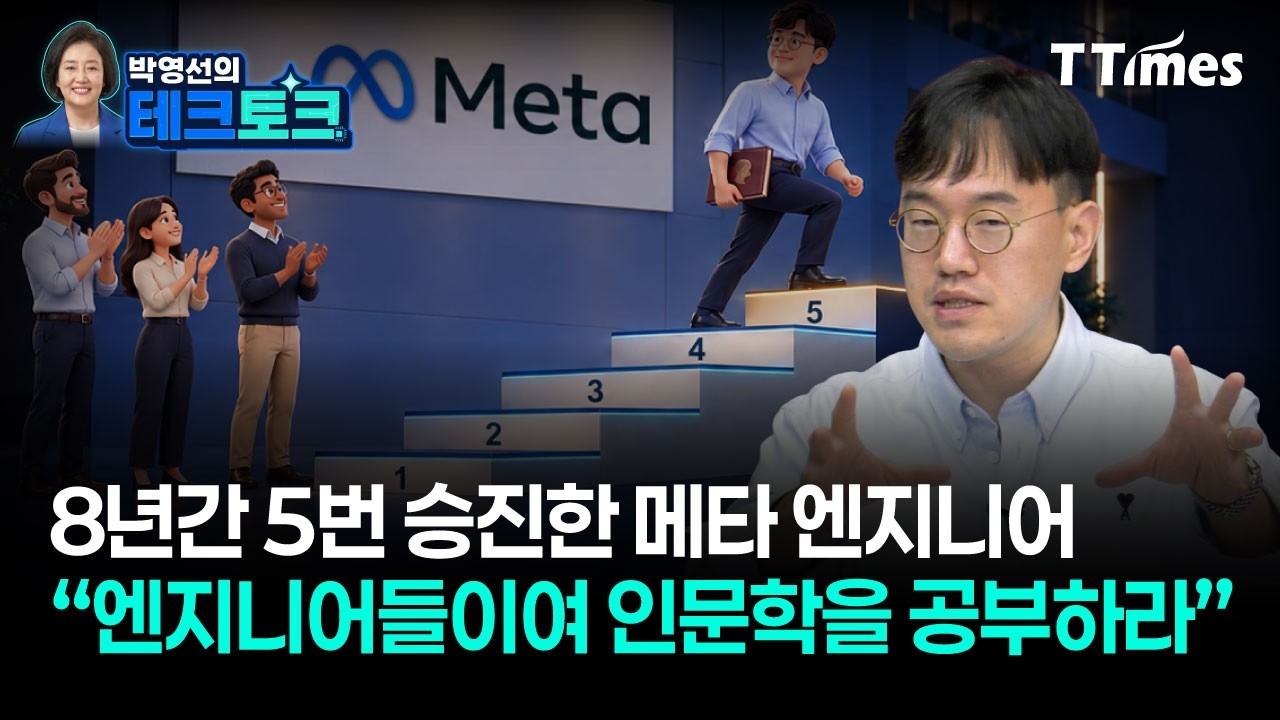
The core point of the second act of AI is the “agent organization” and the “taste economy”: the 2027 AI trends shared by a Meta E7 engineer
The truly important point in this piece is not simply that “AI gets smarter.”
More likely, future corporate competitiveness will not be decided by how many AI agents a company uses, but by its ability to convert human intentions and goals into data structures that AI can execute.
From the perspective of Meta E7 engineer Ahn Sang-hyun, the AI trends of 2027 condense into agent-centered organizations, wearable interfaces, physical AI, big tech monopoly structures, and human-only taste competition.
In particular, from a global economic outlook perspective, AI investment, productivity innovation, big tech competition, semiconductor supply chains, and labor market changes are all connected to this flow.
1. Core keyword of the second act of AI: from human-centered to agent-centered
If the first act of AI was the stage where chatbots were used when needed, the second act is the stage where agents actually perform work.
Previously, a person asked a question, AI answered, and the person made the final judgment.
But going forward, it is likely to shift toward AI agents planning, executing, and reporting results.
This change is not mere task automation.
It is a matter of how corporate organizations are designed.
Companies may broadly be divided into three types in the future.
- Organizations where AI agents work together with people
- Organizations where people manage multiple agents to achieve results
- Organizations where only people still work with each other
What matters here is not “using AI,” but “making AI work.”
This difference could sharply separate corporate productivity innovation and cost structures going forward.
2. AI-native work style: the default is now AI, not questions
The core of AI-native, as Ahn Sang-hyun described it, is not treating AI as a tool like a calculator that you use only when needed.
Now the mindset must shift from “Should I ask AI about this?” to “Is there any reason to do this without AI?”
This change has very practical implications for office workers as well.
AI will become the default in most knowledge work, including document writing, code writing, market research, presentation material preparation, data analysis, and idea validation.
Ultimately, personal competitiveness will likely be judged not by how often someone uses AI, but by how much larger a result they can produce through AI.
From a corporate perspective, AI utilization rates are directly tied to return on investment.
AI investment costs keep rising, but if real results do not appear, the market has no choice but to judge coldly.
Going forward, the key question in the AI industry is likely to shift from “How good is the model?” to “How economically viable is it?”
3. The bottleneck of physical AI: data ontology matters more than the model
Physical AI refers to AI that moves and makes decisions in the real world.
Autonomous vehicles, robots, smart glasses, wearable devices, and AI assistants all fall within this trend.
The core bottleneck here is not simply model performance.
What matters more is how to collect real-world data, connect it, and structure it into meaningful relationships.
Ahn Sang-hyun describes this as ontologizing data.
Ontology, simply put, is the work of organizing relationships between data points.
For example, when a person says, “Take me to Gwanghwamun,” AI must understand location, traffic conditions, the user’s schedule, preferred route, vehicle status, and the environment around the destination together.
It is not enough to merely convert speech to text; AI must understand human intent and context as connected data.
From this perspective, Tesla’s autonomous driving is an important case.
Tesla collects massive driving data from vehicles around the world and uses it to improve its models.
This data accumulation structure is the core of autonomous driving competitiveness.
If you connect this to the semiconductor supply chain, battery industry, and automotive industry, physical AI is likely to become a key growth axis of future manufacturing and mobility markets.
4. The interface after smartphones: from text to voice, and then to wearables
The interface of the AI era is likely to move from smartphone touch to voice, vision, and gestures.
Ahn Sang-hyun sees the smartphone app-centered era gradually weakening, with AI agents and wearables becoming the new touchpoint.
In this trend, Meta’s highlighted product is AI glasses.
AI glasses can naturally collect the data people see, hear, and say.
Users can give voice commands and receive responses through their ears without pressing buttons or opening apps.
For example, if you ask, “What were the action items we decided on in yesterday’s meeting?” AI can organize the conversation record.
Commands like “Transfer money to this person” may also become possible.
The direction is toward handling navigation, photo capture, real-time translation, work memos, and schedule management with a single pair of glasses.
However, the core challenge in the wearable industry is not just convenience.
They must always be worn, but they must not make the user or surrounding people uncomfortable.
Privacy and AI ethics issues are unavoidable.
Meta’s bracelet-type interface is also worth noting.
It works by reading small gestures or neural signals and carrying out commands.
If this technology develops further, the act of touching a smartphone screen itself may gradually diminish.
5. Will big tech monopoly continue? The key is each company’s moat
It is difficult to say whether the AI market will be monopolized by a few big tech companies.
What matters, however, is each company’s hard-to-copy competitive advantage.
Meta has the strength of the social graph.
That is because it holds people’s relationship networks, communication channels, and content consumption data.
By layering AI on top of that, it can expand into personalized recommendations, advertising, commerce, AI assistants, and social agents.
OpenAI and Anthropic have strengths in frontier models and the B2B market.
Google can combine AI with search, YouTube, cloud, and the Android ecosystem.
Apple can differentiate through devices, operating systems, and on-device AI based on privacy protection.
Tesla has strengths in real-world driving data, robotics, and autonomous driving.
Ultimately, the AI market is more likely to become a structure where each company competes in different ways using its own data, distribution channels, devices, and customer touchpoints, rather than one company monopolizing everything.
6. LLMs may become a commodity like electricity
One of the important perspectives Ahn Sang-hyun presented is that large language models could eventually become commoditized like electricity.
Electricity is simply plugged in and used, no matter who generates it.
In the future, with LLMs too, it may become more important not which model it is, but where and how that model is used.
The performance of Chinese open-source models is already rising quickly.
As the open-source camp grows stronger, model performance gaps are likely to narrow.
When that happens, companies and individuals will stop looking only for “the smartest model” and instead seek model combinations with the best cost-to-performance ratio.
This is where token economics becomes important.
Using more AI does not automatically lead to better results.
You must consider what model was used for which task, how many tokens were deployed, and how much revenue increase or cost reduction resulted.
Future corporate AI investment evaluation is likely to shift from “We adopted AI” to “How much added value did we create by using AI agents 10% of the time?”
This part can also have a direct impact on the stock market and corporate valuation.
7. The core capability of engineers in the AI era: goal design and validation, not code
In an era where AI writes code, creates documents, and even handles analysis, the most important skill for engineers changes.
Ahn Sang-hyun says it may not be an era where simply smarter people create more value.
The first core capability is goal design.
Defining the problem is important, but even more important is the ability to clearly design what we want to achieve.
AI can quickly produce output according to the goals it is given.
But if you give it the wrong goal, it will quickly produce the wrong result.
The second core capability is validation.
Even if AI-generated output looks perfect on the surface, there is no guarantee it is truly good.
You must judge whether it moves people, works in the market, and is accepted without inconvenience by users.
The third core capability is understanding and persuading people.
Creating things may become easier in the future.
But selling them is still difficult.
If everyone can create a plausible product, then the ability to persuade customers why they should choose your product becomes even more important.
8. In an era where intelligence is not scarce, what becomes scarce is taste
The most striking sentence in this interview is “What becomes more valuable when intelligence is less scarce?”
When AI democratizes knowledge, analysis, and coding ability, the scarcity of simple intelligence decreases.
What becomes more valuable then is the sensibility that moves people’s hearts, namely taste.
Even if an AI-generated video or image is technically perfect, there are cases where it strangely fails to attract.
That is because it is too perfect to feel human.
Going forward, appeal, empathy, persuasiveness, and a human touch may matter more than perfection.
That is why Ahn Sang-hyun advises engineers to study the humanities.
It is not enough to simply understand technology well.
You must understand what people like, what kinds of stories move them, and why some products are loved while others are ignored.
This trend can greatly affect not only the AI industry, but also content, branding, consumer goods, education, commerce, and entertainment industries.
In the end, as AI makes production easier, the center of differentiation shifts toward taste, interpretation, and the power to persuade people.
9. Skills that may lose value: memorization and answer-oriented education systems
In the AI era, skills that may lose value are simple memorization and the ability to follow fixed systems well.
Of course, a good university, good grades, and structured learning still matter.
But those alone may no longer guarantee competitiveness.
In an era where AI provides knowledge quickly, the ability to see what others do not becomes important.
The willingness to take risks and try, resilience after failure, a unique perspective, and philosophical thinking can make a bigger difference.
This is also connected to labor market changes.
AI is less a technology that simply eliminates jobs and more a technology that changes the nature of work.
During the Industrial Revolution, some existing jobs disappeared, but new jobs and industries emerged.
In the AI era too, people are likely to take on roles of judging AI-generated output, setting direction, and persuading customers and organizations.
10. Korea’s opportunity: speed of execution and K-taste
Korea’s strength, as seen from Silicon Valley, is speed of execution.
When new technology appears, Koreans are extremely fast to try it, take classes, imitate it, and experiment with it.
This action-oriented ability can become an important competitive edge in the AI transition period.
There are also weaknesses.
The speed of first exposure is fast, but more stamina is needed to dig all the way in and make it one’s own.
In the AI era, steady experimentation and accumulation are more important than simply riding a trend.
Another strength is K-culture and K-taste.
K-pop, dramas, beauty, fashion, food, and content sensibility are already proven in the global market.
By combining this with AI, Korea can differentiate itself in ways different from the United States and China.
Companies like Samsung Electronics and SK hynix are being recognized more strongly as global key players in the AI semiconductor and memory markets.
The challenge for Korea going forward is how to connect its strengths in manufacturing and semiconductor supply chains with AI services, physical AI, and K-content sensibility.
11. Advice for developers in their 20s: open source, risk-taking, and humanities
Ahn Sang-hyun advises developers in their 20s to take on challenges.
In the AI era, as much as graduating from a good university, the path of actually building, releasing, and being recognized matters more.
In particular, Korean developers are gaining more presence in the open-source ecosystem.
It is not just people who studied in the traditional way, but those who directly used AI, refined it, failed, and built it all the way through who are being recognized on the global stage.
What matters for developers going forward is not just coding skill.
It is the ability to use AI to build faster, experiment more, and refine products that resonate with people.
And that foundation requires a humanistic understanding.
12. Changes over the next five years: agents become standard, physical AI goes mainstream
Within the next five years, AI agents may become more common than computers.
It may become natural for each person to have an AI assistant and for each company to operate many agents.
Mobile apps may decrease somewhat.
That is because instead of users opening apps and pressing buttons directly, they may speak to agents, and the agents will call the needed services.
Physical AI is also likely to appear in earnest.
When AI glasses, robots, autonomous driving, wearables, and on-device AI are combined, the interface between humans and technology may become much more natural than it is now.
However, AI ethics issues may grow larger.
As always-on devices become part of daily life, privacy, surveillance, data ownership, and algorithmic bias become more sensitive.
Because technology is hard to stop, the balance between regulation and industrial development may emerge as an important variable in the global economic outlook.
13. The most important thing most news misses
Many news stories focus on competition in AI model performance or big tech stock prices.
But the deeper essence of this discussion lies elsewhere.
The first is that AI’s real bottleneck is not model performance, but the ability to structure human intent.
No matter how smart AI becomes, if people cannot properly design the goal, the value of the output remains low.
The second is that relationships in data are becoming more important than the amount of data.
For physical AI and wearables to function properly, the data of seeing, hearing, speaking, and moving must be connected into meaningful context.
The third is that the time is coming when AI economics will be fully tested.
Until now, “We adopted AI” was what mattered; going forward, “How much did AI earn for us?” becomes what matters.
The fourth is that as technology becomes standardized, human appeal becomes more expensive.
When intelligence becomes commonplace, taste, empathy, persuasion, and brand sense become scarcer.
The fifth is that Korea’s opportunity lies not in simply catching up technologically, but in combining AI with K-taste.
Korea is a rare market with both execution speed and cultural sensibility.
If this strength is connected to the AI industry, a new position can be created in the global market.
14. Checkpoints investors and workers should look at now
Investors should look not only at revenue growth in AI companies, but also at return on AI investment.
Since massive capital expenditures are going into data centers and semiconductors, actual productivity improvement and monetization are crucial.
When evaluating big tech companies, you should check the moat each company has.
Social graphs, search data, device ecosystems, cloud infrastructure, autonomous driving data, and semiconductor technology can all be differentiating factors.
Office workers should move beyond using AI merely as an auxiliary tool.
You should work by turning repetitive tasks into agents, validating the output, and designing larger goals.
Developers should not rely only on coding ability; they should also build product sense and user understanding.
For marketers, message design that moves people’s hearts becomes more important than simply producing AI content.
For planners, the ability to set goals for AI to execute becomes the key competitive advantage.
< Summary >
The core of the second act of AI is not chatbot usage, but the shift to organizations where AI agents actually do the work.
The success or failure of physical AI and wearables depends more on data relationships and user experience than on model performance.
LLMs may become commoditized like electricity over the long term, and what matters is cost-to-performance.
The core capability of engineers in the AI era is goal design, validation, and the ability to persuade people more than coding.
As intelligence loses scarcity, taste, empathy, and humanistic understanding become more valuable.
Korea can create global competitiveness when it combines its speed of execution and K-taste with AI.
[Related Articles…]
- The way corporate productivity innovation changes in the AI agent era
- Outlook for AI semiconductors and the reshaping of global supply chains
*Source: [ 티타임즈TV ]
– “지능이 희소성을 잃은 시대, 가치있는 건 테이스트“ (안상현 메타 AX팀 E7엔지니어)