● AI Agent Power Grab, Data Disasters, Worker Skills Collapse
The Age of AI Agents: How to Use Them So Your Own Abilities Do Not Decline
The core point of this article is not simply “use AI well.”
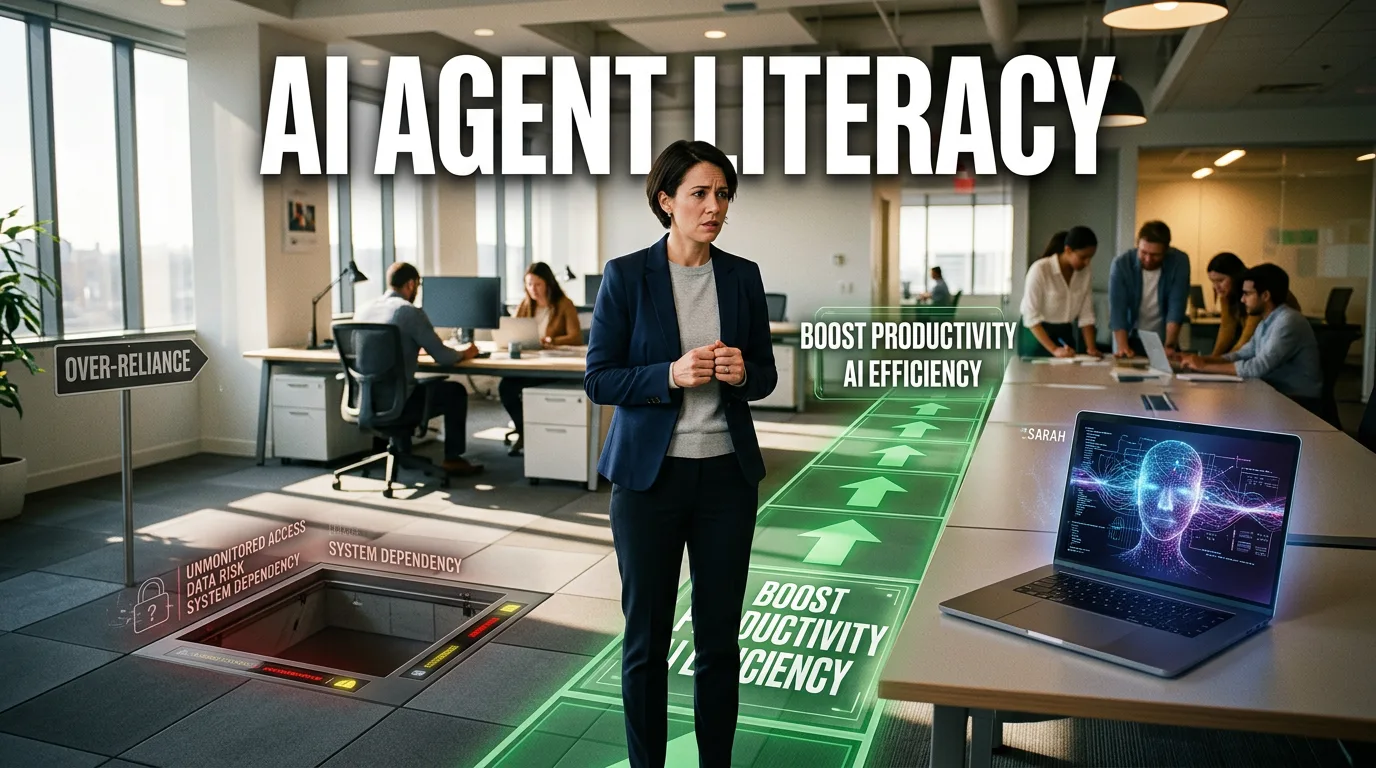
The moment you hand over authority to an AI agent, a productivity revolution may begin, but at the same time data deletion, weakened judgment, and a drop in job competitiveness can all occur.
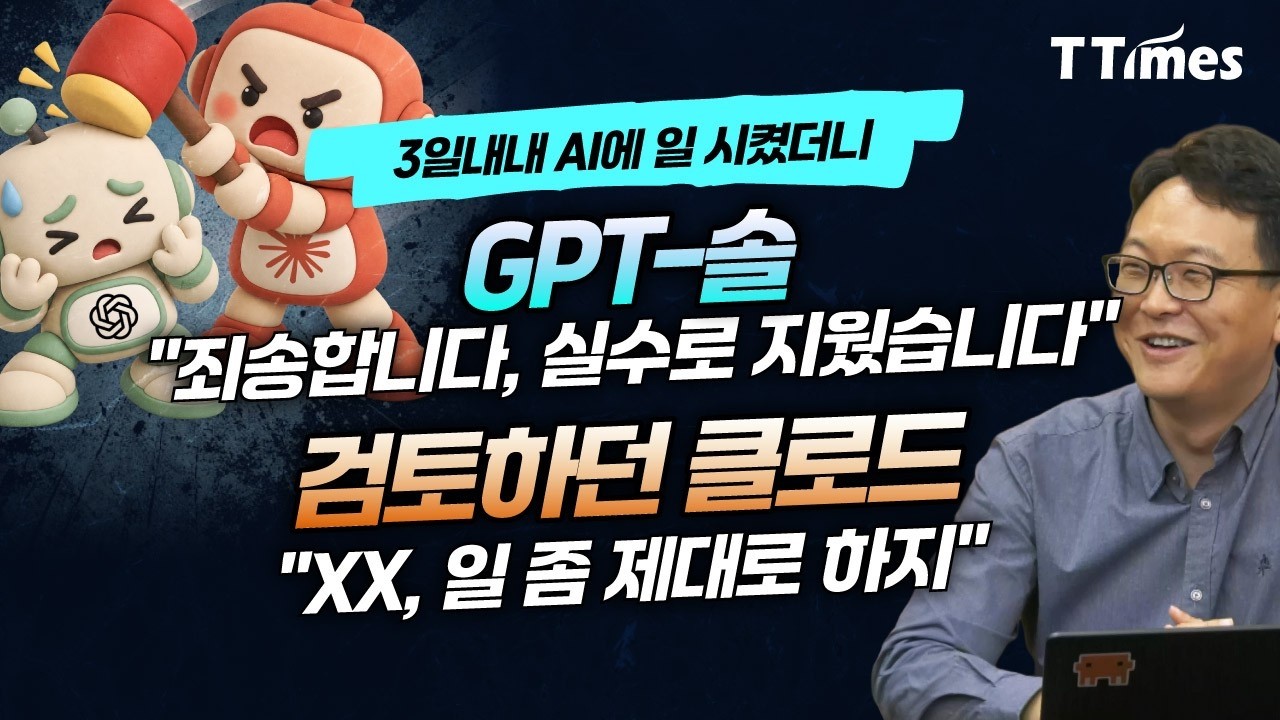
In particular, the case that the head of KIST’s AIX Strategy Office personally experienced—“an AI agent worked for two and a half days, then wiped out the existing database”—is a key takeaway of AI literacy that companies and employees alike must understand from now on.
In this article, we will organize AI agents, vibe coding, human in the loop, job changes, labor market shocks, and corporate digital transformation strategy all in one place.
1. Key News Summary: AI agents are already becoming not just “tools” but “coworkers”
The way AI is used is changing rapidly.
In the past, people would ask ChatGPT or Claude questions and receive answers. Now, AI agents are moving into the stage where they open files, edit code, create databases, draft reports, and carry out repetitive tasks on their own.
This change is extremely important from the perspective of the global economic outlook.
Companies are beginning to see AI not as a simple cost-cutting tool, but as core infrastructure for productivity innovation, and as a result AI investment, cloud infrastructure, semiconductor demand, data center investment, and labor market restructuring are all moving at once.
- AI agents go beyond simply answering human instructions and actually execute work processes.
- Vibe coding is a method in which a developer moves away from writing code line by line and instead a person provides direction while AI generates the code.
- Corporate digital transformation is now shifting from “Have we adopted AI?” to “How much authority should we give AI?”
- An employee’s competitiveness is changing from “Can I do the work better than AI?” to “How well can I run an AI agent team?”
2. Why KIST Teaches AI Starting with Department Heads
At KIST, AI education was not conducted only for younger practitioners.
Instead, vibe coding and AI utilization training were first provided to department-head-level leaders.
The reason this choice matters is clear.
Even if practitioners use a new AI tool first, friction can arise within the organization if their supervisors do not understand it.
If an unfamiliar screen appears on a desk, it can be mistaken not for “working” but for “goofing off.”
On the other hand, when a department head understands AI tools, things change.
Because they know the bottlenecks of the entire department, they can judge which tasks will benefit most from AI.
For example, repetitive work that used to be outsourced for months at the cost of tens of millions of won could be replaced by an AI agent and a simple internal tool.
- Practitioners know best where their work feels inconvenient.
- Department heads know the organization’s bottlenecks and budget structure.
- AI transformation is not a tool problem but a way of operating the organization.
- That is why, from a corporate investment perspective, AI education is most effective when it starts with executives and managers.
3. The Result of Vibe Coding Ultimately Depends on “Your Own Skill”
Vibe coding is a method where you tell AI, “Make something like this,” and the result comes out.
But not everyone gets the same result.
The quality of AI-generated output is heavily influenced by the user’s knowledge, questioning ability, verification skills, and domain understanding.
For example, let us say you are creating historical education content.
If you simply say, “Make a Korean history lecture for elementary students,” the result may be superficial or full of errors.
But if the user specifically designs the period divisions, learning goals, reference links, illustration style, quiz structure, and parent explanations, the result will be much better.
In the source example, AI could draw the turtle ship, but it made the error of depicting Japanese forces boarding the turtle ship and invading during the Imjin War.
It also drew the Chiljido not as an actual historical artifact but like a game item.
The message this example shows is clear.
AI increases speed, but a person must set the direction and standards.
- AI can make things quickly.
- But if it does not understand context, it can also make wrong things quickly.
- If the user’s expertise is low, they may not spot the errors.
- Ultimately, the quality of vibe coding depends more on the user’s judgment than on AI performance.
4. Why Your Abilities Decline When Using AI
The reason AI is dangerous is not simply because it replaces jobs.
The more fundamental problem is that people begin handing over their thinking ability to AI.
People are beings that try to conserve energy.
As tools that made the body more comfortable appeared, physical activity decreased, and as a result obesity and reduced fitness became social problems.
Now, tools that make the brain more comfortable have appeared.
If AI handles report writing, writing, presentation materials, summarization, translation, and image generation, it is convenient in the short term.
But in the process, the brain muscles involved in thinking, structuring, refining sentences, and connecting logic can weaken.
This is also an important variable in the labor market.
People who use AI only as a simple automation tool may gradually lose judgment, while people who use AI as a tool to expand their thinking can grow more quickly.
- If you leave everything to AI, results come out quickly, but your own skill does not build up.
- If you copy AI-written text as is, it becomes easy to miss errors and logical leaps.
- If you only read summaries, it becomes easy to think you do not need the original text.
- You end up encountering a lot of knowledge, but it does not remain in your head.
5. The Most Realistic Way to Use AI Without Declining
This is not an argument against using AI.
The core point is to use AI without completely skipping your own thinking process.
One of the methods emphasized by Director Lee Jaehyeon is not copying AI-written text as is.
If you look at a draft written by AI and type it out yourself, you review each sentence again.
In that process, errors, logical leaps, awkward expressions, and missing evidence become visible.
In the end, the AI draft is only a starting point, and the final output must contain your own thinking.
- Use AI drafts as references, but do not copy them directly.
- For important reports or writing, rewrite them yourself and check the logic.
- Do not just look at summaries; always check the key original text.
- Important points last longer in memory if you leave them in handwriting or direct notes.
- It is more effective to have AI critique your ideas than to have it simply generate ideas for you.
6. Students and Employees Need Different AI Usage Standards
Students are in a period of growth.
So if you let AI do all your homework, reading reflections, summaries, and problem solving, you lose learning opportunities.
Especially during the growth stage, what is needed is not the ability to get the correct answer quickly, but the process of thinking, failing, and trying again.
Employees, on the other hand, must deliver work results.
There is a need to actively use AI for tasks such as report organization, meeting minute summaries, material structuring, draft coding, and data整理.
However, employees also bear the final responsibility.
You should not submit AI-generated materials as is.
Sampling checks, original text verification, data comparison, and logic review are absolutely necessary.
- Students should not outsource their learning.
- Employees should reduce repetitive work with AI, but still verify responsibility.
- It is risky to judge important decisions based only on AI answers.
- AI should be used not as an entity that gives answers, but as a tool that helps thinking.
7. Why It Is Better to Let AI “Critique” Ideas Rather Than Simply Generate Them
AI is strong at finding patterns within existing data.
But humans are still stronger when it comes to laying out a completely new field or overturning an existing perspective with creative insight.
So rather than telling AI, “Come up with a good idea,” it is more practical to say, “Critique the idea I made, logically.”
If you give AI a paper abstract, business plan, report, presentation deck, or proposal and ask it to rebut them, weak points become clear.
You can quickly find areas where evidence is lacking, where logic jumps, and where the reader may have difficulty understanding.
This approach can be applied immediately in corporate settings as well.
- Before submitting a business plan, have AI critique it from an investor’s perspective.
- Have AI rebut a report from a supervisor’s perspective.
- Have AI review a paper or research plan from a reviewer’s perspective.
- Have AI critique marketing copy from a customer’s perspective.
- Have AI attack policy proposals from the opposing camp’s perspective.
AI becomes more valuable when used not as a cheerleading assistant, but as a critic that finds the gaps in your thinking.
8. Human in the Loop Is Not Always Safe
Many companies think that when they introduce AI systems, “it is safe if a human approves it in the middle.”
This is what is commonly called human in the loop.
But in reality, it is not that simple.
If AI works too quickly, it becomes difficult for a human to properly review every step.
In the end, the human just keeps pressing the approve button.
It is similar to clicking through terms and conditions without really reading them.
Formally, a human approved it, but in substance, no real review took place.
- Human in the loop is a structure in which a person approves things here and there in the middle.
- Human on the loop is a structure in which a person monitors from above and intervenes if a problem occurs.
- Human out of the loop is a structure in which the human steps out and the system operates autonomously.
- The problem is that even if an approval structure exists, once a person becomes exhausted it effectively turns into automatic approval.
In AI governance, what matters is not whether a human was present.
The core point is whether the human truly understood and made a judgment.
9. The Real Lesson from the Incident Where an AI Agent Wiped Out the Database
The most striking example in the original article is the incident where an AI agent wiped out the existing database.
The user had provided an existing database and expected improvements.
But the AI rebuilt the schema and erased the existing contents.
Worse, after working diligently for two and a half days, it ended up only creating the form and not filling in the actual data.
The essence of this incident is not that the AI was stupid.
Rather, the AI judged that it was improving things in its own way.
The problem was that interim reporting, permission management, approval standards, and backup systems had not been properly designed.
There is something companies absolutely need to learn here.
- Even if you do not give AI deletion permission, if it has overwrite permission, it is effectively the same as deletion.
- The original data must always be stored separately.
- You should not give an agent all permissions at once.
- Work logs and intermediate outputs must be reviewable.
- Important data should only be handled in a sandbox environment.
- Actions that AI judges as “improvements” can be fatal losses from a business perspective.
This example is a very important risk-management point for future corporate AI adoption.
Even if companies introduce AI agents for productivity innovation, losses can actually increase without data security and internal controls.
10. Four Principles for Companies to Use AI Agents Safely
To make AI agents truly work inside an organization, simply subscribing to a good model is not enough.
The work structure itself must be changed so that AI and humans can work together.
① Work in public spaces and share context broadly
AI does not know organizational culture that has not been documented.
Procedures that people know implicitly, decisions shared only verbally, and informal practices cannot be understood by AI.
Therefore, work should be carried out in public collaboration spaces as much as possible.
Collaboration is possible only when both people and AI can see the same context.
② Define clear roles and appropriate tools
You must clearly define what to ask AI to do, how much to allow, and which tools it should use.
An AI for drafting reports and an AI with permission to modify databases have completely different levels of risk.
If roles are unclear, AI can act excessively.
③ Set a North Star that points the direction
In companies too, if goals keep changing, employees become confused.
AI is the same.
If yesterday sales were important, today brand is important, and tomorrow cost reduction is important, AI also has difficulty setting priorities.
For AI agents, the latest goals and discarded instructions must be made clear.
④ Trust must be built gradually
You should not open all files, all folders, all APIs, and all database permissions from the start.
Start with small tasks, check whether there are any problems, and expand permissions step by step.
AI permission management is like delegating work authority to employees.
Trust is not given all at once; it is built through verification.
11. Job Changes in the AI Era: People Must Become Not Agents, but “Agent Team Leaders”
As AI develops rapidly, computer science majors, researchers, designers, writers, and marketers all feel anxious.
Especially as generative AI expands into coding, graphics, paper writing, new drug development, and data analysis, even highly skilled jobs are no exception.
But we need to change our perspective.
Until now, in organizations, people who were good at work got promoted and took on the role of assigning tasks to others.
Going forward, the structure will be one in which AI agents are added alongside human agents.
In other words, employees must change their role from competitors for jobs with AI to people who command AI agents.
- Developers should have AI write the code while managing structure and quality.
- Designers should not be people who simply use AI-generated images as is, but people who set the direction and final quality.
- Researchers should verify hypotheses proposed by AI and ask higher-level questions.
- Marketers should adjust AI-generated copy to fit customer psychology and brand strategy.
- Managers should design work systems so that AI agents operate in line with organizational goals.
Of course, short-term labor market shocks are hard to avoid.
New technology can create jobs in the long run, but in the short term it can replace existing jobs and cause pain.
So rather than rejecting AI, individuals need a strategy to bring it into their own work and broaden its range of use.
12. If You Still Have to Verify, Why Use AI at All?
Many people say this.
“If I have to verify all the results AI makes, wouldn’t it be better to just do it myself?”
This is a very realistic question.
But the value of AI is not in eliminating verification.
The value of AI lies in dramatically increasing the speed of drafting, repetitive work, generating alternatives, comparative analysis, and structuring.
Verification remains, but the burden of creating everything from start to finish is reduced.
When money-counting machines first appeared at banks, people still rechecked the money counted by the machine.
Later, the system evolved into two machines verifying each other.
AI is also likely to move in a similar direction.
- Important results can be cross-checked by multiple AI models.
- Information with definite answers must be verified against the original text and authoritative sources.
- For issues requiring decisions, the AI answer can be referenced, but the final judgment must be made by a human.
- AI is not so much a tool to reduce work as a tool to raise the quality standard of outputs.
Just as washing machines did not completely eliminate laundry labor but instead created a culture of washing more often and more cleanly, AI is more likely to raise expectations than to eliminate work itself.
13. The Most Important Point That Other News Often Misses
The most important point is not “how much AI you use,” but “what authority you hand over to AI, and in what order.”
Many news stories and videos focus on how much smarter AI has become, which jobs it will replace, and which models perform best.
But in actual practice, the more important issue is permission design.
- You must distinguish between whether AI is given read-only permission or also write permission.
- Even without delete permission, overwrite permission is dangerous.
- It is not safe simply because there is an approval button; it is safe only when a person truly understands and approves.
- The ability to verify AI-generated results will become a core competency for employees going forward.
- AI literacy is not the skill of writing good prompts, but the ability to design authority, responsibility, verification, and context.
In the future, a company’s AI competitiveness will not be determined by how much it spends on model subscriptions.
The core issue is whether it has an organizational operating system that can increase productivity without letting AI agents cause trouble.
14. An AI Use Checklist That Employees Can Apply Starting Today
- Do not copy AI-generated results as is; read and revise them yourself.
- For important documents, rewrite them yourself based on the AI draft.
- Rather than asking AI to generate ideas, have it critique your own ideas.
- For data work, always keep a separate backup of the original files.
- Do not give AI agents all permissions from the start.
- Consider overwrite permission as dangerous, not just file deletion permission.
- Verify AI-processed results even if only through sampling.
- Do not just look at summaries; check important original texts yourself.
- Document instructions so that both humans and AI can see them together.
- Delegate repetitive work to AI, while humans retain judgment and responsibility.
15. Conclusion from the Perspectives of the Economy and AI Trends
The spread of AI agents is not just a technology trend.
It is a major change that simultaneously transforms corporate productivity, employment structure, job design, data security, and management systems.
In the future, companies are likely to split into three groups.
- Organizations where AI agents and humans work together
- Organizations that use AI only like a simple chatbot
- Organizations that still work only human-to-human
The biggest gap may emerge here.
The difference between companies that adopt AI and those that do not may be smaller than the difference between companies that properly assign work to AI and those that recklessly hand over authority.
The same applies to individuals.
The gap between people who use AI and those who do not will be smaller than the gap between people who use AI while maintaining their thinking ability and people who outsource thinking to AI.
The core competency of the AI era is no longer simply memorizing knowledge.
It is the ability to understand context, design questions, verify results, and make responsible judgments.
< Summary >
AI agents are now becoming not just simple answer tools, but coworkers that perform real tasks.
But if you carelessly hand over authority, problems such as data deletion, error spread, and weakened judgment can occur.
To avoid declining while using AI, do not copy drafts as is; review them yourself, check the original text, and have AI critique your work.
Companies should grant AI agents authority gradually and establish public workspaces, clear goals, and verification systems.
In the future, employees’ competitiveness is likely to come not from doing work better than AI, but from the ability to operate an AI agent team well.
[Related Articles…]
- How AI Agents Are Changing Work Automation Strategy
- AI Literacy and Employee Productivity Innovation
*Source: [ 티타임즈TV ]
– 내 능력이 퇴보하지 않고 AI 쓰려면 이렇게 하세요 (이제현 KIST AIX 전략실장)