● Tesla-Starlink Shock, FSD Delay, AI Boom
Starlink’s 100,000-Satellite Ambition and Tesla FSD Subscription Delay: What $328 Tesla Shareholders Should Focus On
The key issue is not simply that the FSD subscription was delayed by 11 days.
Tesla is shifting from an automaker to a software company that builds recurring subscription revenue, while SpaceX is positioning itself for an era of surging AI traffic by rebuilding global communications infrastructure.
To assess the current setup, investors must connect US CPI, rate-cut expectations, rising oil prices, EV demand, and Tesla’s $328 share price level.
At first glance, Tesla Korea’s FSD subscription delay and Elon Musk’s remarks about 100,000 Starlink satellites appear to be unrelated developments.
In practice, they point to a single direction: autonomous driving, AI agents, robotics, satellite internet, and vehicle subscriptions converging into one ecosystem.
For investors watching Tesla around the $328 level, the focus should be less on near-term price action and more on how Tesla may generate recurring revenue and how that may connect with SpaceX infrastructure.
1. Tesla Korea delays FSD subscription rollout to August 21
Tesla Korea has announced a change to the domestic distribution model for supervised FSD.
Previously, customers had to pay roughly KRW 9.04 million upfront for the full FSD package.
Going forward, Tesla plans to offer the product as a monthly subscription at around KRW 150,000.
The original rollout had been expected for this Monday, but Tesla Korea announced on August 6 that the launch would be delayed to August 21.
No specific reason for the delay was disclosed.
Tesla Korea noted that the rollout date, eligibility, and pricing could change depending on system readiness.
2. FSD subscription pricing will vary by customer type
-
Standard FSD subscription: approximately KRW 150,000 per month.
-
EAP holders: approximately KRW 75,000 per month, or half the standard price.
-
Current one-time FSD price: approximately KRW 9.04 million.
-
China-produced vehicles with EAP: one-time purchase at approximately KRW 4.522 million remains available.
The important point is that the policy is not uniform across all Tesla vehicles.
Models 3 and Y produced at the Texas and California factories are moving away from new one-time EAP purchases and toward subscription-based access.
By contrast, China-produced vehicles are expected to retain a one-time EAP purchase structure.
In short, pricing and access now vary by production location, hardware, and software scope.
3. Supervised FSD is not fully autonomous driving
Tesla’s supervised FSD still requires the driver to monitor the vehicle continuously.
The system can handle steering, acceleration, lane changes, and other driving functions, but the driver must remain ready to intervene at any time.
If an accident occurs, liability remains primarily with the driver.
Accordingly, the FSD subscription being discussed in Korea should be understood as an advanced driver-assistance service requiring supervision, not as fully unmanned robotaxi-level autonomy.
Investors and consumers should distinguish clearly between the two.
Tesla’s autonomous-driving potential remains significant, but legal responsibility and real-world usage are still different from full autonomy.
4. Why Tesla is pushing FSD subscriptions in Korea now
Tesla’s timing in Korea is closely tied to market penetration.
According to the Korea Automobile Importers and Distributors Association, Tesla sold 56,139 vehicles in Korea in the first half of this year, ranking first among imported brands.
That represents an increase of about 192% year over year.
The Model Y has also ranked near the top of overall passenger vehicle sales, including domestic brands.
In practical terms, Tesla vehicles are already widely deployed in Korea.
For an automaker, vehicle sales are a one-time revenue event.
By contrast, FSD subscriptions generate recurring monthly revenue after the initial sale.
This is the kind of subscription model favored by the market.
Vehicle sales fluctuate with the economy, interest rates, incentives, and consumer sentiment.
Subscription revenue from vehicles already on the road is generally more predictable.
That is why FSD subscription conversion is becoming increasingly important in evaluating Tesla’s long-term value.
5. The real variable is not the price, but adoption
The core issue with FSD subscriptions is not pricing but paid conversion rates.
In the US, there have been reports that roughly 2% of users moved from a free FSD trial to a paid subscription.
However, this figure was not officially released by Tesla.
It was reportedly compiled and disclosed by a fund manager, so its accuracy is limited.
In addition, the performance of FSD at that time differs from current performance, making direct comparison difficult.
Even so, consumer psychology matters.
Paying KRW 9.04 million upfront is a major burden, but KRW 150,000 per month is still not a trivial expense.
In Korea, buyers also consider maintenance costs, insurance, charging, and financing.
For FSD subscriptions to succeed, Tesla must make customers feel that the service is worth paying for every month.
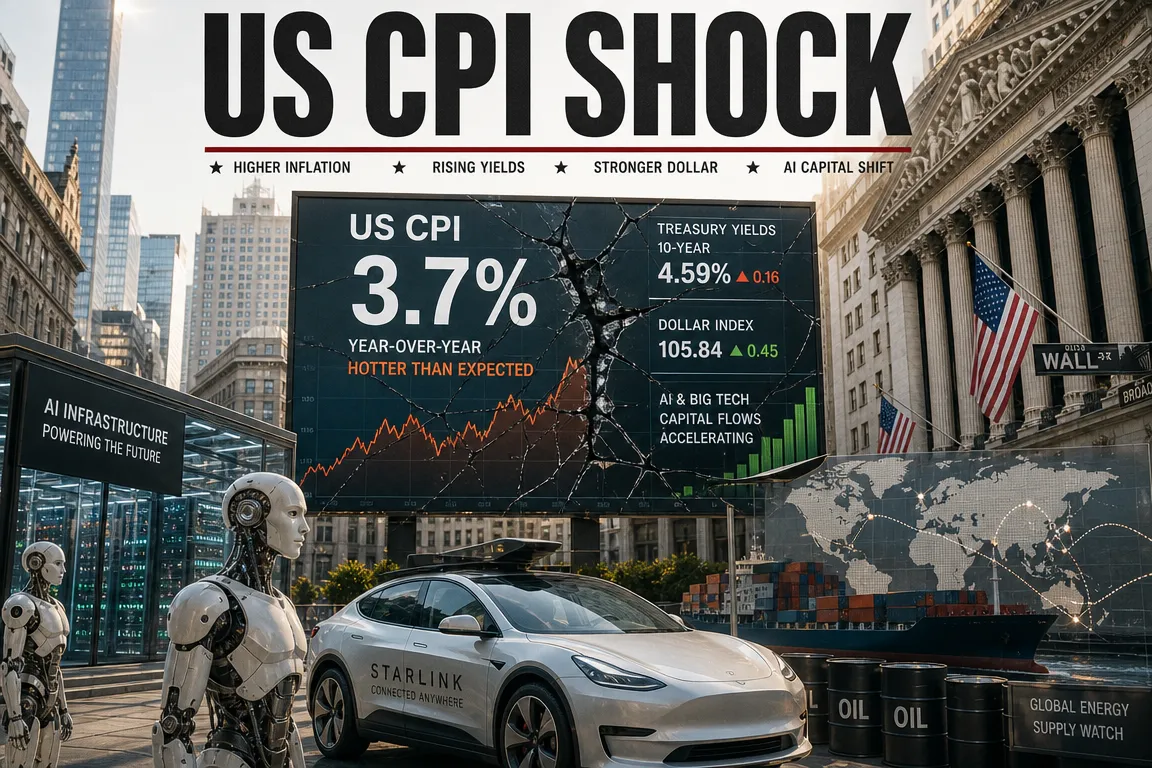
6. This week’s market drivers: US CPI, PPI, and retail sales
Investors tracking Tesla should also monitor this week’s macro calendar.
US CPI is scheduled for release on Wednesday.
The market expects year-over-year inflation at around 3.4%, down slightly from 3.5% in the prior month.
Month-over-month CPI is expected to rise 0.1%.
That would represent a rebound from last month’s -0.4% reading.
Core CPI, which excludes food and energy, is expected to rise 0.2% month over month.
PPI is due on Thursday, followed by July retail sales on Friday.
If these data points come in above expectations, market expectations for Fed rate cuts could be pushed back.
Weaker rate-cut expectations can weigh on growth and technology stocks.
Tesla shares are likely to be sensitive as Tesla is valued both as an EV company and as an AI growth stock.
7. Middle East risk and higher oil prices create a mixed backdrop for EVs
According to Bloomberg, Iran has reportedly set strong conditions for the United States regarding normalization of the Strait of Hormuz.
These reportedly include sanctions relief, lifting of maritime restrictions, return of frozen assets, and withdrawal of US forces from surrounding areas.
The Strait of Hormuz is a critical route for global oil shipments.
Rising tensions in the region can quickly move crude prices.
Recent reports also said that Yemen’s pro-Iran forces attacked a Saudi Aramco refinery with drones.
Against that backdrop, Brent crude has moved above $83 per barrel.
Higher oil prices have a mixed effect on the EV market.
Rising gasoline and diesel prices can improve the relative appeal of EVs.
At the same time, higher fuel costs can lift logistics expenses, increase inflation, and weaken consumer sentiment.
For Tesla, higher oil prices are not automatically positive.
The effect depends on the balance between stronger EV demand and slower economic growth.
8. Musk’s key point: AI traffic will overwhelm human traffic
The most important comment in this story is Musk’s reference to AI traffic.
Musk said AI agents will generate internet traffic that will eventually dwarf human traffic.
This view aligns with recent remarks from Cloudflare.
Cloudflare handles a significant share of global web traffic.
Its CEO previously stated that bot and AI traffic had already surpassed human traffic.
In the original framing, bot traffic was described at around 57% and human traffic at around 43%.
This crossover had been expected around late 2027, but the shift is happening much faster.
Recent earnings commentary also suggested that machine-generated traffic could become up to 1,000 times larger than human traffic within five years.
Musk’s agreement with this view should be read as more than an internet forecast.
It is part of a broader infrastructure strategy linking Tesla, SpaceX, xAI, and Optimus.
9. How AI agents are changing the internet structure
Until now, the internet has been designed around people searching, clicking, watching, and shopping directly.
In an AI agent environment, users will not necessarily browse websites themselves.
AI systems will compare prices, collect information, make reservations, and place orders on behalf of users.
For example, if a person were to search multiple sites for a camera, an AI shopping agent could review thousands of sites at once.
The problem is that AI can generate enormous traffic without necessarily driving the same level of human visits, advertising value, or conversion.
As a result, server costs may rise while monetization weakens for some websites.
This trend could affect search, ecommerce, advertising, cloud infrastructure, and data-center investment.
The expansion of AI traffic is not just a technology trend; it is the beginning of a new digital economic structure.
10. Why Tesla shareholders should care about AI traffic
AI traffic matters for Tesla shareholders because Tesla’s future products are all data-intensive.
Autonomous vehicles must process road conditions, mapping, camera input, traffic flows, and vehicle-to-vehicle data in real time.
Optimus robots will operate in factories, logistics centers, and homes while continuously exchanging environmental data.
If robotaxis become commercialized, a single vehicle could generate far more data than a smartphone user.
In other words, Tesla’s autonomy and robotics businesses cannot be separated from communications infrastructure.
Musk’s emphasis on AI traffic can be interpreted as a recognition of the data surge that Tesla vehicles and Optimus robots may create.
11. Starlink could scale toward 100,000 satellites
Musk said Starlink’s total satellite count, including direct-to-cell satellites, could eventually exceed 100,000.
Starlink is currently known for requiring a dedicated dish antenna to access internet service.
Direct-to-cell technology would allow standard smartphones to connect directly to satellites without a separate antenna.
This would enable messaging, voice, and data connectivity in areas without terrestrial base stations, such as mountains, oceans, deserts, and disaster zones.
In practical terms, it means placing mobile network infrastructure in orbit above the Earth.
At present, Starlink has launched thousands of satellites, and Musk’s 100,000-satellite target implies roughly 9 to 10 times the current scale.
SpaceX has already filed with the US Federal Communications Commission for large-scale additional satellite deployment.
Musk’s remarks point to a longer-term plan that extends beyond the current filing scope.
12. Next-generation Starlink satellites may expand capacity by up to 50x
Musk also said the next generation of Starlink satellites could offer up to 50 times the capacity of current V2 satellites.
If satellite count rises 10-fold and per-satellite capacity rises 50-fold, total network capacity would increase dramatically.
This helps explain the scale of SpaceX’s capital spending.
The rationale is not simply to acquire more internet subscribers.
AI agents, autonomous vehicles, robotics, connected devices, and remote industrial systems could all become demand sources for Starlink.
13. The meaning of Musk’s statement that every future car will have Starlink
Musk said every future car will have Starlink.
The implication is that satellite connectivity will be the only practical way to provide high-speed internet to the tens of billions of vehicles expected over time.
Some Tesla vehicles are already reportedly receiving early Starlink-linked functionality.
If expanded, Tesla vehicles could rely on satellite internet in addition to terrestrial networks.
Autonomous vehicles require reliable connectivity for live maps, traffic data, vehicle data, and software updates.
Current terrestrial mobile networks still have coverage gaps and dead zones.
If Starlink becomes part of vehicle connectivity, Tesla could operate more like a mobile data-network company than a pure automaker.
14. Tesla and SpaceX are moving toward a shared objective
Tesla is lowering vehicle prices and increasing software subscription revenue.
SpaceX is expanding satellite coverage and global communications infrastructure.
They remain different businesses on the surface, but their strategic direction is converging.
The common objective is to connect vehicles, AI, robotics, and communications into a unified data network.
If every Tesla vehicle becomes connected through Starlink, real-time traffic data collection could become much denser.
Navigation accuracy, autonomous decision-making, vehicle-to-vehicle data exchange, remote diagnostics, and software update speed could all improve.
If this scenario develops, Tesla’s valuation can no longer be explained solely through vehicle sales.
15. SpaceX acquisition rumors involving Cursor: what to watch
The original text referred to reports that SpaceX may acquire AI coding startup Cursor at a valuation of roughly $60 billion.
That is approximately KRW 84 trillion.
Cursor is known for AI-assisted coding, including auto-completion, bug fixing, and code suggestions.
However, this should be treated as a report or rumor rather than a confirmed transaction.
There were also references to payment potentially being made in SpaceX shares and to pricing based on the average SpaceX share price at closing.
The report mentioned a potential closing around August 14.
It also linked to broader market speculation about a possible Tesla merger later on.
Until official disclosures are made, such large-scale acquisition and merger rumors should not be treated as core investment inputs.
The main point is that Musk’s ecosystem appears to be strengthening AI development productivity, space infrastructure, autonomous-driving data, and robotics software at the same time.
16. Investment view for Tesla shareholders around $328
If Tesla trades around $328, investors should separate short-term catalysts from long-term structural changes.
In the near term, US CPI, PPI, retail sales, rate-cut expectations, Nasdaq performance, EV demand, and China sales can all affect the stock.
The FSD subscription delay is a short-term headwind to sentiment.
However, if subscription conversion improves after the August 21 rollout, the market may reassess the situation.
Over the long term, the key question is whether Tesla can be valued as a recurring software revenue company rather than a hardware-margin business.
If FSD subscriptions, robotaxis, Optimus robots, and Starlink-based vehicle connectivity are integrated into one ecosystem, Tesla’s valuation framework could change materially.
If subscription uptake remains low and regulatory barriers persist, the stock may remain under pressure.
For shareholders around $328, the key question is not whether the stock rises or falls in the short term, but subscription conversion, autonomy data, Starlink connectivity, and the monetization of AI infrastructure.
17. The most important points that are often overlooked
First, FSD subscriptions are not just a pricing change; they represent a shift in Tesla’s accounting structure.
Vehicle sales are volatile, while subscription revenue is recurring and more predictable.
For Wall Street to re-rate Tesla as a premium growth stock, FSD subscription stability will matter.
Second, the 100,000-satellite Starlink target is not merely an internet expansion story; it is an AI infrastructure story.
As AI agents move across the web and robots and vehicles exchange data, communications networks become a bottleneck.
Musk is trying to address that bottleneck through SpaceX.
Third, the Tesla-SpaceX link is not just about the Musk brand.
Tesla generates data, while SpaceX is building the infrastructure to move it.
If those two layers connect, the boundary between the automotive and telecommunications industries could blur.
Fourth, a 1,000x increase in AI traffic affects not only data centers, but also satellite internet, power grids, semiconductors, and network security.
Investors should view the entire AI infrastructure stack, not only Tesla as a single stock.
Fifth, the performance of Tesla Korea’s FSD subscription could become a global reference case.
Korea has seen rapid Tesla adoption and is accustomed to digital subscription services.
How users respond to a monthly KRW 150,000 fee could influence other markets.
18. Key dates and indicators to monitor
-
August 21: Confirm whether Tesla Korea actually launches the FSD subscription.
-
FSD subscription conversion rate: This is the most important metric for free-trial or existing-owner adoption.
-
US CPI and PPI: Inflation trends will shape expectations for rate cuts.
-
July retail sales: This will indicate whether US consumer demand is slowing.
-
Crude oil prices: Higher oil can both increase EV appeal and weaken consumer sentiment.
-
Starlink direct-to-cell commercialization: Smartphone and vehicle direct connectivity is a key milestone.
-
SpaceX satellite launch pace: This will show whether the 100,000-satellite target is feasible.
-
AI traffic growth rate: This should be tracked through Cloudflare, data-center, and network company results.
19. Final investment interpretation
This story combines a near-term Tesla FSD subscription delay with a long-term Starlink infrastructure expansion theme.
In the short term, delayed FSD rollout, CPI data, and changing rate-cut expectations may move Tesla shares.
Over the medium term, Korea’s FSD subscription performance will serve as an indicator of Tesla’s software revenue potential.
Over the long term, the core issue is the integration of Tesla vehicles, Optimus robots, the Starlink satellite network, and AI agents into one ecosystem.
If Tesla remains only an EV company, its current valuation may be difficult to justify.
If it evolves into a company spanning autonomous driving subscriptions, robotics, satellite communications, and AI data infrastructure, the market may assign a different multiple.
For Tesla shareholders at $328, the key question is clear.
Will Tesla remain a car company, or will it become a platform company that controls global mobility data and AI infrastructure?
< Summary >
Tesla Korea has delayed the launch of its FSD subscription to August 21.
The core change is a shift from a KRW 9.04 million one-time purchase to a monthly KRW 150,000 subscription model.
Tesla is trying to evolve from a vehicle seller into a software company with recurring revenue.
Musk believes AI agent traffic will eventually surpass human traffic.
To prepare for that shift, he has outlined a long-term plan to expand Starlink toward 100,000 satellites and increase next-generation satellite capacity by up to 50 times.
The statement that every car could eventually include Starlink points to a possible connection between Tesla autonomy and SpaceX communications infrastructure.
For Tesla shareholders near $328, the key variables are FSD conversion rates, US CPI, rate-cut expectations, AI traffic growth, and Starlink expansion.
The underlying theme is Musk’s effort to combine automobiles, AI, robotics, and satellite internet into a single data platform.
[Related Articles…]
*Source: [ 오늘의 테슬라 뉴스 ]
– 스타링크 위성 10만 기 예고한 머스크, 근데 테슬라 FSD 구독은 11일 밀렸다 — $328 주주는?
● Physical-AI-Robot-Skin-Shift
Where Is the Next Leading Sector After Semiconductors? The Key Is Physical AI and Electronic Skin for Robots
The most important question in the market is no longer simply whether semiconductors have peaked.
The real issue is where capital is moving within the AI investment cycle.
The recent correction in semiconductor stocks is better understood as a rotation within the AI value chain rather than a signal that the AI industry has stalled.
As 2026 and 2027 approach, market attention is likely to expand from data centers, GPUs, and HBM toward physical AI areas such as humanoid robots, autonomous vehicles, AI appliances, electronic skin, and tactile sensors.
This report reviews the underlying reasons for the semiconductor correction, the free cash flow pressure at hyperscalers, the changing AI value chain, and the emerging market for smart leather and e-skin for robots.
1. Are Semiconductors Really Over?
The answer is no.
However, the period in which semiconductors rise without interruption appears to be ending, and the market is entering a phase in which leadership is shifting within the AI value chain.
Recent market action has shown sharp corrections in semiconductors.
Some capital concentrated in large-cap semiconductor names such as Samsung Electronics and SK hynix has moved into small- and mid-cap growth stocks, robotics, AI software, and AI device-related shares.
This is not only profit-taking but also positioning for the next phase of the AI cycle.
In other words, the market is moving from the question of whether semiconductors remain attractive to the question of which AI-linked sectors may grow faster next.
2. The Main Cause of the Semiconductor Correction: Hyperscaler Free Cash Flow
The largest customers driving AI semiconductor demand have been hyperscalers.
Hyperscalers are large cloud and technology companies such as Amazon, Google, Microsoft, and Meta.
Their spending on data centers, GPUs, and servers has driven strong earnings growth across semiconductor companies.
The issue is that capital expenditure has risen very quickly.
As these companies invest heavily in AI data centers, some are seeing weaker free cash flow.
Free cash flow is the cash left after operating and investment expenses.
In practical terms, it reflects how much capacity remains to keep buying semiconductors.
The market concern is whether hyperscalers will continue to have the financial flexibility to sustain current levels of AI-related spending.
This concern tends to trigger AI bubble narratives and pressure semiconductor stocks.
By contrast, when hyperscaler AI investment, data center expansion, and AI service revenue are confirmed, semiconductor optimism returns.
3. A Market Caught Between AI Bubble Concerns and Semiconductor Bullishness
The market is currently divided between two views.
The first is the AI bubble view.
This view argues that too much capital is being deployed into AI data centers without sufficient monetization evidence.
It also questions whether semiconductor purchases can continue at the current pace if hyperscaler free cash flow keeps declining.
The second is the semiconductor bullish view.
This perspective holds that semiconductors are the core input of the AI era, and that demand for GPUs, HBM, memory, and power semiconductors will continue to rise over the long term.
As AI models expand, inference demand increases, and on-device AI and physical AI spread, semiconductor demand may broaden further.
The key point is that both views can be valid at the same time.
In the near term, AI bubble concerns can weigh on semiconductor valuations.
Over the longer term, however, AI adoption may continue to support semiconductor demand.
For that reason, the current environment is less about abandoning semiconductors and more about identifying the next growth segment within the AI value chain.
4. How the AI Value Chain Is Structured
The AI value chain can be broadly divided into services, models, and infrastructure.
At the top are AI services such as ChatGPT, Gemini, and Copilot.
The companies providing these services are hyperscalers.
Below them are AI models.
These include large language models, multimodal models, and agentic AI models.
Below that is AI infrastructure.
AI infrastructure includes AI semiconductors, data centers, power infrastructure, and communications infrastructure.
So far, capital has been concentrated mainly in the infrastructure layer, especially semiconductors and power-related assets.
Going forward, an additional layer becomes increasingly important.
That layer is products.
AI is moving beyond screen-based services into cars, robots, PCs, smartphones, and home appliances.
This transition is physical AI.
5. The Key Themes for 2026 and 2027: Physical AI
If 2025 is the year of conceptualizing physical AI, 2026 is likely to be the preparation phase.
By 2027 and beyond, physical AI may move into mass production and industrial deployment.
Physical AI refers to AI that operates in the physical world.
Most AI used today remains screen-based.
It generates text, creates images, summarizes documents, and supports coding.
Physical AI, by contrast, operates in real-world environments.
Cars drive autonomously, robots handle objects, AI refrigerators manage food, and AI air conditioners learn user behavior.
In other words, AI is moving from software into hardware.
This is highly relevant for investors because the spread of physical AI will support not only semiconductors but also sensors, motors, actuators, batteries, materials, electronic skin, and robotics components.
6. Major Area of Physical AI ① AI Vehicles
The first major area of physical AI is AI vehicles.
The automotive industry is already undergoing a transition from internal combustion vehicles to electric vehicles.
The next stage is not simply EVs but AI vehicles.
AI vehicles learn driving data, interpret driver behavior, assess their environment, and automate in-vehicle functions.
As autonomous driving advances, vehicles require more AI semiconductors and sensors.
Cameras, lidar, radar, pressure sensors, tactile sensors, and automotive software become part of a single system.
This brings the auto parts industry into the AI value chain.
In addition to automakers such as Hyundai Motor, Tesla, BYD, and Toyota, vehicle semiconductors, electronic components, and smart materials may also attract attention.
7. Major Area of Physical AI ② Humanoid Robots
The second major area is humanoid robots.
Humanoid robots are AI robots designed to move and work in human environments.
Their use cases extend across factories, logistics warehouses, hospitals, homes, and service industries.
Tesla Optimus, Boston Dynamics, Figure AI, and Unitree are among the companies advancing this market.
In particular, some industry expectations point to commercial-scale production for selected humanoid robots between 2027 and 2028.
If humanoid robots move into mass production, AI will undergo another structural shift.
Until now, AI has mainly assisted human cognitive work. Going forward, it may also assist or replace physical labor.
At that point, robotics becomes more than a thematic trade and turns into a factor linked to productivity, labor markets, and manufacturing competitiveness.
8. The Question Most Investors Overlook: What Will Robots Wear?
When evaluating the robotics market, many investors focus on the AI brain, semiconductors, motors, and batteries.
But there is another important question.
What will robots wear?
This matters because robots must sense their surroundings to operate effectively in human environments.
Humans use skin to detect pressure, temperature, pain, texture, and vibration.
Robots need a comparable layer to grasp objects, avoid collisions, and perform delicate tasks.
That layer is electronic skin, e-skin, or smart leather.
The robot’s outer layer becomes more than protection; it becomes a sensor network that reads pressure and contact information.
This market is still not widely recognized, but it may become a critical bottleneck in the physical AI era.
9. Why Levi’s Profited During the Gold Rush
This trend is similar to the California Gold Rush in the United States.
In the mid-1800s, many people rushed to California in search of gold.
However, only a small number actually found gold.
The product that all miners needed was durable workwear: blue jeans.
Levi Strauss made pants that could withstand harsh conditions, and the product became a major business.
A similar pattern may emerge in the AI era.
It is still unclear who will build the leading robot platforms.
However, every robot will need common components and materials.
These include semiconductors, batteries, motors, reducers, sensors, and electronic skin.
Electronic skin in particular is likely to become a necessary element for humanoid robots operating in human environments.
10. Why Electronic Skin and Tactile Sensors Matter
Humanoid robots must do more than walk.
They must grasp, move, press, assemble, and interact with people.
Tactile sensors are essential in this process.
To understand this, consider a robot hand holding a cup.
If the grip is too weak, the cup falls.
If the grip is too strong, the cup breaks.
Real-time pressure and contact data are required to calculate the appropriate force.
That function is provided by electronic skin.
Electronic skin can be applied to robot hands, arms, joints, and outer surfaces.
It must withstand repeated bending, friction, and impact while maintaining performance even when microcracks form.
Power efficiency is also important because always-on sensors increase energy consumption.
Some electronic skin technologies are also being developed to convert motion, vibration, and mechanical energy into electricity.
If these technologies advance, they may help reduce battery burden and extend sensor life in robots.
11. Why Lumia Technologies Is Drawing Attention
In the source material, Lumia Technologies was highlighted as a notable company in electronic skin and smart materials.
Lumia is described as having developed tactile sensing technology that detects pressure and contact information in robot hands.
It is also described as being connected to a robot hand consortium involving Meta and Amazon Robotics.
The key point is that Lumia is not simply a materials company, but a smart leather company combining flexible electronics and sensing technologies.
In the physical AI era, robots must perceive the real world in a human-like way.
Electronic skin may serve as the sensory interface for that process.
Companies like Lumia are important because they target this sensing layer.
12. E-Skin Market Outlook: Potential Annual Growth of Around 20%
The electronic skin market is still at an early stage.
However, several market research firms expect strong growth in e-skin markets, led by North America and Asia-Pacific.
The source material cited annual growth expectations in the 17% to 23% range.
On average, this points to a high-growth market of roughly 20% per year.
Applications are not limited to robotics.
Potential uses include automotive, healthcare, wearable devices, rehabilitation equipment, smart clothing, and industrial sensors.
As AI robots and autonomous vehicles become more practical, demand for sensors that can accurately read external environments is likely to increase.
In this sense, electronic skin can be viewed as an underrecognized segment of the AI investment universe.
13. The Yunikem and Lumia Acquisition Issue
The source material noted that Yunikem, a listed Korean company, signed a term sheet for the acquisition of 100% of Lumia Technologies.
A term sheet is a preliminary document that outlines key conditions before a definitive acquisition agreement.
It typically covers enterprise value, investment amount, ownership percentage, control rights, and transaction structure.
However, signing a term sheet does not mean the acquisition is completed.
Due diligence, financing, a definitive agreement, and payment remain necessary.
The source material also indicated that payment was scheduled to begin on September 30 and proceed in stages.
If the acquisition is completed, Yunikem could expand from a conventional natural leather and automotive seat materials company into a physical AI materials company.
This is the key point of market interest.
14. Yunikem’s Existing Business and Synergy Potential
Yunikem is known for producing leather for fashion goods, handbags, luggage, footwear, and automotive seats.
In Korea’s leather market, it competes with companies such as JoKwang Leather and Samyang Tongsang.
The source material noted that Yunikem holds a meaningful position in that market.
Its links to supply chains for automotive seats at Hyundai Motor, Kia, and Renault Korea are also notable.
If Yunikem combines Lumia’s flexible electronics capabilities with its own materials manufacturing base, it could expand from conventional leather into smart materials.
That could also create opportunities in robot hands, grippers, humanoid robot outer layers, automotive smart surfaces, and wearable sensors.
Given Hyundai Motor’s ownership of Boston Dynamics, the long-term intersection between automotive and robotics may create opportunities for materials companies.
That said, this remains a possibility rather than a confirmed outcome, and actual orders and revenue must be verified separately.
15. Key Investment Checkpoints
From an investment perspective, this issue should not be approached on expectations alone.
Small- and mid-cap growth stocks in particular can be highly volatile in response to headlines and sentiment.
The first checkpoint is whether the Lumia acquisition is completed.
Investors should confirm whether the transaction moves from term sheet to definitive agreement and whether payments proceed as planned.
The second checkpoint is commercialization potential.
It is important to determine whether the electronic skin technology remains in the research stage or is ready for product deployment, and whether it has customer traction.
The third checkpoint is the timing of revenue generation.
Even strong technology can take a long time to generate sales.
Because the robotics market is still early, the focus should be on medium- to long-term business transformation rather than near-term earnings.
The fourth checkpoint is the performance of the existing business.
The source material suggested that Yunikem’s second-quarter earnings may be weak due to capital expenditure effects.
Weak results could pressure the stock, while acquisition and new-business expectations could offset that pressure.
The fifth checkpoint is the presence of actual customers and supply-chain relationships.
It is important to see concrete cooperation with Hyundai Motor, robotics companies, wearable device makers, or medical device companies.
16. The Core Issue That Is Often Missed
Many reports only state that semiconductors are correcting or that robotics is becoming a theme.
The more important point is that the bottleneck in the AI investment cycle is shifting.
The first bottleneck was GPUs and HBM.
AI model training and data center expansion required high-performance semiconductors.
The second bottleneck is power infrastructure.
As data centers expand, demand for power grids, transformers, cooling, and power semiconductors rises.
The third bottleneck is likely to be the physical AI interface.
As AI enters the real world, the question becomes how it will touch, sense, and move.
That requires tactile sensors, electronic skin, smart materials, robot joints, and actuators.
In other words, future AI leaders may not only be the companies that build the AI brain, but also those that allow AI to interact with the physical world.
That is the key investment implication.
In the physical AI era, the interface between software and hardware may create a new capital flow.
17. Semiconductors and Physical AI Are Not Competitors
One point should not be misunderstood.
Physical AI does not mean semiconductors are finished.
On the contrary, the spread of physical AI may broaden semiconductor demand.
AI vehicles require automotive AI semiconductors.
Humanoid robots require edge AI chips, sensor processing chips, communication chips, and power semiconductors.
AI appliances also require on-device AI semiconductors.
However, stock markets tend to shift attention to different sectors at different stages.
Whereas data centers and HBM dominated earlier, capital may later rotate toward robot components, smart materials, electronic skin, and AI devices.
The real issue is not choosing between semiconductors and physical AI.
It is identifying which part of the AI value chain is likely to grow faster next.
18. The AI Value Chain to Watch After 2026
After 2026, investors should view the AI value chain more broadly.
The first layer remains AI semiconductors.
GPUs, HBM, high-bandwidth memory, advanced packaging, and power semiconductors will continue to be important.
The second layer is power and data center infrastructure.
As AI data centers expand, demand for power grids, cooling, transformers, and energy storage systems will increase.
The third layer is communications infrastructure.
Physical AI will require real-time data exchange, making 5G, 6G, edge computing, and low-latency networks important.
The fourth layer is robotics hardware.
Reducers, motors, actuators, sensors, grippers, batteries, and robot operating systems are key components.
The fifth layer is electronic skin and smart materials.
Although still underfollowed, this area may become increasingly important as physical AI advances.
19. The Perspective Individual Investors Should Take
Individual investors should focus first on the direction of the industry rather than short-term stock surges.
AI investment is no longer a simple theme trade. It is tied to global capital expenditure, manufacturing competitiveness, supply chain restructuring, and economic growth.
Interpreting a semiconductor correction as evidence that the entire AI industry has collapsed could mean missing opportunities.
At the same time, chasing physical AI stocks without discipline can lead to buying at overextended levels.
The better approach is to analyze the value chain by segment.
Investors should determine who makes the finished product, who supplies the key components, who provides the materials, and who has secured actual customers.
In areas such as electronic skin and tactile sensors, commercialization timing and technical validation are especially important.
Actual sales, contracts, production, and customers matter more than headlines.
20. Key Conclusion
Semiconductors are not over. The AI investment cycle is expanding.
Slower free cash flow at hyperscalers may pressure semiconductor valuations in the short term.
However, if AI services expand into physical AI products, semiconductor demand may broaden further.
At the same time, market attention is likely to shift toward robots, autonomous vehicles, AI appliances, smart materials, and electronic skin.
The question of what robots will wear may become an important investment clue in the physical AI era.
Electronic skin is a core interface that allows robots to interact with the physical world.
The Yunikem and Lumia acquisition issue is one example of this theme in the Korean market.
That said, final acquisition completion, technology commercialization, and revenue conversion must be verified.
Investment should be based on confirmed changes, not expectations alone.
< Summary >
The semiconductor correction does not mean the AI industry has ended; it suggests that leadership is shifting within the AI value chain.
Slower free cash flow at hyperscalers is weighing on semiconductor sentiment, but physical AI may create new semiconductor demand.
The main themes for 2026 and 2027 are physical AI applications such as humanoid robots, AI vehicles, and AI appliances.
Electronic skin, tactile sensors, and smart leather for robots remain underrecognized but potentially important growth areas.
The Yunikem-Lumia acquisition issue is a Korean-market example of the physical AI materials value chain.
However, final acquisition completion, commercialization, and revenue linkage must be confirmed.
[Related Articles…]
Physical AI and the New Global Growth Cycle in Robotics
Semiconductor Outlook and AI Value Chain Reallocation
*Source: [ 경제 읽어주는 남자(김광석TV) ]
– “반도체는 끝났을까?” 반도체 다음 돈 몰릴 곳, ‘피지컬AI’ | 클로즈업 |