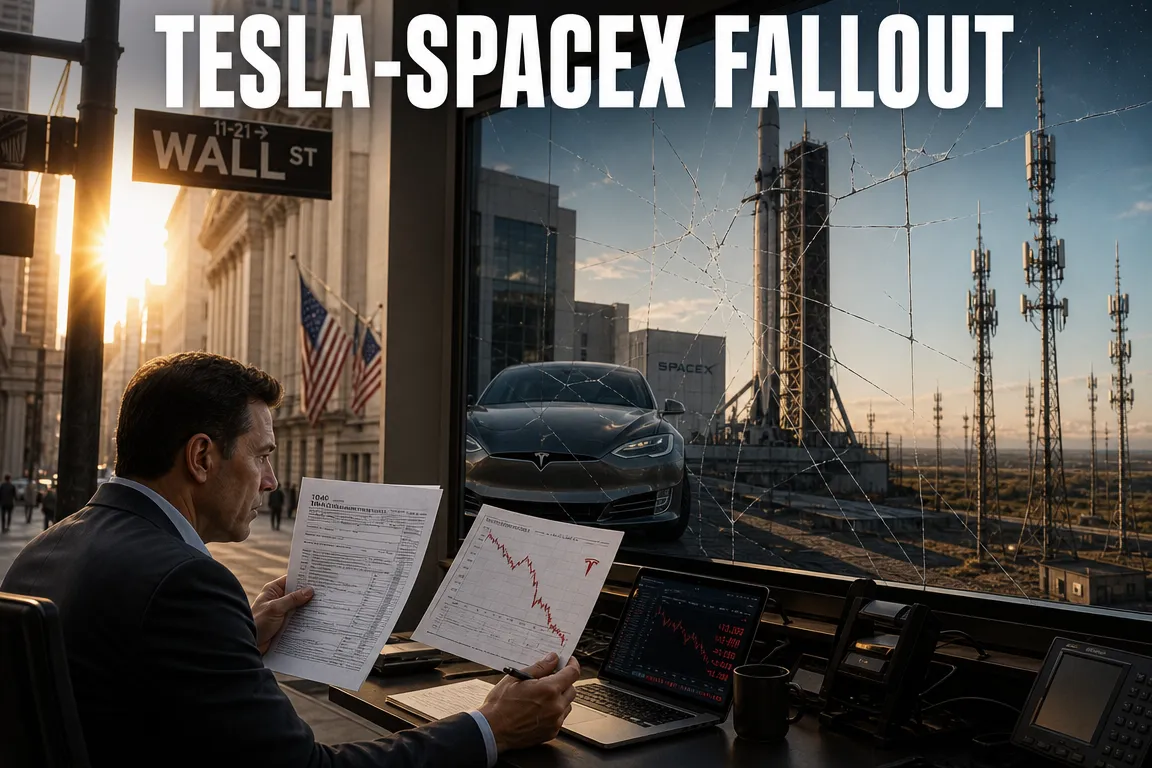
● Tesla-SpaceX Shock Deal, Wall Street Split, Tax Risk Explodes
Why Wall Street’s Heavyweights Bought SpaceX Instead of Tesla: Tesla at $372, Dan Ives’ $500 Scenario, and Tax Risks for Korean Investors
The key issue here is not simply whether Tesla and SpaceX will merge.
The more important point is that even within Wall Street, investors are taking very different positions on the same merger scenario.
Dan Ives believes Tesla is unlikely to trade below $500 if a transaction materializes.
By contrast, some hedge funds are buying SpaceX before Tesla.
Combined with SpaceX’s telecommunications infrastructure expansion, Tesla’s AI transition, shareholder approval requirements, and Korean investors’ capital gains tax exposure, this is no longer just an overseas stock story. It is now a development that links global equity markets and AI investment trends.
For Tesla shareholders in particular, the question is not only whether a merger premium can be obtained, but also how much of that premium would remain after taxes.
Below is a news-style summary, followed by the less-discussed points that matter most.
1. The core development: Tesla weakens, SpaceX strengthens
Tesla closed down 0.63% at $372.20.
By contrast, SpaceX-related pricing was cited at $147.49, up 1.89%.
This suggests the market is assigning stronger expectations to SpaceX than to Tesla.
Given that the Nasdaq posted its sharpest decline since June and the Dow fell more than 1%, SpaceX’s relative strength stands out.
When markets are weak, assets that rise on their own are usually supported by one of two factors:
First, a distinct growth catalyst.
Second, expectations around a structural event.
SpaceX appears to have both, which may explain why capital is rotating toward it.
2. The real reason SpaceX is rising: a telecom infrastructure bet larger than the merger
According to Bloomberg, SpaceX is negotiating to secure at least 80,000 base station sites across the United States.
One of the counterparties mentioned is Crown Castle, a major U.S. tower operator.
80,000 sites would represent nearly half of the wireless tower footprint in the United States.
If realized, this would position SpaceX not only as a space company or satellite internet provider, but potentially as the country’s fourth nationwide mobile carrier.
The market reacted immediately.
AT&T fell 5.6%, and T-Mobile fell 5%.
Meanwhile, Crown Castle surged 11.6%.
The move indicates that investors are taking SpaceX’s telecom expansion seriously.
A Bernstein analyst noted that SpaceX has already spent $30 billion on spectrum, and that securing 80,000 base station sites would mark a decisive step that is difficult to reverse.
In short, SpaceX is evolving from a rocket company into a platform that links satellites, telecom networks, AI cloud infrastructure, and data systems.
That is the main reason some large investors are looking at SpaceX before Tesla.
3. Tesla-SpaceX valuation ratio shifts: the market is already comparing both sides
In the original report, one Tesla share was valued at roughly 2.59 SpaceX shares the day before, while that ratio moved to about 2.52 shares on the latest reading.
That implies a roughly 2.5% shift in favor of SpaceX in just one day.
The significance is straightforward.
The market is no longer evaluating Tesla and SpaceX separately. It is beginning to price potential merger or share-exchange terms through relative valuation.
If Tesla remains flat while SpaceX gains value, Tesla shareholders could face a less favorable exchange ratio.
Conversely, a strong rebound in Tesla would improve Tesla’s negotiating position.
In other words, the key question is not only whether a merger happens, but also at what price and on what terms.
4. Dan Ives’ strong view: a Tesla-SpaceX deal below $500 is hard to imagine
Dan Ives, a well-known Tesla bull, said he sees a very high probability of a Tesla-SpaceX combination.
He stated that if the deal is completed, Tesla would need to be at least in the $500 to $550 range.
Compared with Tesla’s current price of $372, $500 implies about 34% upside.
$550 would imply even more upside.
CNBC also cited views placing the probability of a merger at around 90%, while some expectations ranged from $420 to $550.
What stands out is that Ives raised the lower bound from $420 to $500.
In other words, he believes Tesla is currently too cheap relative to a potential combination with SpaceX.
From his perspective, Tesla’s current price does not fully reflect merger optionality.
5. Estimated scale of a combined company: a $4 trillion to $5 trillion mega-platform
Ives said a combined Tesla-SpaceX entity could have an equity value of roughly $3.5 trillion at current levels.
With a merger premium, he suggested the company could become a $4 trillion to $5 trillion platform.
That would translate to approximately 5,300 trillion won to 6,600 trillion won.
At that scale, the company could compete with Apple, Microsoft, and Nvidia for the title of the world’s largest company.
The key point is that this would not be a traditional industrial business.
Tesla brings electric vehicles, autonomy, robotics, batteries, and AI data.
SpaceX brings satellites, rockets, Starlink, telecom infrastructure, and a space-based data network.
Together, the result would be less a merger of an automaker and a space company than a combination of an AI infrastructure business and a global data platform.
6. Three reasons Ives sees a merger as plausible
Ives outlined three reasons Tesla and SpaceX could ultimately combine.
First, data.
Tesla vehicles collect massive amounts of driving data around the world.
That data is important not only for autonomy and FSD development, but also for training AI models.
If SpaceX expands into an AI cloud business, Tesla’s driving data would become a major strategic asset.
Second, engineering talent.
Tesla and SpaceX already share part of their technical culture and talent base within Musk’s ecosystem.
Rockets, EVs, batteries, robots, AI chips, and telecom networks are different businesses, but they share a systems-engineering foundation.
Third, AI integration.
If Musk’s AI, robotics, autonomy, and data infrastructure initiatives are brought under one structure, Tesla and SpaceX could generate more value together than separately.
The merger scenario is therefore not just about cars and space. It is about integrating AI-era data, communications, robotics, and mobility platforms.
7. Why hedge funds are buying SpaceX instead of Tesla
One notable point is that while Ives sees Tesla as the bigger opportunity, many hedge funds are currently buying SpaceX.
For hedge funds, there are two basic choices.
First, buy Tesla and wait for the gap between the current price and the deal price to narrow.
Second, buy the company that would exist after the transaction and hold SpaceX first.
According to Ives, more money on Wall Street is currently aligned with the second approach.
The reason is not only the merger.
SpaceX already has a compelling standalone business.
Starlink, satellite internet, network expansion, base station access, and potential AI cloud applications all support a separate growth story.
Tesla, by contrast, may require a formal deal announcement before a meaningful premium is fully priced in.
In other words, hedge funds are favoring the asset that still has value even if the transaction does not happen.
8. The opportunity for Tesla investors: the gap between $372 and $500
Ives views Tesla’s current trading range around $370 to $375 as an opportunity.
He believes Tesla could reach $500 if a transaction is announced.
The difference between $372 and $500 is roughly 34%.
He interprets that gap as a discount created by market skepticism.
Put simply, the market still wants a signed agreement, not just Elon Musk’s comments.
Tesla investors are in the same position.
There are many references to merger optionality, AI transition, robotics, FSD, and energy, but the stock will ultimately respond to confirmed numbers and contractual terms.
On that basis, Tesla is currently priced with both optimism and skepticism.
9. The biggest hurdle: a 50% shareholder approval threshold at Tesla
The most important risk in this scenario is Tesla shareholder approval.
Musk has said that investors should not assume a deal is certain, particularly in relation to the special committee process.
Most importantly, Tesla requires approval from more than 50% of all outstanding shares.
That is different from a simple majority of votes cast.
It means approval must come from all outstanding shares, including those that do not vote.
This is a much higher hurdle than it may first appear.
In a prior Tesla-related vote, participation was 73.6%, but approval relative to outstanding shares was only 39.4%, and the measure failed.
If participation is similar, roughly 68% of voted shares would need to support the proposal for it to pass.
That is a demanding threshold and requires strong shareholder alignment.
10. SpaceX has a different approval structure: Musk’s control is much stronger
Unlike Tesla, SpaceX is structured with much stronger Musk control.
In the original report, Musk was described as holding about 20% of Tesla.
By contrast, he was said to hold about 48% of SpaceX equity and 82% of voting power.
That makes approval at SpaceX potentially much simpler.
Tesla, however, requires the consent of many retail and institutional shareholders.
This difference is one of the main reasons hedge funds prefer SpaceX over Tesla.
SpaceX can likely move if Musk pushes hard enough, while Tesla must pass through shareholder democracy.
For Tesla shareholders, the premium may be attractive, but there are multiple steps before it can be realized.
11. The market is less confident than Ives
Ives places the probability of a merger at around 90%.
By contrast, prediction market Kalshi reportedly priced the likelihood of a deal before February next year at around 67%.
The gap between 90% and 67% is significant.
It shows that confidence levels differ even within the broader market.
Ives argues that market skepticism creates opportunity.
The market, however, appears to be saying that no contract has been signed, shareholder approval is still pending, and regulatory risks remain.
From an investment perspective, both views can be valid.
If a deal is announced, Tesla could re-rate sharply.
If the process is delayed or fails, some of the premium embedded in expectations could unwind.
12. Comparison with the Twitter case: similar, but materially different
Ives referred to Musk’s Twitter acquisition as a comparison.
In July 2022, Twitter traded about 38% below the $54.20 acquisition price.
At the time, the market doubted Musk would complete the deal.
Ultimately, the transaction was completed at $54.20.
Ives appears to view the current Tesla situation in a similar light.
That is, he sees a high probability of a deal while the market remains skeptical.
However, there is an important difference.
In the Twitter case, a signed agreement already existed.
In the Tesla-SpaceX scenario, there is not yet an official structure or contract.
That distinction is material.
It would therefore be inappropriate to assume the same outcome as Twitter without qualification.
This time, the process would require terms, special committee review, Tesla shareholder approval, and regulatory approval.
13. The most important number for Korean investors: a 22% tax risk
For Korean investors, the most important issue is not only the merger premium.
It is taxation.
The original report emphasized that if Tesla shares are exchanged for another company’s shares, the transaction could be treated as a sale for tax purposes even if no cash is received.
Under Korean tax law, overseas stock capital gains are taxed at 22% after the KRW 2.5 million basic deduction.
In other words, a Tesla shareholder could face a tax liability even without receiving cash.
That is a practical issue.
Cash may not enter the account, but tax payment obligations may still arise.
Domestic qualifying mergers may benefit from tax deferral treatment, but that generally does not apply to mergers between foreign companies.
Korean Tesla investors therefore need to calculate after-tax returns before focusing on the premium itself.
14. A practical example for 100 Tesla shares
Based on the original report, 100 Tesla shares were valued at approximately 49.28 million won at the current closing price.
If Tesla were valued at $500, as Ives expects, that would rise to about 66.19 million won.
The difference is about 16.91 million won.
If the valuation reached $550, the amount would rise to about 72.81 million won.
On the surface, that appears to be a substantial premium.
However, Korean investors must also consider capital gains tax.
Depending on the original purchase price, gains above the KRW 2.5 million deduction could be taxed at 22%.
This is especially important for long-term holders who entered Tesla at much lower prices.
This factor is often absent from standard stock coverage, but it can materially affect real returns.
15. Is it better to switch into SpaceX now?
Some investors may ask whether they should simply sell Tesla and move into SpaceX.
In practice, the answer is not straightforward.
First, selling Tesla would immediately trigger capital gains tax if there is a gain.
Second, SpaceX may not be available as a simple public-market purchase.
Third, if the transaction is structured through a new holding company, SpaceX holders could also face tax consequences when shares are exchanged.
In other words, moving from Tesla to SpaceX does not eliminate tax risk.
Depending on the transaction structure, both sides may face complex tax treatment.
The more important question is not which stock is better, but how the deal is structured.
16. The next key date: possible terms announcement before December 3
Barclays reportedly raised the possibility of a terms announcement before the December 3 shareholder meeting.
That date matters because the market is waiting for the first official signal.
If terms are announced, three points will become clearer at once:
First, the premium offered to Tesla shareholders.
Second, the exchange ratio between Tesla and SpaceX.
Third, how each company’s shares would be converted.
An announcement could come within weeks, but completion would likely take much longer.
That is because shareholder voting, regulatory approvals, tax interpretation, and listing structure issues would still remain.
Accordingly, Tesla and SpaceX prices may continue to move sharply on rumors and headlines in the short term.
17. The most important points that many other reports do not emphasize
First, this is not only a merger story; it is also a contest for AI infrastructure leadership.
If Tesla and SpaceX were to combine, the result would not simply be an automaker and a space company joining together.
It would create a structure that links autonomy data, robotics, satellite internet, telecom networks, and AI cloud infrastructure.
That also connects the story to the broader AI competition involving Nvidia, Alphabet, OpenAI, Anthropic, and Meta.
Second, SpaceX’s 80,000-site base station plan is a more concrete growth catalyst than the merger itself.
The merger remains uncertain, but the telecom infrastructure expansion is already moving as a business strategy.
That is why hedge funds appear to prefer SpaceX, an asset that retains value even if the deal fails.
Third, the real risk for Tesla shareholders is not price volatility, but voting participation.
A requirement for more than 50% of all outstanding shares is a very high bar.
If retail participation is low, the deal could fail even if the premium looks attractive.
Fourth, Korean investors may face a different after-tax outcome from U.S. investors.
U.S. coverage tends to focus on the merger premium, but Korean investors must also account for the 22% capital gains tax and the timing of taxation.
This matters especially if shares are exchanged without cash proceeds.
Fifth, Tesla should no longer be viewed solely as an electric vehicle valuation.
Tesla is currently pricing in EV demand trends, margin pressure, capital expenditure shifts, AI transition costs, autonomy expectations, and merger optionality.
As a result, Tesla’s future stock performance may respond more to AI platform re-rating and event probability than to EV deliveries alone.
18. What each type of investor should watch
Tesla shareholders should focus first on terms and the probability of shareholder approval, rather than the premium itself.
The $500 or $550 scenario is attractive, but it remains only a scenario until a contract is signed.
Investors with access to SpaceX should focus on standalone business value rather than merger expectations.
The key issue is whether Starlink, network expansion, base station access, and AI cloud initiatives translate into real revenue.
Korean investors should separately model the tax impact.
In particular, overseas stock capital gains tax, share-exchange taxation, and the possibility that tax deferral will not apply can materially alter returns.
Short-term traders should pay close attention to possible terms announcements around December 3, changes in prediction market odds, Wall Street research, and Tesla shareholder meeting headlines.
Long-term investors should view this as a test of whether Tesla and SpaceX can help define an AI-centered economic platform.
19. Conclusion: Ives is focused on Tesla, while hedge funds are focused on SpaceX
The current setup is clear.
Ives believes Tesla’s stock is not fully reflecting merger optionality.
He thinks Tesla could reach $500 if a deal emerges.
By contrast, hedge funds are preferring SpaceX until a contract is signed.
SpaceX retains value even if no merger occurs, thanks to its telecom, satellite, and AI infrastructure businesses.
In that sense, Ives is pursuing an event-driven strategy centered on undervalued Tesla before the announcement.
Hedge funds are pursuing a strategy centered on owning SpaceX, which still has standalone growth potential even if the event does not materialize.
Which view proves correct will ultimately depend on the contract.
The next signals to watch are twofold:
First, whether official terms and an exchange ratio are announced.
Second, how Tesla plans to secure approval from more than 50% of all outstanding shares.
Korean investors must also verify the tax treatment.
This is not just a Tesla story. It is a complex event involving overseas equities, AI investment, global markets, telecom infrastructure, and taxation.
For that reason, understanding the structure is more important than focusing on a single price point.
< Summary >
Tesla closed at $372.20 and weakened, while SpaceX-related value strengthened.
Dan Ives believes Tesla would need to trade at $500 to $550 if a Tesla-SpaceX merger proceeds.
By contrast, Wall Street hedge funds appear to prefer SpaceX because it retains standalone growth value even without a merger.
SpaceX is reportedly pursuing 80,000 base station sites in the United States and expanding into telecom infrastructure.
Tesla shareholders face a high approval threshold of more than 50% of all outstanding shares.
Korean investors may face a 22% capital gains tax issue even if shares are exchanged rather than sold for cash.
Key areas to watch are the official contract, exchange ratio, shareholder approval, and tax treatment.
[Related Articles…]
Tesla Stock and AI Transition Strategy Analysis
AI Infrastructure Investment and Global Big Tech Competition Outlook
*Source: [ 오늘의 테슬라 뉴스 ]
– 월가 큰손은 스페이스X를 샀다 — 댄 아이브스와 정반대, $372 테슬라 주주는?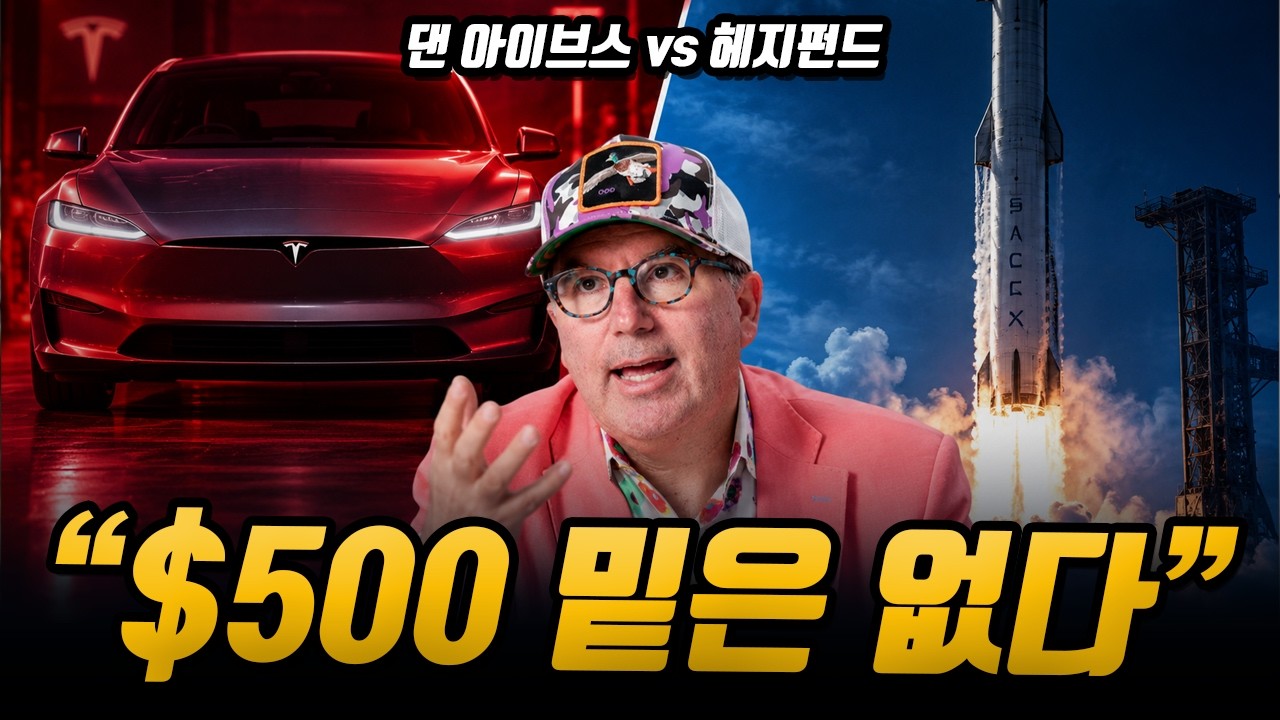
● Trump Shock, Tariff War, Korea Pressure
U.S. Midterm Aftermath and a Trump-Driven Scenario: Even if Democrats Win, Tariffs and U.S.-Korea Relations May Not Change Much
The key takeaways in this article are threefold.
First, even if Democrats win the House, it will be difficult to materially block the Trump administration’s foreign policy, security, and trade agenda.
Second, the midterm outcome may not weaken Trump’s leverage; instead, it could intensify the use of executive orders and tariff pressure.
Third, for South Korea, bilateral relations may become more confrontational, while opportunities may expand in shipbuilding, energy, AI infrastructure, and manufacturing investment negotiations.
1. Core Midterm Landscape: A Democratic House Win Is Plausible, but a Sweep Is Unlikely
The central forecast in the source discussion is that Democrats are likely to take the House, but control of the Senate remains uncertain.
The current U.S. political structure is described as a unified Republican control of the White House, Senate, and House.
Historically, however, the incumbent party tends to face headwinds in midterm elections.
The honeymoon effect usually fades after the first year, while inflation, interest rates, and cost-of-living pressures tend to weigh on approval ratings in the second year.
-
House Outlook
The House has 435 seats.
A majority requires 218 seats.
Republicans currently hold a narrow edge, but Democrats are assessed as having more than a 75% chance of retaking the House.
That said, a result in the 225-230 seat range for Democrats would count as a win, but not a landslide.
-
Senate Outlook
The Senate has 100 seats.
The current balance is described as 53 Republicans and 47 Democrats.
Democrats need at least 51 seats to control the Senate.
If the chamber ends in a 50-50 split, the vice president’s tie-breaking vote favors Republicans.
In practical terms, Democrats would need to flip at least four seats to gain control.
Key variables in the Senate include battleground states.
Important questions are whether Republican-leaning states such as Ohio, Maine, Alaska, Iowa, and Texas will shift, and whether Democrats can defend vulnerable seats in Michigan, Georgia, and New Hampshire.
A further risk is the potential persistence of a “shy Trump” vote that is not fully captured in polling.
If conservative turnout exceeds expectations by 2-3 percentage points, Democratic control of the Senate could become much harder than anticipated.
2. Most Likely Scenario: Republican Senate Retention and Democratic House Control
The most realistic scenario in the source is a Republican-held Senate and a Democratic-controlled House.
This structure resembles the outcome after the 2018 midterm election during Trump’s first term.
At that time, Republicans kept the Senate while Democrats won the House.
Trump interpreted that result as a win because he retained the Senate, and he then moved more aggressively.
The result was the escalation of U.S.-China trade tensions and tariff conflict.
A similar pattern could emerge again.
Even if Trump loses the House, he may frame the outcome as holding the core of power if Republicans keep the Senate.
As legislative gridlock increases, he may rely more heavily on executive orders, trade law tools, export controls, and tariff policy.
3. Why Even Full Democratic Control May Not Restrain Trump
Many assume that Democrats could meaningfully constrain Trump if they control both chambers.
However, the source argues that presidential authority remains especially strong in foreign affairs, national security, trade, and tariffs.
-
Foreign Policy and Security Remain Executive-Dominant
The U.S. president has substantial unilateral authority in foreign and security policy.
Pressure on allies, military signaling, and trade negotiation strategy are difficult for Congress to block in advance.
-
Tariffs and Export Controls Offer Broad Executive Tools
While tariff authority is generally assigned to Congress, the executive branch has considerable room under Section 301, national security provisions, and export control mechanisms.
Trump could use these tools against China and also pressure allies such as South Korea, Japan, and Europe.
-
Congressional Oversight Is Mostly Reactive
A Democratic House can use hearings, investigations, subpoenas, and budget review to pressure the administration.
However, it is difficult to stop policy before it is implemented.
Most congressional action would come after the fact.
-
The Presidential Veto Remains a Barrier
Even if Congress passes legislation limiting tariffs, the president can veto it.
Overriding a veto requires a two-thirds majority in both chambers.
That is not realistic under the current political balance.
As a result, even if Democrats win, uncertainty may not decline; instead, executive-driven policymaking and conflict with Congress could intensify.
4. Inflation as the Key Variable Shaping the Midterm
The most important economic factor in the midterm is inflation.
U.S. voters are highly sensitive to prices.
For middle- and lower-income households in particular, higher gasoline, food, rent, and borrowing costs quickly translate into political dissatisfaction.
The source argues that both the Biden and Trump administrations contributed to inflationary pressures in different ways.
-
Under the Biden Administration
Sanctions on Russian oil and gas following the Russia-Ukraine war contributed to higher energy prices.
This raised global inflation pressures.
The source notes, however, that Biden’s choice had an unavoidable strategic rationale tied to NATO and European security.
-
Under the Trump Administration
The source links heightened tensions in the Middle East, especially around Iran, to higher crude prices.
In this case, the criticism is stronger because the escalation is seen as less necessary.
Higher oil prices feed into inflation, higher rates, and weaker consumption.
The broader chain is clear: geopolitical risk leads to higher oil prices, which raise inflation, increase rate pressure, slow consumption, and weaken election prospects.
That dynamic is also important for investors.
Slower U.S. consumption, dollar strength, won won depreciation, energy volatility, and higher equity market volatility can all emerge through this channel.
5. Trump Impeachment Risk Is Low: The Math Does Not Work
One of the clearest conclusions in the source is that Trump faces little realistic impeachment risk.
In the United States, impeachment requires a simple majority in the House and then a two-thirds vote in the Senate for final removal.
That means 67 of 100 senators must vote in favor.
The problem is that even if Democrats control the Senate, they are unlikely to reach more than 51 or 52 seats.
That is far short of 67.
In practical terms, impeachment is impossible unless a large number of Republicans turn against Trump.
As in the Watergate era, removal would require a major bipartisan rupture driven by an extraordinary scandal.
The source sees that level of defection as unlikely in Trump’s current political environment.
During Trump’s first term, the House impeached him, but the Senate blocked conviction.
6. Limited Lame-Duck Risk: Without a Landslide, Trump Can Still Hold
A meaningful lame-duck period would require not just a Republican loss, but a major defeat.
The source argues that Democrats would need more than 60 Senate seats and at least 240 House seats for Trump to face a serious political setback.
Sixty seats in the Senate are especially important.
That is the threshold required to overcome the filibuster.
If Democrats had at least 60 seats, legislative capacity would increase materially and the political message would be much stronger.
However, that outcome is considered unlikely.
The U.S. political environment remains deeply polarized.
Republican voters are unlikely to shift to Democrats even if they are dissatisfied with Trump.
Democratic voters are similarly unlikely to support Republican candidates.
Elections therefore increasingly depend on turnout rather than broad movement among swing voters.
Trump’s campaign appearances in Republican strongholds such as Alaska, Texas, and Alabama reflect this reality.
Mobilizing the base has become more important than persuading undecided voters.
7. Election Denial: More Likely as a Political Narrative Than as Direct Action
The source assesses that Trump is unlikely to attempt to overturn an election result through direct action.
After the 2020 presidential election and the January 6, 2021 Capitol attack, he is understood to recognize the risks involved.
If he had lost in 2024, the legal and criminal exposure linked to election interference could have become severe.
That experience makes a renewed full-scale effort at election denial less likely.
However, he may still use claims of fraud as a political defense.
Especially if Democrats narrowly win the Senate or outperform expectations in the House, Trump could frame the result as illegitimate to deflect blame.
He may also accuse Democratic-led states of improper election administration.
This is more likely to function as a mobilization tool for future elections than as a genuine attempt to overturn institutions.
8. Extreme Scenario: Emergency Measures, State-Level Disruption, and Political Paralysis
The source also considers a low-probability worst-case scenario.
In that scenario, Trump could declare a national emergency on the basis of alleged election fraud and seek to disrupt voting in selected areas.
Because U.S. elections are administered by states rather than the federal government, Republican-led states might cooperate while Democratic-led states such as California, New York, and Michigan could continue their own procedures.
This could create a situation in which elections proceed in some states but are disrupted in others.
The result could be a fragmented recognition of outcomes and, in theory, a political paralysis that prevents a normal Congress from forming.
The source considers this highly unlikely.
Nevertheless, Democrats are preparing for multiple election-contest scenarios because of the real experience of January 6.
9. War Escalation Risk: Low, but Not Zero
Another extreme scenario is external conflict escalation.
When domestic politics turn unfavorable, leaders sometimes try to shift attention through foreign conflict, the so-called “wag the dog” approach.
In this context, the concern is that Iran or the Middle East could be used to heighten national security tensions.
However, the source sees this as unlikely.
MAGA supporters generally oppose foreign wars and large-scale overseas intervention.
Conservative media figures such as Tucker Carlson have also been critical of unnecessary war.
In addition, figures such as J.D. Vance and Marco Rubio may not easily accept a long-duration war strategy tied to Trump’s political objectives.
Still, Trump has repeatedly challenged conventional political and institutional norms.
For that reason, policymakers, companies, and investors should not ignore tail risks related to geopolitics.
10. The Most Important Point for South Korea: Trump Sees Korea as a Strategic Partner and a Negotiating Target
The most relevant section for South Korea is the outlook for bilateral relations.
Trump is likely to view South Korea as strategically important.
At the same time, he is likely to see Korea as a source of economic leverage.
In practical terms, that means shipbuilding, batteries, semiconductors, energy, AI infrastructure, and manufacturing investment will all become part of the negotiation agenda.
The core policy theme in Trump 2.0 would be U.S. industrial revival.
To support that goal, he is likely to push allied companies for large-scale investment in the United States.
Tariff threats could be used to pressure companies into building factories, creating jobs, and expanding strategic-sector investment.
For Korean firms, this is a burden.
But it is also an opportunity.
As the United States pursues both AI dominance and manufacturing reindustrialization, South Korea’s capabilities in semiconductors, power equipment, shipbuilding, batteries, nuclear energy, LNG, and data-center infrastructure become valuable bargaining assets.
11. Response Strategy for South Korea and Korean Companies: A Transactional but Principled Approach
The source’s response strategy is clear.
South Korea should preserve the alliance framework but approach negotiations more transactionally.
If the Trump administration acts transactionally, Korea should respond in kind: one concession should be matched by one return benefit.
-
Shipbuilding Cooperation
The United States needs shipbuilding capacity to counter China.
Korean shipbuilders can use maintenance, LNG carriers, offshore plants, and commercial vessels as leverage.
-
Energy Cooperation
U.S. LNG, Alaska energy projects, and nuclear cooperation are important bargaining tools.
Investment should be calibrated against energy security and industrial competitiveness, not expanded automatically.
-
AI Infrastructure and Semiconductors
As AI competition intensifies, power supply, data centers, advanced semiconductors, cooling systems, and grid investment become increasingly important.
Korean companies are well positioned to participate in that buildout.
-
Tariff Negotiations
Because Trump is likely to use tariffs as leverage, Korea should prepare for sector-specific exposure and substitution strategies.
Automobiles, steel, batteries, semiconductor equipment, and chemicals are especially sensitive.
The key point is not to follow U.S. demands passively.
The United States needs Korea in specific strategic sectors, so Korea should negotiate from a firmer position.
U.S. power is no longer what it once was, while Korea’s industrial capabilities are materially stronger than in the past.
That shift may increase friction, but it may also support a more balanced bilateral relationship.
12. Market Variables Investors Should Watch
After the midterm election, markets are unlikely to move solely on whether Democrats or Republicans win.
The more important question is how Trump chooses to implement policy.
-
Tariff Risk
If Trump expands tariffs, global supply chains could be disrupted again.
That would be a burden for Korean export-oriented companies.
-
Inflation and Rates
Middle East risk could push oil prices higher and reignite inflation.
This would directly affect Federal Reserve policy and global asset prices.
-
Dollar and FX
Rising political uncertainty and geopolitical risk could strengthen the dollar.
Higher USD/KRW volatility would pressure Korean equities and import prices.
-
Defense, Energy, and Shipbuilding
In a Trump 2.0 environment, defense, energy security, and shipbuilding cooperation may gain importance.
Industries linked to U.S. manufacturing revival and China containment could benefit over time.
-
AI Infrastructure Investment
If the U.S. continues the AI race, investment in power grids, data centers, semiconductors, and cooling infrastructure will be essential.
This increases the likelihood of Korean participation.
13. The Most Important Points Not Often Emphasized in Other Media
First, a Democratic House victory does not automatically reduce Trump risk.
If Congress is constrained, Trump may rely even more on executive orders, tariffs, and export controls.
For markets, policy unpredictability may matter more than political checks and balances.
Second, Senate control at the 60-seat level matters more than impeachment rhetoric.
Media coverage often focuses on impeachment, but the more relevant practical benchmark is the 60-seat threshold needed to neutralize a filibuster.
Without 60 Senate seats, Democrats would still have limited ability to stop Trump.
Third, election denial is more likely to be a turnout tool than a true coup scenario.
Trump may use claims that Democrats “stole” the election to keep his base mobilized through the 2028 cycle.
Fourth, South Korea is not merely in a defensive position.
The United States needs Korea in shipbuilding, semiconductors, batteries, energy, and AI infrastructure.
Korea should therefore use investment and security cooperation as bargaining chips to secure tangible gains.
Fifth, Trump’s real objective is measurable U.S. manufacturing output.
He is likely to emphasize jobs, factories, investment levels, and trade balance as evidence of success.
That makes pressure on Korean companies to invest in the United States more likely after the midterm.
< Summary >
Democrats are likely to retake the House in the U.S. midterm election, but a decisive Senate victory is less likely.
Even if Democrats gain partial or full control of Congress, it will still be difficult to materially restrain Trump’s foreign policy, security, and trade agenda.
Impeachment is unlikely because it requires 67 Senate votes, and a major lame-duck phase would require a much larger Democratic victory than currently expected.
Trump is likely to use tariffs, executive orders, and investment pressure more aggressively after the midterm.
For South Korea, shipbuilding, energy, semiconductors, and AI infrastructure should be treated as negotiation assets in a more transactional U.S.-Korea relationship.
[Related Articles…]
- Trump 2.0 and Global Trade: Tariff Pressure, Supply Chains, and Korea’s Response
- AI Infrastructure Investment and the Reconfiguration of Global Supply Chains
*Source: [ 경제 읽어주는 남자(김광석TV) ]
– [풀버전] 민주당이 이겨도 트럼프는 못 막는다…중간선거 뒤 ‘독주’ 시작될까 | 경읽남과 토론합시다 | 민정훈 교수